
VAPE FAQs
Is Alibarbar Vape Legit?
Jul
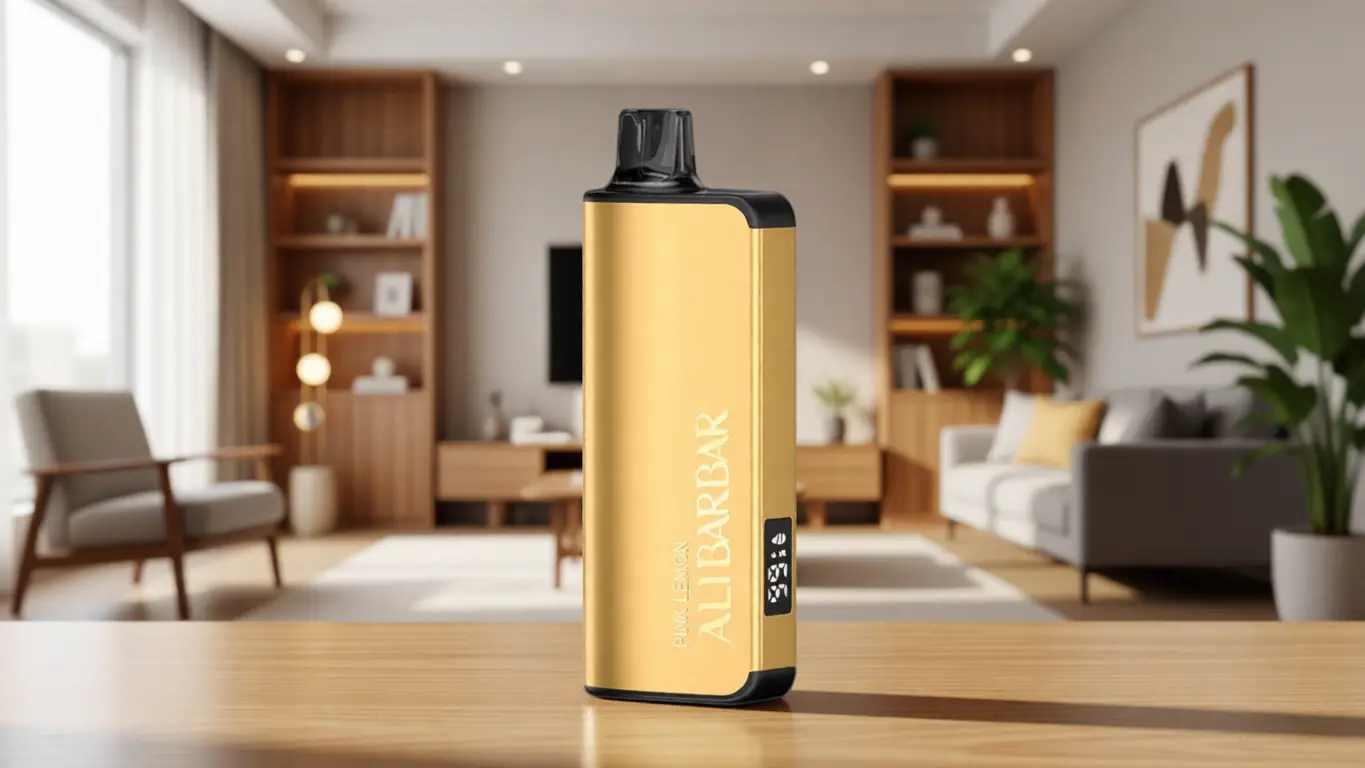
It’s a fair question, and one that deserves a structured answer rather than a superficial yes or no. When adults search for “Is Alibarbar Vape legit?”, they’re rarely asking about the existence of the brand. They are asking about authenticity, consistency, durability, and whether the device in their hand—or the one they are considering—is what it claims to be. In a market flooded with visual clones and unverified inventory, that skepticism is sensible.
At OZVAPE Shop, we see this question as a prompt to examine the engineering behind the name, the supply chain that delivers it, and the observable signals that separate a meticulously built device from a convincing imitation. This article applies an analyst’s lens to the Alibarbar product family, focusing on the factory‑certified devices available through authorised Australian channels.
Understanding What Matters: Core Engineering and Design Factors
Before judging any personal electronic device—let alone an entire brand—it’s useful to move past packaging and marketing claims. A legitimate product is one whose internal engineering, power management, physical durability, and lifecycle flexibility align with transparent documentation. Below are the four factors that most reliably separate thoughtfully designed devices from undifferentiated ones.
Internal Architecture and Output Consistency
A device’s heating element configuration directly affects how it performs over its entire intended service life. Poor thermal management leads to degradation mid‑session, or a noticeable drop in output after the first third of its capacity is consumed. Users consistently report frustration when a device “falls off” early, forcing them to carry spares or accept an underwhelming experience.
Alibarbar’s engineering team mitigates this by using calibrated power curves and mesh‑based heating geometries that maintain a steady thermal profile. In practice, this means a device from their INGOT series delivers the same character from activation until the integrated power cell is depleted. The absence of a late‑stage fade is a strong indicator of thoughtful internal design.
Power Management and Status Transparency
One of the most common—and avoidable—frustrations is a device that dies without warning. Ambiguous or absent status indicators leave the user operating blind. They compensate by carrying backup units, which adds cost and bulk.
Look for devices that communicate their remaining charge clearly. In Alibarbar’s higher‑capacity models, such as the INGOT 15000, a multi‑segment LED indicator provides an honest readout. This isn’t a gimmick; it’s a practical tool that prevents the user from being caught out during a long commute or an extended social engagement.
Physical Design and Material Durability
Surface finish matters more than aesthetics. A device that lives in a pocket with keys, coins, and other hard objects needs a coating that resists micro‑abrasion. Devices built with soft‑touch paints often look tired within days. Alibarbar’s use of anodised metals and high‑durability polycarbonate shells means the surface stays presentable far longer—a detail that speaks to genuine manufacturing investment rather than cost‑cutting.
Equally, mouthpiece geometry affects prolonged comfort. A sharply angled or thin‑edged mouthpiece becomes irritating over time. Alibarbar’s contouring, shaped to distribute contact pressure evenly, is the result of iterative prototyping—evidence of a brand that sweats the details.
Modularity and Lifecycle Flexibility
Sealed units, rechargeable systems, and replaceable‑component architectures each serve different priorities. Sealed units offer simplicity but commit the user to full replacement. Rechargeable units reduce waste and can lower cost‑per‑use. Replaceable‑component designs, while rarer, maximise economy.
Alibarbar’s range is deliberately diverse. The INGOT 9000 serves users who value a compact, maintenance‑free experience. The Ice Adjust 12000 introduces adjustability, allowing the user to fine‑tune operation without switching devices. This modular approach to the product line itself—offering clear, differentiated choices rather than a single one‑size‑fits‑all model—reflects a legitimate, user‑centric product strategy.
Applying These Criteria to the Alibarbar Range
Alibarbar’s current catalogue illustrates an evolutionary arc, not a sudden market entry. Early releases prioritised compact, pre‑configured formats. Subsequent generations—the INGOT and Ice Adjust series—added higher capacity, clearer status feedback, and adjustable output levels, while retaining a common design language that signals consistent internal quality control.
INGOT 9000: A portable, sealed unit that prioritises pocket‑friendly dimensions and consistent output. Its internal architecture is optimised to prevent the late‑stage performance drop that plagues many devices in its category.
INGOT 15000: A higher‑capacity device with a multi‑level LED gauge. This addition alone addresses the blind‑operation problem directly, reducing the impulse to carry a backup.
Ice Adjust 12000: An adjustable‑output model that lets the user choose between intensity levels. The mechanism is physical, deliberate, and resets to a safe default, reflecting a design culture that values user control and safety interlocks equally.
Legitimacy in a hardware brand is demonstrated through this kind of coherent product line logic. Each model addresses a known pain point without excessive marketing fanfare.
Supply chain verification is the other half of the equation. A genuine Alibarbar device manufactured under licence will include tamper‑evident packaging, a unique verification code that can be checked against the brand’s database, and documentation that uses consistent branding and font treatments. Counterfeit units often fail on small details: a misaligned logo, a flimsy box interior, or an indicator LED that behaves erratically. At OZVAPE Shop, every unit is sourced directly from authorised distribution networks and undergoes a documented intake check. This commitment to factory‑certified inventory closes the gap between the brand’s engineering and what arrives at the user’s door.
A Practical Framework for Evaluation
If you are holding an Alibarbar device—or any device you want to trust—use this diagnostic sequence to assess its legitimacy and build quality:
Check the verification label. Scratch the panel, note the code, and check it on the official Alibarbar authentication page. A working, one‑time‑use code that resolves correctly is the strongest single signal.
Observe the status indicator. Activate the device and note whether the LED behaves as described in the user guide. A genuine unit will have a clear, visible indicator that dims or changes colour predictably. An erratic or absent indicator suggests a counterfeit or a fault.
Assess output consistency over time. Run the device through a typical usage session. Does the experience remain stable from first activation to the final cycle? A noticeable mid‑session fade points to substandard internal engineering.
Examine the surface finish after a few days of carry. Light scratching is normal, but if the colour lifts or the texture becomes tacky within a week, the materials are below‑grade.
Evaluate the packaging information. Genuine packaging lists the responsible importer, proper safety markings, and clear batch codes. Vague or missing traceability details are a red flag.
A prompt to carry with you: “If this device gives me no clear status feedback, I will naturally carry a backup. That’s a hidden cost. Does this device respect my routine?”
Common Selection Errors and Industry Observations
Having observed the personal electronic device market across multiple supply cycles, certain patterns recur:
Overweighting a single specification. Users sometimes fixate on stated capacity while ignoring output consistency or status transparency. A high‑capacity number is meaningless if the device under‑performs after 30% use.
Assuming visual similarity indicates equivalent internals. The external shell of a device can be replicated easily. The heating element geometry, airflow calibration, and power management firmware are far harder to duplicate accurately. Counterfeit devices often fail on internal engineering, not looks.
Undervaluing modularity in cost‑per‑use calculations. A sealed unit with a low upfront price may end up costing more over months than a rechargeable or adjustable device. Legitimate brands often provide clear lifecycle cost advantages that are invisible during a quick price scan.
Confusing category terminology with technical specifications. Terms like “adjustable” or “high‑capacity” are used inconsistently across the industry. A legitimate product will quantify its range: adjustable in what increments? High capacity compared to what baseline? Alibarbar’s documentation answers these questions directly, which is itself a trust signal.
From a supply‑chain perspective, the existence of widespread counterfeits is not, paradoxically, a condemnation of the original brand. It is a signal that the brand has enough market value to be worth imitating. The consumer’s defence is to buy through a channel that verifies provenance at the point of intake—something that small, unauthorised sellers rarely do.
Frequently Asked Questions
Q: Is Alibarbar a genuine brand or just a white‑label operation?
A: Alibarbar is an independently designed product line with distinct internal engineering, unique mouldings, and a multi‑generation roadmap. The consistent design language across models indicates its own industrial design team, not borrowed off‑the‑shelf tooling.
Q: How do I know if a retailer is selling authentic Alibarbar devices?
A: An authorised retailer will provide factory‑sealed packaging with intact verification labels, will allow you to verify the code before purchase, and will have a documented relationship with the brand’s distribution network. OZVAPE Shop publishes its sourcing standards for this exact reason.
Q: What should I do if my Alibarbar device stops working within its indicated service life?
A: First confirm it was activated correctly and hasn’t been subjected to extremes of temperature. If the issue persists and you purchased from an authorised channel, reach out to that retailer for a return‑and‑evaluation process. Legitimate retailers handle these situations as a normal part of supporting hardware products.
Q: Does Alibarbar’s packaging include a verification system?
A: Yes. Every authentic unit ships with a unique, scratch‑off code that can be validated via the brand’s official verification portal. A code that has already been checked, or fails to load, is a strong indicator of a counterfeit.
Q: Are Alibarbar devices rechargeable?
A: The range includes both sealed (non‑rechargeable) and rechargeable models. For example, the INGOT 15000 features a USB‑C port for recharging, while the INGOT 9000 is a sealed unit. The product description on an authorised seller’s site will clearly state this.
Q: What’s the advantage of an adjustable device like the Ice Adjust 12000?
A: It allows the user to select from multiple output levels, tailoring the experience without switching devices. This modularity adds flexibility and can extend the perceived value of the unit because it adapts to different moments of the day.
Q: Do counterfeit Alibarbar devices look identical to the real ones?
A: Often at a glance, yes. But close inspection reveals differences: the box weight may be lighter, the LED window may be misaligned, the typography may use a subtly wrong font weight, and the verification code will typically be missing or invalid. Training your eye on a genuine unit from an authorised source makes these discrepancies noticeable.
Q: Can I purchase Alibarbar devices directly from OZVAPE Shop with confidence?
A: Yes. OZVAPE Shop sources exclusively from factory‑certified supply lines, conducts a physical intake inspection on each batch, and provides post‑purchase support handled by locally‑based staff. Should a rare anomaly slip through, the return process is documented and straightforward.
Conclusion
“Is Alibarbar legit?” turns out to be two questions in one: Does the brand design and manufacture devices that meet high, consistent engineering standards? And can you reliably obtain the genuine product, not a clever facsimile? The evidence, observed through a technical lens, points toward a brand that treats its product line as a design exercise, not a commodity cash‑in. The internal architecture, status transparency, durable materials, and coherent model stratification all reflect genuine engineering investment.

That said, a well‑made device is only as trustworthy as the channel through which it reaches you. Purchasing through a retailer that documents its supply chain, verifies inventory, and stands behind what it sells closes the loop. OZVAPE Shop was built around that principle, acting as a single, accountable access point for the full Alibarbar catalogue in Australia.
The right device choice is the one that aligns with your daily routine—not the one with the loudest marketing claims. A legitimate brand gives you the information to make that alignment possible; a legitimate retailer ensures that what you receive is actually what the engineers built.