
VAPE FAQs
Is A Weed Vape Bad For Your Lungs?

Jun
Is A Weed Vape Bad For Your Lungs?
The question rarely arrives cleanly. It typically surfaces after a user notices mild throat irritation, a tightness that wasn’t there before, or simply sits with the uneasy feeling that the device in their pocket hasn’t changed shape but somehow delivers a harsher experience than it did a month ago. They aren’t asking for a binary yes or no. They’re asking what, specifically, makes the difference between an experience that feels benign and one that leaves lasting physical discomfort — and whether any of that is under their control.
The honest answer is that lung outcomes depend far less on the category of device than on the engineering discipline that went into the specific unit you hold. The materials used in the heating chamber, the precision of temperature regulation, the nature of the aerosol pathway, and the consistency of power delivery all intersect to determine what exactly reaches the user’s airways. At OZVAPE Shop, we maintain these are not abstract variables; they are the concrete, factory-specifiable design choices that separate a device that warrants careful use from one that invites entirely unnecessary risk.
Understanding What Matters: Core Engineering and Respiratory Impact
There is no single throat hit, no universal vapour texture, and no standardised lung response. What users describe as “harshness” can stem from particle size distribution, from trace thermal degradation by-products, or from the simple fact that the heating element reached a temperature the wicking material was never designed to handle. Four engineering domains deserve sustained attention because they directly shape the biological interface.
Heating Element Architecture and Thermal Uniformity
The element is not merely a heat source; it is a thermal field. In poorly engineered devices, a wire coil wrapped around a silica or cotton wick creates extreme temperature gradients — the section in direct contact with the wire reaches 220°C or higher, while material 2 millimetres away barely crosses 180°C. This gradient produces a mixed aerosol: some compounds vaporise gently while others undergo partial pyrolysis. The result is a fraction of by-products the lungs have no evolved mechanism to handle comfortably.
Devices designed around large-format mesh or planar heating surfaces combat this by spreading thermal energy across a broad, even plane. When you encounter product documentation that specifies “mesh coil” without defining surface area or resistance-compensating firmware, you’re being handed half the story. The full picture includes whether the chipset can dynamically adjust output to maintain set temperature as draw resistance varies. This isn’t marketing — it’s respiratory hygiene. A device that overshoots its temperature by even 15°C for fractions of a second during a long draw is generating a different chemical profile than one that holds steady.
Material Integrity in the Vapour Path
The materials lining the mouthpiece, chamber walls, and airway are in prolonged contact with heated aerosol. Cheap polymer blends, residual mould-release agents, or low-grade stainless steels exposed to organic acids and heat can leach trace elements that the respiratory mucosa absorbs before the user perceives any taste. Users frequently describe a “plasticky” afternote that fades after a week; what they’re exhaling during that week is not just botanical extract.
High-density polyetheretherketone (PEEK) or medical-grade stainless steel (typically 316L) in the vapour path is an engineering choice with direct lung relevance. Devices that have undergone ISO 10993 biocompatibility testing for the mouthpiece material at operating temperatures offer a layer of assurance that a spec sheet without those numbers cannot. When a brand declines to publish material grades for anything beyond “stainless steel,” assume there is trace substitution happening further back in the supply chain.
Power Management and Session Stability
A device that delivers 20 consistent draws and then suddenly fades is not just inconvenient; it pushes the user toward compensatory behaviour. When vapour density drops, the reflexive response is a longer, harder pull. If the firmware doesn’t limit current to prevent a temperature spike as the battery sags, that pull draws on a coil now running well above its calibrated range. The user receives a hit that is thermally scorched, chemically different, and delivered with greater suction force deep into the lungs.
This is why battery management ICs and boost-buck converter quality matter. A device that maintains flat output voltage down to the last 10% of battery capacity, and provides granular status indication (battery level and active temperature range), gives the user the opportunity to stop before the system enters an unstable regime. Ambiguous blinking lights that mean “something is wrong” do not provide that opportunity; they simply create anxiety and a pattern of finishing every session with an irritated throat.
Sealed vs Serviceable Architecture and Long-Term Exposure
Sealed, pre-filled cartridges place the entire responsibility for wicking material stability and coil longevity on a single factory. Once that cartridge is depleted, the user disposes of it and starts fresh. However, the cost of that convenience is zero transparency about the condition of the coil after 200 draws. A refillable pod system, by contrast, lets users replace the coil or pod when performance visibly declines. The sealed route can, under poor manufacturing oversight, subject the user to a gradual build-up of carbonised residue that steadily alters aerosol composition over the cartridge’s life.

There is no universal answer here. The correct choice depends on whether the user is prepared to monitor and replace wearing components, or whether they would prefer a device whose entire vapour path is renewed with each unit. The mistake is assuming either architecture inherently protects the lungs. What protects them is conscientious engineering inside the black box — and that only becomes visible through transparent, standardised specifications.
Applying These Criteria to Real-World Options
Users who seek out devices like the ALIBARBAR INGOT 9000 are often drawn by the promise of a long operational life without daily maintenance. The INGOT series employs a sealed architecture with an integrated mesh coil and a liquid capacity that comfortably outlasts a long weekend. From a respiratory standpoint, the relevant engineering detail is not the puff count but the combination of a draw-activated regulator chip that meters power precisely and a cotton wicking material that maintains saturation across the entire reservoir volume. When saturation drops unevenly near the end of life, even a high-capacity unit can produce a dry hit; the INGOT’s air-inlet design and internal baffling are intended to push that inevitability as late as possible.
The Ice Adjust 12000 model adds a variable airflow ring that changes the dilution of aerosol with ambient air. For lung-conscious users, this is not merely a sensation preference. Wider airflow draws cooler vapour by increasing the ratio of air to aerosol, reducing the thermal load on the airway. It’s a mechanical control with a physiological consequence, and it represents a design approach that understands why some users need to fine-tune beyond what a fixed system offers.
Other families encountered in the market, such as those using quartz coil configurations or external 18650 battery setups, bring their own thermal profiles. Quartz can heat faster and more intensely, which suits rapid extraction but demands tighter temperature regulation to avoid crossing combustion thresholds. External battery systems can sustain higher wattages, but if the battery door contacts oxidise over months, they introduce resistance variation that the chipset may not compensate for. These aren’t defects; they’re trade-offs, and an informed user weighs them against their own breathing habits and tolerance for maintenance.
A Practical Framework for Evaluating a Device’s Lung Impact
Users rarely have access to laboratory-grade particulate analysis. Yet a series of observable, documentable factors yields a surprisingly reliable picture of how a device will treat the respiratory system over time. Walk through these questions before trusting any device with thousands of draws:
Can you identify the heating element material and geometry? Look for “mesh” or “planar” descriptions with a specified resistance range. Avoid devices that mention only “ceramic” without clarifying whether it’s a coating or a full element, as some ceramic coils are simply silica wicks with a ceramic powder binder.
Does the manufacturer publish the mouthpiece material? If the answer is “food-grade plastic” or “medical-grade PCTG” with a testing standard, proceed. If it says only “plastic,” assume the lowest-cost polymer capable of passing a visual inspection.
What is the battery’s voltage sag profile, and does the device show you remaining charge in 25% increments or better? A simple LED that switches from green to red without warning gives you no chance to pause before the device drops into an unstable thermal zone. A percentage display or a 4-bar indicator is a lung-protective feature, not a cosmetic one.
Does the device have any active thermal protection? Some microcontrollers now include a thermistor that cuts power if the coil exceeds a temperature threshold (commonly 230°C–250°C). This is an automatic safeguard against the dry-hit scenario. Its absence doesn’t guarantee danger, but its presence tells you the engineers thought about failure modes.
What does the vapour path look like when disassembled (if possible)? In refillable systems, the presence of sharp corners or narrow metal channels that trap condensate suggests an environment where bacterial film can form over weeks. While the heat of the aerosol likely sterilises the immediate area, the combination of moisture and organic residue in a dark compartment is never ideal. Sealed systems sidestep this by design, which is an underappreciated respiratory argument for pre-filled, disposable units of known provenance.
Common Selection Errors and Industry Observations
The pattern of what goes wrong for users is strikingly consistent. It isn’t that they buy the wrong brand; it’s that they evaluate devices using criteria that have no correlation with the load placed on their lungs.
Equating visual bulk with build quality. A heavy, metallic-shell device doesn’t tell you the grade of stainless steel inside the heating chamber, nor the presence of a conformal coating on the circuit board to prevent moisture ingress. I’ve seen teardowns of devices with anodised aluminium exteriors and a vapour path lined with a polymer rated for only 80°C. The two facts coexist in the same housing.
Overweighting puff-count claims and ignoring thermal consistency. Puff count is a function of liquid volume, power, and draw duration. A 10,000-puff device that sags to 80% voltage after 3,000 puffs delivers a different aerosol profile for the remaining 7,000 than it did at the start. The spec that matters is the discharge curve, not the total number. Manufacturers who share that curve are few; the ALIBARBAR family is among those that do provide a stable output window in technical documentation, not just marketing material.
Assuming category names imply biological safety. Terms like “dry herb vaporiser” and “oil pen” and “disposable” carry no regulatory definition of lung compatibility. They are loose market categories. A “dry herb vaporiser” that combusts the botanical load because its temperature sensor failed is worse for the lungs than a properly functioning oil device using a ceramic coil, regardless of the category label. Judging by category rather than by the physical design inside the unit is an error that keeps the entire industry stuck in low-information consumerism.
Undervaluing supply chain transparency in the purchasing decision. A device from an authorised supply chain has a known chain of custody. Units from grey-market channels may be legitimate but counterfeited, or may have sat in a non-climate-controlled container for months, degrading battery cells and polymer components. When users complain of unexpected harshness or a dead unit after two weeks, the root cause is often a compromised battery that the vendor never saw. This is not a design flaw; it’s a procurement failure.
Frequently Asked Questions
Q: Can a vape device ever be completely harmless to the lungs?
A: No. Introducing any foreign aerosol into the lungs triggers a biological response. The question is one of relative irritation and long-term compatibility, which depends on temperature stability, particle size, and the absence of thermal degradation by-products.
Q: What specific indicator suggests my device is producing harmful compounds?
A: A persistent acrid taste, an odour of burnt sugar or burning dust, or a visible darkening of the liquid in a windowed cartridge indicates thermal breakdown. At that point, even if the device still produces vapour, the chemical composition has changed.
Q: Is a high-capacity sealed device safer because the factory controls everything?
A: Only if the factory’s quality control is rigorous. A sealed unit with a poorly calibrated coil can deliver hundreds of consistently harmful draws. The advantage of a sealed system is that every unit is identical, making it easier to identify and recall a bad batch — but only if the user purchases through an authorised channel that tracks lot numbers.
Q: How does adjustable airflow affect lung sensation?
A: Increased airflow dilutes the aerosol with room air, cooling it and reducing the density of droplets per unit volume. This can lessen airway irritation, but it also changes the depth to which aerosol reaches the lungs. A deeper, cooler inhalation isn’t automatically gentler.
Q: If a device says “temperature control,” does that mean the coil never exceeds a safe limit?
A: “Temperature control” is a marketing phrase unless accompanied by a stated temperature range and a description of the feedback mechanism (thermistor, TCR wire). Without those details, assume the device limits wattage, not temperature.
Q: Do ceramic coils eliminate the risk of dry hits?
A: They reduce it by distributing heat more evenly, but a ceramic element can still reach scorching temperatures if the wicking material runs dry. The protection comes from a moisture-detection algorithm or thermal cut-off, not the ceramic itself.
Q: What should I look for in a device if I have pre-existing respiratory sensitivity?
A: Prioritise devices with published mouthpiece material certifications, a smooth SS316L vapour path, and a 4-bar or percentage battery indicator. Additionally, opt for lower-temperature operation (below 200°C) if adjustable.
Q: How important is the battery’s health to lung impact?
A: Directly. A degraded battery cell with high internal resistance will sag under load, causing the voltage regulator to struggle. That can lead to temperature overshoots, especially in the final seconds of a draw. Replacing devices when battery life noticeably degrades is a practical harm-reduction step.
Q: Is there any way to verify if a device is counterfeit without opening it?
A: Many manufacturers now include QR codes linked to a verification database. Authorised retailers like OZVAPE Shop also provide batch traceability. If a deal seems suspiciously cheap and the seller cannot provide batch confirmation, the unit’s internal components are an unknown variable.
Q: What is the single most overlooked factor in device-related lung irritation?
A: Hydration of the user. Dry mucous membranes are more susceptible to irritation from any aerosol, regardless of temperature or particle size. It sounds trivial, but the user’s own physiological state is part of the equation that no device specification can replace.
Conclusion
The evidence leaves little room for the comfortable delusion that all devices are lung-neutral simply because they avoid combustion. What reaches the delicate tissues of the airways is a direct fingerprint of engineering decisions made weeks earlier and thousands of kilometres away — decisions about materials, thermal mapping, firmware logic, and quality assurance. When those decisions are made with rigour and documented transparently, the resulting device tends toward predictability and relative mildness. When they are made against a cost-cutting clock, the user becomes an involuntary beta tester.
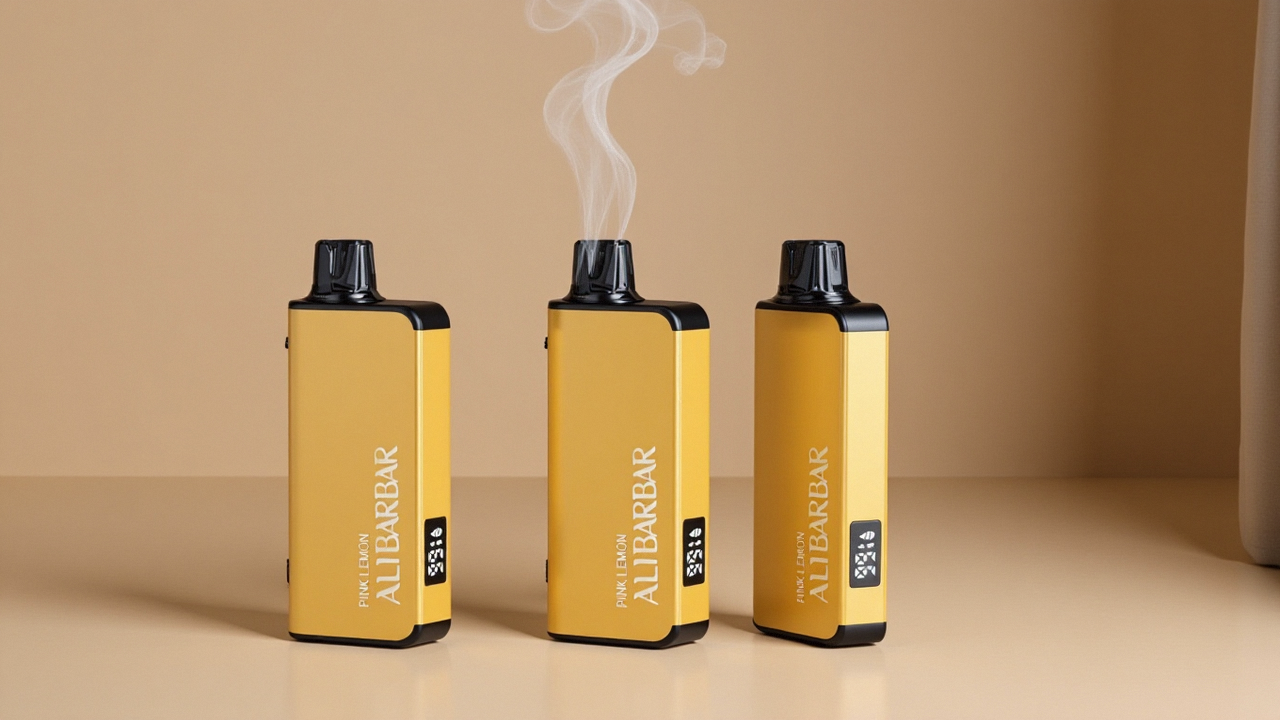
The practical difference between a device that becomes a daily companion and one that aggravates the throat after a week is rarely visible on a product page. It lives in the supply chain documentation, the factory audit record, and the willingness of the retailer to stand behind each unit. That is why adult users in Australia who seek out the ALIBARBAR range through OZVAPE Shop do so not out of brand fervour but because the sourcing model — factory-certified inventory with batch-level traceability — removes one large layer of uncertainty.
The right device for your lungs is not the one with the most aggressive marketing or the highest puff claim. It is the one built with the kind of technical honesty that allows you, before you ever inhale, to map exactly what stands between you and the heating element.