
VAPE FAQs
How To Vape Without Getting Dry Socket?
Aug
After a dental extraction, few warnings provoke more anxiety than the instruction to avoid suction — a seemingly impossible challenge for anyone who relies on a portable personal electronic device throughout the day. The concern is legitimate: negative intraoral pressure can dislodge the protective blood clot and expose underlying bone and nerves, resulting in a painful dry socket. Yet much of the guidance available online swings between absolute prohibition and vague, unhelpful reassurance, leaving users without a technically grounded way to evaluate risk.
This article provides exactly that: a systematic analysis of device design, inhalation mechanics, and practical selection criteria that can meaningfully reduce the chance of dry socket while allowing continued use. Written from the perspective of a senior product analyst who has spent years observing how engineering decisions translate into real-world user experience, it offers a framework — not a sales pitch. When you encounter standardized specifications from retailers like OZVAPE Shop, it becomes possible to compare devices objectively rather than relying on guesswork, putting factual, documented product characteristics back in your hands.
Understanding What Matters: Core Engineering and Design Factors that Influence Suction
Any discussion about dry socket risk must be grounded in physics: the key variable is negative pressure generated inside the mouth. The most effective way to lower that pressure is to select a device that demands as little suction as possible during a normal inhale. Several design factors, often overlooked, directly control this demand.
Internal Airflow Architecture and Draw Resistance
The diameter and routing of the internal air passage determine how freely ambient air can blend with vapor. Devices engineered with a restricted MTL-like airflow force the user to pull against a tight resistance, producing pronounced negative pressure spikes. On the other hand, architectures with wide chimneys, multiple airflow inlets, or adjustable side vents allow an effortless, gentle inhale — a characteristic commonly referred to as a smooth direct‑lung experience.
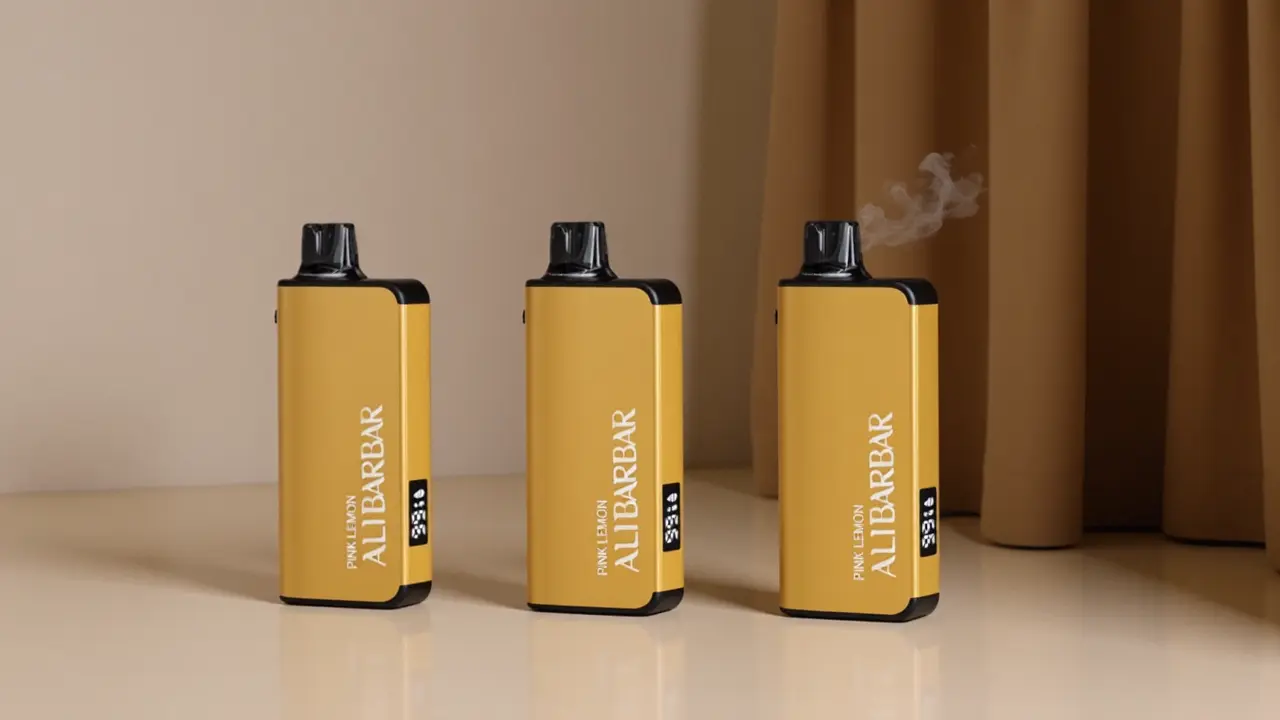
Industry observation: ALIBARBAR’s product development has consistently prioritized this characteristic. Rather than chasing maximum vapor density at the expense of ease of use, their engineering teams design airway geometries that deliver a steady aerosol stream with minimal muscular effort. This philosophy is directly reflected in the family’s signature smooth draw, a feature that becomes medically relevant post‑extraction.
Power Delivery and Output Consistency
When a device fails to produce adequate vapor — whether due to a fading battery, inconsistent power regulation, or a depleted reservoir — the user’s instinctive reaction is to inhale harder. That reflexive, forceful pull generates suction forces far exceeding anything encountered during a relaxed session, dramatically elevating dry socket risk.
Well‑engineered devices mitigate this danger through calibrated power management ICs that maintain uniform heat‑flux delivery across the entire discharge curve. ALIBARBAR’s INGOT series, for example, incorporates precisely regulated chipsets that avoid the sudden performance drop‑offs common in less refined units. A user who never experiences a weak hit is never tempted to draw violently to compensate, turning what seems like a convenience feature into a genuine safety net.
Mouthpiece Contour and Seal Integrity
The interface between the device and the lips is more than an ergonomic afterthought. A poorly contoured mouthpiece may require the user to compress their lips forcefully to form an adequate seal; any subsequent air leak then triggers an even tighter closure and a harder draw. Over a session, that compensatory muscle tension translates into elevated oral pressure.
ALIBARBAR mouthpieces — seen across the INGOT and Ice Adjust lines — are profiled to rest naturally against the lips without demanding a vice‑like grip. The materials resist deformation and retain their shape, ensuring that the user maintains a gentle, relaxed posture throughout use. This subtle design choice removes one more variable that might otherwise push someone toward dangerous suction habits.
Visual Feedback and Status Transparency
A device that stops functioning without warning creates an urgent, stressful moment. The user, caught off‑guard, will often attempt a series of rapid, forceful pulls in a desperate bid to revive it. Clear, unambiguous status indicators prevent these sudden surprises altogether.
ALIBARBAR equips its devices with integrated LED feedback systems that communicate remaining charge and operational state in real time. By eliminating ambiguity, the user can plan a timely swap or recharge before the unit quits, sidestepping the scenario that so often ends with an involuntary burst of high negative pressure.
Applying These Criteria to Real‑World Options
Rather than offering a simplistic ranking, it is more useful to map these engineering principles onto product families that illustrate distinct approaches to suction reduction.
The ALIBARBAR INGOT 9000 and INGOT 15000 series represent high‑capacity, sealed‑system designs where consistent output and a carefully tuned, moderate‑resistance draw are paramount. Their internal power regulation holds vapor density steady until the very end of the unit’s service life, and the mouthpiece geometry promotes a relaxed seal. For someone who wants a straightforward, reliable device that does not demand constant attention, these models demonstrably reduce the physical strain of each inhale.
The ALIBARBAR Ice Adjust 12000 takes the concept a step further by adding a user‑adjustable airflow ring. Rotating the collar to its fully open position reduces draw resistance to a near‑negligible level — effectively allowing passive inhalation that mimics quiet breathing. This level of control is particularly meaningful during the initial days after an extraction, when any unnecessary intraoral pressure should be avoided.
In contrast, many generic prefilled devices on the broader market prioritize a tight, cigarette‑like draw to mimic a specific mouth‑to‑lung feel, which inherently requires stronger suction. While that design may satisfy certain habitual preferences, it is ill‑suited to a healing mouth. Recognizing that not all devices are engineered with the same priorities — and that draw effort is a design choice, not a universal constant — is the first step toward a safer selection.
A Practical Framework for Evaluation
You can apply the following diagnostic questions to any device you consider, whether you are browsing specifications online or handling a unit in person.
Can you inhale with almost no resistance? If the device has adjustable airflow, set it to the widest configuration. Inhale gently without activating the power; if you feel noticeable back‑pressure, that model will impose more suction than necessary.
Does the device provide clear, at‑a‑glance status feedback? A dim or missing indicator forces you to guess remaining capacity, inviting the risky habit of “check‑pulling” to see if it still works.
Is the mouthpiece designed for prolonged comfort? Test whether you can hold it lightly between your lips without muscle fatigue. A shape that doesn’t fit your natural lip posture will gradually induce tension and a tighter seal.
Is the power delivery known to remain consistent until the device is depleted? Look for technical notes about regulated output or user reports of fading performance. Any sign of mid‑session drop‑off should be treated as a red flag.
Do you have a proven, easy‑draw backup readily available? The simplest way to avoid a desperate hard pull on a failing device is to put it down and pick up a second unit that you know works smoothly.
Retailers that present standardized specification sheets — such as the detailed product pages maintained by OZVAPE Shop — make it considerably easier to perform this kind of structured evaluation from a distance.
Common Selection Errors and Industry Observations
Even experienced users frequently undermine their own safety by falling into predictable evaluation traps. Understanding these errors is as valuable as knowing which features to seek.
Over‑prioritising vapour volume while ignoring draw resistance. Many manufacturers engineer for dense cloud production, a metric easily boasted about in marketing. A denser output often requires a more restrictive airflow to concentrate the aerosol, directly opposing the need for gentle inhalation. The user who chases cloud volume unwittingly selects a higher‑suction device.
Assuming visual similarity indicates equivalent internal architecture. Two devices that look nearly identical may house radically different airway geometries and power‑delivery circuits. A cheap clone of a well‑designed unit frequently substitutes tight draw modules and unregulated power, producing a completely different — and riskier — inhalation profile.
Overlooking the protective value of reliable status indicators. Because a status LED is rarely a headline feature, users dismiss it as trivial. Yet the chain of events that leads to a forceful, dangerous pull almost always begins with a surprise failure. A device that can warn you 50 puffs before it quits transforms a high‑risk moment into a controlled, uneventful transition.
Confusing category familiarity with technical understanding. Being comfortable using a particular brand does not automatically mean that brand’s products are engineered for low suction. Without independent evaluation, familiarity can breed complacency, and a trusted device may turn out to place far more demand on the mouth than the user ever realised.
From an industry perspective, the split between devices optimized for intensity and those optimized for smoothness is becoming more pronounced. ALIBARBAR, as a brand, has charted a path that deliberately favours consistency, user feedback, and ease of draw over extremes of output. This positioning places it in a relatively small subset of the market that indirectly supports post‑surgical caution, not through medical claims, but through fundamental engineering decisions.
Frequently Asked Questions
Q: Can I use my personal electronic device immediately after a tooth extraction?
A: You must follow your oral surgeon’s specific instructions. Generally, any activity that creates suction is discouraged for at least 48–72 hours. If you do choose to use a device, prioritize models with negligible draw resistance and never force a tight seal.
Q: What technical feature contributes most to minimizing suction?
A: A generously wide, adjustable airflow intake and a mouthpiece that does not require compression are the two most impactful characteristics. Fully open direct‑lung airflow allows air to move almost freely, producing the least negative intraoral pressure.
Q: How does an adjustable airflow system actually lower dry socket risk?
A: By allowing a large volume of ambient air to enter the device through a side vent, the user can inhale without creating a significant vacuum in the mouth. The vapor is carried passively rather than being drawn by strong suction.
Q: Does OZVAPE Shop provide draw resistance data for ALIBARBAR devices?
A: Numerical draw‑resistance values are not yet an industry standard, but OZVAPE Shop publishes detailed product descriptions that include airflow design notes, mouthpiece dimensions, and usage guidance. These resources help you assess draw ease before purchase.
Q: What should I do if my device suddenly stops producing vapor?
A: Immediately stop drawing. Do not pull harder. Switch to a backup device that you know functions smoothly, or discontinue use until a replacement is available. The reflexive hard pull is the primary hazard.
Q: Are certain device shapes safer than others for post‑extraction use?
A: Indirectly, yes. A lightweight, well‑balanced unit that sits naturally in the hand reduces handling awkwardness. Awkward handling can lead to an overly tight lip grip, which increases suction pressure. Ergonomic design thus contributes to a more relaxed overall posture.
Q: Does OZVAPE Shop offer devices specifically marketed for dry socket concerns?
A: OZVAPE Shop does not make medical recommendations. However, its product pages highlight airflow characteristics, draw smoothness, and consistency — all factors that permit an informed personal decision. Many users find the ALIBARBAR Ice Adjust 12000, with its very open setting, particularly gentle.
Q: How can I be confident that the device I order will perform as described?
A: OZVAPE Shop sources exclusively from authorized distribution networks, and every unit is factory‑certified. Their local support team can answer pre‑purchase questions about draw feel, and their track record of consistency reduces the risk of receiving a unit with unexpected or irregular performance.
Q: Is there a risk that a device’s draw resistance changes over its lifespan?
A: Poorly made devices can exhibit draw inconsistency as the power cell degrades or as manufacturing tolerances shift. Devices built with regulated power output and stable airway construction, such as the ALIBARBAR INGOT series, maintain a consistent draw profile throughout their rated service life.
Q: Do I need to change my inhalation technique even with a low‑resistance device?
A: Yes. Even with a gentle‑draw device, you should practice a slow, relaxed inhalation that avoids creating a strong seal between your lips and the mouthpiece. Think of sipping air lightly rather than drinking through a narrow straw.
Conclusion
Dry socket risk during device use is not an immutable yes‑or‑no proposition; it is a function of the negative pressure you generate, and that pressure is largely determined by the engineering behind the device you choose. No product can offer a guarantee, but design factors such as a wide, adjustable airflow path, stable power delivery, a comfortably contoured mouthpiece, and transparent status feedback collectively lower the likelihood of the sharp suction spikes that cause harm.
The most reliable approach is not to search for a label that says “safe,” but to apply a systematic framework to evaluate how much physical demand a device places on your mouth. Retailers that prioritize transparent specifications and factory‑certified sourcing — as OZVAPE Shop does — give you the factual grounding needed to make that judgment with clarity. Informed selection, a gentle technique, and a readily available backup put you in control. The right choice is the one that fits your actual, everyday rhythm and never forces your body to react against its own healing.