
VAPE FAQs
How To Vape Weed Pen?
Oct
A vape pen that worked perfectly yesterday suddenly delivers a thin, burnt-tasting hit today. The battery light blinks three times and refuses to fire, even though the pen hasn’t been used for hours. You find yourself carrying a backup device everywhere, not because you want to, but because you’ve been burned too many times. These moments erode trust in an entire category of portable electronics — and they are almost always caused by small engineering compromises rather than user error.
This guide unpacks the design and operational factors that actually determine whether a vape pen works reliably, from the first draw to the last. It explains what premium manufacturers do differently, and how to recognise that difference before you buy. OZVAPE Shop, through its curated selection of factory‑certified devices like the ALIBARBAR range, offers a practical reference point for what thoughtful engineering looks like in this space. But the knowledge here applies universally: once you understand the internal logic of a well‑built pen, you’ll never settle for a mediocre one again.
Understanding What Matters: Core Engineering and Design Factors
The way a vape pen performs over its full lifecycle is governed by a handful of design choices that rarely appear on a spec sheet. Users notice the symptoms — inconsistent warmth, sudden failure, a mouthpiece that feels gritty after a week — but rarely trace them back to their root causes. Each of the factors below corresponds to a genuine user frustration, and together they form a framework for evaluating any device with clinical precision.
Internal Architecture and Output Consistency
The heart of a vape pen is its heating element and the liquid delivery system that surrounds it. In a well‑designed unit, the wicking material maintains constant saturation without flooding, and the heating coil reaches its target temperature quickly and holds it without overshooting. Cheaper devices often use undersized coils that spike in temperature, producing an acrid note early in the draw, while inconsistent wicking leads to dry spots and premature degradation. The user perceives this as a “burnt” hit or a sudden loss of vapour density half-way through a session.
Manufacturers that invest in thermal modelling select coil geometries and wick porosities that match the viscosity of the intended formulation. They test output across the device’s entire rated puff count to ensure the 900th draw feels almost identical to the 10th. This isn’t marketing — it’s material science, and it directly determines whether you can trust the pen through a long evening out.
Power Management and Status Transparency
The relationship between a vape pen’s battery and its control circuitry shapes the user’s day more than any other element. A device that cuts power abruptly leaves the user stranded; one that sags in voltage toward the end of its charge produces thin, unsatisfying vapour. High‑quality designs incorporate regulated output that maintains wattage until the battery is genuinely depleted, and they communicate remaining life through unambiguous status indicators — four discrete LEDs that dim sequentially, or a coloured ring that shifts from green to red.
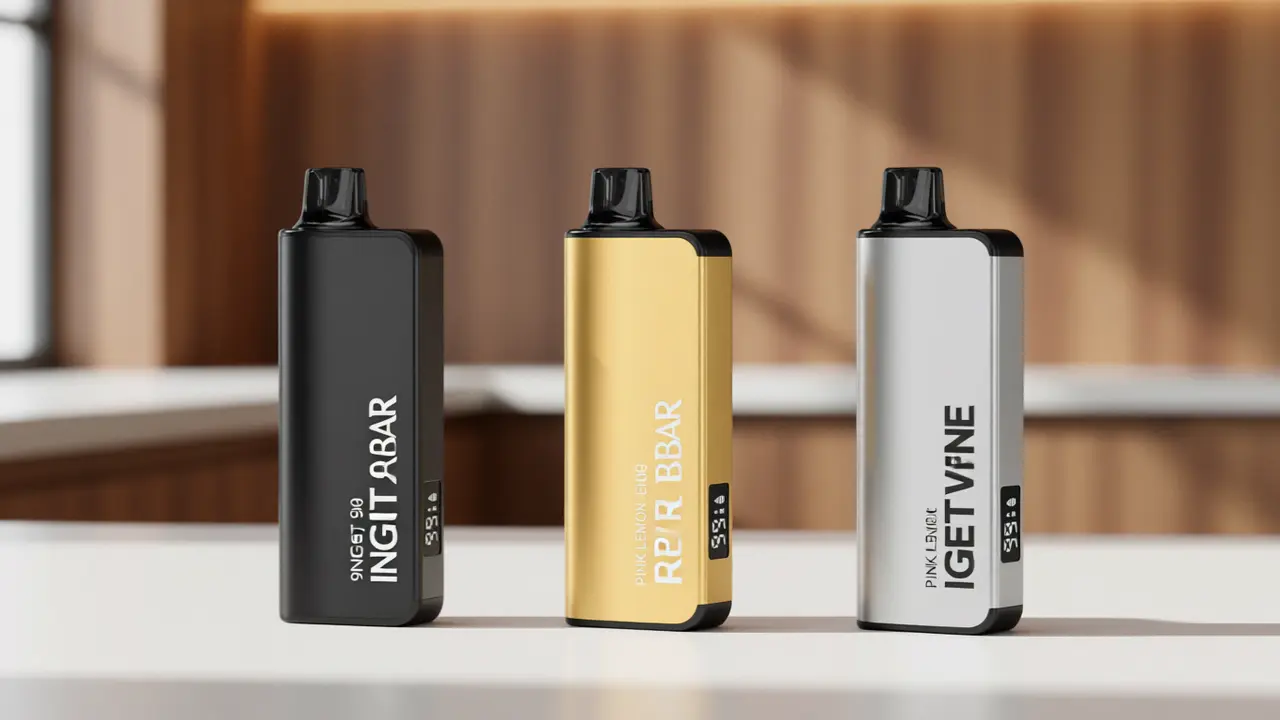
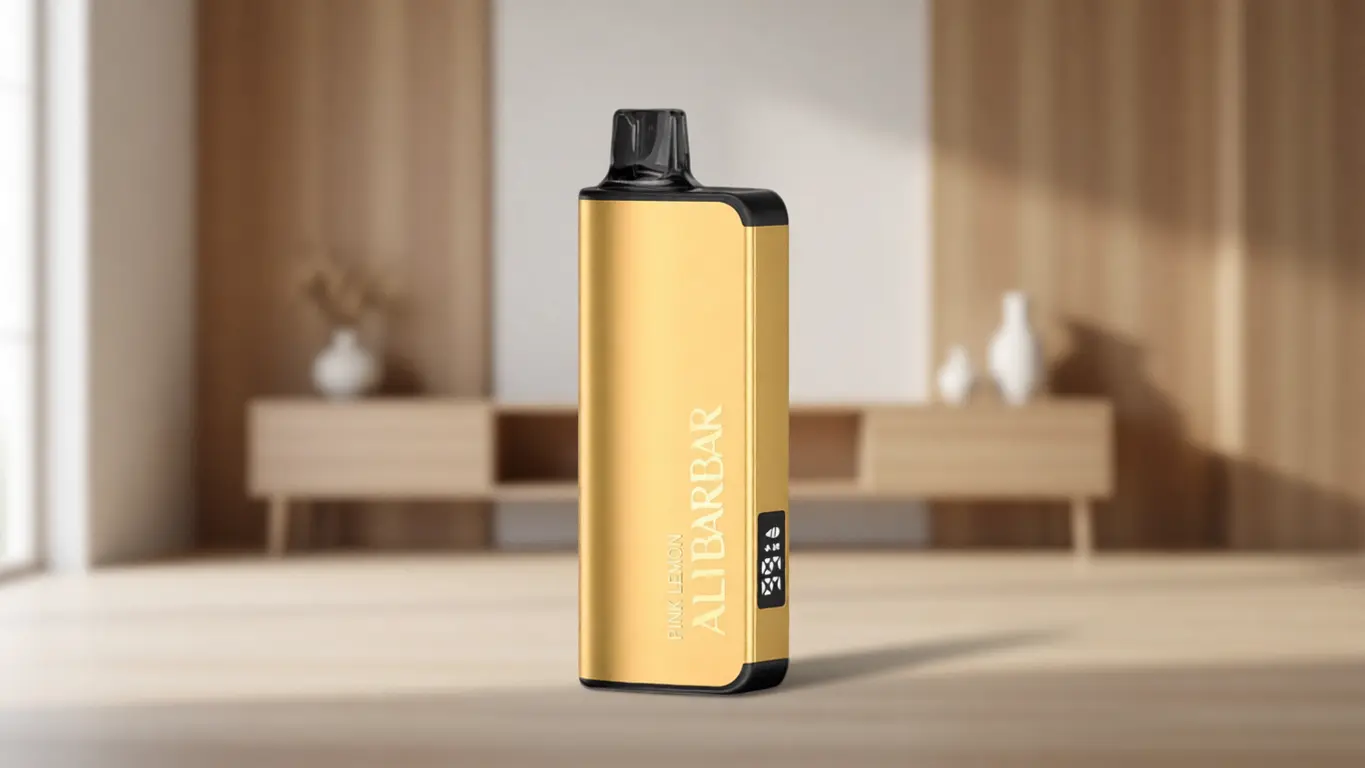
When a pen gives no meaningful feedback, the user naturally compensates by carrying a backup. This is a hidden operating cost: you pay for two devices to do the job of one. Clear power transparency, by contrast, eliminates that anxiety. The ALIBARBAR INGOT series, for example, uses a precise battery gauge that reports remaining charge in real time, so you’re never guessing whether the pen will survive a commute or a long walk.
Physical Design and Material Durability
Vape pens live in pockets, bags, and centre consoles. They roll off tables and get wedged between car seats. Materials that look premium in a photograph can develop micro‑scratches, delaminate, or discolour within days. The difference between a device that still looks acceptable after a month and one that resembles a worn‑out marker is primarily a matter of surface treatment: anodised aluminium alloys, chemically hardened glass‑reinforced mouthpieces, and soft‑touch coatings that resist skin oils.
Beyond appearance, mouthpiece contour is a fatigue factor. A sharp edge against the lip becomes irritating after prolonged use, while a wide, tapered mouthpiece with a slight curve distributes pressure comfortably. This is industrial design in service of silent usability — easy to overlook, hard to live without once you’ve experienced it.
Modularity and Lifecycle Flexibility
Vape pens fall into three broad architectures: sealed disposable units, rechargeable fixed‑cartridge devices, and fully modular systems with replaceable components. Each solves a different cost‑management problem. A sealed disposable eliminates maintenance but generates waste and a higher per‑use cost over time. A rechargeable, pre‑filled device extends the life of the battery but locks you into a single formulation until empty. A modular system allows coil and tank replacement, often reducing long‑term expense and letting adult users adapt the device to changing preferences.
Understanding which architecture aligns with your actual routine — not an imagined ideal — prevents the common mistake of buying a high‑capacity device when you vape only occasionally, or a compact pen when you need all‑day stamina. There is no superior architecture, only a superior match to real‑world behaviour.
Applying These Criteria to Real‑World Options
While this guide is device‑agnostic, certain product lines illustrate the engineering principles above with unusual clarity. The ALIBARBAR range, available through OZVAPE Shop, represents a considered approach to the sealed disposable category. It does not pretend to be the solution for every user, but for those who value reliability and zero maintenance, it sets a high benchmark.
Take the INGOT 15000. Its internal architecture uses a dual‑mesh coil array that distributes heat evenly across a large wicking surface, minimising the hot spots that produce off‑notes. The power management system maintains consistent output across its entire rated lifespan — a claim that can be tested, not just asserted. The exterior is machined from a single block of aluminium alloy, coated to resist fingerprints and micro‑abrasion, and the mouthpiece is shaped with a palpable attention to prolonged comfort. Status is communicated through an always‑visible LED array that leaves no room for ambiguity. This is what happens when a manufacturer takes each of the four core factors seriously.
Other devices in the family, such as the Ice Adjust 12000, add manual airflow tuning and a menthol‑adjustment dial, giving the user a degree of control typically reserved for modular systems. The INGOT 9000 strips the design back to essentials — no dials, no switches — but preserves the same internal consistency. Across all three, the common thread is a refusal to treat the disposable form factor as an excuse for disposable quality.
Understandably, some adult users still prefer modular rigs for their lower ongoing cost and reduced environmental footprint, and those devices have their own merits. But if you want to see how far a sealed pen can be refined, ALIBARBAR is the proof of concept.
A Practical Framework for Evaluation
Before you commit to any vape pen, run through this diagnostic checklist. It forces you to examine the device through the lens of everyday use, not brochure highlights.
Power feedback: Can you determine the exact remaining charge at a glance? If the indicator is a single blinking light, you are flying blind.
Heat consistency: Does the manufacturer specify the coil material and resistance tolerance? Absence of this data suggests the heating element is treated as a commodity part.
Build feel: Hold the pen for 30 seconds as if in prolonged use. Does any ridge press uncomfortably against your fingers or lips? Does the surface immediately show oil from your skin?
Lifecycle design: Is the battery capacity stated in milliamp‑hours, and is the advertised puff count validated against a standard draw length? Without a standardised lab condition, “15000 puffs” is a number, not a commitment.
Component chemistry: Can you confirm the wicking material is medical‑grade cotton or ceramic, not silica? This affects flavour neutrality and long‑term thermal stability.
Airflow path: Trace the intake route. A poorly sealed path picks up internal electronics off‑gassing; a well‑designed one isolates the vapour stream entirely.
Use these questions as a filter, and you’ll quickly separate devices engineered for a predictable experience from those assembled to hit a price point.
Common Selection Errors and Industry Observations
Even experienced users sabotage their own satisfaction through a few persistent blind spots. Observing these patterns across the market uncovers deeper truths about how vape pens are built and sold.
Overweighting capacity while ignoring consistency. A device promising 15,000 puffs sounds economical, but if the output degrades after 2,000 draws, you are paying for unusable volume. Capacity without thermal regulation is a hollow metric.
Assuming visual similarity indicates identical internals. Two pens with the same body shape may use entirely different coil alloys, air‑seal designs, and battery chemistries. Industrial design is easily copied; precision manufacturing is not.
Undervaluing modularity in long‑term cost. If you vape frequently, a pen that lets you swap a cartridge or coil often pays for itself within three months compared to repeatedly buying sealed units. Run the numbers based on your actual consumption, not on the sticker price.
Confusing category language with technical specification. Terms like “mesh coil,” “variable airflow,” and “rechargeable” are generic. A quality device will state the mesh density, the airflow restriction range in millimetres of water, and the battery’s charge‑cycle rating. Generic language usually conceals generic components.
From an industry perspective, the vape pen market is currently in a period of supplier consolidation. A small number of established OEM factories in Shenzhen supply the precision heating elements and regulation chips found in top‑tier pens. Brands that maintain direct engineering relationships with these factories can iterate on thermal profiles and quality‑control protocols; those that simply private‑label existing molds cannot. This is not information that appears on a product page, but it explains why some devices outperform their specifications while others barely meet them.
Frequently Asked Questions
Q: How do I properly prime a new vape pen before first use?
A: If the pen uses a refillable or pre‑filled cartridge, take several unpowered draws (without pressing the fire button) until you detect a faint flavour. This draws liquid into the wick and prevents a dry burn that can permanently damage the coil.
Q: Why does my pen produce weak vapour even though the battery is fully charged?
A: The most common causes are a clogged airflow inlet, a cold environment that thickens the liquid, or a coil that has reached the end of its thermal life. Clean the mouthpiece air channel with a dry cotton swab first; if performance doesn’t improve, the coil is likely expired.
Q: What’s the correct inhalation technique for a vape pen?
A: Use a slow, steady, mouth‑to‑lung draw lasting 2–3 seconds, similar to sipping through a narrow straw. Hard, rapid pulls can flood the coil and introduce liquid into the chimney, causing spitting and leaking.
Q: How should I store a vape pen when not in use?
A: Keep it upright, away from direct sunlight and extreme temperatures (below 5°C or above 40°C). Long‑term horizontal storage can cause e‑liquid to migrate into the airflow tube, leading to gurgling and spit‑back.
Q: Can I confirm that my ALIBARBAR pen is genuine and not a counterfeit?
A: Every ALIBARBAR device sold through OZVAPE Shop arrives with a unique verification code that can be checked on the brand’s official authentication portal. Supply‑chain transparency is the first line of defence against imitation products.
Q: What should I do if my pen activates by itself or overheats?
A: Stop use immediately. Most pens include a safety cutoff, but an auto‑firing pen indicates a pressure sensor or button fault. Disconnect from any charger and store the device in a cool place. Contact the retailer for an exchange under warranty.
Q: Does the puff count on a disposable pen really equal the number of draws I’ll get?
A: It equals the number of draws under standardised laboratory conditions (typically a 1‑second draw per puff). Real‑world usage varies with draw length and intensity. A device rated for 15,000 puffs under test conditions may deliver roughly 10,000‑12,000 typical‑length draws.
Q: Is it safe to charge a vape pen overnight?
A: Devices with regulated charging circuits (including all ALIBARBAR rechargeable units) monitor voltage and cut off current when the battery is full. Nonetheless, the safest practice is to charge on a hard, non‑flammable surface while awake, and to unplug once the indicator shows completion.
Q: How does a disposable pen compare to a refillable pod system for daily use?
A: A disposable like an ALIBARBAR INGOT requires zero upkeep and delivers factory‑calibrated consistency every time. A refillable system gives you choice over formulations and lower per‑millilitre cost, but demands periodic coil replacement and cleaning. Your decision should balance convenience against customisation.
Q: What does OZVAPE Shop do if a pen arrives damaged or fails prematurely?
A: OZVAPE Shop maintains a dedicated Australian‑based support channel. Documented faults are handled with a replacement or refund in accordance with Australian consumer law, and the team can be reached directly through the store’s contact page.
Conclusion
A vape pen is nothing more than a precisely controlled heating system in a portable shell, yet the gap between a pen that functions flawlessly and one that frustrates is vast. That gap is not mysterious: it lives in the coil quality, the battery regulation, the honesty of the status display, and the integrity of the materials. Once you know what to look for, the choice becomes a calm calculation rather than a leap of faith.
OZVAPE Shop carries a selection of devices, including the ALIBARBAR range, that embody these engineering principles in designs built to match real adult routines. There is no universal best device, only the device that aligns with your daily rhythm. The satisfaction comes from making that alignment conscious.