
VAPE FAQs
How To Vape First Time?
May
You are standing in front of a wall of devices that all look vaguely similar — sleek, colourful, promising — and you haven’t even taken the first real puff. The term “vaping” gets thrown around so casually that no one bothers to explain what it actually means for a person who has never held a piece of hardware before. This guide exists to close that gap. It explains, in plain engineering and human‑factors terms, exactly what happens when you pick up a device for the first time, what the hardware expects from you, and how to choose something that will not turn your first experience into a frustrating, cough‑filled exercise in buyer’s remorse.
Reliable information matters more than enthusiasm. At OZVAPE Shop, we’ve seen that the difference between a first‑time user who continues comfortably and one who gives up within a day rarely rests on the device’s appearance or maximum puff count. It turns on whether the person was given an honest map of how the device behaves, what signals it sends, and what trade‑offs were accepted in its design. This article is that map.
What a First‑Time User Should Know About Device Architecture
First‑time users do not need a crash course in electrical engineering, but they do benefit enormously from understanding a handful of design decisions that dictate how a device feels in the hand, how it responds to an inhale, and how likely it is to cause an unpleasant surprise. The following factors are the ones we repeatedly see differentiate a smooth introduction from a rough one.
Draw Activation vs. Button Firing
The majority of devices marketed to new users are draw‑activated. This means there is no button to press; the internal airflow sensor detects the change in pressure when you inhale and energises the heating element for exactly that duration. For a beginner, this is the closest analogue to the act they might already know, and it removes one layer of coordination. Button‑fired systems give you explicit control — you press, then inhale — but they also introduce a risk of accidental firing in a pocket or bag if not locked properly. A draw‑activated device with a physical on/off switch, or one that requires no manual arming at all, eliminates that variable almost completely.
Pre‑Filled, Sealed Architecture vs. Refillable Systems
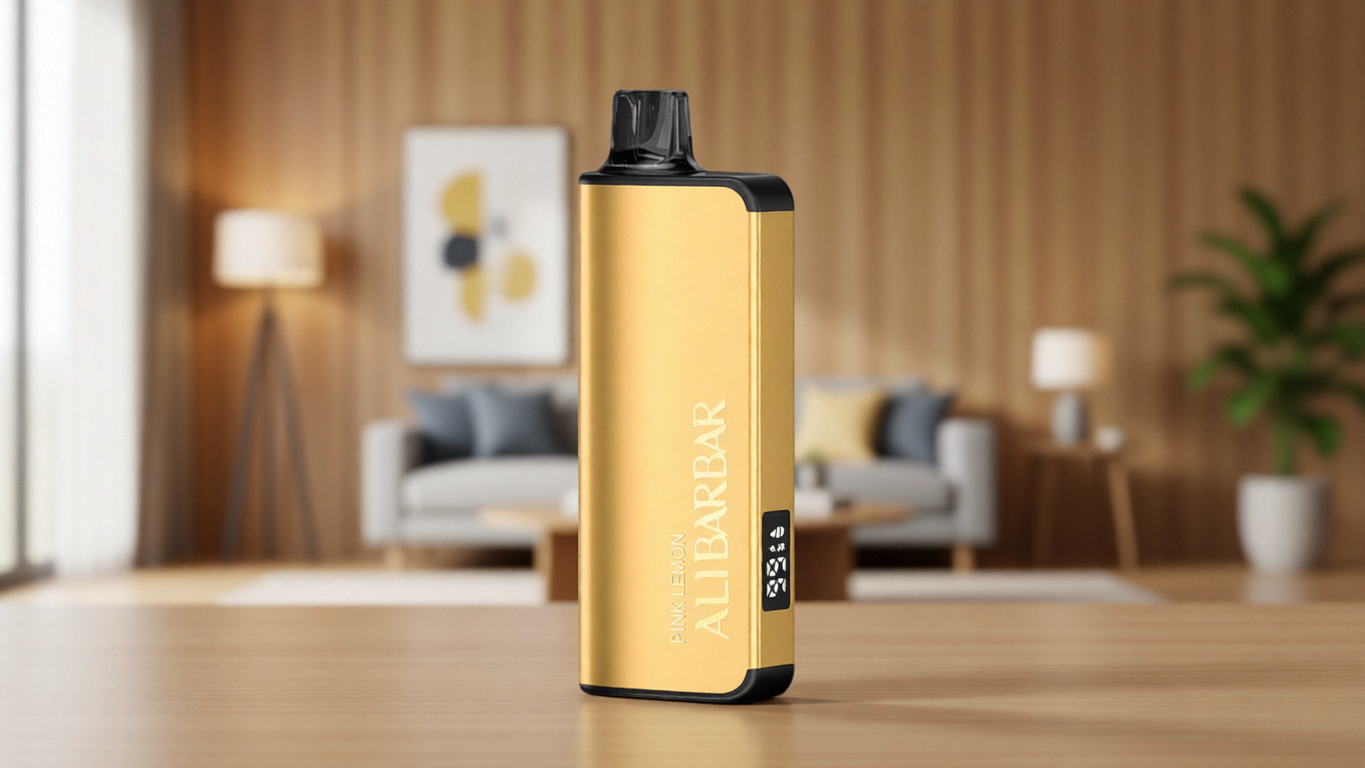
A sealed disposable unit or a pre‑filled pod system arrives ready to use. There is no separate liquid to handle, no filling port to leak, and no coil to prime incorrectly. The entire fluid path is assembled and quality‑tested at the factory. For a first‑time user, this removes the steepest part of the learning curve. The trade‑off, of course, is that once the liquid is consumed, the entire pod or device is replaced. That is an intentional design choice — not a flaw — and one that prioritises simplicity over long‑term running cost. Devices such as the ALIBARBAR INGOT 9000 and Ice Adjust 12000 illustrate this approach clearly: they are factory‑sealed, draw‑activated, and require nothing beyond removing packaging and inhaling.
Status Communication: LED Feedback and Why It Matters
A device that gives you no clue about its remaining charge or liquid level asks you to operate on trust alone. The better‑designed beginner devices communicate at least two pieces of information: a clear indication that the device has activated (a small LED that glows during a draw) and a low‑power warning (a colour change or blinking pattern). Without the latter, the device simply stops working mid‑thought, and the user — not unreasonably — assumes it is broken. Look for single‑colour indicators that shift from a steady state to a distinct flashing pattern when the cell is depleted. Elaborate screens are unnecessary for the first device; unambiguous, not‑to‑be‑ignored signals are essential.
Material and Ergonomic Considerations for the First Grip
A device that feels slippery, hot after a few pulls, or awkward against the lips will be set aside quickly. The first device should sit comfortably in the concave space between thumb and forefinger, and the mouthpiece should have a flattened, duck‑bill profile rather than a perfectly round cigarette‑diameter opening, because it distributes the contact pressure more evenly and feels less like a foreign object. Foods‑grade PCTG or similar polymers with a soft‑touch finish are common and, in practice, stay more pleasant over a long first session than hard‑gloss plastics or bare metal.
Matching These Engineering Realities to Real‑World First‑Time Needs
The discussion above can sound abstract until it is mapped onto the day‑to‑day situation of someone trying a device for the first time. Different first‑time users arrive with different anxieties, and the same device architecture serves each one differently.
The person who wants zero preparation and no visible parts. A factory‑sealed disposable like the ALIBARBAR INGOT 15000, with its draw‑activation and integrated battery, is designed for this scenario. There is one piece. There are no buttons. The LED on the bottom illuminates during use and signals depletion. You unbox it, you use it, you dispose of it responsibly when the light tells you it is finished. The engineering goal here is the removal of all friction, and the primary trade‑off is that the user does not have the option to recharge or refill.
The person who worries about running out of power mid‑day. Some disposable designs now incorporate a USB‑C charging port, allowing the integrated cell to be topped up before the liquid is exhausted. The ALIBARBAR Ice Adjust 12000, for example, includes this feature while remaining entirely draw‑activated and sealed. This configuration addresses the single largest complaint about older single‑use designs: the cell dying before the liquid does. The charge‑port is passive until you connect it; nothing about the draw experience changes whether it is fully charged or at half capacity.
The person who wants only a few puffs and then plans to set the device aside. Not every first‑time use case involves sustained daily consumption. A compact, lower‑capacity disposable may be the more appropriate choice here. The important factor is that the device must deliver consistent vapour quality from the first draw to the last. Good thermal management — typically a mesh coil with a generous wick‑to‑liquid contact area — ensures that the 50th puff tastes and feels the same as the 5th. When trying your very first device, you cannot yet know what degree of usage you will settle into, so a moderate size that doesn’t commit you to weeks of use is often the wisest, lowest‑pressure starting point.
The reason a retailer such as OZVAPE Shop dedicates detailed specification pages to each variant is not to sell more units but to make these comparisons possible before you ever handle a device. When you can see at a glance whether a unit offers recharging, what its rated puff count is, and what kind of draw activation it uses, the anxiety of choosing drops substantially.
A Practical Framework for Choosing and Using Your First Device
Here is a methodology you can follow, independent of any brand, to reduce the risk of a disappointing first encounter.
Decide your non‑negotiable. Is it the complete absence of buttons? A rechargeable battery? A particular size? Pick the one feature that would make you put the device down if it weren’t present.
Identify your tolerance for ambiguity. Are you comfortable interpreting a blinking LED, or do you need a display that spells out “low battery”? Most first‑timer‑friendly models use the former, and that is acceptable as long as you understand the pattern. If not knowing will cause you ongoing low‑grade stress, prioritise a device with a screen or a companion app — but understand that introduces another layer of electronics to manage.
Perform a pre‑use check. Before the first draw, hold the device upright. If it is a sealed disposable, there should be no liquid pooling where the mouthpiece meets the body, and no rattle. A faint rattle can indicate a loose component that may affect electrical continuity later. If you are using a device with a charging port, ensure the port cover, if any, closes flush.
Calibrate your inhalation. The single most common error made on a first draw is inhaling too sharply, as if pulling on a heavily obstructed cigarette. Modern devices with mesh coils have relatively open airflow; a slow, steady draw of 2–4 seconds fills the chamber properly without flooding the wick or inducing a harsh, thin vapour. If the device spits or crackles loudly for more than a second, you are likely drawing harder than the design intended. Ease off.
Watch the indicator during your first session. Glow while drawing? That means the circuit is active. Off when you stop? Normal. If the light blinks several times in quick succession between draws, check the manual — that is almost certainly the low‑power signal. If you are using a rechargeable unit, charge it before the cell is fully drained; partial charges prolong the electrochemical lifespan.
Record a single data point for yourself. After your first proper session, jot down a note: how many draws you took, how long the device lasted, whether you felt any throat irritation. This tiny habit anchors you in reality and prevents the swirl of online opinions from overwriting your own measured experience.
Common First‑Timer Errors and What They Teach Us About the Industry
Understanding what first‑time users routinely get wrong tells you as much about device design as it does about human behaviour. The following patterns are drawn from extended retail support data and industry observation.
Confusing price per unit with cost per use. A disposable that delivers 1,500 puffs for one price may appear cheaper than a pod system with separate refills — until you factor in that the pod system distributes its battery and circuitry across multiple consumable pods. First‑timers often choose the smallest, cheapest disposable and then find themselves replacing it every day, paying more over a week than they would have with a rechargeable, higher‑capacity disposable. This is not a device failure; it is a forecasting error. The industry has responded by making capacity‑focused disposables like the ALIBARBAR INGOT 15000 more widely available, but the user still needs to do the arithmetic.
Assuming that all “disposable” devices are of equivalent quality. The term “disposable” describes a form factor, not a performance standard. Differences in coil material (mesh vs. round wire), wicking density, and battery‑management firmware mean two devices with the same rated puff count can perform night and day differently. A mesh coil, for instance, heats more evenly and draws liquid from a larger surface area, which directly reduces the incidence of dry, burnt hits. First‑timers who have a bad experience with a cheap wire‑coil disposable often conclude that “vaping isn’t for me,” when in fact they were simply handed a badly engineered unit.
Ignoring nicotine delivery kinetics. A new user who takes ten rapid, deep draws on a device delivering high‑strength nicotine per puff may feel light‑headed, nauseated, or anxious. This is not a sign of an allergic reaction; it is an expected physiological response to a sudden spike in nicotine plasma levels. Beginners who have never consumed nicotine before should start with the lowest available strength or, if the device allows, a zero‑strength option, and pace themselves at one draw every 60–90 seconds. The industry’s shift toward draw‑activated, pre‑configured delivery systems has made it easier to maintain a steady intake profile, but the user still controls the frequency.
Underestimating the importance of mouthfeel. Vapour does not feel like smoke; it is denser and wetter, and it cools more slowly in the mouth. A first‑timer who expects a cigarette‑like sensation may overcompensate by drawing harder, which leads to coughing. A device with a tapered, ergonomic mouthpiece and a moderate airflow restriction yields a more forgiving introduction. This is a physical interaction, not a mystical one, and it deserves the same attention you would give to the fit of a pair of headphones.
Frequently Asked Questions
Q: I have never inhaled anything before. Is it dangerous to try vaping for the first time?
A: Inhalation of any foreign aerosol carries some degree of respiratory irritation. If you have no prior experience with inhaled substances, start with a single small puff, exhale fully, and wait several minutes. If you feel no irritation, proceed slowly. Using a device with a zero‑strength aerosol is the lowest‑risk way to learn the physical technique.
Q: What nicotine strength should I choose as a complete beginner?
A: For a person with no prior nicotine exposure, zero‑strength or the lowest available strength (often labelled as 20 mg/ml or “low” on pre‑filled disposables) is the most conservative starting point. Even at that level, the sensation of the vapour itself may be enough to satisfy the ritual. Adjust only after you know how your body responds.
Q: How do I actually inhale from a vape device?
A: Do not inhale directly into the lungs as you would from a deep‑breathing exercise. Instead, draw the vapour into your mouth first (as if sipping from a straw), hold it there briefly, then either inhale it shallowly into the lungs or exhale it through your nose or mouth. This mouth‑to‑lung technique reduces the intensity of the throat hit and gives you better control.
Q: The device blinks three times when I try to use it. What does that mean?
A: On most draw‑activated disposables designed for beginners, a blinking LED — especially a quick succession of three to five blinks — signals that the internal battery voltage has fallen below the operational threshold. If the device has a charging port, connect it; if it does not, the unit is depleted and should be responsibly recycled.
Q: My device tastes burnt after only a few puffs. Is it defective?
A: A burnt taste almost always means liquid is not reaching the heating surface fast enough. This can happen if you chain‑puff rapidly without allowing the wick to re‑saturate. Wait 20–30 seconds between draws. If the burnt taste persists, the coil may have been damaged during manufacturing or shipping, and the unit should be replaced.
Q: How long should a disposable last for a first‑time user?
A: There is no fixed answer because individual draw lengths vary widely. A device rated for 3,000 puffs might serve a light, occasional user for two weeks or more, while a heavy daily user might exhaust it in a few days. Use the LED depletion signal as your guide, not a calendar.
Q: Can I refill a disposable device?
A: No. Disposables are sealed at the factory. Any attempt to refill can introduce contaminants, damage the internal electrical connections, and create a serious safety hazard. Once the liquid is consumed, the whole unit is meant to be replaced.
Q: I felt dizzy after a few puffs. Should I be concerned?
A: Dizziness is a common sign of nicotine over‑absorption. Stop using the device, sit down, drink a glass of water, and wait. The sensation usually passes within 10–15 minutes. In future sessions, take slower, shorter draws, and increase the interval between them.
Q: What do I do if liquid leaks from the mouthpiece?
A: A tiny amount of condensation is normal with repeated use. If you see actual droplets, hold the device upright and gently tap the mouthpiece side against a tissue. Do not blow air back into the device — that can force liquid further into the airway and reach the electronics. If leaking is persistent, the device’s internal seal may have been compromised during transit.
Q: I am overwhelmed by the choices. Is there a single “safest” first device?
A: There is no universal answer because individual preferences vary, but a sealed, draw‑activated, pre‑filled device with a visible battery indicator and a charging port strikes the best balance between simplicity and forgiveness. Such a device requires no manual dexterity beyond removing the packaging, gives clear feedback, and does not strand you if the charge runs low before the liquid does.
A Calm, Informed First Step
The first time you vape is a brief, private interaction between you and a small piece of electronic hardware. The industry’s tendency to wrap that moment in hype or anxiety does users a disservice. The engineering is straightforward. The variables that matter — draw speed, coil architecture, status feedback — are knowable and controllable. When you understand what the device was built to do, and you match it to a realistic expectation of your own patience and routine, the experience becomes unremarkable in the best sense: it just works, quietly, without drama.
Organised, transparent information turns a wall of options into a manageable choice. That is why we structure the product specifications at OZVAPE Shop to let you isolate the variables that actually affect your first hour of use. No two first‑time users are identical. The right device is not the one with the most enthusiastic claims, but the one whose architecture aligns with the way you intend to live with it tomorrow morning, and the morning after that. Start there.