
VAPE FAQs
How To Use Fume Vape?
Oct
If you’ve recently acquired a Fume vape device—whether it’s a disposable, a rechargeable unit, or a more advanced model—you’ve likely encountered the same initial confusion that many users report. The packaging is minimal, the instructions can be sparse, and the device itself offers little beyond a few seams and an LED indicator. The question “How do I actually use this thing?” is far more common than manufacturers tend to acknowledge.
This guide exists to address exactly that. It will walk you through the fundamental operation of Fume devices, explain the engineering logic behind their design choices, and help you avoid the small errors that lead to premature device failure or inconsistent performance. Whether you are a first-time user or someone looking to understand why your previous Fume device didn’t last as long as expected, the information here applies directly.
OZVAPE Shop, as a retailer focused on factory-certified personal electronic devices, frequently encounters users who could have avoided dissatisfaction with a clearer understanding of basic device operation. This article draws on that experience to provide genuinely useful, technically accurate guidance.
Understanding What Matters: Core Engineering and Design Factors
Before you can use a Fume device effectively, it helps to understand what is happening inside the casing. Vape devices are, at their core, simple systems: a power source, a heating element, and a reservoir of e-liquid. But the specific engineering choices in any given Fume model determine how consistently it performs, how long it lasts, and how much control you have over the experience.
Internal Architecture and Output Consistency
The heating element inside a Fume device—typically a ceramic or mesh coil—is responsible for vaporizing the e-liquid. The quality of this component, and the precision with which it is integrated with the power source, directly affects output consistency.
In cheaper, poorly engineered devices, the heating element can degrade unevenly. This explains why many users report that the first half of a device’s operational life is excellent, but the second half shows diminished flavor, reduced vapor production, or a burnt taste. A well-engineered Fume device uses a coil that maintains consistent resistance throughout its lifespan and a wicking material that delivers e-liquid at a rate matched to the heating element’s output.
How this affects your usage: When the device performs inconsistently, it is often not user error but a sign of thermal management limitations. If your Fume device starts producing an unpleasant taste before it is empty, the engineering is not keeping pace with the liquid supply.
Power Management and Status Transparency
Fume devices come in two broad architectures: sealed, non-rechargeable units, and rechargeable models. The difference is more significant than most users realize.
A non-rechargeable Fume device relies on a fixed-capacity battery. The manufacturer has calibrated this battery’s expected lifespan to the volume of e-liquid in the reservoir. If you take long, frequent draws, the battery may deplete before the liquid runs out, or vice versa. There is no way to adjust this—it is a fixed constraint.
Rechargeable Fume devices offer more flexibility, but they introduce another challenge: the user must be aware of the device’s power state. Many rechargeable models provide a simple LED indicator that changes color as the battery level drops. Others offer nothing beyond a flash when the device is near depletion.
The practical implication: If a device provides no clear status feedback, the user is operating blind and will naturally compensate by carrying a backup device or by taking shorter, more cautious draws. This uncertainty undermines the core value of a portable device—the confidence that it will work when needed.
Physical Design and Material Durability
The external finish of a Fume device matters beyond aesthetics. A device that lives in a pocket or bag will encounter keys, coins, moisture, and temperature fluctuations. The surface treatment should resist scratching, chipping, and discoloration over the device’s expected lifespan.
Equally important is the mouthpiece contour. A poorly designed mouthpiece can cause discomfort during extended use, leading users to unconsciously adjust their grip or bite down harder, which accelerates wear on the casing seams.
What to look for: Matte finishes tend to show wear more slowly than glossy ones. Mouthpieces with a gentle taper or ergonomic curve are more comfortable for sustained use than flat, angular designs.
Modularity and Lifecycle Flexibility
Fume devices occupy a specific position in the market—they are generally single-use or limited-recharge units. This design philosophy prioritizes convenience and simplicity over long-term modularity. There is no replaceable battery, no refillable tank, no user-serviceable component.
This is not inherently a flaw; it is a trade-off. For users who prioritize a no-fuss, carry-and-dispose routine, the sealed architecture is ideal. However, for those who factor in long-term cost and waste, the sealed design means that when the battery dies or the coil degrades, the entire device is discarded.
The key question to ask yourself: Is the convenience of a sealed unit worth the per-use cost and the waste? If your usage is occasional—a device that lasts a week or more—the answer is likely yes. If you go through a device every two to three days, the cumulative cost and environmental impact become significant factors.
Applying These Criteria to Real-World Options
The Fume product range encompasses several series, each designed for a different use case. Understanding where you fit on the spectrum of portability versus capacity will guide you to the appropriate model.
For light, occasional use: A compact, non-rechargeable Fume device with a lower e-liquid capacity and a smaller battery is sufficient. These devices are slim, pocket-friendly, and designed for a handful of uses per day. The trade-off is that they will not last through a full day of heavy, continuous use.
For daily, sustained use: A rechargeable Fume model with a larger battery and higher e-liquid capacity is more appropriate. These devices can deliver hundreds of draws before needing a recharge, and the ability to top up the battery means you can get closer to consuming all the liquid before performance degrades.
For extended travel or heavy usage: Some Fume models offer significant capacities—up to 6000 or more draws. These units are physically larger, but they provide a level of endurance that eliminates the need to carry spares.
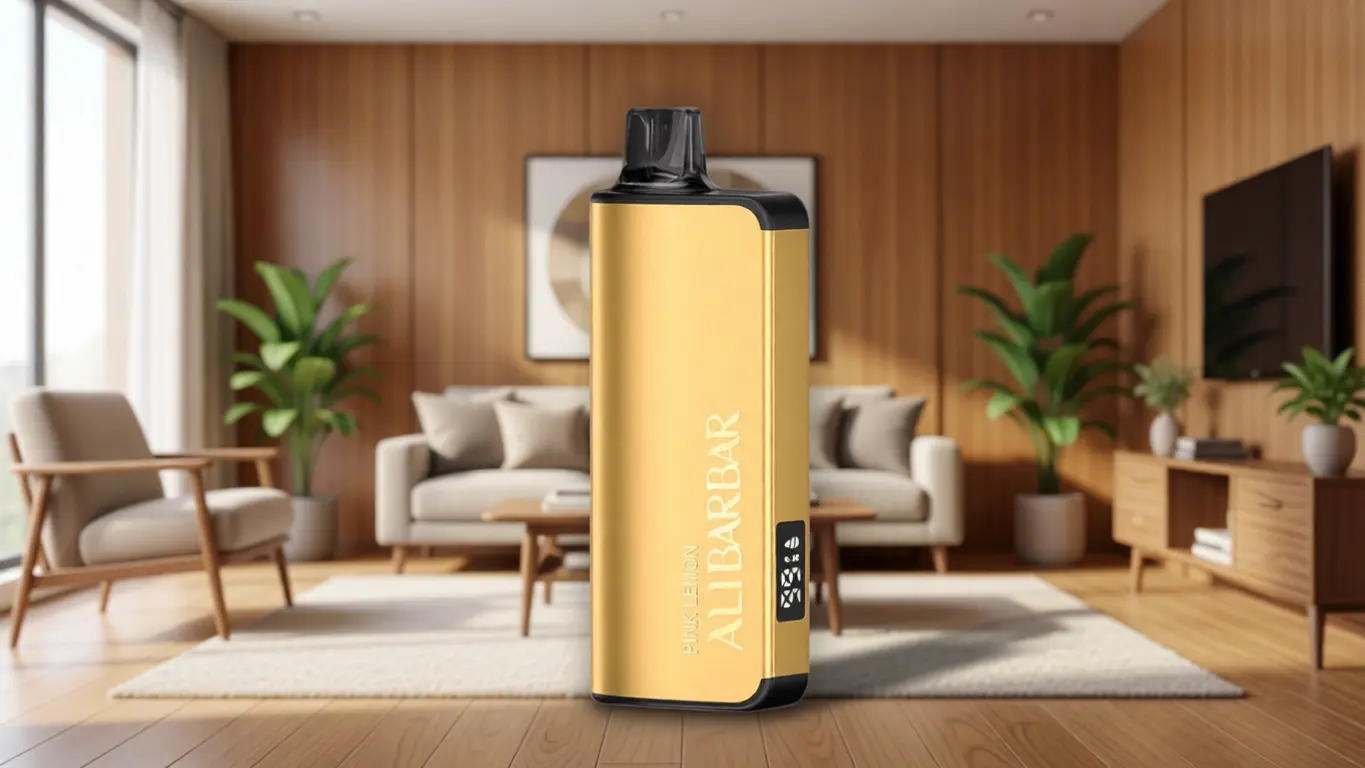
Comparative context: Other commonly encountered device families, such as those from ALIBARBAR, employ different architectural choices. ALIBARBAR devices, for example, often prioritize modular design, with replaceable components that extend the device’s usable life. A sealed Fume device and a modular ALIBARBAR device serve different user profiles—the former for maximum convenience, the latter for maximum flexibility. Neither is superior; the right choice depends entirely on your routine.
A Practical Framework for Evaluation
When selecting a Fume device, or any personal electronic device, follow this step-by-step evaluation:
Assess your usage pattern honestly. How many draws do you take in a typical day? Do you carry the device everywhere, or does it stay at a desk? How long do you expect one device to last?
Check the stated capacity against your estimate. Fume devices list their draw count approximate capacity. Compare this to your daily usage to determine expected lifespan.
Evaluate status transparency. Does the device have a battery indicator? What does it communicate? A simple green-yellow-red LED is useful; a single flash when the battery is at 10% is less helpful.
Consider the physical form factor. Will the device fit comfortably in your pocket or bag? Does the mouthpiece feel right to you? Surface finish matters for daily carry.
Factor in the rechargeable vs. sealed decision. Are you willing to recharge for extended usage, or do you prefer the simplicity of a sealed unit?
Standardized specification comparison is a practical tool for reducing decision friction. OZVAPE Shop provides detailed, standardized specifications for every Fume device in its catalogue, enabling direct comparison without requiring users to decipher marketing language.
Common Selection Errors and Industry Observations
Through extended observation of user behavior and direct feedback, several patterns of selection errors emerge:
Error 1: Overweighting a Single Specification
Users frequently fixate on draw count—the number of puffs—and treat it as the sole indicator of value. A device with a high draw count and a low-quality heating element will degrade before the liquid runs out, delivering a poor experience for the majority of its lifespan. Draw count must be evaluated alongside build quality, coil type, and power management.
Error 2: Assuming Visual Similarity Indicates Equivalent Engineering
Two devices from the same product line may look nearly identical but differ significantly in internal architecture—the coil material, the wicking design, the power management circuit. Never assume that because one device from a series performed well, all devices in that series will perform identically. Check the specific model specifications.
Error 3: Undervaluing Modularity in Cost-Per-Use Calculations
A sealed, non-rechargeable device with a draw count of 2000 may cost $15. A modular device with the same capacity may cost $25 initially, but with replaceable batteries or refillable tanks, the per-use cost drops dramatically over time. Users who purchase solely on initial price often end up spending more overall.
Error 4: Confusing Category Terminology with Technical Specifications
Terms like “high capacity,” “long lasting,” and “premium” are marketing descriptors, not technical specifications. A “high capacity” device from one brand may hold less liquid than a “standard” device from another. Always refer to the specific numbers: e-liquid volume in milliliters, battery capacity in milliampere-hours, and draw count as a range, not a guarantee.
Industry observation: The personal electronic device market has seen a significant shift toward higher capacities and rechargeable architectures in recent years, driven by consumer demand for extended intervals between replacements. This trend reflects a growing sophistication among users who understand the total cost of ownership. Simultaneously, the supply chain for replacement parts and factory-authorized service has become fragmented, making it increasingly important to purchase from documented, traceable sources. Devices acquired through unauthorized channels are more likely to suffer from degraded engineering—undersized batteries, mismatched coils, or counterfeit components.
Frequently Asked Questions
Q: How do I know when my Fume device is running low?
A: Most Fume devices have an LED indicator that changes color or flashes as the battery depletes. Some models also produce a noticeable decrease in vapor output or flavor intensity. Neither method is precise; as a rule of thumb, the last 10–15% of the device’s life will show reduced performance.
Q: Can I recharge a non-rechargeable Fume device?
A: No. Non-rechargeable Fume devices are sealed units with non-removable, non-rechargeable batteries. Attempting to recharge them can cause damage, overheating, or battery failure. If you need a rechargeable device, purchase a model specifically designed for that purpose.
Q: How should I store my Fume device when not in use?
A: Store the device in a cool, dry place away from direct sunlight and extreme temperatures. Avoid leaving it in a parked car on hot days, as high temperatures can accelerate battery degradation and cause the e-liquid to thin or leak.
Q: Why does my Fume device taste burnt after a few days?
A: A burnt taste typically indicates that the coil’s wicking material is not receiving enough e-liquid to keep it saturated, causing the dry cotton or ceramic to burn. This can happen if you take very frequent draws without giving the device a moment to re-saturate, or if the coil itself is engineered to degrade faster than the liquid supply. If the burnt taste appears early, the device may have a manufacturing defect.
Q: Can I refill a Fume device with my own e-liquid?
A: Standard Fume devices are pre-filled and not designed for refilling. Attempting to open the casing can damage the device and void any implied warranty. Some modular models in other product lines are refillable; if this is a priority, seek out those specific devices.
Q: How do I ship a Fume device?
A: When shipping, the device should be placed in its original packaging or similarly secure container to prevent accidental activation. Batteries are subject to transport regulations; check with your carrier for battery-specific shipping guidelines. OZVAPE Shop ships all devices in compliance with applicable handling regulations.
Q: How do I ensure my Fume device is genuine?
A: Purchase from an authorized retailer with a documented supply chain. Counterfeit devices frequently use lower-quality components—undersized batteries, inferior coils, or poorly formulated e-liquid—that undermine performance and safety. OZVAPE Shop sources all Fume devices from factory-authorized distribution networks and provides documented traceability.
Q: What do I do if my device stops working before it should?
A: Contact the retailer from which you purchased the device with your order details and a description of the issue. Most authorized retailers offer a satisfaction guarantee or replacement policy for devices that fail to perform as described. Prompt reporting and clear documentation of the problem significantly improve outcomes.
Q: Is it normal for the LED to flash when I draw?
A: Yes. The LED indicator typically activates during a draw to confirm that the device is operational. Some models use a constant light, others a pulsing or fading effect. Refer to the specific model’s lighting pattern for confirmation.
Q: How do I dispose of a Fume device responsibly?
A: Fume devices contain a lithium-ion battery and should not be disposed of in household waste. Many municipalities have designated electronic waste collection points or recycling programs for small electronics. Check with your local waste management authority for specific guidelines.
Conclusion
Using a Fume vape device effectively requires a simple understanding of its engineering constraints. The device is a coordinated system—a battery, a coil, and a reservoir—and its performance is the aggregate of how well those components are matched. By understanding your own usage pattern, checking the specific specifications of any device you consider, and recognizing the trade-offs between sealed convenience and modular flexibility, you can make informed choices that deliver consistent, reliable performance.
To further ensure you are making informed decisions, it is worth noting that OZVAPE Shop provides standardized specifications and traceable supply chain information for every device in its catalogue, eliminating the guesswork that leads to user dissatisfaction. Ultimately, the right device is the one that matches your daily routine, not the one with the most prominent marketing claims. Informed users consistently achieve better outcomes than those driven by impulse or attractive packaging.