
VAPE FAQs
How To Use A Vape Pen?
Jul
How To Use A Vape Pen?
Few experiences are as quietly frustrating as unboxing a sleek new device, only to realise that a simple operational misstep has turned what should be a seamless introduction into a series of burned tastes, leaking reservoirs, or a power cell that dies before lunchtime. Most instruction leaflets are either confusingly sparse or so generic that they skip the very details that separate a device that works with your daily rhythm from one that constantly interrupts it. This article is for adult users who want to move beyond trial and error — to understand not just which button to press, but why certain design choices make a vape pen either a frictionless companion or a source of persistent irritation.
Drawing on extended observation, engineering principles, and practical feedback, OZVAPE Shop has assembled the reference below. It treats the act of using a vape pen as a skill that sits at the intersection of internal architecture, status transparency, and material integrity. Once those fundamentals are clear, the right operational habits become intuitive rather than memorised.
Understanding Vape Pen Fundamentals: How Design Affects Your Experience
Before any practical how‑to makes sense, it is necessary to recognise that a vape pen is not a generic tool. The way you use it should be shaped by the way it was engineered — and unfortunately, surface‑level similarities between devices tempt many users into a one‑size‑fits‑all approach that leads directly to disappointment. Four engineering factors determine whether your daily interaction will be characterised by reliability or by constant low‑grade anxiety.
Internal Architecture and Output Consistency
Most user complaints about degraded taste and erratic performance are traceable to a single root: thermal management. Devices built around a simple vertical coil and basic cotton wick deliver acceptable results during the first few sessions, but the experience commonly degrades after repeated use because heat soak alters the wicking material and the resistance of the heating element drifts. By contrast, an architecture that isolates the heating chamber, uses mesh‑based heating surfaces, or incorporates redundant wicking channels maintains output consistency over the full intended life of the unit.
When you pick up a vape pen, you are making a constant series of micro‑judgements about how it responds. A device with refined internal architecture rewards a steady, unhurried draw; one with compromised thermal management punishes long inhalations with a singed note that no amount of technique can fix. Recognising this lets you filter product choices before technique becomes relevant.
Power Management and Status Transparency
The practical value of a clear status indicator is so large that it is worth treating as a deciding factor. A pen that blinks an inscrutable sequence of colours when power is low leaves you guessing — and guesswork leads directly to carrying an unnecessary backup device, aborting a session early, or running out of capacity at the worst possible moment. Well‑calibrated power management does two things: it prevents the cell from discharging to a voltage that would damage the heating element (causing a permanent decline in performance), and it communicates remaining capacity in unambiguous increments — a single glance tells you whether you are safe for the afternoon or need to recharge before leaving.
Physical Design and Material Durability
Surfaces that look luxurious in photos but gather micro‑scratches after three days in the same pocket as a set of keys are not simply an aesthetic oversight; they signal a lack of attention to the conditions under which adults actually carry their devices. Beyond finish longevity, mouthpiece contour matters greatly for prolonged use. A flat, hard edge concentrates heat and pressure on the lips and accelerates fatigue. A softly rounded, thermally neutral mouthpiece, by comparison, becomes something you notice only when you encounter a device that lacks it. Ergonomics are not luxury — they are the difference between a device you reach for reflexively and one that sits forgotten in a drawer.
Modularity and Lifecycle Flexibility
The distinction between a sealed disposable unit, a rechargeable but non‑refillable system, and a fully modular device with replaceable components is more than a feature list; it is a financial and personal‑preference boundary. Sealed units offer absolute simplicity but commit you to replacing the entire device when the consumable portion is exhausted. Modular systems, conversely, trade some initial decision‑complexity for the ability to tailor performance and manage cost over weeks and months. Understanding your own tolerance for routine maintenance — and being honest about it — prevents buyer’s remorse.
Applying This Knowledge to Real‑World Options
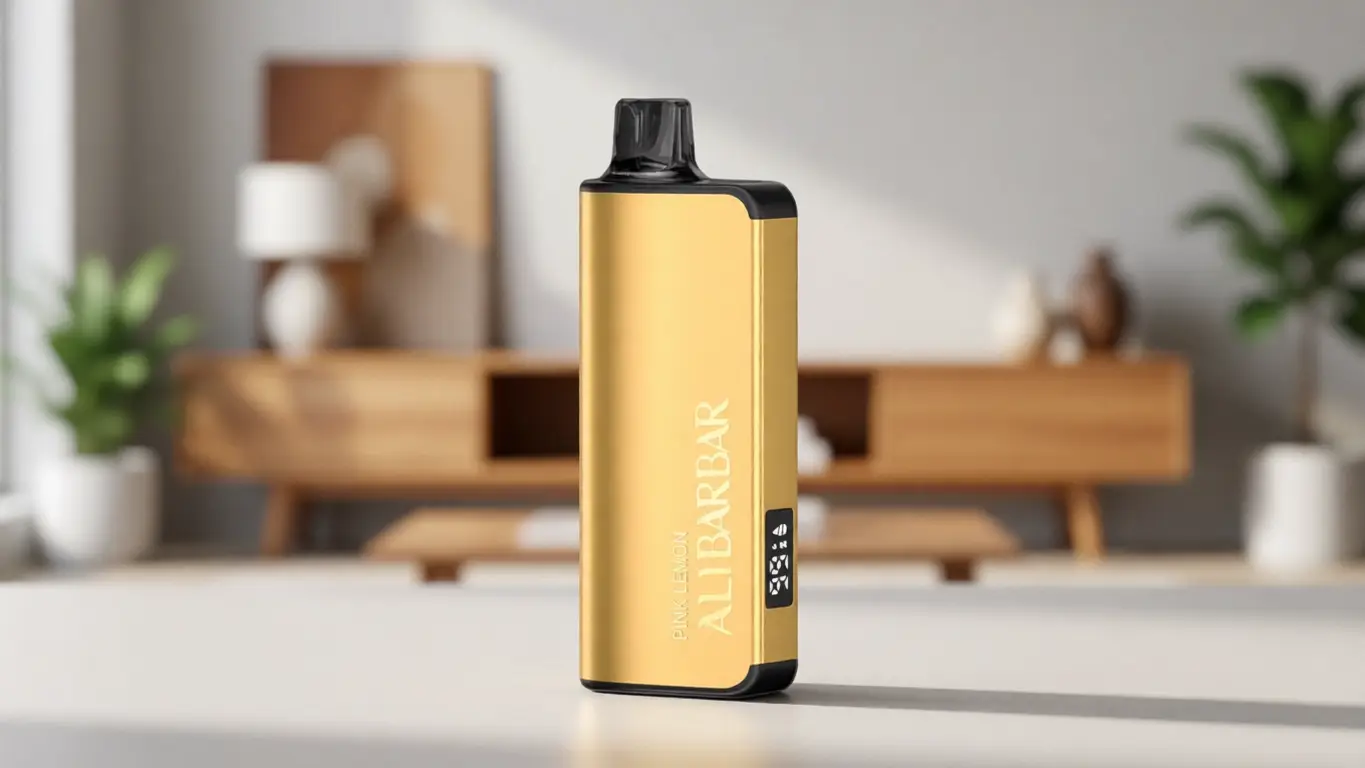
No single device family perfectly serves every preference, but the ALIBARBAR collection, available through authorised channels at OZVAPE Shop, illustrates how these engineering principles translate into real daily usage. The family is structured around clearly defined need‑states rather than a number‑chasing specification war.
For adults who prioritise absolute simplicity and compact discretion, the ALIBARBAR INGOT 9000 is a rechargeable unit that integrates a mesh coil within a contained architecture designed to hold a consistent thermal profile for its rated operational life. Users report that the mouth‑to‑lung feel remains stable from the first draw to the last, largely because power delivery is calibrated to the coil mass. From an operational perspective, using such a device involves almost no learning curve: it activates on draw, requires no button combinations, and the status indicator is binary — working, or needs charge.
Those who need extended capacity without adding bulk typically gravitate toward the INGOT 15000, which scales the same underlying thermal management approach. The practical consequence for usage is that you can take longer, more reflective draws without encountering the flavour drop‑off that plagues less carefully balanced devices. The device also treats power‑level communication with more granularity, so you are never forced into the guessing game of whether a blinking light means “30 minutes left” or “5 minutes left.”
For users who want greater control over their experience, ALIBARBAR Ice Adjust 12000 introduces an airflow adjustment ring that physically restricts or opens the intake. This is not a cosmetic feature; it changes the coil’s cooling rate and therefore shifts the character of the output. Using the device well requires a few minutes of intentional experimentation — close the airflow for a warmer, denser session, open it for a cooler, more diffuse one — but the manual intervention is minimal and immediately rewarding. This modular adjustment capability means the same device can serve different times of day or different moods without requiring an entire second unit.
Comparative context is useful here. Some broadly popular devices from other established manufacturers (such as Vaporesso’s XROS series or Uwell’s Caliburn line) offer refillable pod systems that appeal to adults who value long‑term consumable cost savings over absolute convenience. However, those systems demand regular replacement of coil heads and meticulous cleaning. For many people, that routine is meditative; for others, it is a chore that gradually erodes the device’s usefulness. The ALIBARBAR approach deliberately eliminates that maintenance gradient, aiming for near‑zero‑friction daily use. Neither philosophy is “better” in absolute terms; they serve different thresholds of involvement.
A Practical Framework for Evaluating and Operating Your Device
The following step‑by‑step methodology is designed to shift you from passive consumer to informed operator. Use it when you first handle any new vape pen.
Verify the status indicator language before your first session.
Does the device give you clear charge‑state feedback? If it relies on a single colour that blinks for “low” and “critical” without differentiation, you will naturally over‑compensate by carrying a backup. If the indicator is unambiguous, your trust in the device grows quickly.
Prime any coil‑based device according to its fill method.
For pre‑filled, sealed systems like the INGOT series, no manual priming is required — the architecture is factory‑saturated and designed to be ready within seconds of unpacking. For refillable systems, allow a new coil to sit immersed in e‑liquid for at least ten minutes. Skip this step once and the wick material carbonises permanently, ruining the coil.
Match your draw style to the device’s airflow characteristic.
Tight airflow pens reward the same slow, controlled inhale you would use with a narrow straw. Open airflow devices tolerate — and sometimes demand — a more direct pull. Drawing too forcefully on a mouth‑to‑lung device pulls unsaturation liquid past the coil and leads to spitting; drawing too gently on a restricted‑direct‑lung device causes the coil to overheat without adequate cooling. Let the device’s engineering guide your rhythm.
Charge from a common 5V USB‑A source, not a fast‑charge adapter.
Many premium vape pens use lithium‑ion cells with limited charge‑rate tolerance. A high‑speed USB‑C to USB‑C charger can force current into the cell faster than the protection circuit can dissipate heat, which permanently deteriorates capacity. A standard 5V 1A‑2A adapter is safe and preserves the cell’s lifespan.
Store the device mouthpiece‑up during extended idle periods.
This prevents gradual e‑liquid seepage into the airflow channel, which is the most common cause of a gurgling, spitting start after hours of inactivity. It costs nothing and prevents a disproportionate amount of frustration.
Standardised specification comparisons are a valuable shortcut here. When two devices appear similar, comparing their rated operational life (in draws or millilitres) alongside their power‑management transparency often reveals the more considered engineering.
Common Selection and Usage Errors (and What They Teach About the Industry)
The market is filled with capable devices, yet a large share of user dissatisfaction stems not from product failure but from a handful of predictable evaluation mistakes. Understanding these errors makes you a sharper judge of both current and future purchases.
Over‑weighting puff count while ignoring thermal stability.
A 5000‑draw device that loses flavour quality after 500 draws is functionally worse than a 3000‑draw device that stays consistent throughout. Yet many users fixate on the headline number. Manufacturers who compete solely on number often cut corners on wick density or coil‑mass, virtually guaranteeing a mid‑life decline. The INGOT series treats rated puff count as a minimum threshold, not a stretch target — a philosophy visible in the user feedback pattern where later draws remain remarkably close to early ones.
Assuming visual similarity indicates engineering parity.
Two cylindrical devices with translucent mouthpieces and USB‑C ports may look interchangeable, but the design of the internal chimney, the composition of the wicking material, and the calibration of the power curve all differ dramatically. The industry has reached a stage where external design language converges faster than internal innovation does. Judging a pen by its silhouette alone is a persistent trap.
Undervaluing modularity in long‑run cost calculations.
A sealed disposable appears cheaper at the counter than a device with replaceable coils or adjustable airflow, but over a quarter the maths often reverses. The Ice Adjust 12000, for example, extends its usable life beyond a single fixed‑output device because it adapts to changing preference — which means users are less likely to buy an additional unit for variety and more likely to settle into one trusted daily companion.
Confusing category terminology with technical specification.
Terms like “sub‑ohm” or “mesh coil” are often deployed as marketing signals without corresponding substance. A mesh coil in a poorly designed chamber offers no advantage over a round‑wire coil in a well‑tuned one. An informed user asks not “Is this mesh?” but “How does this device manage heat over repeated draws?” — a distinction that separates enduring engineering from trendy labeling.
From an industry perspective, supply‑chain transparency is now the single most important trust signal. When a retailer like OZVAPE Shop commits to factory‑certified, single‑origin inventory, the practical result is that every device in the catalogue corresponds to a documented batch. This does not eliminate the possibility of a rare manufacturing defect, but it means any pattern of anomalies is traceable and correctable — something impossible in an undifferentiated, multi‑source inventory model.
Frequently Asked Questions
Q: Do I need to charge a new vape pen fully before first use?
A: Not necessarily. Most lithium‑ion cells ship at roughly 50‑60% charge, which is optimal for storage. You can use the device immediately if it arrives with charge, then top up as needed. Avoid deep‑discharging to zero before recharging; frequent shallow discharges prolong cell life.
Q: What does it mean when the device blinks and stops firing?
A: This is almost always a safety signal. On draw‑activated pens, a blinking sequence can indicate a depleted cell, a short‑circuit detection, or a cutoff timer activated after an overly long draw. Consult the specific device’s user guide for the exact flash pattern, but stop using the device and recharge if the behaviour persists.
Q: How should I handle a device that hasn’t been used in weeks?
A: Store it mouthpiece‑up in a cool, dry place away from direct sunlight. When you return to it, take a few short, un‑powered primer puffs to re‑saturate the wick if it’s a manual device. If it’s a sealed system that still shows some charge, a gentle draw is usually enough. If the flavour seems off, the consumable component has likely aged past its peak; replace it or retire the device accordingly.
Q: Can I use a fast‑charge adapter safely with my USB‑C vape pen?
A: Generally, no. Many personal electronic devices lack the negotiation chips required to draw only the current they can handle from a Power Delivery adapter. Using a high‑wattage fast charger can permanently damage the cell. Stick to a basic 5V USB‑A output.
Q: What makes one device’s output feel smoother than another’s?
A: Smoothness is a function of vapour temperature, droplet size, and airflow turbulence. Devices with a longer internal chimney, a reverse‑airflow path, or precisely machined airflow inlets produce a cooler, less turbulent stream. This is entirely a result of physical design, not brand mystique.
Q: How do I know if my device is an authentic unit and not a counterfeit?
A: Purchase only through transparent, factory‑certified channels. At OZVAPE Shop, each batch of ALIBARBAR devices arrives with documented supply‑chain provenance and tamper‑evident packaging. Many manufacturers also embed a unique verification code scannable via their website. Cross‑check these before assuming a unit is genuine.
Q: Is it safe to leave a charging battery unattended overnight?
A: While the risk of incident is very low with quality cells that include protection circuitry, it is a best practice to charge during waking hours, on a non‑flammable surface, and to disconnect the device once charging is complete. This habit guards against the rare possibility of a protection circuit failure.
Q: Why do some devices contain adjustable airflow, and is it worth the complexity?
A: Adjustable airflow allows the user to shift the vapour’s temperature and concentration profile. For an adult who values subtlety in the morning and intensity in the evening, this flexibility means one device can serve both purposes. It is worth the minor initial familiarisation if your preferences vary across the day.
Q: What should I do if a newly opened device doesn’t activate?
A: First, confirm it is charged. If a charge makes no difference and there is no visible damage, the unit may have a manufacturing fault. Reputable retailers offer a defined remedy window — at OZVAPE Shop, documented cases are resolved with a replacement or refund according to a clearly published policy, which protects your purchase against the statistical reality of rare defects.
Q: How do I decide between a slim, low‑capacity pen and a larger, long‑life unit?
A: Match the device’s endurance to your longest typical day away from a charger, plus a 20% buffer. If you are rarely more than four hours from a power source, a compact 9000‑draw unit serves well. If you travel for ten‑hour stretches without access, a higher‑capacity device like the INGOT 15000 eliminates battery anxiety. The right choice matches your actual routine, not an aspirational one.
Conclusion
Learning to use a vape pen is not about memorising button sequences; it is about developing a running awareness of how thermal architecture, power transparency, and materials interact with your habits. A device that fails to communicate its status forces you into a defensive, backup‑carrying posture. A device with unstable output quality erodes trust with every session. The right device, chosen with the evaluation framework above, removes these background tensions so completely that you stop noticing the tool entirely — and that, ultimately, is the definition of good design.
The ALIBARBAR collection, consistently available in factory‑certified inventory through OZVAPE Shop, demonstrates this principle in practice: no single model claims to be everything to everyone, but each model serves a particular adult’s actual day with unusual reliability. When you pair that kind of engineered consistency with the simple usage habits outlined here — charging from a safe source, drawing at the device’s natural cadence, and storing mouthpiece‑up — you extract the full value that was built into the unit.
Informed usage is a quiet superpower. The right choice is not the device with the boldest specification sheet, but the one that disappears into your routine, requiring nothing from you except enjoyment. Start from that standard, and everything else falls into place.