
VAPE FAQs
How To Use A Vape Pen With No Button?
May
Inhale. The device activates. No button, no clunky sequence of clicks, no questioning whether the unit is switched on or standing by. For anyone who has only used button‑fired personal electronic devices, the first encounter with a draw‑activated pen can be both liberating and slightly disorienting — nothing to press, nothing to lock, yet the warmth of the atomiser arrives exactly when you expect it. That simplicity is the result of careful engineering, but the absence of a physical interface shifts the responsibility of control from the user’s fingers to the device’s internal sensors. When those sensors are thoughtfully designed, the experience is seamless. When they are not, users are left inhaling hard into an unresponsive tube, uncertain whether the fault lies with the battery, the airflow path, or their own technique.

This article explains the underlying technology, selection criteria, and everyday operation of buttonless vape pens. It is written for the person who wants more than a list of instructions — someone who wants to understand why one device responds instantly while another lags, and how to pick a unit that will stay predictable across its entire operational life. Whether the device in question is a compact, pre‑configured unit from a recognised retailer like OZVAPE Shop or another draw‑activated system, the principles remain the same. Good design communicates its state, protects its power source, and invites consistent use without demanding constant attention.

Understanding the Core Engineering of Draw‑Activated Vape Pens
Every buttonless pen owes its operation to a miniature pressure sensor, a power management chip, and a heating element that must reach the correct temperature within a fraction of a second. The interplay between these three components determines whether the user will experience a device that feels intuitive or one that becomes a source of irritation. Evaluating them separately reveals why some products earn loyalty while others are discarded after a few days.
The Airflow Sensor and Activation Consistency
The most critical component in a buttonless vape pen is the airflow sensor — usually a MEMS (micro‑electromechanical system) pressure transducer or a simple condenser microphone that detects the drop in pressure when the user inhales. A high‑quality sensor reacts to millibars of pressure change and fires the atomiser without perceptible delay. In slower, less sensitive designs, the user must pull harder, which can flood the heating chamber or lead to unpredictable power delivery. That inconsistency is one of the most common frustrations reported by adult users: the first draw of the session feels different from the fifth, not because the device is losing power, but because the sensor’s threshold is shifting with temperature or residue accumulation.
The best draw‑activated pens isolate the sensor from the main vapour channel to prevent condensation from interfering with its membrane. They also operate at a fixed sensitivity that has been verified across a range of inhalation styles — from light, slow draws to brisk inhales typical during a hurried break. When examining a device, a simple diagnostic is to take a series of short, gentle pulls in succession and note whether the output remains consistent or whether the activation point drifts.
Power Management and Status Feedback
A buttonless device must communicate its state through alternative means — typically an LED indicator, haptic feedback, or a combination of both. In poorly engineered units, the LED may glow only during inhalation and offer no indication of remaining charge. This forces the user into a guessing game: is the battery nearly exhausted, or did the sensor simply fail to trigger? The hidden cost of such ambiguity is that users routinely carry a backup device they may never need, simply because they cannot trust the primary unit to give fair warning.
Modern designs address this with graduated feedback. A white or blue light on activation signals an ample charge; a gradual shift to red, or a blinking pattern before power‑off, gives the user a clear window to plan a recharge. Equally important is low‑voltage cut‑off circuitry. A properly calibrated power management IC (integrated circuit) will not allow the battery to be drained so deeply that the cell is damaged — a common cause of premature failure in buttonless disposable devices that lack this protection. From an engineering standpoint, the inclusion of a fuel‑gauge chip, rather than a simple comparator circuit, is what separates a device that lasts its full projected life from one that degrades after the first few cycles.
Physical Design and the Inhale Experience
Without a button as an anchor point, the entire interaction shifts to the mouthpiece and the body’s grip. The contour of the drip tip, the surface finish, and the weight distribution all influence whether the device feels like a natural extension of the hand or a disposable object to be fumbled with. In draw‑activated pens, the mouthpiece must do double duty: it must be comfortable and it must not obstruct the airflow path in a way that confuses the sensor. Overly narrow bores can create turbulent, noisy draws that make it harder for the sensor to register a clean pressure signal.
Material selection also matters more than most users initially assume. A soft‑touch coating that rubs off after a week in a pocket, or a metallic body that becomes uncomfortably cold during outdoor use, will erode satisfaction even if the internal electronics are faultless. The most durable buttonless pens use chemically resistant finishes and lightly textured grips that maintain their appearance and tactility over months of handling.
Closed System, Rechargeable, or Fully Modular
Not all buttonless pens are sealed, single‑use units. The architecture of the device — whether it is a disposable, a rechargeable unit with a fixed reservoir, or a replaceable‑pod system — determines long‑term cost, convenience, and environmental impact. A disposable offers zero maintenance but shifts the cost burden to repeated purchases. A rechargeable with a built‑in reservoir extends the device’s usable window but still ends when the heating element degrades or the fluid is exhausted. A modular pod system allows the user to keep the power section and swap only the consumable portion, which can be both more economical and more sustainable over a year of daily use.
The choice is personal, but the principle is universal: a user who understands these categories will not mistake a fixed‑reservoir device for one they can refill, nor will they purchase a disposable expecting the longevity of a rechargeable. That clarity is what prevents the disappointment that comes from misaligned expectations.
Applying These Criteria to Real‑World Buttonless Devices
Draw‑activated designs are now the default format for a large segment of the personal electronic device market, but the execution varies enormously. A useful way to think about the options is to group them by the user need they are solving, not by brand or appearance.
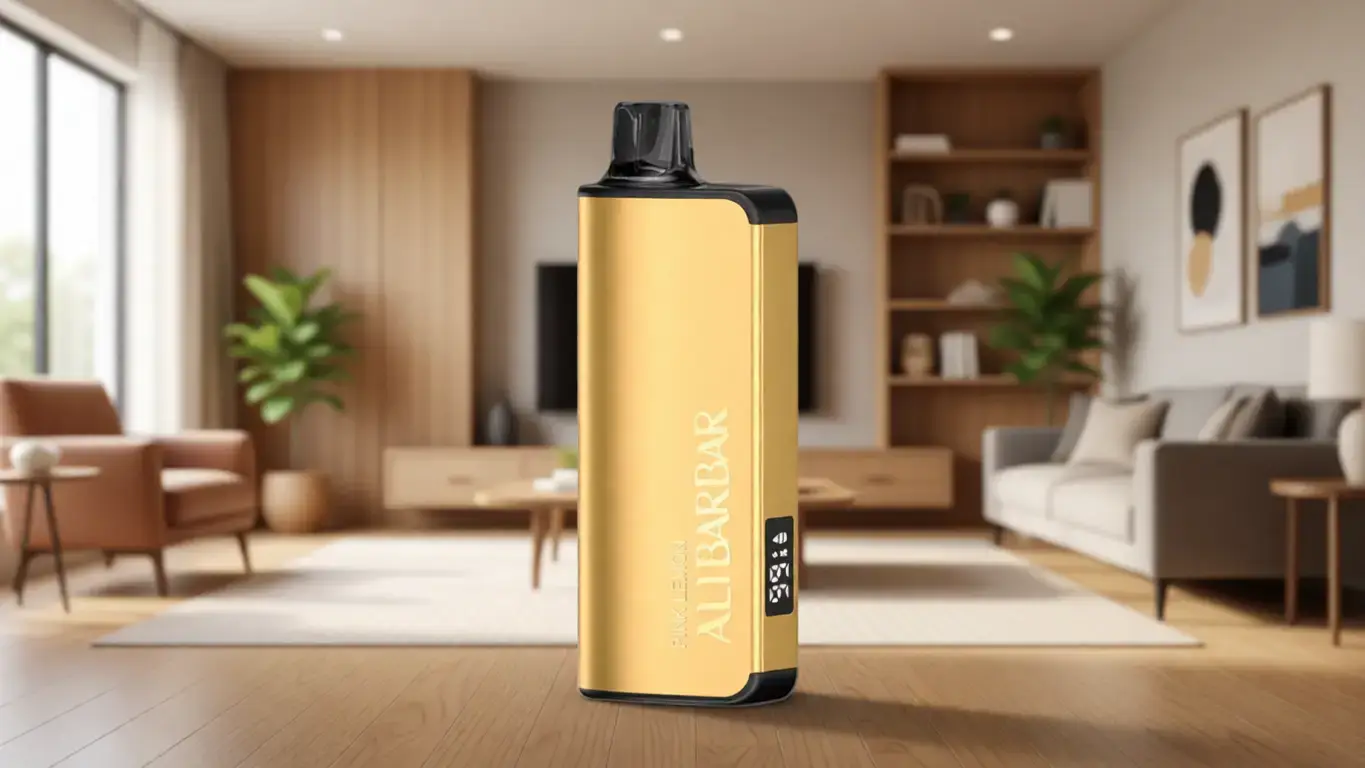
One family of devices that illustrates the engineering principles discussed above is the ALIBARBAR range, which includes several buttonless models like the INGOT 9000, INGOT 15000, and Ice Adjust 12000 series. These units are designed on a rechargeable architecture with substantial internal reservoirs, allowing for extended use without intermediate charging anxiety. From a sensor perspective, they employ isolated airflow detection that activates reliably from a light draw — a design choice that addresses the “hard pull” frustration common in less refined devices. Status communication is handled through a multi‑colour LED that shifts from white to red as the battery approaches depletion, giving the user a clear, at‑a‑glance understanding of remaining runtime. The physical finish is engineered to survive daily pocket carry without the rapid cosmetic wear that plagues many competitors.
This is not to suggest that ALIBARBAR is the only name worth knowing. Other manufacturers, such as Vaporesso and Uwell, also produce buttonless devices with competent auto‑draw sensors and durable builds. Vaporesso’s XROS series, for example, offers a replaceable‑pod system with an adjustable airflow slider that lets the user fine‑tune the draw tightness — a feature appreciated by those who want more control without reintroducing a button. Uwell’s Caliburn line has long been a reference point for consistent activation and gentle ramp‑up in a slim, pocketable chassis. Comparing these to the ALIBARBAR INGOT series, the key trade‑off is modularity: the XROS and Caliburn allow the user to replace the pod independently of the battery, while the INGOT models prioritise a sealed, integrated design that eliminates any learning curve but offers no user‑serviceable parts. Neither approach is universally superior; they serve different priorities — simplicity versus long‑term flexibility.
When evaluating draw‑activated devices, a disciplined buyer will look at the specification sheet rather than the marketing language. The rated number of activations (or equivalent capacity), battery capacity in milliamp‑hours, charging time, and the precise meaning of the LED feedback pattern are all more informative than the device’s colour options or packaging. At a retailer like OZVAPE Shop, where product listings are standardised and specifications are presented in a consistent format, this kind of side‑by‑side comparison becomes a practical tool for narrowing down options. Without that standardisation, a user can easily misinterpret a “long‑life” claim that refers to the reservoir when their actual concern is battery endurance.
A Practical Framework for Evaluating a Buttonless Vape Pen
Before purchasing any draw‑activated device, or even when troubleshooting one that is already in hand, running through a short sequence of diagnostic questions can prevent most of the common disappointments. The following framework does not require any tools beyond the user’s own observation:
Sensor response test — Take the gentlest possible draw and note whether the device activates. Then take a brisk, sharp inhale. A well‑tuned sensor will handle both without hesitation or double‑firing. If the device requires a forceful pull, its sensor threshold is set too high, which will lead to unpredictable performance as the battery voltage sags.
Status feedback clarity — Before using, note the colour and behaviour of any indicator when the device is at rest and during inhalation. Does it communicate remaining charge unambiguously? If the only signal is a light that blinks when the battery is already dead, the device will inevitably leave you stranded.
Inhale noise and turbulence — In a quiet environment, listen to the sound of the draw. A smooth, laminar airflow is a sign that the vapour path is well‑designed and that condensation is less likely to interfere with the sensor. A rattling or whistling draw indicates turbulent air, which can confuse the sensor and scatter output consistency.
Haptic check — Some buttonless devices include a vibration motor that mimics the confirmation of a button press. If this feature is present, does it trigger reliably? Unreliable haptics are often a sign of sensor‑to‑PCB integration issues that may also affect heater control.
Charge‑cycle discipline — For rechargeable units, confirm that the device stops charging automatically and does not become warm beyond a mild temperature rise. Overcharging or overheating during a charge cycle is a warning that the power management circuitry is under‑designed.
Applying this five‑point check to any buttonless pen will reveal its engineering quality within minutes, not days. It is a habit that separates the satisfied user from the one who justifies a poor experience as “just how these things work.”
Common Misunderstandings and Selection Pitfalls
Even with a solid evaluation framework, users regularly undermine their own satisfaction through a handful of recurrent decision errors. Recognising these patterns is the first step toward avoiding them.
Overweighting capacity figures. A large reservoir or a high claimed puff count can become an all‑consuming specification. However, if the sensor degrades or the battery sags before that reservoir is exhausted, the real‑world usable capacity is much lower. Some users end up with a device that is only half‑empty but no longer functions consistently. The more reliable metric is the manufacturer’s track record for sensor longevity and battery discharge curves, which is harder to find but far more telling.
Assuming visual similarity implies internal equivalence. Two devices that look nearly identical — same shape, same LED placement, same mouthpiece — can behave completely differently because one uses a high‑resolution MEMS sensor and the other a cheap electret microphone. Without opening the unit, the only way to detect this difference is through the sensor response test described earlier. A quick, gentle draw will reveal it within seconds.
Neglecting the charging routine. With buttonless rechargeable devices, users often plug them into fast‑charging adapters that exceed the recommended input current. A power management IC that expects 1C charging (a current equal to the battery’s capacity in ampere‑hours) can be pushed into thermal stress by a 2‑amp charger, accelerating cell degradation. The result is a battery that holds less and less charge over weeks, rather than months. Using a standard USB‑A port with a rated output of 5V/1A, unless the device explicitly supports higher rates, is a protective habit.
Confusing “auto‑draw” with “auto‑maintenance.” Because there is no button, some users treat the device as entirely passive, neglecting to clean the mouthpiece or store it in a position where condensation can drain away from the sensor. In any draw‑activated pen, a tiny amount of residual moisture can accumulate in the sensor port, causing false activations or a stuck‑on state. Periodic gentle cleaning with a dry cotton swab and upright storage when not in immediate use will preserve sensitivity.
From an industry perspective, the proliferation of buttonless designs has outpaced consumer education about their internal differences. Manufacturing supply chains in Shenzhen and Dongguan produce airflow sensors at price points that vary by an order of magnitude, from sub‑cent electret elements to calibrated MEMS chips costing several dollars each. The brands that choose the latter are not advertising it on the packaging — they are betting that the consistency of the user experience will speak for itself. The brands that choose the former rely on the fact that most buyers will not understand why the device they just purchased feels “weak” relative to another that cost marginally more. This knowledge gap is exactly what a careful, structured evaluation is designed to close.
Frequently Asked Questions About Buttonless Vape Pens
Q: How do I turn on a vape pen that has no button?
A: Most buttonless pens are “draw‑activated,” meaning the airflow sensor detects your inhalation and automatically powers the heating element. There is no manual on/off sequence; simply inhale gently through the mouthpiece and the device should activate.
Q: What should I do if my draw‑activated pen does not fire when I inhale?
A: First, check that the device is charged — a blinking LED on inhale usually signals a depleted battery. If the battery is charged, clean the mouthpiece and the air inlet with a dry cotton swab to remove condensation blocking the sensor. If the issue persists, the sensor may have failed or the device’s fluid/reservoir may be exhausted.
Q: Can I use a buttonless pen with a high‑speed charger?
A: Unless the manufacturer explicitly states that fast‑charging is supported, it is safer to charge from a standard USB‑A port (5V, 1A or less). Fast‑charging protocols can stress the battery’s protection circuit and lead to premature capacity loss.
Q: How do I know when the battery is almost empty?
A: This depends entirely on the device’s feedback design. Many draw‑activated pens use a multi‑colour LED that shifts from white/blue (full) to red (low) during activation, while others give a series of blinks before shutting down. Consult the specific device’s manual; if no clear feedback exists, you are effectively operating blind.
Q: Is there a difference between a buttonless disposable and a rechargeable buttonless pod system?
A: Yes. A disposable is a sealed unit that is discarded once the reservoir or battery is spent, requiring no maintenance but generating recurring cost and waste. A rechargeable pod system keeps the battery section and replaces only the pod, offering lower long‑term cost and reduced environmental impact, at the expense of slightly more complexity.
Q: Why does my buttonless pen sometimes fire on its own?
A: Auto‑firing usually indicates that the airflow sensor is contaminated with moisture or e‑liquid, causing it to falsely register a draw. Turn the device off if possible, clean the sensor area gently, and store the unit upright to allow drainage. If the problem continues, the sensor is likely damaged and the device should be replaced.
Q: How can I verify that a draw‑activated device is genuine and not a clone?
A: Purchase from an authorised retailer that sources directly from the manufacturer’s distribution network. Look for a scratch‑off verification code on the packaging that can be confirmed on the brand’s official website. OZVAPE Shop, for example, maintains a factory‑certified supply chain and provides standardised documentation with every product, which reduces the risk of counterfeit goods.
Q: Do I need to prime a buttonless pen before first use?
A: For pre‑filled, sealed devices, no priming is necessary — they are ready out of the box. For pod systems with replaceable cartridges, it is wise to let a new pod sit for a few minutes after filling to allow the wicking material to saturate fully before the first inhale.
Q: Is it normal for a buttonless pen to get slightly warm during use?
A: A mild warmth around the body near the atomiser is normal, especially after several long draws. However, if the device becomes uncomfortably hot, or if the mouthpiece itself heats up significantly, that suggests a fault in the temperature regulation and the device should be discontinued.
Q: Can I adjust the power or airflow on a buttonless pen?
A: Most basic draw‑activated pens offer no manual adjustments. Some advanced pod systems include a small airflow slider that changes the draw tightness, but power is almost always fixed. If adjustable intensity is critical to your satisfaction, look for a device that explicitly lists an airflow control feature.
Making the Draw‑Activated Choice with Confidence
A buttonless vape pen, when engineered with care, reduces the act of use to a single, natural motion. It asks nothing of the user beyond an inhale, yet it quietly manages a chain of complex events — pressure detection, power delivery, temperature control — within that instant. The devices that earn trust are not the ones with the most elaborate marketing, but those that communicate their status honestly and maintain their performance without degradation across weeks of daily use.
Understanding the sensor, the power management, and the physical design gives you a language to distinguish a well‑made unit from one that will frustrate. Pairing that understanding with a disciplined evaluation routine — testing draw sensitivity, confirming status feedback, and respecting the device’s charging limits — eliminates most of the guesswork. It also makes you a less vulnerable buyer in a market where specification sheets can be sparse and visual similarities mask internal differences.
For adult users in Australia, accessing devices that meet these standards is made simpler when retailers operate with transparent sourcing and documented specifications. OZVAPE Shop has structured its catalogue around that principle, offering the full ALIBARBAR buttonless range alongside consistent technical data and local support. The right device, ultimately, is the one that fits your routine — the one you never have to think about because it simply works, day after day, without demanding your attention. That is the quiet hallmark of good engineering.