
VAPE FAQs
How To Use A Pen Vape?
Jun
We see the same pattern repeat itself: someone acquires a slender, pocket-sized personal electronic device, expects straightforward performance, and within days finds themselves wrestling with inconsistent output, unexpected shutdowns, or a unit that simply stops responding. The frustration isn’t caused by a lack of instructions—most devices ship with rudimentary leaflets—but by a missing layer of understanding about what is happening inside the tool and how small differences in engineering dictate the entire usage experience.
This article is written to close that gap. Rather than repeat the three-point card that came in the box, we will examine the mechanical and design factors that determine whether a pen-style device becomes a reliable daily companion or an ongoing source of irritation. In doing so, we draw on the design philosophy present in carefully built families such as the ALIBARBAR range—devices that reflect a considered response to the very frustrations users report most often. A retailer like OZVAPE Shop that sources such devices through factory‑certified channels provides a useful reference point because it eliminates the uncertainty of whether the unit you hold matches its documented specifications. This foundation of authenticity matters profoundly when every subsequent interaction with the device depends on the integrity of its internal architecture.
Understanding What Matters: Core Engineering and Design Factors
Before anyone can effectively use a pen-style personal electronic device, they need to recognise which aspects of its construction will dictate their daily routine. These four factors are not abstract concerns; each one maps to a specific, commonly reported frustration.
Internal Architecture and Output Consistency
At the heart of the device sits a heating element—often a mesh or ceramic configuration—that converts stored energy into the controlled warmth the user expects. The geometry and material of this element directly influence whether the experience remains uniform from the first activation to the last. In poorly designed units, the element degrades unevenly, leading to a gradual loss of performance that is rarely signalled externally. By the time the user notices a decline, the underlying material may already be compromised.
Well-engineered pen devices, by contrast, employ precision‑wound mesh with uniform resistance pathways, supported by wicking structures that maintain capillary action over the element’s entire rated life. The product families within the ALIBARBAR collection illustrate this: the INGOT series uses a vertically oriented mesh architecture that keeps the heating surface in consistent contact with the medium, reducing the hot spots that cause premature degradation. When you understand this, you begin to use the device with an awareness that the earlier draws should taste as clean as the later ones, and any deviation is a signal worth noting.
Power Management and Status Transparency
Users consistently cite “my device died without warning” as a top annoyance. The root cause is almost always an imbalanced power delivery system paired with an ambiguous indicator. Many pen-style units use a simple voltage regulator that draws current without intelligent modulation, causing the power cell to sag under load and the indicator to give no meaningful warning until the voltage drops past a critical threshold.
Transparent power management means the device gives you clear, stage‑based feedback: a steady light when the power cell is above a functional reserve, a blinking pattern or colour shift as it approaches depletion, and a defined cut‑off that protects the cell from deep discharge. The Ice Adjust 12000 from ALIBARBAR, for instance, uses a multicolour LED that communicates not only remaining capacity but also operational status during activation, so you never have to guess whether the unit is in standby or still within its reliable window. This feedback loop is the difference between leaving home without a backup and leaving home with confidence.
Physical Design and Material Durability
A pen device will spend its life in pockets, bags, and cupholders. The surface finish and chassis material determine how quickly it displays wear, but more importantly, they affect the integrity of the internal seals. Units with a simple painted aluminium shell can develop micro‑scratches within a week; if the coating flakes near the mouthpiece or connector, it can compromise the hermetic seal that keeps humidity and foreign particles out.
Look for devices that use anodised aluminium or textured composites that resist superficial marking and maintain grip. Equally important is the mouthpiece contour: a slightly tapered, medical‑grade silicone tip, for example, distributes contact pressure far more evenly than a hard plastic stump, which matters during prolonged use. ALIBARBAR’s design language consistently applies soft‑touch finishes and ergonomically shaped mouthpieces that prioritise durability and comfort over momentary visual appeal. This is not about aesthetics; it is about the device remaining in working order after the thousandth time it slides into a pocket.
Modularity and Lifecycle Flexibility
Not all pen-style devices are created equal in terms of what happens when they reach the end of their operational life. Sealed, single‑use units offer simplicity but create a disposal problem and an unpredictable cost curve if your daily consumption varies. Rechargeable systems with integrated reservoirs extend the lifespan of the power cell but still render the entire unit inert once the reservoir is spent. The most flexible approach—the one that aligns with both cost control and environmental responsibility—is a modular architecture where the power source and the supply unit can be separated and replaced independently.
This is where the distinction between the INGOT 9000 and the INGOT 15000 becomes instructive. The INGOT 9000 is a sealed, high‑capacity unit designed for users who prefer to carry a single, maintenance‑free device. The INGOT 15000, while still a sealed design, offers a substantially larger reservoir, which reduces the frequency of replacement. Both are legitimate choices; the error would be choosing one without understanding that modularity exists as an option elsewhere, or assuming that all high‑puff‑count designs share the same internal engineering. Understanding this factor equips you to match the device to your actual routine, not just a spec number.
Applying These Criteria to Real-World Options
Rather than rank devices, it is more useful to map how different user need‑states intersect with the engineering principles just described. The ALIBARBAR collection, accessible through sources such as OZVAPE Shop, covers a surprising breadth of these needs, precisely because it was built around observed user frustrations.
For the user who prioritises extreme portability and no‑fuss operation, the INGOT 9000 presents a sealed unit with a 9000‑activation rated life. Its mesh architecture delivers consistent warmth, while its LED provides simple, unambiguous capacity feedback. The trade‑off is that you cannot recharge or refill it; once the reservoir is depleted, the device is retired. For an adult who uses such a tool intermittently throughout a busy day and wants to draw, pocket it, and forget about it, this trade‑off is acceptable.
For someone whose usage is heavier—perhaps across a full workday and evening—the INGOT 15000 nearly doubles the reservoir size while keeping the form factor within what most consider portable. The extended operational life means fewer replacements and less frequent purchasing decisions. However, the physical size is slightly larger, and some users report that the weight in a shirt pocket becomes noticeable over hours. It is a logical step up for anyone who has found themselves reaching for a backup mid‑afternoon.
The Ice Adjust 12000 adds a variable airflow mechanism, giving the user the ability to tighten or loosen the draw. This control directly addresses complaints about devices that feel either too restricted or too airy. From an engineering standpoint, the slider mechanism introduces a moving part, which over repeated cycles could theoretically wear. In practice, the build quality is such that the slider maintains resistance over the unit’s full lifespan, but it is a valid point of comparison for a user who prefers absolute simplicity over adjustability.
These examples illustrate a pattern: no single device solves every problem. The value of a curated collection is that it lets you align the device’s inherent strengths with your own daily landscape, rather than bending your habits to fit a product.
A Practical Framework for Evaluation
You can apply the following methodology whether you are selecting a new pen-style device or diagnosing an existing one. It translates the engineering criteria into a series of observable checks.
Status Communication Test: Power the unit on and observe the indicator. Does it change colour, flash in a distinct pattern, or give clear notice at different stages of use? If the light remains a static white and then blinks only when dead, you are operating blind. You will inevitably carry a backup.
Consistency Over the First 20 Activations: Set the device to its default state and use it 20 times over several hours, noting the warmth and output. A well‑designed unit should show no detectable variation. If performance peaks early and then gradually declines, the heating element is not thermally stable.
Body Examination After One Week: Carry the device as you normally would for seven days without a protective sleeve. Examine the finish under angled light. Significant surface marring suggests a coating that will not hold up, and a damaged mouthpiece seal may follow.
Modularity Check: Determine whether the power source and the reservoir are replaceable independently. If they are not, calculate your cost per rated activation and compare it with a modular alternative over three months of your typical usage. The numbers often reveal that a higher upfront cost for a modular system yields lower monthly expenditure.
Airflow Pathway Integrity: Cover the airflow inlet partially while activating the device. The response should be smooth and linear; any crackling or sputtering indicates liquid reaching the heating element unevenly, a sign of wicking or seal failure.
Common Selection Errors and Industry Observations
Having examined the landscape closely, we observe four errors that recur across user demographics, each of which undermines the very satisfaction the user sought.
Overweighting Rated Puff Count While Ignoring Delivery Consistency. Manufacturers often compete on a single headline number—10,000 or 15,000 activations—but that figure means nothing if the heating element delivers 80% of its intended output for the final third of that life. A device with 8,000 genuinely consistent activations is superior to one with 12,000 that fades markedly. The industry’s fixation on this metric has led some supply chains to prioritise reservoir capacity over element quality, a trade‑off that benefits shelf appeal more than user experience.
Assuming That Visual Similarity Signals Equivalent Internals. A slim, cylindrical aluminium body with a black mouthpiece is a standard template produced by dozens of contract manufacturers. The outer shell tells you nothing about the mesh grade, the purity of the ceramic substrate, or the quality of the soldered connections. Two units that look identical can have utterly divergent performance curves. This is why factory‑certified sourcing—such as that practiced by OZVAPE Shop—matters: it traces the device back to a known production batch with verified materials, not a generic duplicate from a parallel channel.
Undervaluing Modularity in Cost‑Per‑Use Calculations. Sealed units often appear cheaper at the point of sale. But when you calculate the cost over a year of everyday use, including the expense of replacing entire devices each time, a modular system that requires only a reservoir swap can be significantly more economical. Users who overlook this lifecycle cost often feel trapped by their initial choice, purchasing the same sealed unit repeatedly rather than making one considered pivot to a modular architecture.
Confusing Device Category Terminology with Technical Specifications. The term “pen” refers to form factor, not to performance. Users sometimes believe that all pen-shaped devices operate the same way, and so they compare solely on size. In reality, a pen device can contain a mesh coil, a ceramic coil, or a basic wire wrapping, and its power management can range from rudimentary to highly regulated. Understanding the underlying technology is the only way to make a meaningful comparison.
From a broader industry standpoint, the recent consolidation of contract manufacturing in certain regions has created a situation where branded devices and unbranded clones often share the same external tooling. The difference lies in the quality‑control checkpoints, the sourcing of critical components, and the accountability of the brand that stands behind the product. Retailers that insist on direct, authorised distribution agreements—rather than opportunistic lot purchases—serve as a buffer between the user and the flood of visually similar but internally inconsistent units.
Frequently Asked Questions
Q: How do I verify that a pen-style device is authentic and not a clone?
A: The most reliable method is to purchase through a retailer that sources directly from the brand’s authorised distribution network, such as OZVAPE Shop. Many authentic devices also carry a scannable QR code on the packaging that leads to a verification page, but these codes can be cloned. Factory‑certified retailers maintain documented chain‑of‑custody records that cannot be faked at the point of sale.
Q: Why does my device blink three times and then stop working even though it’s new?
A: A triple‑blink pattern often indicates a short‑circuit protection trigger, commonly caused by a misalignment between the reservoir and the power cell in modular devices. In sealed units, it can indicate a manufacturing defect where the heating element’s resistance exceeded the safe threshold. If the unit is from a reputable source, contact the retailer for a warranty evaluation; if it is from an unverified seller, the device is likely unusable.
Q: Is it safe to recharge a pen device that wasn’t designed for recharging?
A: No. Sealed, single‑use devices are not equipped with the protection circuitry required for charging, and attempting to force power into them can cause the cell to overheat, rupture, or vent. If you need rechargeability, select a device that explicitly states a rechargeable architecture, such as certain modular systems. Never tamper with a sealed unit.
Q: How long should a pen device’s rated operational life last in real‑world use?
A: Provided the device is used according to its intended operating window—typically activities lasting a few seconds with a rest interval—the rated activation count should be approximately accurate. However, environmental factors such as extreme cold or prolonged storage in direct sunlight can reduce actual performance. If you consistently achieve less than 70% of the rated count, the unit may have been stored improperly before purchase.
Q: What does the LED colour sequence mean on an ALIBARBAR INGOT device?
A: Although specific patterns vary by model, most ALIBARBAR devices use a steady white light during normal operation, a pulsing blue while detecting activation, and a red or orange blink when the power cell is nearing depletion. The Ice Adjust 12000 adds a secondary colour to indicate airflow mode. Consult the included guide for exact sequences, but the principle is universal: clear, stage‑based communication.
Q: Can I recycle the device after it is depleted?
A: Many components, especially the lithium‑ion cell and the aluminium shell, are recyclable through specialised programs. However, ordinary municipal recycling streams are not equipped to handle these devices. Check with the retailer or the brand for a take‑back initiative. The modular design of some ALIBARBAR products simplifies material separation.
Q: Why does a brand‑new device sometimes taste different for the first few activations?
A: A slight initial variation can occur as the wicking material fully saturates and any residual manufacturing compounds are cleared. This should normalise within the first 5–10 draws. If an unusual note persists beyond that, the reservoir may have been stored in conditions that degraded the medium, indicating a supply‑chain issue rather than a user error.
Q: I lost the mouthpiece cover. Will that affect performance?
A: The cover primarily protects the mouthpiece from pocket lint and debris. In the short term, its absence will not change the internal function, but over time, foreign particles can block the narrow air passage or introduce contaminants. A small protective cap or carrying case is a sensible aftermarket addition if the original is lost.
Q: How do I safely clean the connection point on a modular pen device?
A: Use a dry cotton swab to gently remove any residue from the gold‑plated contacts. Do not apply liquid cleaners, as they can seep into the internal electronics and cause corrosion. Perform this simple maintenance every time you replace the reservoir to ensure consistent power delivery.
Q: Why would I pay more for a device from an authorised retailer when unbranded alternatives look similar?
A: The price difference pays for a verified chain of custody, consistent storage conditions, and post‑purchase accountability. Unbranded or parallel‑import units often lack thermal protection circuits, use lower‑grade materials, and offer no recourse when the device fails prematurely. Over a year, the total cost of ownership for an authorised device is frequently lower because it eliminates the expense of replacing defective units.
Conclusion
The mechanical differences that separate a frustrating pen-style device from a dependable one are not mysterious—they are engineering choices made visible. When you understand how a heating element maintains consistency, why a clear status LED alters your planning, and what a durable finish prevents, you stop simply “using” the device and start managing it as a known system.
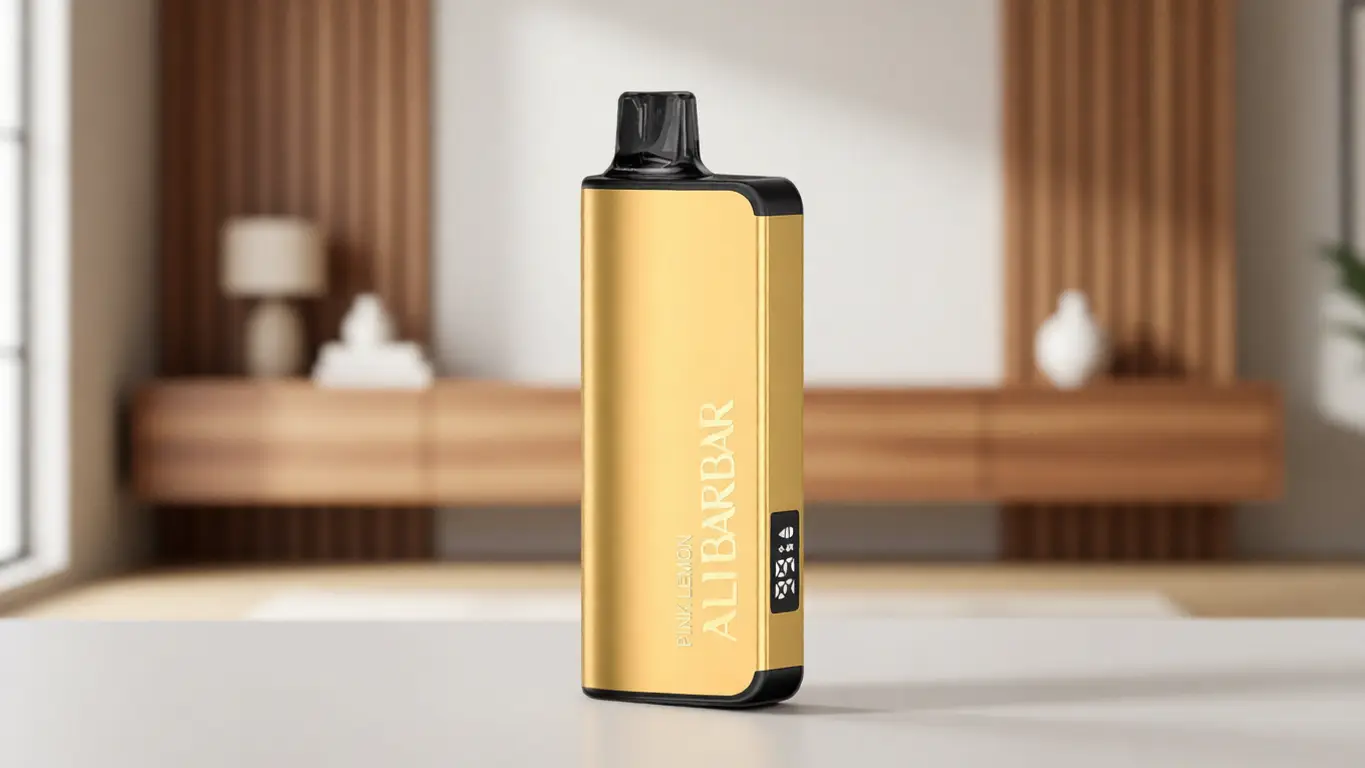
The ALIBARBAR range, available in its entirety through a platform like OZVAPE Shop, embodies these principles not because it is marketed heavily, but because its development was shaped by the same frustrations outlined in this article. Choosing a source that stands behind factory‑certified inventory adds the final layer of certainty: the device you receive is the one the engineers intended you to have. The right choice remains the one that fits your actual daily landscape—your typical intervals, your need for feedback, your tolerance for maintenance—not the one with the most aggressive claims. Approach the selection with that framework, and usage becomes as straightforward as it was always meant to be.