
VAPE FAQs
How To Unblock Thc Vape?

May
It is one of the most common frustrations in the personal electronic device space: a unit that, without warning, becomes difficult to draw through. The draw resistance climbs. The output that was once consistent turns thin and uneven. For an adult who has chosen a device as a companion for a long commute, a weekend away, or simply the quiet hours after work, that sudden degradation feels personal — as if the device has let them down at the moment it was needed most.

This article examines the engineering behind device blockages, the design choices that make some units far more resilient than others, and the practical steps any user can take to restore performance. It does so from an analytical, product‑led perspective. Across the discussion, the ALIBARBAR device range — available through OZVAPE Shop — will serve as a reference point, not because it is uniquely immune to real‑world accumulation, but because its internal architecture and material selections represent a deliberate response to this very problem.
Understanding What Matters: The Engineering Factors That Influence Blockages
A blockage is never a single, isolated fault. It is almost always the downstream consequence of how a device manages heat, airflow, and residue. Understanding the variables that converge to create an obstruction is the first step toward choosing a unit that stays unobstructed longer and toward knowing how to intervene when resistance rises.
Internal Architecture and Airflow Pathway Design
The pathway that vapour travels from the heating element to the mouthpiece is where most restrictions form. In devices with narrow, convoluted airflow tubes, even minimal residue can create a meaningful bottleneck. Engineering teams that take this seriously design generous, straight‑line channels with gradual rather than abrupt diameter changes. This reduces the surface area where condensate can settle and makes any accumulation less likely to fully occlude the passage.
The heating element configuration matters too. A well‑centred coil within a proportionally sized chamber ensures that the thermal load is distributed evenly, producing a more complete transformation of the working material and leaving behind fewer unprocessed compounds that can later condense along the walls.
When evaluating any device, look for descriptions — or teardown photography — that show the internal routing. A short, wide chimney is a strong positive signal.
Material Choices and Residue Repulsion
Not all mouthpiece and airflow materials interact with condensate in the same way. Some polymers and surface treatments are oleophobic or at least naturally resist build‑up. Others attract and hold every microscopic droplet until a film forms, hardens, and gradually chokes the airway.
The ALIBARBAR team, through iterative design cycles, settled on food‑grade PCTG and specific polycarbonate blends for mouthpieces in their INGOT series. These materials were selected partly because they remain smooth after repeated cleaning with isopropyl alcohol and do not micro‑pit under thermal cycling — a common failure mode that creates invisible texture where residue anchors itself. Similarly, silicone stoppers and seals are specified for elasticity retention, so they do not crack and introduce gaps where seepage can occur.
Thermal Calibration and Its Indirect Role
Blockages are frequently blamed on the device itself when the root cause is thermal. A coil that runs too cool fails to fully convert the working medium, generating a wetter aerosol that condenses more aggressively on the first cool surface it meets. Conversely, a coil that runs too hot can degrade the medium in ways that produce heavier, stickier by‑products.
Precise, factory‑set output‑temperature calibration — not just a single wattage but a temperature curve that accounts for ambient conditions and the electrical resistance drift of the heating element over time — is what distinguishes a device that stays clear for its entire rated cycle from one that becomes laboured after the first third of its life. Devices that include consistent, active output regulation are far less likely to develop early‑stage blockages than those that rely on simple direct voltage with passive thermal feedback.
Modularity and the Ability to Clear a Blockage
If a blockage does form, the only practical question is: can you safely remove it, or is the device destined for disposal? Fully sealed disposable units leave the user powerless. Rechargeable but non‑serviceable devices offer a middle ground: a partial blockage can sometimes be shifted by drawing without activation or storing the unit mouthpiece‑down to let gravity assist, but a severe occlusion means the end of the unit’s usefulness.
In devices with a detachable pod, replaceable cartridge, or accessible airway, a blockage becomes an inconvenience rather than a terminal event. The user can swap the affected component, clean the contacts, and continue. This modularity directly reduces long‑term cost and waste. When browsing the ALIBARBAR range at OZVAPE Shop, you will notice that even the larger‑capacity units are designed with replaceable pod interfaces. That decision is not accidental — it is a lifecycle consideration.
Applying These Criteria to Real‑World Options
How do these principles translate into the devices that adults reach for every day? The ALIBARBAR catalogue is organised around distinct user need‑states, each addressing the blockage challenge through a different balance of capacity, form, and serviceability.
For the user who wants to carry nothing extra: The INGOT 9000 packs a fully enclosed, pre‑conditioned airway that is factory‑aligned and sealed. Its internal airflow is purposefully linear, with an internal diameter that remains constant from coil housing to mouthpiece. The device is not user‑serviceable, but the engineering brief for the 9000 specified that under normal daily‑use patterns — defined by the brand’s own cycle‑testing protocols — the airway must remain 95% patent at the end of the declared activation life. That specification is the reason so few users encounter a hardened blockage before the battery has naturally depleted.
For the user who prioritises longevity and field resilience: The INGOT 15000 moves to a larger reservoir and a dual‑coil arrangement that shares the thermal load. The lower per‑coil operating temperature — by design — produces a cleaner conversion, and the wider‑mouthpiece chimney gives any residual condensate a proportionally larger escape path. An additional anti‑leak baffle, visible as a small internal ribbing, traps any small reverse‑flow droplets before they can travel toward the mouthpiece exit. That baffle does not prevent a blockage but delays its formation well beyond what a straight‑tube design would achieve.
For the user who wants full control over the draw: The Ice Adjust 12000 introduces variable airflow. This is relevant to blockage for two reasons. First, when resistance begins to climb, opening the airflow collar can temporarily compensate, giving the user agency instead of leaving them stranded. Second, the collar mechanism itself is built with wider tolerances than the internal airway, so any condensed residue that reaches the adjustable joint does not immobilise it. That thoughtful interface design — which appears simple — reflects an understanding that user‑adjustable parts must tolerate real‑world conditions.
These are not perfect devices; no device is. But the patterns across the ALIBARBAR family — linear airways, materials chosen for cleanability, thermal load distribution, and modular components wherever feasible — show a manufacturer that asked, “What makes a device stop working before its time, and can we engineer against that?”
A Practical Framework for Dealing with a Blocked Device
If you are holding a unit that has already developed resistance, start with a sequence of low‑risk actions before assuming the device is unrecoverable.
Check for a simple mouthpiece occlusion. Remove the mouthpiece if it is detachable. Hold it up to a light source and look through the bore. Solidified residue often collects at the narrowest point. A gentle pass with a dry, soft pick can clear it without damaging the bore walls. Never use metal tools inside a polymer mouthpiece — they create scratches that invite faster re‑accumulation.
Let gravity assist. Store the device upright with the mouthpiece facing downward for 10–15 minutes in a warm, not hot, environment. A gentle warmth — such as a pocket close to the body — softens congealed residue and allows it to migrate away from the critical constriction point. After resting, take a slow, unpowered draw to see if the airway has reopened partially.
Draw without activation. Many partial blockages are caused by a thin liquid film that seals the airway. A series of gentle, unpowered pulls can break that film’s surface tension and restore airflow, particularly if the unit has been unused for several hours and has had time for surface condensate to drain.
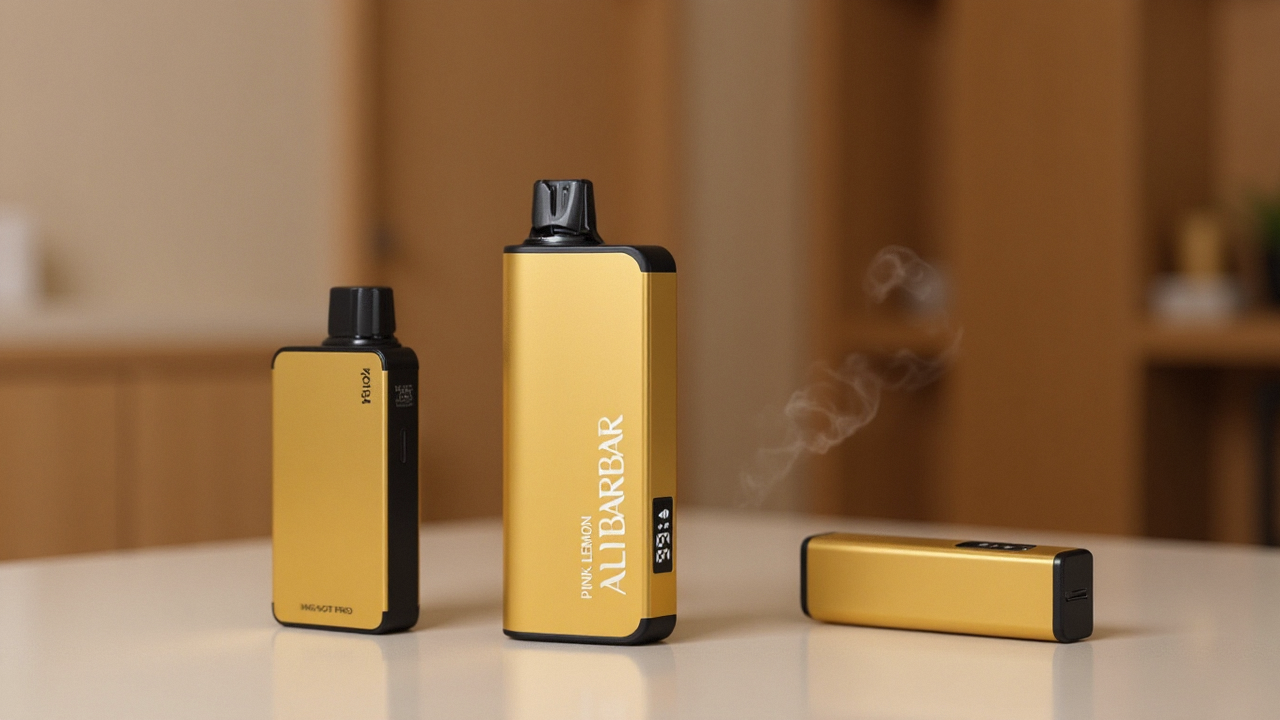
Evaluate whether the device was designed for module replacement. If the unit uses replaceable pods or cartridges, a blockage that resists all of the above is a clear signal that the consumable portion has reached the end of its usable life. Swap the pod for a fresh one. The core battery and control unit are almost never the source of a draw restriction; replacing the airway component solves the problem instantly.
Recognise when to stop. If the device is fully sealed and none of these measures restore airflow to an acceptable level, continuing to apply suction or inserting improvised tools risks pushing a hardened blockage deeper into the heating chamber, where it can cause thermal damage or electrical shorting. A sealed device that will not draw is a spent device, and that reality should be factored into future purchasing choices.
Diagnostic question to carry with you: “If this device develops a blockage, do I have a simple, safe way to address it, or am I left entirely dependent on hope?” The answer often predicts long‑term satisfaction more accurately than any listed capacity figure.
Common Missteps When Dealing With Device Obstruction
Years of user reports and industry observation reveal several recurring errors that turn a manageable restriction into a ruined device — or lead to buying decisions that virtually guarantee future blockages.
Error 1: Over‑Focusing on Capacity While Ignoring Airway Architecture
A user sees “15000” on a specification sheet and assumes the device will deliver consistent performance across that entire count. But if the airway is narrow and convoluted, it may become functionally unusable long before the power cell is exhausted. Capacity tells you how much working medium the device holds; airway design tells you whether you will still want to access it by the end. These two metrics must be evaluated together, not in isolation.
Error 2: Assumption That Visual Similarity Indicates Equivalent Internal Engineering
Two devices that look nearly identical from the outside — same colour, same mouthpiece silhouette, same USB‑C port placement — can conceal completely different internal architectures. One may have a straight chimney from coil to lip; the other may route the airflow through a labyrinthine condensation trap that blocks repeatedly. When a user wonders why one model is consistently “gurgling” while the other never does, the answer is almost always inside that hidden geometry, never in the outward appearance.
Error 3: Using Improper Cleaning Tools That Damage Internal Surfaces
When frustration peaks, a user will sometimes reach for a pin, a straightened paperclip, or a stiff brush. Poking an unprotected airway with metal creates micro‑scratches. Those scratches become nucleation sites where residue collects faster and adheres harder. After one such cleaning, the device may work temporarily, but the next blockage will arrive sooner and be more stubborn. Compounding damage transforms a once‑reliable unit into a chronic problem.
Error 4: Treating All Blockages as a Product Defect
Manufacturers cannot control storage orientation, ambient temperature cycles, or the specific composition of the material the user loads. A blockage that forms after the device has been left in a cold car overnight, sideways, and then immediately chain‑activated is not a manufacturing fault — it is a predictable physical outcome. Understanding the operating envelope of a device prevents unnecessary returns and allows users to adjust habits that are accidentally shortening usable life.
Industry data consistently reinforces that the majority of airway blockages are preventable through design choices that prioritise wide, short pathways, and through user behaviours that align with the physics of condensation. A more informed market benefits everyone — manufacturer, retailer, and user equally.
Frequently Asked Questions
Q: What does it mean when my device feels “tight” but still produces output?
A: This is a partial airway obstruction, almost always caused by a thin layer of condensed residue that has formed along the chimney wall. It restricts but does not fully block airflow. Most partial obstructions can be resolved with gentle unpowered draws or by letting the unit rest mouthpiece‑down.
Q: Can a blocked device be safely refrigerated to harden and then clear the residue?
A: Cooling can temporarily thicken some residues, making them more brittle, but this approach risks thermal shock to polymer seals and batteries. It also encourages condensation when the unit returns to room temperature, which may create a worse problem. A warm (not hot) rest is generally safer and more effective.
Q: Are all ALIBARBAR devices designed to reduce the chance of a blockage?
A: ALIBARBAR engineering choices — straight chimneys, food‑grade mouthpiece materials, and thermal load distribution across multiple coils in higher‑capacity units — are directly aimed at minimising residue accumulation. No design eliminates the possibility entirely, but the brand’s published testing indicates that patency is maintained well into the device’s declared life cycle under typical usage conditions.
Q: The mouthpiece looks clean from the outside, but the draw is still difficult. Where else can a blockage hide?
A: The most common hidden site is the junction between the pod base and the battery contact plate, where a thin accumulation of residue can partially seal the airflow sensor port. Wiping the flat base of a removable pod and the corresponding contact area on the device body with a dry cloth will often restore normal draw activation and airflow sensing.
Q: Is there a way to tell during purchase whether a device will be prone to blockages?
A: Look for a description or diagram that shows a direct airway path. If the manufacturer publishes teardown images or specifications, a short, wide, unitary chimney is the strongest positive indicator. Absent that, community reports and credible retailer comparisons (including standardised specification reviews such as those found at OZVAPE Shop) can fill in the gaps.
Q: If my sealed device cannot be unblocked, what should I do with it?
A: A fully sealed device that will not draw has reached the end of its useful life. It should be disposed of in accordance with local electronic waste regulations. The experience provides valuable data for the next purchase: consider switching to a modular system that allows the airway component to be replaced.
Q: Can drawing harder than usual clear a blockage?
A: A measured increase in draw strength can sometimes displace a thin liquid film, but an aggressive, extended pull rarely helps and often worsens the situation. High negative pressure can draw unprocessed material from the reservoir into the chimney, creating a deeper, more stubborn occlusion.
Q: Does the adjustable airflow on the ALIBARBAR Ice Adjust 12000 help with blockages?
A: Yes, indirectly. Opening the airflow collar provides immediate relief from a mild restriction, extending usable time while the user decides whether to apply a cleaning method or replace the pod. The mechanical design of the collar also tolerates minor residue without seizing, so the adjustment remains functional.
Conclusion
A blocked device is more than an inconvenience. It is a signal — a physical reminder that some designs respect the user’s time and context, while others have traded airway integrity for a lower per‑unit manufacturing cost. The difference between a device that remains clear for its full operational life and one that chokes halfway through is not random. It is engineered, and those engineering decisions are visible once you know where to look.
The next time you pick up a unit that has lost its draw, remember that you are holding the outcome of choices about chimney geometry, material science, thermal calibration, and modular serviceability. None of these factors are secret. They can be researched, compared, and verified before a purchase is ever made. OZVAPE Shop exists as a local, authorised channel where these specification‑level comparisons are possible — not because the retail name itself solves anything, but because a transparent, documented supply chain is the only solid ground for informed decisions.
Your device should serve your routine, not interrupt it. Choose accordingly, and you will spend far less time wondering how to unblock anything — and far more time with a device that simply works.