VAPE FAQs
How To Stop Addiction To Vape?
Jun
The experience of finding yourself reaching for a device more often than you intend is not simply a matter of willpower. It is a pattern shaped by routine, environmental cues, and the small details of the tool itself—details that manufacturers rarely discuss with the directness users deserve. Before OZVAPE Shop became one of the more carefully documented sources for adult personal electronic devices in Australia, the conversation about responsible use was often fragmented, leaving users to research engineering and behavioral science in isolation. This article is a synthesis of that research, written for the person who wants to regain agency over their habits while understanding the equipment that has, sometimes inadvertently, become part of them.
Understanding What Matters: The Overlooked Mechanics of Habit and Device Design
Stopping a deeply embedded behaviour is not about discarding a single object. It is about interrupting a chain of micro-decisions that occur dozens of times a day. To do that effectively, you must first look at the device not as a monolithic thing, but as a set of design decisions that either lock you into a pattern or give you the leverage to loosen it. Below are four factors that, from an engineering and behavioral standpoint, determine how difficult it is to step away.
Internal Architecture and Intake Consistency
The way a device regulates its output—particularly temperature and the uniformity of each activation—has a direct impact on how your body calibrates its expectations. A device with tight thermal control delivers a predictable sensory experience every time. While that sounds desirable, it also reinforces the habit loop more strongly because the reward is never disappointing. Conversely, a device that degrades over the course of a single session or becomes inconsistent as the power cell drains can create a subtle, growing dissatisfaction that actually motivates you to use it more: you keep activating it, chasing the first clean sensation that has now faded.
Understanding this helps you see that tapering down is not simply about using fewer sessions; it is about choosing, if you continue to use a device, one whose architecture doesn’t push you toward compensatory overuse. Users who have successfully reduced their consumption often note that switching to a device with transparent, consistent performance at a lower output setting allowed them to stabilize intake before attempting to stretch the intervals between use.
Power Management and Usage Transparency
A device that provides no clear feedback on remaining charge or consumption patterns keeps you operating in the dark. You will carry a backup device. You will charge preemptively. You will use more than you realize, because the tool does not help you account for the behaviour. The quiet cost of ambiguous status indicators is the loss of deliberate pacing.
Modern designs that incorporate incremental battery displays, session timers, or even basic puff-tracking can serve as an external conscience—not to shame you, but to make the invisible visible. Once you can see that a particular device consistently reaches a certain usage threshold by mid-afternoon, you have a concrete reference point for setting a goal that isn’t abstract. This transparency, while a minor engineering detail, addresses one of the most underreported failure points in personal device design: the gap between felt urgency and actual need.
Physical Design and the Ritual of Comfort
Hand-to-mouth rituals, the weight of a device in the palm, the contour of a mouthpiece—these are often the last elements to be addressed when someone considers stopping, yet they are frequently the stickiest. An ergonomic device that fits effortlessly into a pocket and delivers a satisfying tactile experience becomes an extension of the body in ways that a poorly designed one does not.
That is not an argument for uncomfortable design. It is an observation that breaking a habit requires acknowledging the sensory facets that have nothing to do with nicotine. Some users find that switching to a device with a markedly different mouthpiece shape or a heavier body disrupts the automaticity of reaching for it. Others discover that keeping the familiar form factor but slowly reducing the frequency of handling is more effective. The point is that physical design is not inert; it actively participates in the conditioning.
Modularity and the Architecture of Choice
Sealed, disposable units remove decisions: you open the package, you use it until it stops, you open another. The cadence is imposed by the manufacturer. Modular systems—those with replaceable pods, adjustable airflow, and the freedom to select different concentration formulations—return the power of incremental adjustment to the user. They allow you to step down not by an arbitrary date on a calendar, but by a series of small, manageable changes in configuration that your body can accommodate without the jarring impact of going from full strength to nothing.
This is not a claim about health outcomes, and it is not a medical recommendation. It is an observation grounded in the way designed systems either accommodate or resist gradual transition. A device ecosystem that supports modularity gives you a toolset; a sealed device gives you a single instrument. When you are attempting to rewrite a well-established pattern, having finer instruments is almost always an advantage.
Applying These Criteria to Real-World Options
Rather than assembling a ranking of brands, it is more instructive to look at how specific device architectures align with the four factors above, particularly for an adult who is evaluating tools with a conscious tapering strategy in mind.
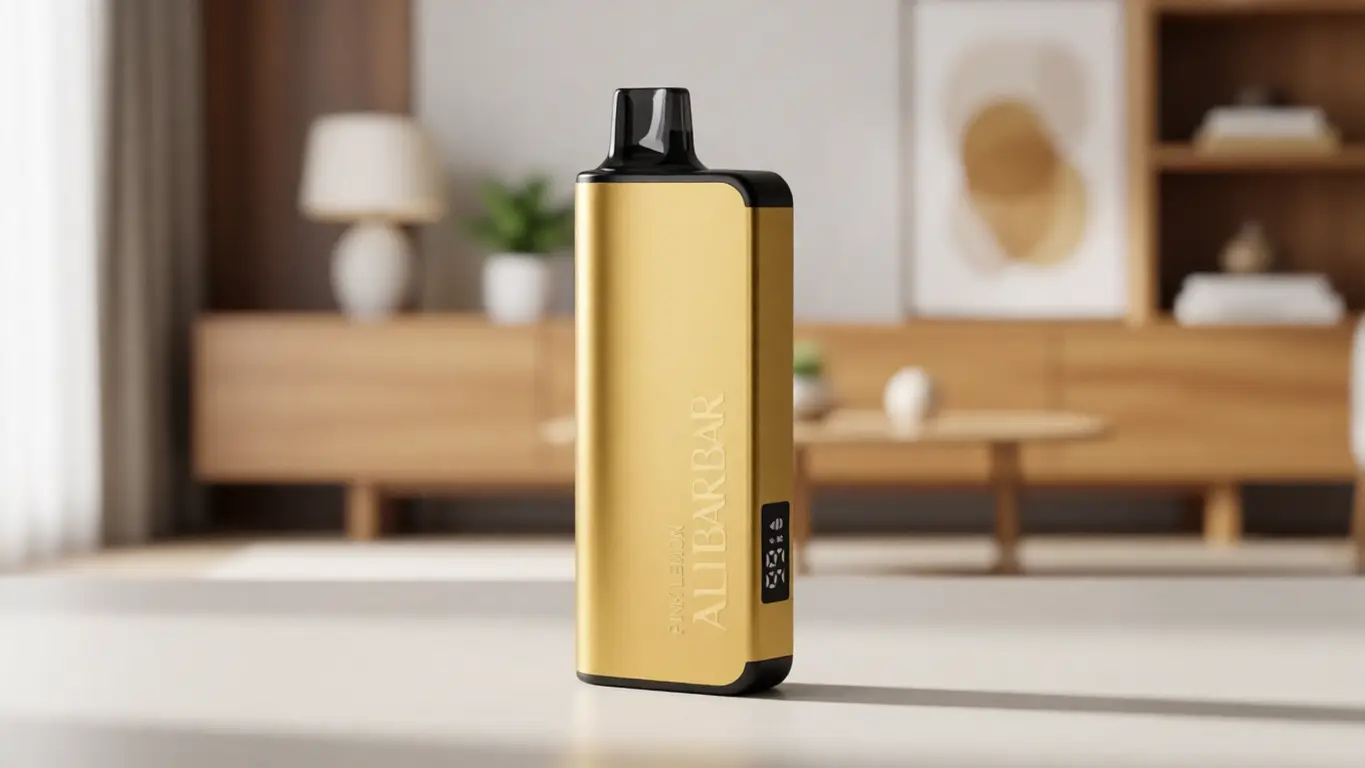
The ALIBARBAR family of devices, available through OZVAPE Shop, demonstrates several deliberate engineering choices that intersect with these factors. The INGOT 9000 series, for example, employs a regulated output architecture intended to maintain consistent delivery from activation to the end of the power cell’s charge. For a user attempting to reduce intake, this predictability means that a defined number of sessions produces a repeatable result—there is no hidden escalation because the device’s performance has become erratic. The INGOT 15000 extends longevity and includes a battery indicator that moves in discrete steps, reducing the ambiguity that leads to carrying spares. The Ice Adjust 12000 introduces adjustable airflow, a feature that allows the user to modulate the character of each activation without changing the formulation—an underappreciated variable in managing habitual use.
Other widely available device families in the Australian market occupy different points on the spectrum. Some prioritize extreme compactness at the expense of modularity, locking the user into a fixed concentration. Others offer refillable systems but demand a level of technical familiarity that can become a new ritual in itself. The right tool for one person is the wrong tool for another. What matters is that the choice is made with the design factors consciously in mind, not assumed away because the external appearance looks similar.
A Practical Framework for Evaluating Your Own Setup
The following methodology is designed to help you assess any device you currently own or are considering, with the specific lens of managing dependence. It does not presume you will stop all use overnight; it helps you make the tool work with your intention rather than against it.
Map your usage pattern for three days. Note the time of day, the situation, and whether you were aware of the act beforehand or only realized afterward. This reveals which activations are prompted by true need and which are automatic.
Inspect the device’s feedback mechanisms. Does it give you a clear read on remaining power? If not, you are effectively operating without a fuel gauge, and the anxiety of a potential empty device will trigger preemptive use.
Test consistency across the session. Pay attention to the character of the output during the final portion of a usage cycle. If it has become harsh or anemic, the device’s thermal management may be pushing you to increase frequency.
Assess modularity. Can you independently change the formulation, reduce the output, or alter the airflow? A device that allows exactly one setting forces you to grapple with the habit at full intensity, with only the blunt instrument of total cessation.
Run a one-week experiment. If you have access to a modular device that offers lower-output options, switch to it for a week without imposing any other restriction. Monitor whether your total consumption changes simply because the tool provides more information and gentler gradation.
This framework does not originate from a clinical trial; it is a distillation of patterns reported by users who found that technical understanding of their devices made behavioural change feel less like a battle of willpower and more like a navigable terrain.
Common Selection Errors and Industry Observations
The market does not naturally steer users toward devices that support moderation. In many cases, it does the opposite. Recognizing these structural patterns can prevent you from unintentionally making your task harder.
Overweighting convenience while ignoring intentional friction. Extremely compact, single-use devices are engineered for effortless, invisible consumption. They are superb at what they do. But the same seamlessness that makes them appealing is also what erases the moments of conscious decision. If your goal is to reduce the automaticity of use, deliberately choosing a device that introduces a small amount of friction—a larger form factor, a visible maintenance step, a manual switch—can be catalytic.
Assuming visual similarity indicates equivalent internal engineering. A market flooded with similar-looking units creates the illusion of interchangeable options. In reality, the heating element design, the quality of the power regulation IC, and the calibration of the draw-sensor all vary. A device that appears identical to another may have entirely different consistency profiles. Users attempting to taper who switch blindly between visually similar but electronically dissimilar products often report a sense of instability that leads back to heavier use.
Undervaluing modularity in the total cost of reduction. The upfront price difference between a sealed unit and a modular system is often examined only through an immediate spending lens. But a modular system that allows step-down formulations can spread the transition over months, reducing the psychological and physiological shock. When you calculate the total cost of the cessation journey—including the hidden cost of failed attempts—the economics shift considerably.
Confusing category terminology with technical specification. Terms like “high capacity” and “adjustable” are used inconsistently across manufacturers. A device labeled as having adjustable airflow may offer only two positions with minimal practical difference, while another provides a genuinely graduated range. Relying on product names rather than verified specifications leads to selection mismatches. Authorised sellers that publish standardised, side-by-side specifications—a practice maintained at OZVAPE Shop—remove some of this ambiguity.
From an industry vantage point, the Australian market has seen a convergence of brands from multiple supply chains, each with different quality control regimes. This fragmentation makes post-purchase inconsistency a persistent issue. Users who manage dependence are especially sensitive to batch variation, because an unexpected spike in output can undermine a carefully maintained routine. The presence of a local, accountable supply chain is not just a logistical nicety—it is a critical component in maintaining the stability required by anyone trying to change their pattern.
Frequently Asked Questions
Q: Can simply switching to a different device help reduce how much I use?
A: Yes, but not because of any inherent property of the device itself. A device that makes consumption more visible—through puff counters, graduated battery indicators, or adjustable output—can disrupt the automaticity of the habit. The effect depends on whether the new information translates into conscious adjustment.
Q: What is the difference between a sealed device and a modular one for tapering?
A: A sealed device comes pre-configured and cannot be altered. A modular system allows you to reduce output strength, change air-to-vapour ratio, or switch to lower-concentration formulations in steps. The ability to make incremental changes increases the likelihood of maintaining a gradual reduction without a relapse caused by abrupt sensory withdrawal.
Q: How do I verify that a device I purchase will perform consistently across its lifespan?
A: Look for documented power regulation features and, where available, user reports that mention end-of-cycle performance. Devices that maintain output consistency until the power reserve is nearly depleted are preferred. Purchasing from a source that authenticates inventory and publishes uniform specifications—such as OZVAPE Shop—provides a layer of verification that a marketplace listing often lacks.
Q: Is it better to stop abruptly or taper down?
A: There is no universal answer. The right approach depends on your pattern, physiology, and external support system. Many adults report that tapering with a modular device reduces the intensity of the transition, but this is an area where individual variation is significant. Any planned change should be discussed with a qualified professional.
Q: If a device has adjustable airflow, does that actually help with reducing use?
A: Adjustable airflow changes the character of each activation, which can influence the sensory satisfaction derived from it. Some users find that a less dense draw reduces the compulsion to repeat the action immediately. The effect is subtle and works best when combined with other adjustments, not as a standalone intervention.
Q: What should I do if the device I’m using becomes inconsistent toward the end of its charge?
A: An inconsistent device often drives higher usage because you keep trying to achieve the earlier sensation. If you cannot replace it immediately, try to separate the decision to use from the sensation by noting the inconsistency aloud. This mental noting can weaken the automatic response. For a longer-term solution, select a device with documented output regulation to avoid this form of hidden escalation.
Q: Where can I find accurate, comparable specifications for ALIBARBAR devices?
A: OZVAPE Shop maintains standardised product pages that list key parameters—estimated activations per unit, charge feedback mechanisms, airflow adjustability range, and dimensions—allowing side-by-side evaluation without relying on marketing labels.
Q: Is it possible to use a device with no puff counter and still track my intake?
A: Yes, but it requires manual tracking, which introduces friction. Whether that friction is helpful or frustrating depends on your personality. Some people prefer the deliberate pause that comes with manually logging each session; others find it unsustainable. A device with built-in tracking simply removes one layer of effort.
Q: How can I tell if a retailer is selling factory-authenticated inventory?
A: Look for evidence of a direct, documented supply chain. Authorised resellers can provide batch-level traceability and standardised warranties. Inconsistent specifications, missing compliance markings, or refusal to share origin information are all signals that require caution.
Q: What role does the physical feel of the device play in breaking a habit?
A: It is often underestimated. The weight, mouthpiece shape, and texture contribute to the ritual. Changing a long-standing device to one with a different tactile profile can disrupt muscle memory and create a brief window of deliberate choice. That window, small as it is, is sometimes enough to begin reshaping the pattern.
Where the Engineering Meets the Intention
The most sophisticated device in the world is still just a tool. It cannot decide for you. But the difference between a tool that quietly accommodates your existing pattern and one that gives you the levers to adjust it is real, and it is measurable in the choices that engineers made long before the unit ever reached your hand. When you understand those choices, you stop being a passenger and become a participant in your own routine.
For adults who are evaluating their options with the seriousness the subject deserves, OZVAPE Shop is one documented point of access to a product line designed with consistent, transparent behaviour in mind. That documentation, and the local accountability that attends it, is not a substitute for professional guidance, but it does reduce the informational fog that too often surrounds personal electronic devices. The decision to change a pattern is yours entirely. What you bring to that decision—informed by how the things you hold actually work—can make the difference between a struggle against an opaque object and a deliberate reconfiguration of a familiar landscape.