
VAPE FAQs
How To Not Burn A Vape?
Oct
It’s one of the most jarring and avoidable experiences an adult user can encounter: you reach for a personal electronic device expecting a familiar, consistent output, and instead you’re met with an acrid, burnt sensation that lingers unpleasantly. That single moment usually signals a failure not just of the device but of the entire engineering chain that was supposed to prevent it. While occasional user error is possible, a device that burns consistently or prematurely reflects deeper design compromises — the kind that a well-informed buyer can learn to identify and sidestep.
At OZVAPE Shop, we’ve spent years observing which design traits reliably keep a device performing smoothly throughout its intended lifespan, and which ones repeatedly lead to combustion of the wicking material. This article unpacks the engineering behind burnt hits, explains how to evaluate devices for burn‑resistance, and provides a practical methodology for recognising hardware that won’t let you down. No magic formulas, just the physics and materials science that determine whether your next draw will be smooth or scorched.
Understanding What Physically Causes a Burnt Hit
Before you can prevent something, you need to know exactly what’s happening inside the device. A burnt hit is not a random malfunction; it’s the predictable outcome of a specific thermal event.
The Pyrolysis Threshold of Wick Materials
Inside every personal electronic device is a heating element — usually a coil of resistance wire — wrapped around or embedded within an absorbent wick. The wick draws a liquid solution toward the coil. When the user activates the device, current passes through the coil, raising its temperature. If liquid is present abundantly, the coil’s heat vaporises it without damaging the wick. If the wick becomes dry or the power exceeds the delivery rate of the liquid, the temperature of the wick material itself crosses its pyrolysis threshold. Cotton, the most common wicking material, begins to decompose around 200–250°C. Once that happens, the chemical structure alters irreversibly, producing a charred taste. Even a single excursion into that temperature zone can ruin a coil.
What makes this particularly frustrating is that the user has no real‑time feedback about wick saturation until it’s too late. If the device lacks a mechanism to detect dryness or limit power when saturation dips, burnt hits are inevitable under heavy usage patterns.
The Role of Power Delivery Instability
Pyrolysis isn’t only about wick dryness. A power control board that spikes or delivers erratic voltage can push a coil well beyond its intended operating range in milliseconds, even if the wick is adequately saturated. Poorly regulated output can cause hot spots on the coil where temperature skyrockets locally, charring a small section of wick that then taints every subsequent draw. This is why a device’s internal power management is just as critical as the wicking material.
Thermal Inertia and Chain Activation
Even the best wick has a finite capillary rate. When draws are taken in rapid succession, the wick may not have enough time to re‑saturate the area nearest the coil. The result is a gradual temperature rise with each consecutive activation until the threshold is breached. Devices with higher thermal mass in the coil or poor airflow design trap heat and accelerate this progression.
Understanding these three mechanisms — wick degradation, power excursions, and thermal buildup — gives you a checklist to evaluate any device before you put your trust in it.
How to Identify Burn‑Resistant Design: Core Engineering Factors
If you want a device that nearly eliminates the risk of burnt hits, you have to look beyond marketing language and examine four structural characteristics.
1. Heating Element Geometry and Wick Interface
Not all coils are equal. A mesh coil — a grid‑like sheet of metal — distributes heat across a larger surface area than a simple round wire. Wider heat distribution lowers peak temperature for the same power level and reduces the chance of a local hotspot. ALIBARBAR devices, such as the INGOT 9000 and INGOT 15000, use precisely tuned mesh coils that maintain contact with the wick evenly, minimising dry spots. The material matters too: high‑grade organic cotton with long fibre strands provides more consistent capillary action than bleached or short‑fibre cotton blends. When a manufacturer refuses to disclose wick and coil materials, that opacity often hides cost‑cutting where it hurts most.
2. Power Regulation and Over‑Current Protection
A well‑designed output circuit does more than deliver power; it constrains it within a safe envelope. Look for devices with constant‑wattage output, meaning they don’t sag as battery voltage drops. A sagging battery forces the user to draw longer to get the same sensation, overcooking the wick. Some devices, like the ALIBARBAR Ice Adjust 12000, incorporate an airflow sensor that modulates power dynamically — not simply on/off switching — which can help avoid dry coils during rapid use. Additionally, a hard‑wired over‑time cut‑off (e.g., 10 seconds) prevents thermal runaway if the device is accidentally activated in a pocket.
3. Status Transparency
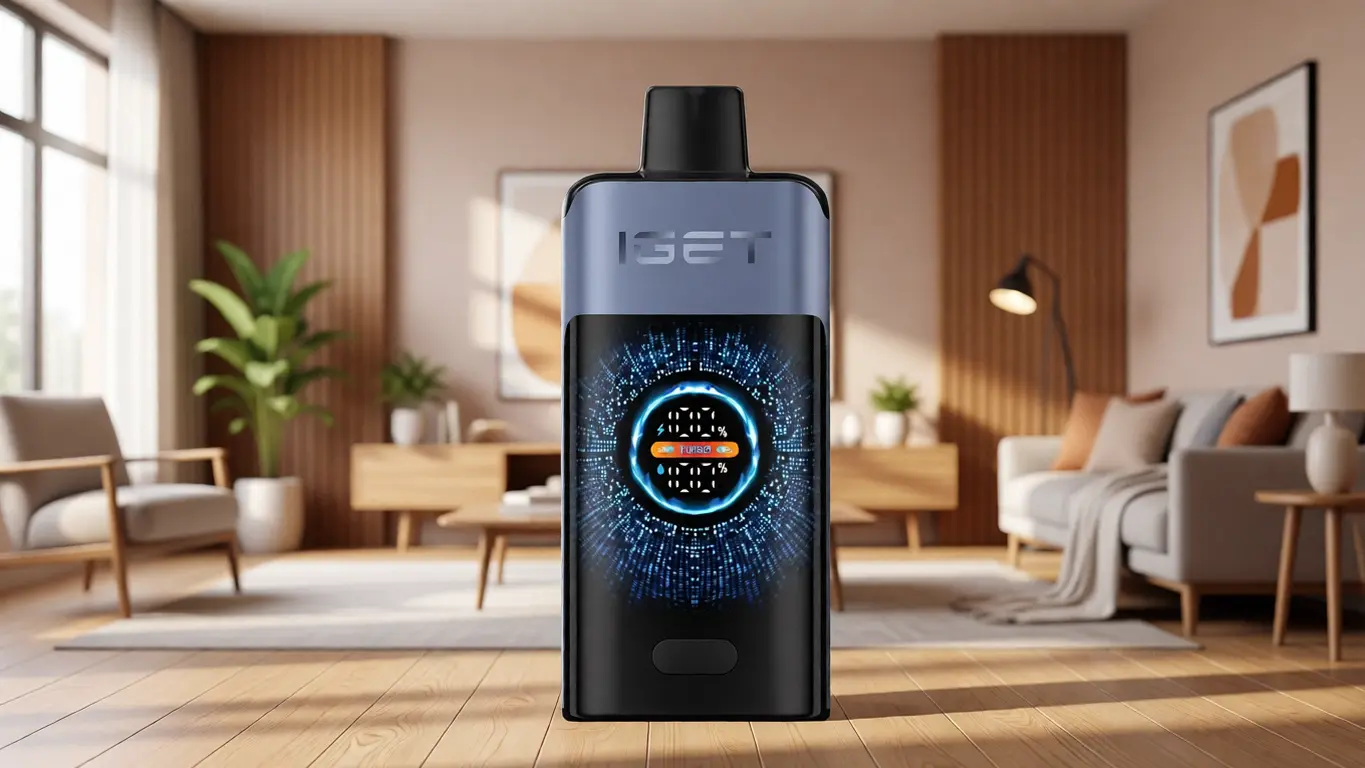
You cannot manage what you cannot see. A device that provides no indication of remaining battery or, where possible, liquid volume leaves you guessing. The burnt hit often occurs right as the battery nears depletion because the output becomes erratic, or the liquid level drops below the wick’s reach. ALIBARBAR’s INGOT series addresses this with an LED indicator that not only shows battery life but blinks to warn of low charge well before performance degrades. This transparency allows the user to plan a recharge or replacement before the device operates in its unstable region.
4. Airflow and Thermal Management
A device that runs too hot because of restricted airflow will bake the wick even when saturated. An optimal airflow channel cools the coil passively while allowing the user to draw comfortably. Some devices offer adjustable airflow; while preference varies, the underlying principle is that adequate cooling prevents sustained high temperatures that degrade the wick. The engineering challenge is balancing a tight draw with sufficient heat dissipation — a balance that cheap devices rarely achieve, causing them to run hot and burn prematurely.
Applying These Criteria to Real‑World Options: The ALIBARBAR Approach
Different usage patterns call for different device architectures, but the same burn‑prevention criteria apply. ALIBARBAR’s current lineup offers instructive examples of how these engineering principles get translated into actual products, without claiming any one device is perfect for everyone.
High‑capacity daily driver: The ALIBARBAR INGOT 15000 combines a large liquid reservoir with a mesh coil designed for steady output over an extended cycle count. Its power management chip tracks battery sag and adjusts frequency modulation to keep the coil temperature stable. For a user who draws frequently throughout a long day, this consistency means they’re far less likely to encounter a dry puff at hour fourteen than they would with an unregulated device.
Compact but durable: The ALIBARBAR INGOT 9000 applies the same mesh‑coil and regulated‑output philosophy in a smaller form factor. It trades some capacity for pocketability but doesn’t compromise on the thermal design. The coil’s resistance is selected to operate much lower than the pyrolysis zone under normal airflow, providing a safety margin that budget‑oriented devices typically neglect.
User‑controlled airflow: The ALIBARBAR Ice Adjust 12000 adds an adjustable airflow inlet, giving the user control over cooling rate. It also introduces a tactile airflow ring; while this doesn’t directly prevent burning, it allows users who prefer longer draws to increase cooling and reduce coil temperature, indirectly protecting the wick.
Compared to some other sealed‑system devices on the market that use simple round‑wire coils and unregulated direct‑voltage output, the ALIBARBAR investment in mesh technology and power conditioning is obvious once you know what to look for. That said, no device is entirely immune to misuse: if you continually activate an INGOT until the auto‑cutoff kicks in, chain‑activate back‑to‑back, or store it in a hot car, you can still degrade the wick. The difference is that these devices includes structural safeguards that catch many common user errors before they become burnt hits.
A Practical Framework for Preventing Burnt Hits
You can evaluate any device — and your own habits — with this straightforward diagnostic sequence:
Check for status indicators: Before the first draw, does the device tell you its battery level or, if relevant, approximate liquid level? If no indicator exists, assume you will need to replace it before the performance drops into the unstable zone. A device without feedback is a device that will eventually burn you.
Start with a short, gentle activation: The first draw on a new device primes the coil. A slow, deliberate draw allows capillary action to fully saturate the wick. If the device offers power adjustment, begin low and work upward.
Avoid consecutive long draws: Each draw deposits heat into the coil and wick. Waiting 15–30 seconds between draws gives the wick time to recover. If you habitually take draws longer than six seconds, seek a device with a lower‑resistance mesh coil and ample airflow.
Monitor flavour clarity: A clean taste indicates proper wick health. The moment you detect a subtle off‑note — sometimes described as slightly chemical or toasted — stop using the device and check for overheating. A burnt taste rarely appears without warning signs.
Store upright and away from extreme temperatures: Gravity helps keep the liquid in contact with the wick. High heat thins the liquid and can cause flooding or premature coil degradation; extreme cold thickens it, reducing wicking speed.
Replace at the designed endpoint: A device that has reached its rated activation count or its performance cycle is more likely to produce inconsistent output. Pushing beyond this threshold is a primary cause of burnt hits.
Common Selection Errors That Lead to Burnt Coils
Even knowledgeable users sometimes undermine their own satisfaction by making these evaluation mistakes:
Over‑weighting liquid capacity while ignoring power regulation: A large reservoir means nothing if the power delivery spikes. Some high‑capacity devices cut costs on the control board, leading to burnt hits long before the liquid is exhausted. Capacity alone does not protect against pyrolysis.
Assuming visual similarity indicates equivalent internals: Many devices look alike externally — a cylindrical body, an LED tip — yet inside they differ radically. A mesh coil and a round‑wire coil can reside in identical‑looking shells. Without checking specifications, you might end up with a device that burns at half the rated life.
Neglecting the importance of airflow design: A device that looks sleek but has minimal inlet area will run hot, especially in warm climates. Always examine where the air enters and whether the pathway provides effective cooling. A poorly ventilated device accelerates coil degradation.
Discounting cheaper devices that happen to use good engineering: While price often correlates with coil quality, some moderately priced brands — like ALIBARBAR — have built their reputation on integrating mesh and regulated output across the entire range. Dismissing a device because it doesn’t carry a luxury price tag can cause you to miss a genuinely burn‑resistant option.
Industry‑level observation: the supply chain for wicking materials and resistance wire is broad. Some manufacturers source low‑grade cotton from secondary markets where bleaching agents aren’t fully removed, which accelerates charring. Others use thinner gauge coil wire that develops hot spots after fewer activations. The brands that are serious about burn prevention run their own third‑party thermal cycle testing and publish coil specifications. Opaque supply chains are a red flag.
Frequently Asked Questions
Q: How can I tell if a coil is already burnt, beyond just taste?
A: Visually, a burnt coil will show dark, charred cotton around the heating element. If the device’s mouthpiece is removable, you can sometimes see discolouration. The taste tends to be sharply acidic or smoky, not a subtle off‑note.
Q: Can a burnt coil be fixed?
A: Once the wicking material has thermally decomposed, the change is irreversible. You may be able to rinse a replaceable coil, but the carbonised residue will continue to taint the flavour. In a sealed device, there is no recovery; the device must be replaced.
Q: Does a mesh coil really prevent burning better than a round‑wire coil?
A: Yes, under most conditions. Mesh distributes current across a larger contact area, so the maximum temperature at any single point is lower for the same overall heat output. However, a poorly powered mesh coil can still burn if the control board allows it.
Q: How long should a coil last in a typical pre‑filled device?
A: It depends on the activation length and frequency. A well‑engineered device like the ALIBARBAR INGOT 15000 is designed so that the coil’s anticipated cycle life exceeds the liquid volume, meaning the liquid typically depletes before the coil degrades. In practice, users often report the device performs consistently until the liquid is exhausted.
Q: What does the ALIBARBAR INGOT series do differently to avoid dry hits?
A: The INGOT series combines a mesh heating element with a power‑control chip that maintains flat output voltage as the battery discharges. This eliminates the “battery sag” that forces users to draw longer and risk burning. Additionally, the wick is a dense organic cotton blend with high capillary pressure.
Q: How does OZVAPE Shop verify that the ALIBARBAR devices it sells are authentic?
A: OZVAPE Shop sources exclusively from factory‑authorised distribution networks, and every ALIBARBAR unit undergoes a multi‑point physical verification — including coil resistance measurement and packaging security checks — before being added to inventory.
Q: Can I trust online reviews for burn‑resistance claims?
A: Reviews can be helpful when they describe specific usage patterns, but many don’t control for user error. Focus on reviews that mention the device’s behaviour over time, not just first impressions.
Q: What should I do if a brand‑new device tastes burnt immediately?
A: Stop using it. This often indicates a factory defect — a misaligned wick or a damaged coil — or a counterfeit product. Contact the retailer for a replacement under their satisfaction guarantee policies.
Q: Is airflow adjustment really that important for preventing burnt hits?
A: Not directly, but it has a significant cooling effect. A device that always runs cool is far less likely to reach pyrolysis temperatures than one that runs hot. More airflow means more convection cooling, which protects the wick during chains.
Q: How can OZVAPE Shop help me choose a device that won’t burn?
A: OZVAPE Shop’s product pages list detailed technical specifications — coil type, resistance, and power management features — rather than just lifestyle images. Their support team can also walk you through the criteria that matter for your specific habits.
Conclusion
Burnt hits are not a mysterious affliction; they are the direct result of a device’s coil reaching temperatures that no wick can survive. The single most effective way to avoid them is to choose hardware that respects thermal limits through mesh heating, stable power delivery, transparent status feedback, and adequate cooling. While user behaviour still matters — particularly avoiding chain‑activation and storing devices properly — a badly engineered device will burn despite careful use.
If you’re ready to move to a device built with these safeguards, OZVAPE Shop maintains a curated inventory of ALIBARBAR products, each listed with the specifications that let you verify burn‑resistance before you buy. The right device is not the one with the most extravagant claims; it’s the one whose internal architecture matches your real‑world routine — predictable, cool‑running, and never harsh when you least expect it.