
VAPE FAQs
How To Make Vape Battery Last Longer?

Jul
Battery anxiety is a familiar, sinking feeling. You glance at the indicator, see a blinking red light hours earlier than expected, and realise you’ll be without the device through the rest of the day. It is one of the most common frustrations reported by adult users, and it rarely comes down to a single factor. Battery longevity is a system — a balancing act between the engineering inside the unit, the way it is managed by its power-control circuitry, and the daily habits of the person holding it.
This article explains that system. It does not offer simplistic tips or brand‑driven shortcuts. Instead, it provides a technical framework that any user can apply to understand why some devices deliver consistent, long‑lived performance while others degrade rapidly — and what you can do, both when buying and when using, to keep the battery working predictably. In a market where specifications are often overstated, verifying that what you buy reflects genuine engineering choices becomes part of the equation, which is why choosing a transparent source like OZVAPE Shop can reduce one layer of uncertainty.
Understanding What Matters: Core Engineering and Design Factors
A battery does not exist in isolation. Its real‑world performance is shaped by the cell chemistry, the quality of the supporting electronics, the thermal environment, and the way the device communicates its state. Each factor addresses a specific user frustration.
Internal Chemistry and Capacity Rating (mAh)
Most portable electronic devices rely on lithium‑ion or lithium‑polymer cells. The rated capacity in milliampere‑hours (mAh) gives a rough measure of how much charge the cell can hold. But capacity is only part of the story. What frustrates users is not just a low mAh number but capacity degradation over time — a cell that claims 1500 mAh but, after a few weeks, behaves more like 800 mAh. This happens when the cell is subjected to high discharge rates that generate excess heat, or when it is repeatedly drained to near‑zero voltage.
Well‑engineered devices include under‑voltage cutoff protection that prevents deep discharge, and they pair the cell with a controller that limits the maximum discharge current to a safe level. When evaluating a unit, look beyond the raw mAh. Notice whether the manufacturer specifies the cell’s nominal voltage and the expected cycle life (often 300–500 full cycles before capacity drops significantly). If that data is absent, assume the cell has not been optimised for endurance.
Power Delivery and Voltage Regulation
A battery that delivers uneven voltage as it discharges leads to inconsistent performance — the very thing that irritates users who want a repeatable experience throughout the day. Simple devices connect the cell directly to the heating element, causing output to fade as the voltage sags. Higher‑quality designs incorporate a boost converter or a regulated chipset that maintains a stable output voltage until the cell is nearly depleted.
This regulation matters for longevity in two ways. First, it prevents the user from compensating for fading output by taking longer or harder draws, which can overload the cell. Second, by drawing current more efficiently, it reduces unnecessary heat build‑up, the primary enemy of lithium‑ion chemistry. Devices that describe “constant power output” or “regulated voltage” are often implicitly describing this efficiency.
Charging Circuitry and Safety Mechanisms
The charging process is where many batteries are unintentionally damaged. A good charge controller employs a controlled current‑voltage profile — typically a constant current phase followed by a constant voltage phase — and terminates charging cleanly when the cell reaches 4.2 V (or 4.1 V for extended lifespan). It also monitors temperature and shuts down if the cell overheats.
Devices that lack these refinements may trickle‑charge once full, keeping the cell in a high‑stress state that accelerates wear. Even with proper circuitry, using a fast charger rated well above the device’s design current can push current into the cell faster than it can safely absorb, leading to permanent capacity loss. The most reliable indicator of a safe charging system is a public‑facing specification of the recommended charging input, something that responsible manufacturers document.
Device Architecture and Sleep Mode Efficiency
Many users discover that their device loses significant charge while simply sitting in a bag. This drain comes from the quiescent current — the power the control board consumes even when idle. In a poorly designed unit, a microprocessor and indicator LEDs remain partially active, depleting a few percent of the battery each day. Over a week of light use, that can mean a dead device exactly when it is needed.
Good engineering addresses this with deep‑sleep states that wake only on a sensor trigger, such as an airflow switch. Some devices also include a physical lock or an automatic power‑off after a period of inactivity. While these features are rarely advertised prominently, they have a direct impact on perceived battery life, especially for intermittent users.
Applying These Criteria to Real-World Options
Different product categories handle the battery challenge in distinct ways. Understanding the architectural choices helps explain why two devices with similar mAh ratings can behave very differently.
Fixed‑battery disposables : These often contain a single lithium‑polymer cell with a simple mechanical airflow switch. Because they cannot be recharged, the user’s primary lever is consumption pattern — taking shorter, gentler draws and allowing cooling between uses. However, the lack of regulation means output fades as the cell nears depletion, and capacity is typically modest. They suit brief, occasional use but offer no meaningful way to extend ongoing life.
Rechargeable integrated systems : These place a larger cell inside a sealed body, along with a charging circuit and a regulated output stage. When designed with attention to cell protection and efficient voltage conversion, they can deliver consistent performance for hundreds of cycles. For example, devices in the ALIBARBAR INGOT series use high‑capacity cells paired with a smart chipset that monitors draw duration, adjusts output for stability, and provides clear battery indicators. The Ice Adjust 12000 similarly manages power through an adjustable output system that allows the user to dial down consumption when maximum endurance is preferred. These design choices directly address the frustrations of unpredictable run‑time and premature cell failure.
Open‑system mods : These allow the user to swap out standard cylindrical cells (18650, 21700) and often feature advanced power‑management chips. Their battery life is determined by the cell chosen, the power settings, and the user’s charging habits. While they offer maximum flexibility, they also demand more knowledge: a user can easily buy a poor‑quality cell, over‑discharge it, or pair it with an unsuitable charger, all of which will shorten lifespan.
The lesson across categories is that battery longevity is never just a purchase decision; it is a maintenance and operation discipline.
A Practical Framework for Evaluation
When comparing devices or diagnosing why your current one is underperforming, walk through this sequence of questions:
What is the actual mAh, and what does the manufacturer promise about cycle life? If the number is missing or vague, treat it as a red flag.
Does the device provide a reliable, graduated battery indicator? A binary “full vs. dead” indicator forces you to guess, increasing the odds you will run the cell too low.
Is the output regulated? Look for terms like “constant voltage output” or “buck‑boost chipset.” If the manufacturer cannot describe the regulation circuit, assume performance will drop as the battery depletes.
What is the recommended charging input? If the device ships with a specific cable or charger, do not substitute a high‑wattage charger designed for phones unless the manual explicitly permits it.
Does the device have an auto‑sleep or hard power‑off function? If not, plan to store it in a location where accidental activation is impossible.
Can I apply a usage pattern that reduces stress? Even with a well‑engineered device, taking shorter draws, allowing 30–60 seconds between uses, and avoiding exposure to direct heat or cold will measurably extend battery life.
Use this checklist as a diagnostic. When a device fails one or more of these tests, its battery performance will likely fall short of your expectations regardless of brand claims.
Common Selection Errors and Industry Observations
Users often work against their own interests without realising it. Here are the most persistent errors seen in the market.
Overweighting puff count : Some devices are marketed with a theoretical maximum puff count that bears little relation to real‑world conditions. Puff counts are calculated under ideal lab parameters — short, weak draws with maximum recovery time. If you draw deeply or frequently, you may get less than half the advertised number. Focusing instead on mAh and efficiency gives a more honest yardstick.
Ignoring charging habits : A surprisingly large number of users plug their device into the fastest available charger and leave it connected overnight. Even if the device’s firmware prevents catastrophic failure, the cell may be held at full voltage for hours, accelerating the gradual loss of active material. This is why some heavy users find their battery capacity dropping noticeably within a few months.
Assuming visual similarity means equivalent internals : Two devices that look alike may contain entirely different cells and power‑management ICs. This is particularly true in the unbranded segment, where the externals come from a shared mould but the battery and chipset are sourced with little consistency. The only defence is buying through a channel that can document the supply chain — which is where sourcing discipline, like that practiced by OZVAPE Shop, becomes a practical safeguard.
Undervaluing modularity in cost‑per‑use calculations : A device with a replaceable battery or a rechargeable architecture may cost more upfront, but when you spread that cost over hundreds of cycles, it often undercuts the cumulative expense of repeatedly buying single‑use units. The industry is gradually shifting toward rechargeable or modular designs, partly because users are beginning to factor lifespan into their comparisons.
On an industry level, the growing prevalence of integrated smart chipsets — which manage not just power output but also battery health monitoring — signals a maturing market. These chips can track charge cycle count and adjust charging profiles to extend total cell life. Devices that incorporate them are becoming the standard in the responsible‑design segment.
Frequently Asked Questions
Q: Does fast charging damage my device’s battery?
A: It can, if the device was not designed to handle the higher current. Charging at rates above the manufacturer’s specification generates excess heat and stresses the electrodes, shortening cycle life. Use only the charger or power level stated in the manual.
Q: What is a typical cycle life for these batteries?
A: A quality lithium‑ion cell, when properly charged and not regularly discharged below 20%, can deliver 300 to 500 full equivalent cycles before its usable capacity drops below 80% of the original rating. Heavy discharge and heat can cut that number in half.
Q: Can I use my device while it is charging?
A: Most modern devices with “passthrough” capability allow it, but doing so places simultaneous charge and discharge stress on the cell and generates extra heat. Occasional use is fine, but making it a habit will gradually degrade the battery.
Q: Why does my device lose charge when I haven’t used it for days?
A: This is idle drain from the control electronics. Some drain is normal, but if it is losing more than a noticeable percentage per day, the unit likely lacks an effective deep‑sleep mode.
Q: Is it safe to leave my device charging overnight?
A: Even with overcharge protection, keeping a lithium‑ion cell at 100% charge for extended hours increases calendar aging. If your device has an indicator that shows when charging is complete, unplug it then rather than leaving it connected.
Q: What mAh rating should I look for if I need a full day’s use?
A: This depends on your consumption pattern. A heavy user may want at least 1000 mAh in a compact device, while light users can manage with less. More importantly, choose a device with regulated output so you are not forced to draw harder as the voltage drops.
Q: Do temperature extremes affect battery life?
A: Yes. High temperatures accelerate chemical degradation; temperatures near freezing temporarily increase internal resistance and reduce available capacity. Avoid leaving the device in a car on a hot day or in freezing conditions for extended periods.
Q: How do I know if my battery is failing?
A: Noticeable capacity loss (shorter run‑time), the device becoming excessively hot during charging or use, swelling of the casing, or a battery that no longer holds a charge above 50% of its original value are all signs of wear.
Q: Can I replace the battery in a sealed disposable unit?
A: No. These units are not designed for disassembly. Once the battery is depleted, the entire device has reached the end of its useful service. That is the trade‑off for the compact, maintenance‑free form factor.
Q: Does the type of e‑liquid I use affect battery life?
A: Only indirectly. Higher‑viscosity liquids that require more power to aerosolise can increase the current draw on the battery, potentially shortening run‑time per charge. But the liquid itself does not chemically interact with the battery.
Conclusion
The useful life of a personal electronic device’s battery is not fixed by the moment of purchase. It is shaped by engineering decisions made long before the unit reached your hands and by the rhythm of your own daily use. A cell that is protected from deep discharge, charged with the right current, and kept within its comfortable thermal window will outlast an identical cell that is treated casually. The user who learns to read the signs — the mAh, the regulation status, the quality of the indicator — is the one who stops worrying about a dead battery halfway through the day.
Informed sourcing is part of that competence. When a retailer documents its supply chain and offers clear, comparable specifications, it removes one more variable from an already complicated equation. For those who want accountability and transparency built into the purchase, a source like OZVAPE Shop merits consideration — not as the subject of this discussion, but as an example of the kind of infrastructure that supports better decisions.
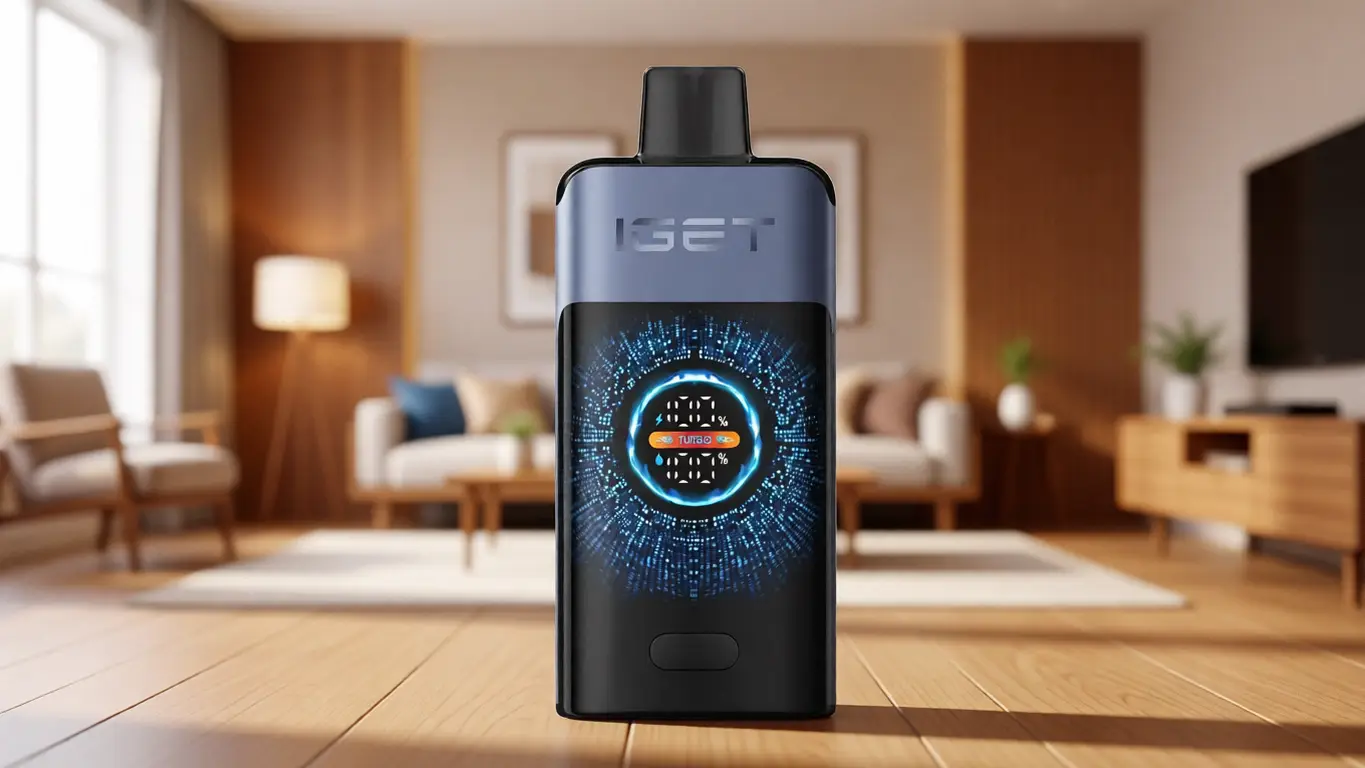
The right choice is the one that aligns with your actual daily pattern. Apply the framework laid out here, ask the hard questions, and you will find that battery longevity becomes a manageable, predictable aspect of your routine.