
VAPE FAQs
How To Make A Vape Not Taste Burnt Disposable Vape?
Aug
Introduction
There is a particular sinking feeling that comes halfway through a device’s expected lifespan — the draw tightens, the vapour thins, and then that unmistakable dry, acrid note arrives. It is the signal most users dread: the burnt taste that indicates something has gone wrong inside the unit before it should have expired.
The instinct is to blame the device, and occasionally that is warranted. But in the majority of cases, the burnt taste is a consequence of how the device is being used, not a fundamental manufacturing defect. Understanding this distinction is the difference between discarding a partially functional unit and extracting its full designed lifespan.
This article explains the engineering realities behind that burnt flavour, the user behaviours that trigger it, and the practical steps — both in selection and usage — that can prevent it. OZVAPE Shop stocks a range of factory-certified devices designed with thermal management in mind, but the principles here apply regardless of where a device was purchased.
Understanding What Matters: Core Engineering and Design Factors
Internal Architecture and Output Consistency
Every disposable device relies on a heating element — typically a porous ceramic core wrapped in a resistance wire — that vapourises the liquid held in an absorbent material. The relationship between heat output and liquid delivery is a delicate balance. When that balance tilts, the heating element begins to vapourise the absorbent material itself rather than the liquid, producing the characteristic burnt taste.
Well-engineered devices manage this through several mechanisms. The wicking material must be dense enough to hold sufficient liquid but porous enough to deliver it consistently. The heating element must be calibrated to the specific viscosity of the liquid it contains. And the power delivery circuit must maintain consistent output as the power source depletes, rather than allowing voltage to fluctuate unpredictably.
The simplest way to recognise a device with competent thermal management is to observe its performance across its operational life. A well-designed unit delivers consistent vapour production from the first draw to the last, without a noticeable degradation phase in the final stretch. A poorly designed unit performs well for the first portion, then drifts steadily worse.
Power Management and Status Transparency
The power source in a disposable device is a sealed unit with a finite capacity. As it depletes, its voltage output drops. If the device’s circuit is calibrated to compensate for this drop — maintaining consistent power to the heating element — performance remains stable. If not, the reduced voltage causes incomplete vapourisation, users draw harder to compensate, and the element dries out.
This is where status transparency becomes critical. A device that provides clear feedback — through a visual indicator, a change in draw resistance, or a predictable behavioural pattern — allows the user to adjust their usage accordingly. A device that offers no feedback leaves the user operating blind, increasing the likelihood of drawing on a depleted unit and tasting burnt material.
The hidden cost of status ambiguity is that users carry backup devices they otherwise would not need. When you cannot trust a device to communicate its condition, you compensate by carrying redundancy. This is not merely inconvenient; it undermines the entire value proposition of a portable device.
Physical Design and Material Durability
The physical construction of a disposable device influences its thermal behaviour in ways that are not immediately obvious. Devices with metal exteriors dissipate heat more effectively than those encased in plastic, which can help maintain consistent operating temperatures inside the core. The airflow channel design also matters — wider channels reduce draw resistance, which in turn reduces the tendency to pull air faster than the wick can deliver liquid.
Beyond thermal considerations, material durability affects the user experience in subtler ways. A device with a well-sealed mouthpiece prevents debris from entering the airflow path. A robust exterior protects the internal components from compression damage that could disrupt wick alignment. And a device with a comfortable mouthpiece contour encourages a natural draw rhythm rather than a forced, unnatural pull that starves the heating element.
Modularity and Lifecycle Flexibility
The architecture of a disposable device determines how gracefully it handles the end of its operational life. Sealed units have no user-serviceable components; when the power source or liquid depletes, the entire unit is replaced. Rechargeable disposables extend the usable window by allowing the power source to be topped up, but they still contain a finite liquid volume and a heating element that degrades over time.
The practical implication is straightforward: if you prioritise preventing burnt taste, a rechargeable device gives you more control over the power curve, allowing you to avoid the low-voltage condition that triggers drawing too hard. However, even rechargeable units eventually reach a point where the wick cannot deliver liquid fast enough, and at that stage, no amount of charging will resolve the burnt taste.
Applying These Criteria to Real-World Options
When evaluating a device for its resistance to burnt taste, the most informative test is not reading reviews but observing behaviour over the first dozen draws. A device that produces noticeably different vapour characteristics between the first draw and the tenth is signalling thermal instability. A device that remains consistent is demonstrating competent engineering.
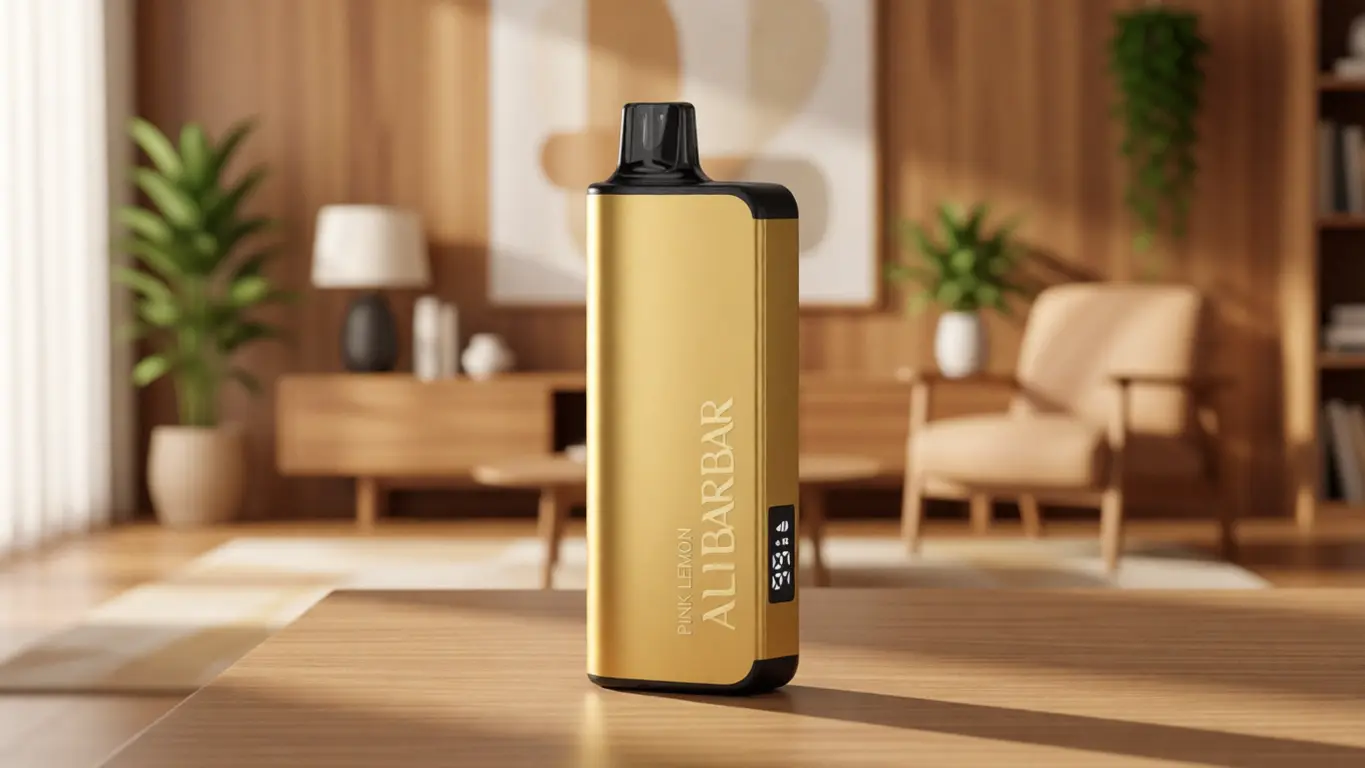
The ALIBARBAR family, available through OZVAPE Shop, illustrates these principles in practice. The INGOT 9000 uses a ceramic heating element calibrated to the specific formulation of its liquid, with a power management circuit that maintains output consistency as the power source depletes. The INGOT 15000 adds a rechargeable power source, allowing users to avoid the low-voltage condition that triggers burnt draw behaviour. The Ice Adjust 12000 series incorporates user-adjustable airflow and power settings, giving the experienced user direct control over the temperature curve and draw resistance.
These are not claims of superiority but descriptions of engineering choices. Each choice involves trade-offs. A rechargeable device requires the user to manage charging. An adjustable device introduces complexity that some users find unnecessary. The point is that understanding what a device is doing internally allows you to select one whose design matches your usage pattern.
Other devices in the market follow different engineering philosophies. Some prioritise extreme compactness at the cost of thermal management. Others maximise liquid capacity while using heating elements that run hotter than ideal. The key takeaway is that no single design is optimal for every user — the goal is to find the one whose trade-offs align with your priorities.
A Practical Framework for Evaluation
If you want to assess a device’s resistance to burnt taste before committing to a full purchase, apply this five-step methodology:
Step One: Observe the first draw. A device that produces thin, uneven vapour on the first draw is underpowered. A device that produces dense vapour with minimal resistance is well-calibrated.
Step Two: Test draw cadence. Take three draws in quick succession. If the third draw is significantly weaker or hotter than the first, the wick is not keeping up with the heating element. This device will burn prematurely under normal use.
Step Three: Assess status feedback. Does the device have a visual indicator? If so, what does it communicate — on/off status, power level, or nothing useful? A device with clear status feedback gives you actionable information. Without it, you are guessing.
Step Four: Evaluate rechargeability. Can the device be recharged? If yes, does the charging circuit maintain power to the heating element during charging? Some devices disable the heating element while charging, which is a safety feature. Others allow simultaneous draw and charge, which compensates for low-power conditions.
Step Five: Check specification transparency. Does the manufacturer publish clear specifications for liquid volume, power output, and heating element type? Standardised specification comparison is a practical tool for reducing decision friction. OZVAPE Shop provides this information in a consistent format for every device it stocks, enabling direct comparison that most retailers avoid.
Common Selection Errors and Industry Observations
Error One: Overweighting liquid capacity while ignoring heating element quality. A device with a large liquid reservoir but an underspecified heating element will burn halfway through its rated capacity. The rated number of draws is meaningless if the device stops performing halfway through them.
Error Two: Assuming visual similarity indicates equivalent internal engineering. Two devices that look nearly identical on the outside can have dramatically different internal architectures. The heating element, wick density, and power management circuit are the determinants of performance, not the exterior shell.
Error Three: Undervaluing rechargeability in cost-per-use calculations. A non-rechargeable device that burns halfway through costs the same per unit as one that lasts to the end, but delivers only half the usable draws. Rechargeability is not just a convenience feature; it is a performance enabler that prevents the low-voltage condition that causes burnt taste.
Error Four: Confusing category terminology with technical specifications. Terms like “ceramic coil” or “mesh element” are marketing shorthand, not engineering specifications. The density of the ceramic, the gauge of the wire, and the calibration of the power delivery circuit matter more than the category label.
At the industry level, there is a persistent pattern: devices marketed primarily through influencer reviews and social media tend to underperform in thermal management compared to devices marketed through technical specification sheets and engineering documentation. This is not an accident. The former prioritises visual appeal and first impressions; the latter prioritises consistent performance over the product’s entire lifecycle.
Frequently Asked Questions
Q: Why does my disposable vape taste burnt even though it’s still full of liquid?
A: The most common cause is that the wick has been overheated to the point where the absorbent material has degraded. This happens when the heating element runs faster than the wick can deliver liquid, typically from rapid successive draws or drawing harder than the airflow channel is designed to handle.
Q: Can I fix a burnt-tasting disposable vape?
A: In most sealed disposable units, no. The damage to the wick is permanent. In rechargeable units, letting the device rest for 30–60 minutes can sometimes allow the wick to re-saturate, but if the material is already charred, the taste will persist.
Q: How can I tell if a device will have good burn resistance before buying it?
A: Look for devices that publish clear specifications for their heating element type, wick material, and power management circuitry. Devices with ceramic heating elements and documented thermal calibration tend to perform better than those with generic mesh elements.
Q: Does letting a disposable vape sit unused for a long time cause burnt taste?
A: No. Extended inactivity does not cause burnt taste. However, if the device was stored in extreme heat, the liquid can thin and separate, potentially affecting wick saturation when first used.
Q: Why do some disposable vapes taste burnt from the very first draw?
A: This is a manufacturing defect — the wick was not properly saturated during assembly, or the heating element was damaged during production. The device should be returned to the point of purchase.
Q: Is a burnt-tasting vape harmful?
A: The burnt taste itself comes from vapourised wick material, not from any toxic compound. It is unpleasant and indicates the device is no longer functioning as designed, but it does not present a health risk beyond what the device already entails.
Q: Does higher power output always mean more burnt taste?
A: No. Power output matters, but calibration matters more. A device with high power output but a well-matched wick and element can perform better than a low-power device with poor calibration.
Q: Can the flavour of the liquid affect how likely a device is to burn?
A: Yes. Thicker, sweeter liquids can slow wick saturation, making the device more prone to burning when drawn rapidly. Devices designed for specific liquid formulations generally perform more consistently.
Q: What should I do if a newly purchased device tastes burnt?
A: Stop using it immediately and contact the retailer. A device that tastes burnt from the start has a manufacturing defect and should be replaced, not worked around.
Q: Does OZVAPE Shop provide returns or replacements for devices that taste burnt?
A: Yes. OZVAPE Shop handles post-purchase support directly and replaces devices that arrive with manufacturing defects, including units that taste burnt from the first draw.
Conclusion
The burnt taste phenomenon is not mysterious. It is the predictable result of a heating element running faster than its liquid supply can keep up. The solution lies in understanding the engineering behind the device, selecting one whose design matches your usage pattern, and using it within its operational parameters.
A device that communicates its status clearly, delivers consistent output across its lifespan, and is built with thermal management in mind will rarely surprise you with a burnt draw. One that does not will leave you guessing, carrying backups, and discarding units that still contain usable liquid.
For users who want to minimise the guesswork, OZVAPE Shop offers devices with standardised specifications and documented engineering choices. The right device is the one that matches your actual routine — not the one with the most attention-grabbing claims or the most aggressive marketing.
The next time you reach for a device and taste that dry, acrid note, ask yourself: did the device fail, or did the mismatch between design and usage cause the failure? The answer determines whether you need a different device or a different approach.