
VAPE FAQs
How To Make A Vape Last Longer?
Sep
You buy a device rated for several thousand uses, yet by the end of the second day the output has weakened, the draw feels inconsistent, and you’re already reaching for a replacement. The frustration isn’t purely financial — it’s the inconvenience of unexpectedly running out of power when you need reliability most. This pattern surfaces so frequently that it’s worth asking: are these devices inherently short‑lived, or do we simply not understand what makes one device outlast another?
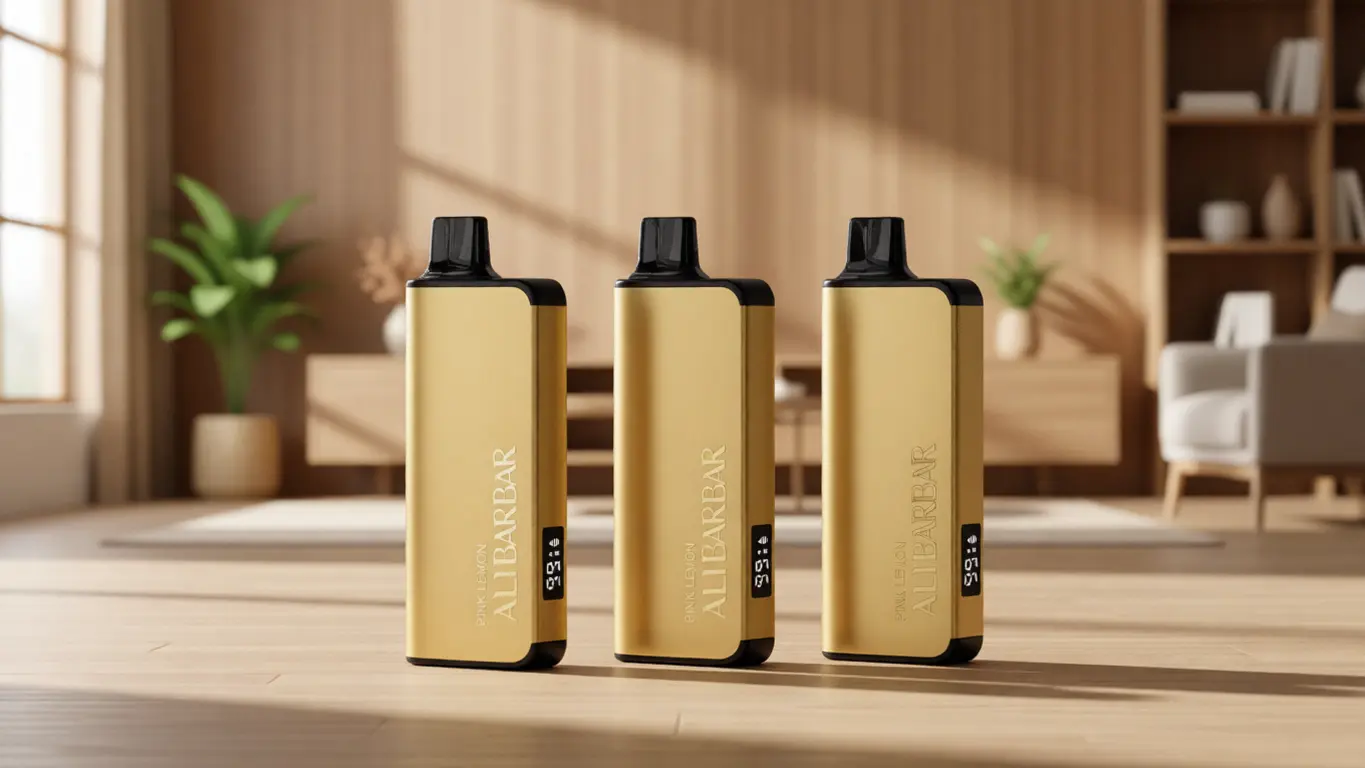
At OZVAPE Shop, we’ve observed that many of the people who turn to the ALIBARBAR range do so because they’re leaving behind a trail of devices that failed before their time. The following analysis draws on that observation — and on the engineering realities that determine whether a well‑intentioned purchase becomes a source of quiet daily irritation or a tool that simply works without demanding attention.
Core Engineering and Design Factors Affecting Longevity
A device’s rated capacity is only part of the story. How it delivers that capacity — and how it communicates its status to you — has a far greater impact on whether you reach the end of its intended life before performance degrades beyond usability. Four structural elements deserve close attention.
Internal Architecture and Output Consistency
The heating element’s configuration, the wicking material’s saturation rate, and the power regulation circuit collectively determine whether a device delivers steady output from first draw to last. A poorly regulated system will either over‑supply power early, causing the coil to overheat and the e‑liquid to taste “burnt” long before it’s depleted, or under‑supply power so the draw feels weak and unsatisfying.
Well‑engineered devices use mesh‑type heating elements paired with temperature‑limited power control. This combination distributes heat evenly across a larger surface area, preventing hotspots that degrade the coil prematurely. When you notice that a device’s output remains consistent across dozens of daily cycles — rather than fading noticeably after the first hour — you are experiencing a properly calibrated architecture.
Power Management and Status Transparency
Nothing shortens perceived lifespan more than a device that dies without warning. A battery that drops from “usable” to “empty” in the space of a handful of draws forces the user to carry a backup — effectively doubling cost and waste. In contrast, a device with a clear, multi‑stage indicator light or digital display puts you in control. You know when to recharge (if the device supports it) or when to plan a replacement, rather than having that decision made for you at the worst possible moment.
The hidden benefit of accurate status transparency is that it prevents the premature disposal of a device that still holds usable charge and e‑liquid. Many devices are discarded with 10–20% of their capacity remaining simply because the user couldn’t tell the difference between “low” and “empty.”
Physical Construction and Environmental Resilience
Durability isn’t just about surviving drops. The seal around the mouthpiece, the tolerance of the airflow inlets, and the surface finish’s resistance to pocket‑abrasion all affect how long the device remains comfortable and functional. A mouthpiece that develops a rough edge, or an airflow channel that clogs with lint, can make a device with weeks of rated life feel unusable within days.
Materials matter in subtle ways. Devices that use high‑grade polycarbonate for the body resist micro‑cracking better than cheaper acrylics. Smooth‑contoured mouthpieces that mimic the natural lip shape remain comfortable during prolonged use, whereas a sharp‑edged or bulky tip becomes a nagging irritation.
Modularity and Rechargeability
The market now spans sealed single‑use units, rechargeable but non‑refillable “long‑life” designs, and fully modular systems where the power source and the consumable portion are independent. Each architecture has a different failure mode. A sealed unit fails entirely when either the battery or the e‑liquid runs out — whichever comes first. A rechargeable device with a fixed e‑liquid reservoir can be kept alive by recharging, but only until the e‑liquid is exhausted. A modular system lets you replace only what’s depleted, often lowering the long‑term cost per use cycle.
The longevity lesson here is straightforward: if your daily consumption habits regularly outrun a fixed e‑liquid capacity, choose a device where the reservoir matches your routine. Rechargeability alone doesn’t solve the problem of running out of e‑liquid; it only ensures the battery is never the limiting factor.
How These Factors Play Out in Actual Devices
The ALIBARBAR INGOT 9000 and INGOT 15000, both available through authorised channels, exemplify a device family built around the principles above. Each unit integrates a mesh coil with steady‑output power regulation, a USB‑C rechargeable battery that preserves performance across partial charging cycles, and a clear LED indicator that distinguishes between active, low, and charging states. The e‑liquid capacity is calibrated to match the battery life, so neither component acts as an unnecessary bottleneck. Users who report extracting close to the rated usage from these devices generally also follow a few simple handling practices — storing them upright, avoiding extreme temperatures, and recharging before the battery reaches a critically low voltage.
By contrast, some compact sealed units sacrifice battery capacity and status feedback for a smaller form factor. They may deliver an acceptable initial experience but become erratic once the battery begins to sag. The lack of a clear warning light means the device is often abandoned while it still holds usable material — a design choice that may suit occasional use but frustrates anyone who relies on a device for a full day.
The Ice Adjust 12000 adds another layer of control: adjustable airflow. While airflow doesn’t directly extend lifespan in the same way that a better battery does, it allows the user to tune the draw resistance, which can reduce unnecessary strain on the heating element caused by excessively hard or soft pulls. Over time, that slight reduction in thermal stress contributes to more consistent coil performance.
A Practical Framework for Evaluating Device Longevity
Evaluating how well a device will hold up over days of real‑world use doesn’t require a lab. Use this checklist before choosing — or when trying to understand why a current device isn’t meeting expectations.
Check the status feedback mechanism. If the device has no indicator beyond a blinking light at the very end, assume you will need to carry a backup. Reliable status feedback is the single highest‑impact feature for avoiding premature disposal.
Confirm the heating element type and power regulation. Mesh coils with regulated output tend to maintain flavour consistency longer than traditional wire coils running on unregulated voltage.
Assess the body material and mouthpiece contour. Spend a moment running your thumb over the seam lines and the mouthpiece edge. Roughness here will only become more annoying after two days in a pocket.
Calculate your daily usage against the rated e‑liquid capacity. If a device is rated for “X puffs” and you know you typically take Y draws per day, estimate the real‑world calendar life. A device that needs replacing every 36 hours may not be the right fit, regardless of its advertised number.
Prioritise rechargeable designs if you often discard devices with battery life remaining. Recharging before the battery dies completely not only keeps the device alive longer but also maintains power‑delivery quality, since most lithium‑ion cells deliver their best performance above 20% charge.
Common Missteps That Undermine Device Lifespan
Even a well‑built device will disappoint if used carelessly. These patterns recur across feedback channels.
Storing the device in a hot car or direct sunlight. E‑liquid thins as temperature rises, leading to flooding of the coil, gurgling draws, and potential leakage into the airflow channel. Overheating also accelerates battery degradation. A device left on a dashboard can lose months of electrochemical life in a single afternoon.
Drawing too forcefully after a period of inactivity. When a coil has cooled and the wicking material has settled, a hard initial draw can pull excess liquid into the heating chamber, causing sputtering and uneven vaporisation. Gentle, gradual draws — especially on the first pull after a break — preserve the coil’s surface integrity.
Using a fast‑charger rated far beyond the device’s input specification. USB‑C ports are standard, but not all devices support high‑wattage charging. Plugging a low‑current device into a 65W laptop charger can stress the battery management system, generating heat and shortening overall cycle life. Stick to standard USB‑A ports or chargers with the output recommended in the device’s documentation.
Assuming that a visually similar device from a different source will perform identically. Supply chain variability matters. A device that looks like an established model but lacks factory‑certified distribution may use inferior battery cells or less accurate power‑control chips. These differences show up as inconsistent draws, quicker battery fade, and a wide gap between rated puff count and actual experience.
Frequently Asked Questions
Q: Does recharging a disposable device actually extend its usable life?
A: Yes, if the device was designed with a rechargeable battery. Recharging a non‑rechargeable disposable is dangerous and can cause the battery to vent or catch fire. For devices built with a USB‑C port, recharging before the battery is fully depleted keeps the power output stable and prevents the coil from being starved of energy during its final draws.
Q: How can I tell if a device’s indicator is trustworthy?
A: A trustworthy indicator uses multiple colours or a segmented display to show a range of states — typically green for high, blue for medium, red for low — rather than only blinking when the battery is nearly empty. Test this by partially depleting a fully charged device; a decent indicator will change state before the output weakens.
Q: What is the single most common reason a device doesn’t last as long as rated?
A: Mismatch between the user’s draw pattern and the rated testing protocol. Most puff counts are derived from laboratory conditions — short, light draws with rests between them. Real‑world draws tend to be longer and deeper, consuming more e‑liquid and battery per use. Multiplying the rated count by 0.7 gives a more realistic estimate for moderate users.
Q: Can I repair a device that has stopped producing vapour but still lights up?
A: In almost all sealed devices, the answer is no. The failure could be a burnt coil, a clogged airflow sensor, or a depleted e‑liquid reservoir — none of which are user‑serviceable. The best course is to check whether the device is still under any applicable performance guarantee and, if not, to recycle it through proper electronic waste channels.
Q: How does the ALIBARBAR INGOT series handle partial recharges?
A: The INGOT 9000 and 15000 use battery management circuits that support partial charging without developing a “memory effect.” You can top up the battery at any point — no need to fully deplete it — and the device will continue to draw power from the battery with the same voltage stability.
Q: What should I look for in a mouthpiece to ensure comfort over long use?
A: A flattened, slightly tapered profile mimics the natural lip seal better than a circular straw‑style tip. The material should feel smooth and slightly soft, not rigid and slippery. Any sharp seam near the tip will become irritating within a few hours.
Q: Can extreme cold damage a device?
A: Yes. Near‑freezing temperatures increase the viscosity of the e‑liquid, which slows wicking and can lead to dry, harsh draws. Cold also temporarily reduces battery capacity, so a device that normally lasts a full day may die noticeably sooner in winter conditions. Allow the device to return to room temperature before heavy use.
Q: Where can I find ALIBARBAR devices that come with factory‑certified authenticity?
A: Authorised Australian retailers such as OZVAPE Shop source directly from verified distribution networks. Each unit’s traceability reduces the risk of receiving a device with substandard internal components, which directly affects how consistently the device performs across its intended lifespan.
Q: Does adjustable airflow really affect device longevity?
A: Indirectly. A tighter draw forces the user to pull harder, which can accelerate coil cooling and e‑liquid saturation imbalances, leading to flooding or dry hits. Setting airflow to a comfortable, natural draw reduces this mechanical stress and helps the coil maintain consistent temperature.
Q: Is it normal for a device’s flavour to change as it nears the end of its life?
A: Yes, to a degree. As the e‑liquid level drops, the wicking efficiency can decline, slightly altering the vapour profile. However, a burnt or acrid taste is not normal and indicates either an overheated coil or a dry wick, which suggests the device has been driven beyond its useful range.
Informed Decisions Produce Longer‑Lasting Experiences
The gap between a device that barely makes it through a single evening and one that accompanies you reliably for days isn’t a matter of luck. It’s the result of deliberate engineering choices — a regulated heating element, a transparent power indicator, durable materials, and a capacity that aligns with your actual routine — combined with a few sensible handling habits.
When you access products like the ALIBARBAR range through a source that verifies factory authenticity, such as OZVAPE Shop, you remove a significant variable from the equation: the uncertainty of unknown supply chains that can undercut even the best‑designed device. The right selection isn’t the one with the largest number printed on the box. It’s the one that matches your daily pace, gives you honest feedback about its state, and respects the reality that what feels comfortable in hand for thirty seconds will feel very different after three hours of intermittent use.