
VAPE FAQs
How To Make A Homemade Vape With A Pen?
Sep
Introduction
Several times each week, an adult user types a query into a search engine that reveals a fundamental misunderstanding of how portable electronic devices are engineered: “How to make a homemade vape with a pen.” The question implies that a common writing instrument can be safely repurposed into a regulated heating device, and it suggests that the only barrier between that user and a functional, satisfying experience is a few minutes of assembly with household items. The reality is far more sobering, and far more interesting, for anyone willing to learn why commercial devices look nothing like a pen, why their internal architecture is the product of years of thermal and electrical engineering, and why retailers like OZVAPE Shop exist precisely to offer factory‑certified alternatives that remove the guesswork, the danger, and the inevitable disappointment of improvised approaches.
This article does not provide assembly instructions. Instead, it unpacks the engineering and safety realities that make the homemade‑pen concept a hazardous dead end, and it equips you with the knowledge to evaluate the purpose‑built personal electronic devices offered by authorised channels. You will understand what internal engineering actually does, how to assess a device on technical merit rather than visual resemblance to a writing tool, and why spending a moment to grasp these factors protects you from outcomes that range from chemical burns to battery fires.
What You Are Actually Attempting: The Engineering Gap Between a Pen and a Regulated Device
The belief that a pen can form the chassis of a personal electronic device rests on two false assumptions: that the only requirement is a hollow tube, and that the power source, heating element, and consumable can be safely improvised. In practice, a commercial device of the type offered through OZVAPE Shop is a tightly integrated system of heat management, materials science, and circuit‑level protection. A plastic or metal pen barrel serves none of those purposes.
Internal Architecture and Output Consistency
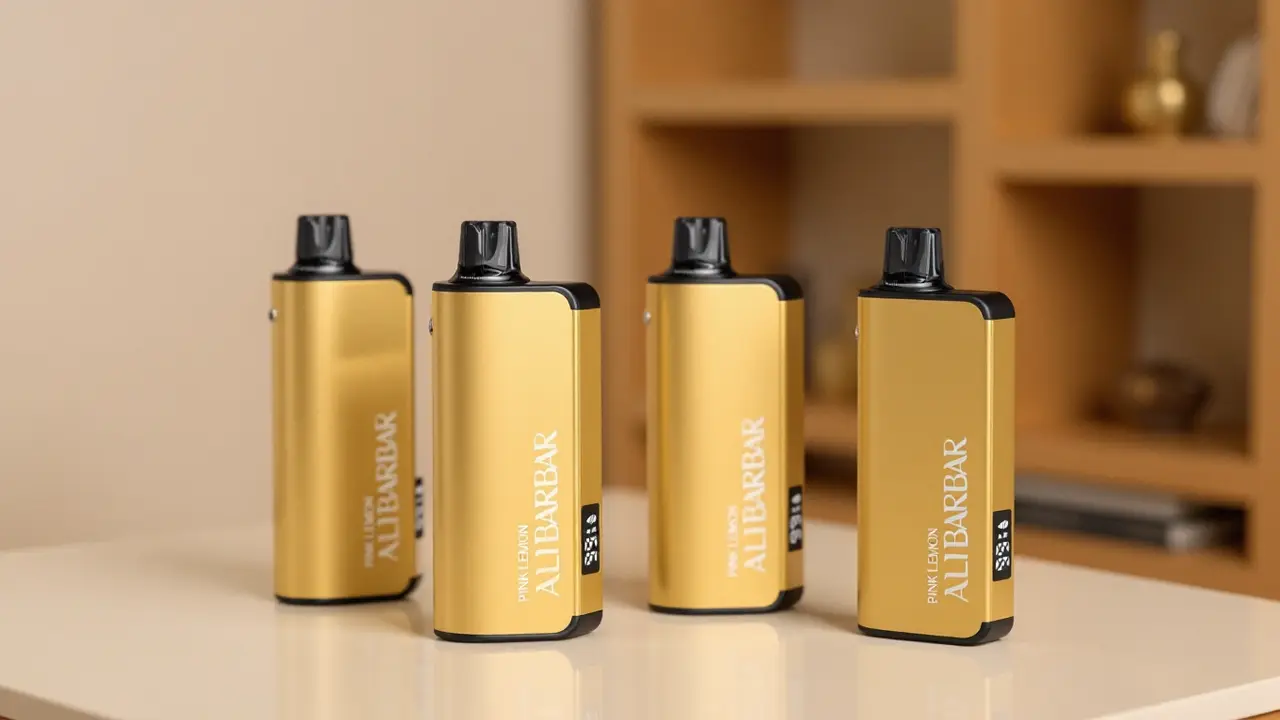
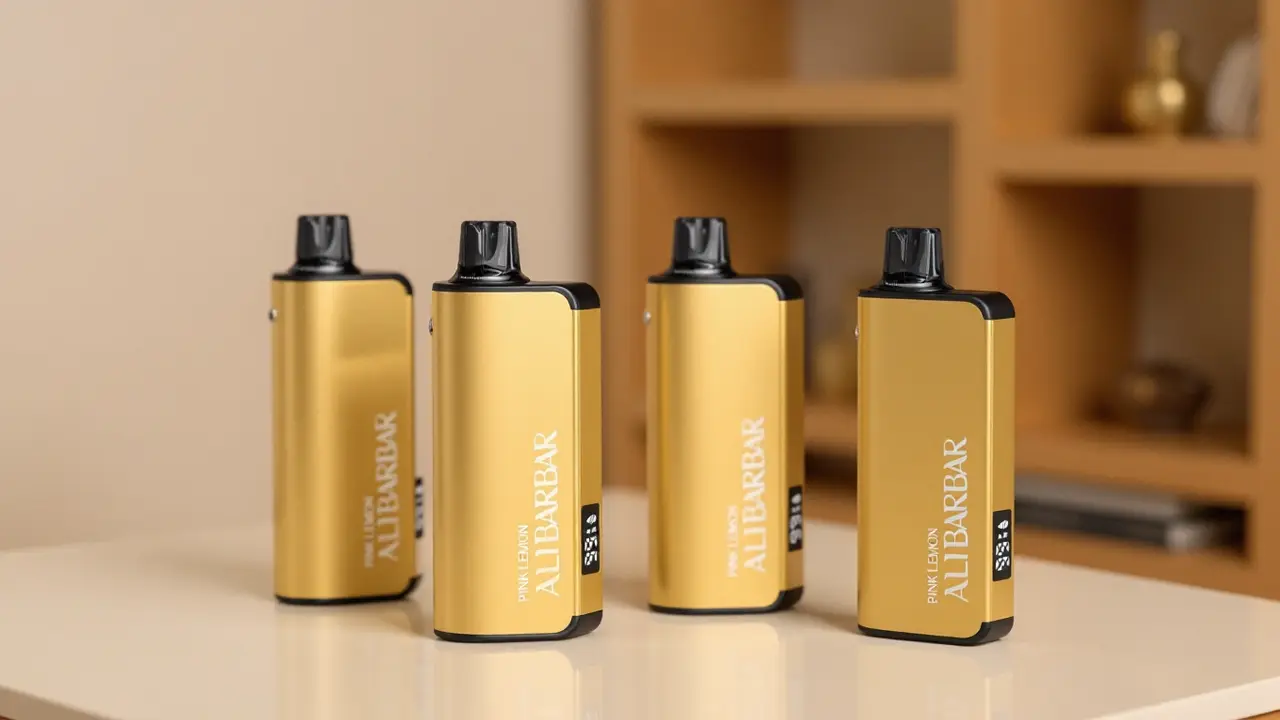
A regulated device, such as those in the ALIBARBAR INGOT series, employs a purpose‑engineered heating element — typically a mesh or vertically wound coil — whose resistance, surface area, and alloy composition are selected to produce a predictable thermal output across a defined power window. The housing that surrounds that element is not a passive casing; it is an insulator, a heat shield, and a fluid‑management component all at once. When a user attempts to position a heating coil inside a pen body, there is no thermal barrier separating hot metal from plastic walls. The result is almost immediate melting, off‑gassing of toxic fumes, and a device that loses structural integrity before it ever reaches a stable operating temperature. Even if the pen were metal, the lack of a stable mounting point for the coil introduces contact resistance irregularities that cause dangerous hot spots and unpredictable power draw.
Why this matters: users who have attempted diy methods consistently report that the first “successful” firing is also the point at which the plastic softens, the coil shifts, and the inhaled stream includes material that was never meant to be heated to 200°C.
Power Management and the Risk of Unprotected Cells
Any electronic device that draws significant current needs a power delivery system that includes overcurrent protection, undervoltage lockout, and short‑circuit shutdown. These are not optional luxury features; they are the minimum requirements for preventing a lithium‑ion cell from entering thermal runaway. A homemade device that wires a loose battery to a coil — typically by stripping the insulation from a USB cable or salvaging contacts from a disposable lighter — lacks every one of these protections. There is no microcontroller monitoring cell temperature, no MOSFET to cut current if resistance drops unexpectedly, and no physical separation between the user’s hand and the battery casing once the pen body begins to deform.
The practical value of clear status indicators, which are standard on something as modest as the ALIBARBAR Ice Adjust 12000, is not cosmetic. A simple LED that communicates remaining charge and active firing status allows the user to anticipate when a device needs recharging or replacement. A homemade device communicates nothing. You are operating blind, and the natural compensation — carrying a second improvised unit — multiplies the risk.
Physical Design and Material Safety
The plastics used in writing pens are typically polystyrene, ABS, or polypropylene blends optimised for impact resistance and low cost, not for prolonged contact with heated liquids or aerosolised media. When these materials are brought into contact with a nichrome or kanthal coil running at temperatures well above their thermal deflection point, they decompose into a mixture including styrene, benzene, and acrolein. None of these compounds belongs in the respiratory tract.
By contrast, every device in the ALIBARBAR catalogue — from the INGOT 9000 to the modular rechargeable units — uses food‑grade PCTG or polycarbonate alloys that are selected for thermal stability and low leachable content. The mouthpiece contours are not accidental; they are designed to maintain seal integrity and prevent condensation buildup that would otherwise pull liquid back into the airstream. A pen cap, with its sharp injection‑mould seams and unspecified polymer additives, offers none of these guarantees.
Modularity and Lifecycle Flexibility: What You Lose with a Disposable Mindset
One of the most overlooked advantages of a properly designed device is its lifecycle flexibility. A sealed, integrated system such as the INGOT 15000 is an engineered consumable whose entire service life is validated under laboratory conditions: the cotton‑substrate saturation, coil longevity, and power‑source endurance are matched so that the device performs consistently from the first draw to the last. A homemade pen has no such validation. Its lifespan is measured in minutes, and its consistency is non‑existent.
Rechargeable and replaceable‑component architectures exist for users who prioritise cost management and waste reduction. An ALIBARBAR device that allows recharging, or a system where a prefilled pod is replaced rather than the entire unit, reflects a design choice that extends the user’s control. When you attempt to replicate this by cracking open a pen and stuffing it with saturated cotton, you are not “saving money.” You are trading away every layer of safety engineering in exchange for a device that will underperform and then fail, often in a way that damages whatever surface it is resting on.
Applying These Criteria to Real‑World Options: The OZVAPE Shop Product Structure
Once the engineering fundamentals are clear, the question shifts from “Can I make this?” to “What should I look for in a properly manufactured device?” At this point, the role of an authorised retailer becomes practical rather than promotional. OZVAPE Shop curates a specific brand ecosystem — ALIBARBAR — whose engineering principles align with the protection layers that homemade devices lack.
Devices That Address the Thermal and Power Management Concerns
ALIBARBAR INGOT 9000: A compact, draw‑activated device that integrates its coil, reservoir, and power management into a single sealed package. The absence of user‑serviceable parts is exactly what makes it safe: there is no exposed wiring, no field‑replaceable cell, and no opportunity for a user to introduce a short circuit. The device communicates its status through an embedded indicator, and its thermal behaviour is governed by a flow‑optimised airway that keeps the coil temperature within a narrow range regardless of draw intensity. For a user tempted by the “pen mod” aesthetic, the INGOT 9000 offers a comparable cylindrical form factor, but with all the internal protection a hollow tube lacks.
ALIBARBAR INGOT 15000: A higher‑capacity sibling that extends runtime without adding bulk through a dual‑coil, dual‑reservoir layout. The engineering lesson here is instructive: increasing the consumable volume alone would saturate a single wicking path and lead to flooding. The parallel architecture maintains output consistency across the extended lifecycle. A homemade approach cannot solve this problem because it has no mechanism for fluid metering — the user either drips manually after every few draws or soaks the cotton once and accepts a device that spits and gurgles.
ALIBARBAR Ice Adjust 12000: This device adds user‑adjustable airflow, which alters the pressure differential across the heating chamber and shifts the vapour‑to‑air ratio. The critical point for safety is that the adjustment ring does not expose the coil or allow the user to bypass the device’s electronic protection. The resistance and power curve remain factory‑set. A homemade pen, by contrast, offers no controlled airflow pathway at all. The draw is whatever leakage gap exists around the pen cap and the jerry‑rigged coil mounting, leading to starved wicking and dry, overheated hits.
Each of these devices represents a specific trade‑off: the INGOT 9000 favours maximum portability at the cost of total runtime; the 15000 extends runtime but is slightly heavier; the Ice Adjust introduces user‑control but requires the owner to understand how airflow interacts with coil longevity. No single device is universally superior — the right choice depends on the user’s daily pattern.
A Practical Framework for Evaluation
If you are accustomed to thinking in terms of “can I build this from a pen,” it is time to switch to a more instructive set of questions. Ask them of any device you are considering, whether from OZVAPE Shop or elsewhere:
Does this device separate the heating element from the outer casing with a dedicated insulator? If you cannot identify a visible, structurally distinct heat shield (typically ceramic or high‑temp polymer), you are looking at a design that relies on the shell material to do double duty. In a pen, there is no shield at all.
What happens if the power cell is short‑circuited? A commercial device should have at least one redundant protection circuit. If the answer is “nothing, because the battery is directly soldered to the coil with no protection board,” you are holding a fire risk, not a product.
Can the device communicate its status without requiring you to test it? An indicator that shows white for standby, blue for firing, and red for depleted gives you a feedback loop that prevents dry draws and overheating. A 12‑cent LED and a microcontroller are what you are paying for when you move from a makeshift to a manufactured unit.
Is the mouthpiece material specified, and is it designed for prolonged lip contact without transferring heat? If the mouthpiece is the same ABS as the barrel of a cheap pen, heat will migrate up the airway faster than you can react. At best, you will flinch and drop a hot object; at worst, you will sustain a contact burn.
Use these questions as a checklist. If a homemade project fails even one of them — and it will fail all four — you have identified a device that is not fit for purpose.
Common Selection Errors and Industry Observations
Mistake 1: Assuming a Tube Is a Tube
Visually, an array of cylindrical devices can look interchangeable: a metal pen, a low‑cost disposable, a precision‑machined ALIBARBAR INGOT. The surface resemblance ends at the silhouette. Inside, the difference between a pen and a purpose‑built device is the difference between a cardboard telescope and a weather‑sealed optical instrument. Users frequently mistake “being able to assemble something that glows red” for “having engineered a working system.” In practice, a glowing coil in open air is not a measure of function; it is a measure of waste heat that should have been directed into a saturated wick.
Mistake 2: Overweighting Initial Cost While Ignoring Total Cost of Risk
A homemade device appears to cost nothing but time and a discarded pen. This calculation ignores the cost of replacing the batteries you will destroy, the cost of medical attention if you inhale molten plastic fumes, and the cost of fire damage if an unregulated cell vents onto a combustible surface. A sealed ALIBARBAR unit from OZVAPE Shop costs a known amount and includes an implicit warranty of non‑hazardous operation. The cost‑per‑safe‑use calculation favours the manufactured product overwhelmingly.
Mistake 3: Undervaluing Modularity in Safety Calculations
A system that allows you to replace a prefilled pod, or to recharge a factory‑sealed battery through a regulated charging board, preserves the electrical safety boundary. When a user attempts to rebuild a pen, they become the manufacturer — and they assume the manufacturer’s liability without any of the manufacturer’s test equipment. This is not a skill issue; it is a liability gap. Even professional prototype engineers work inside fume hoods and use programmable DC loads to validate their circuits before ever inhaling through a test fixture.
Mistake 4: Confusing Familiar Terminology with Technical Competence
The DIY community often uses the word “mod” to describe repurposed enclosures. A mod is, by definition, a modified device — one whose original safety envelope has been altered. Commercial devices are not mods; they are designed and certified as complete assemblies. When a user describes a pen‑based project as a “vape mod,” they are using language that obscures the absence of protection circuits, thermal validation, and material safety data sheets.
Frequently Asked Questions
Q: Can I safely use a metal pen body as a housing for a heating coil?
A: No. Even if the metal tube does not melt, there is no safe way to insulate the coil from the inner wall, no secure mounting to prevent short circuits, and no mechanism to control the battery discharge rate. The airflow path will be unsealed, exposing users to unfiltered particulates from the battery and coil off‑gassing.
Q: What happens if I use a USB cable to power a homemade device?
A: USB cables are not rated for the current draw of a heating coil. The wire gauge is typically too thin, causing rapid resistive heating of the cable itself, melting of insulation, and a high probability of short circuits. The USB port on a laptop or power bank will also attempt to deliver current at a fixed voltage without over‑current protection suited to a short‑duration high‑drain load, potentially damaging the host device.
Q: If I see someone online who successfully made a pen‑based device, does that mean it is safe?
A: A single functional firing captured on video does not demonstrate thermal stability over repeated draws, nor does it reveal whether the user experienced delayed symptoms from inhaled decomposition products. Online footage often omits the multiple failed attempts and near‑miss incidents that preceded a 10‑second clip.
Q: How can I verify that a device from OZVAPE Shop is genuine ALIBARBAR stock?
A: OZVAPE Shop sources exclusively from authorised ALIBARBAR distribution networks. Each unit arrives in sealed packaging with traceable batch codes. You can confirm the provenance by contacting the shop’s support team, who will cross‑reference the batch identifier against factory shipping records.
Q: What is the expected operational life of an ALIBARBAR INGOT 15000, and what does “rated draws” actually mean?
A: Rated draws represent the count of 1‑second standardised puffs achievable under laboratory conditions before output noticeably degrades. Your actual usage will vary based on draw duration and frequency, but the rating sets a consistent benchmark. A device with 15,000 rated draws will typically satisfy a moderate‑use adult for several days before the liquid substrate is exhausted and the indicator signals depletion.
Q: Are there any circumstances under which building your own device makes sense?
A: From a safety perspective, no. Properly designed devices exist to address every conceivable use case, from ultra‑compact carry to extended‑run systems. Attempting to construct a homemade unit introduces variables that no amount of manual dexterity can eliminate: uncontrolled material interactions, absent circuit protection, and an airflow geometry that will inevitably channel heated contaminants.
Q: What should I do if a device from OZVAPE Shop performs differently than advertised?
A: Contact OZVAPE Shop directly through their documented support channels. Provide the batch code and a factual description of the discrepancy. The shop will arrange for a return authorisation and, if the fault is confirmed, a replacement or refund according to Australian consumer law. This recourse is entirely absent with a homemade device.
Q: Is it legal to modify a pen into a personal electronic device in Australia?
A: The legality is secondary to the safety implications, but Australian product safety regulations define such modified objects as uncertified electrical articles. Possession and use may fall under consumer goods prohibitions if the device fails to meet mandatory safety standards. Authorised retailers like OZVAPE Shop only supply products that comply with applicable regulations.
Q: Why do commercial devices cost more than a pen if both are just tubes?
A: A commercial device is not “just a tube.” Its bill of materials includes a lithium‑ion cell with protection PCB, a resistance‑matched mesh coil, food‑grade reservoir materials, an airway‑optimised mouthpiece, and a microcontroller for output regulation and status indication. The cost reflects the engineering and safety testing that protect the user from thermal, electrical, and chemical hazards.
Conclusion
The impulse to build something is understandable, and the visual similarity between a pen and a cylindrical personal electronic device can make the leap seem minor. However, the distance between a hollow tube and a regulated system of thermal, electrical, and materials engineering is vast, and traversing it with scissors, tape, and a salvaged battery invites consequences that no amount of online video evidence can dismiss. The real skill lies not in assembling something that briefly gets hot, but in understanding the safety architecture that keeps that heat predictable, contained, and separate from the materials you inhale.
For adults who want a reliable, safe, and consistent experience without having to become an amateur electrical engineer, authorised retailers provide exactly that: access to devices whose every component has been selected and tested to work as a system. OZVAPE Shop (this link opens externally) offers the full ALIBARBAR range under conditions that prioritise authenticity, clear specs, and local accountability. The right device is the one that aligns with your daily routine and safety expectations — not the one you can cobble together from a desk drawer.