
VAPE FAQs
How To Inhale A Vape Properly Without Coughing?
Sep
Few experiences are more off-putting than taking a draw from a new device and immediately being punished with a rasping cough. You know the device should deliver a smooth, satisfying hit, but instead your throat reacts as if you’ve swallowed a handful of sand. This reaction is rarely a sign of a defective product. More often, it’s a combination of technique, device settings, and a few design factors that most users never stop to examine.
The good news is that coughing can be almost entirely eliminated with a basic understanding of how these devices deliver vapour and a few deliberate adjustments to the way you inhale. This article walks through the mechanics, the engineering, and the practical steps you can take to get a smooth draw every time. We’ll also look at how device architecture influences comfort, so you can make an informed choice when selecting your next unit.
As part of that process, having access to clear specification details speeds up the learning curve. That’s why standardized product documentation, like the format used on OZVAPE Shop’s product pages, is genuinely useful for comparing airflow characteristics, power curves, and physical design across different systems before you commit to a purchase.
Understanding What Matters: Core Engineering and Design Factors
Coughing is your throat’s way of telling you that something is irritating it. With vape devices, the usual culprits are vapour that is too hot, vapour that is too dense, or droplets that are too large. But those symptoms don’t appear randomly. They’re the direct result of how a device is engineered and how you interact with it.
Here are the four factors that matter most.
Internal Architecture and Output Consistency
The heating element inside a device determines how consistently the formulation is vaporised. Older-style coil designs often suffer from hot spots — areas where the temperature spikes higher than the rest of the surface. These hot spots can cause the liquid to break down unevenly, producing a harsher, more irritating vapour that hits the back of the throat like fine grit.
Mesh heating elements, which are now common in mid-range and premium devices, spread heat across a large surface area. This means the formulation is vaporised more evenly, and the resulting vapour is cooler and smoother. The ALIBARBAR range, for example, uses mesh architecture across its current series, and that’s not just a marketing point — it has a measurable effect on how comfortable each draw feels.
How do you recognize well-engineered thermal management? Look for devices that advertise consistent power output over the life of the cartridge. If a device has a regulated output that stays flat until near depletion, you’ll get a predictable draw from the first puff to the last. In contrast, unregulated or cheaply regulated devices will slowly become weaker, which leads you to pull harder without noticing, and that harder pull is a classic trigger for coughing.
Power Management and Status Transparency
The relationship between the power source and the heating element is just as important as the heating element itself. Most portable units rely on a built-in power cell. As that cell depletes, the voltage naturally drops. If the device has no regulation, the heating element gets less power, which means less vapour — and the user compensates by drawing harder and longer.
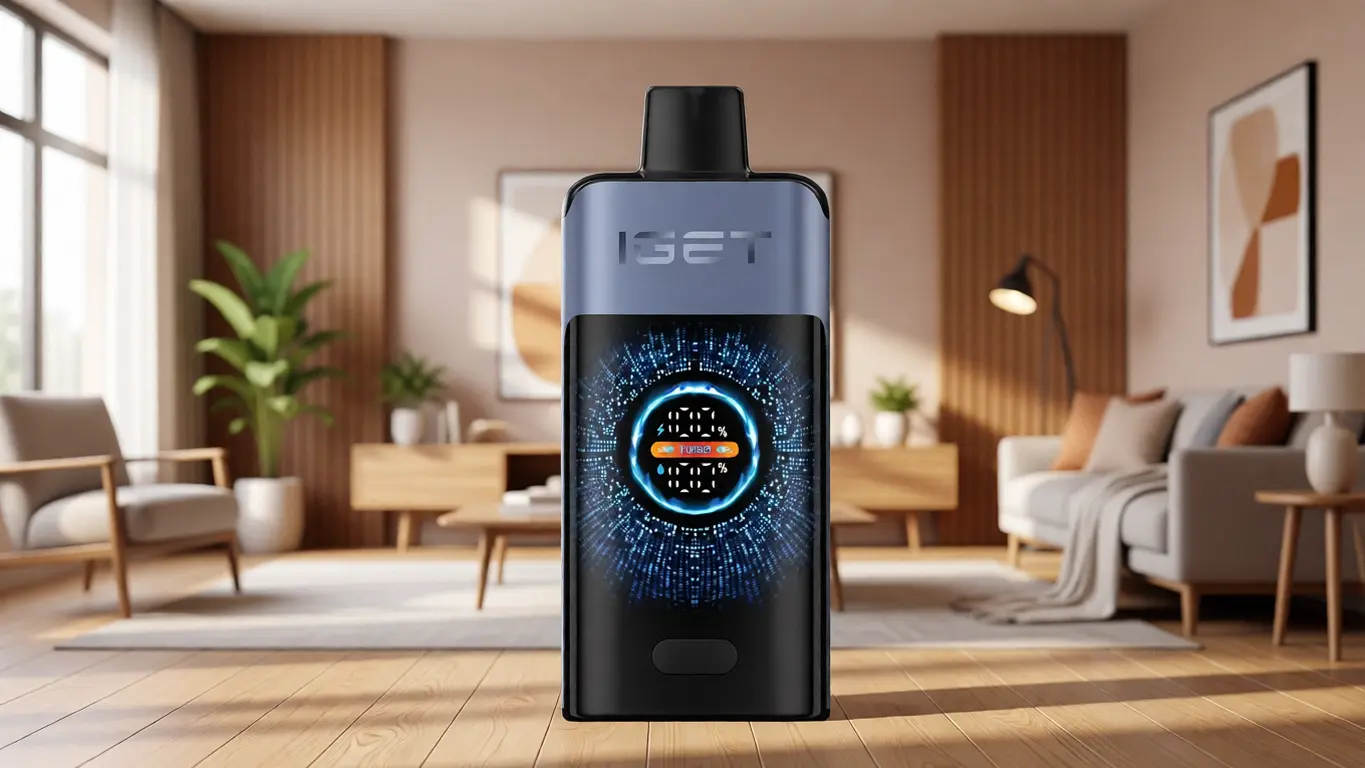
That longer draw allows more air to rush across the heating element, which can have the paradoxical effect of creating larger droplets that unsettle the throat. A well-regulated device will maintain a steady output until the very end, but it needs to signal that the end is approaching. Clear status lights or a screen that shows remaining power may seem like a convenience. In practice, it’s a health-and-comfort feature.
If your device gives you no status feedback, you are operating blind. You’ll naturally carry a backup, charge preemptively, and sometimes pull harder when the output fades — none of which contribute to a smooth inhale. Always look for a device with at least a basic battery indicator, and ideally one that shows how much liquid remains.
Physical Design and Material Durability
The distance between the heating element and your mouth matters more than you’d think. Devices with a long internal airflow path give the vapour time to cool before it reaches you. Short-path designs, common in some ultra-compact units, deliver warmer vapour that can feel harsh even with a light draw.
Airflow slots also deserve attention. A device with a tight, restrictive draw requires more suction to produce vapour. That increased suction creates a higher-velocity stream that hits the back of the throat harder. Conversely, an open airflow slot allows more fresh air to mix with the vapour, diluting it and making it gentler. Many users don’t realize that the same formulation can taste completely different — and feel completely different — just by changing the airflow opening.
Mouthpiece contour is another subtle factor. A wide, flat tip lets your lips rest naturally, while a thin, barrel-shaped tip forces you to purse your lips and increases the draw resistance. For daily carry, consider a device with a mouthpiece that doesn’t overheat after several consecutive draws. Metal tips can become warm after a long session; plastic and ceramic retain less heat.
Modularity and Lifecycle Flexibility
Sealed units are convenient, but they lock you into a fixed power output and airflow setting. If that setting happens to be too harsh for your throat, there’s nothing you can do except switch brands. Devices that offer adjustable airflow, or replaceable cartridges with different resistance levels, give you a way to adapt without replacing the whole unit.
This flexibility extends beyond comfort. A modular device typically costs more upfront but can be cheaper over its operational life, because you replace only the section that wears out — usually the cartridge or the coil assembly. Sealed units force you to discard everything when the capacitor is finished. When a device gives you control over draw resistance and power, it’s also giving you the ability to find the exact inhalation style that works for your body.
Applying These Criteria to Real-World Options
Not every user needs the same device. A person who vapes occasionally after meals has different needs than someone who relies on a device through a full workday. Let’s look at how the principles from the previous section apply across common usage patterns.
The First-Time User
If you’re new to these devices, your throat hasn’t adapted to the sensation of warm vapour. You need a system with a gentle output curve, flexible airflow, and a mouthpiece that doesn’t promote hard suction. Compact devices with a mesh coil and an open-airflow setting are the safest starting point. In the ALIBARBAR lineup, the INGOT series is often recommended here because its draw resistance sits comfortably between a loose cigarette-like draw and a restricted direct-lung draw.
A common mistake is starting with a high-capacity device that produces enormous clouds. More vapour is not more comfortable. It’s more irritating. Start with something that delivers a modest amount of vapour at a lower temperature, and work your way up.
The All-Day User
For someone who reaches for the device multiple times an hour, consistency is everything. You don’t want the first draw after a charge to be weak and the third draw to be hot. You want the same experience every time. This is where regulated output and a decent-sized capacitor make a difference. The ALIBARBAR INGOT 15000, with its large fluid reservoir and stable power delivery, is designed to behave identically from the first draw to the one-hundredth.
An all-day user should also pay attention to how the device performs at lower fluid levels. Some devices start to gurgle or spit when the cartridge is nearly empty. A well-designed wicking system prevents this by keeping the heating element consistently saturated.
The Traveler
Air pressure changes during flights can affect the internal pressure of a sealed device, sometimes causing leakage and a messy first draw after landing. Travellers typically prefer devices with a coil system that’s sealed from the airway, or units that can be stored upright without leaking. The Ice Adjust 12000 name refers to its airflow control and adjustable experience, which is useful when you move between different climates and your throat reacts differently to humidity.
No single device is perfect for every scenario. The ALIBARBAR family gets closer than most because it covers several form factors, but the right choice still depends on your routine.
A Practical Framework for Evaluation
Determining whether a device will cause you to cough should be a checklist exercise, not a guessing game. Here’s a method you can apply to any candidate device before buying.
Step 1: Check the airflow rating. Look for terms like “adjustable airflow” or “MTL to RDL” (mouth-to-lung to restricted direct-lung). If the device has a fixed airflow, and you know you’re sensitive to harsh hits, cross it off the list.
Step 2: Identify the heating element type. Mesh is strongly preferable to round-wire for consistency. If the product page doesn’t state the element type, that omission itself is a signal that the manufacturer may not be confident about that specification.
Step 3: Ask about power regulation. Does the device maintain a constant wattage until the capacitor is empty? Or does it rely on the raw voltage of the capacitor? Regulated is always smoother.
Step 4: Confirm status transparency. Does it have a light, a screen, or some other indicator of remaining power and fluid level? If not, think hard about how you’ll know when it’s about to empty. You don’t want to be caught mid-draw by a weak hit that makes you inhale harder and triggers a cough.
Step 5: Test before you buy, if possible. Many physical retailers let you hold the device and draw on a non-activated sample. Pay attention to the mouthpiece shape and how much suction it requires. If that specific draw resistance isn’t comfortable, the device won’t suddenly feel better once it’s filled.
Step 6: Compare specifications side-by-side. A dedicated platform that lists all key parameters for multiple devices is a practical tool for reducing decision friction. If you’re comparing the ALIBARBAR range against other options, a standardized spec sheet is far more useful than reading anecdotal reviews written by users with different tolerance levels.
Common Selection Errors and Industry Observations
Even experienced users make mistakes when evaluating devices, and those mistakes often lead to the very coughing problem they wanted to avoid.
Overweighting One Specification
A huge fluid capacity or a high puff count is easy to fixate on. But if the device has poor airflow control or an unregulated heating design, that capacity is irrelevant — you’ll be using it less because it’s unpleasant. Balance capacity with the factors that affect comfort.
Assuming Visual Similarity Means Equivalent Engineering
Two devices with the same shape and size can have completely different internals. One may use a mesh coil with proper thermal regulation; the other may use an older coil design with no temperature control. The external appearance tells you nothing. Always look up the technical specifications rather than relying on visual resemblance.
Undervaluing Modularity
The cheapest long-term solution is not always the one with the lowest upfront price. Sealed units are easy to toss away, but the cost per draw is often higher, and the user may end up replacing the whole device more frequently. Modular systems let you replace the consumable part and keep the power base — and they give you the option to adjust airflow later, which is a comfort feature.
Confusing Category Terminology with Technical Specifications
“Pod system” and “mod” are categories, not quality indicators. A draw-activated switch is not the same as a regulated output. A button isn’t inherently worse than a sensor. Look at the actual performance data, not the label.
An Industry-Level Observation
From a manufacturing perspective, the biggest variation between individual units of the same model is the assembly tolerance of the press-fit components. Airflow slots that are a fraction of a millimetre off can change the draw resistance by a noticeable margin. That’s why repeatable QC procedures matter. A retailer that sources through authorised distribution channels can offer a more consistent experience than one that buys from grey-market goods, where quality control is less certain.
Frequently Asked Questions
Q: Why do I cough even with a new device?
A: The most common cause is drawing too hard or too deeply on the first few puffs. Your throat is also not used to the temperature and density of vapour. Start with short, shallow draws and give your body time to adapt.
Q: What is the best inhalation technique to avoid coughing?
A: Draw the vapour into your mouth first, hold it for half a second, then inhale fresh air to push it into your lungs. This technique, called mouth-to-lung, dilutes the vapour with cool air before it reaches the back of your throat.
Q: Should I inhale directly into my lungs?
A: Direct-lung inhaling is possible with devices that have a wide, open airflow. However, it produces denser vapour and a stronger throat sensation. Unless you are used to it, start with the mouth-to-lung method.
Q: How do I know if my device’s airflow is too restricted?
A: If you feel much resistance when drawing, or if you automatically pull harder to get vapour, the airflow is likely too tight for you. Open the airflow adjustment fully, or choose a device designed for a looser draw.
Q: Can the formulation of the liquid affect coughing?
A: Yes. Certain active components and flavourings can produce a more pronounced throat hit. If you’re sensitive to harshness, choose a formulation with lower strength and a neutral flavour profile until your throat becomes accustomed.
Q: How does temperature affect coughing?
A: Vapour that is too hot triggers a cough reflex. Devices with regulated power delivery or adjustable wattage let you lower the temperature. If your device runs fixed at a high temperature, consider exchanging it for one with temperature control.
Q: What should I do if a device begins to taste burnt or harsh?
A: Stop using it immediately. A burnt taste means the heating element is contacting insufficient fluid, and continuing to draw will worsen the harshness and could create respiratory irritation. Allow the device to rest for at least a minute, and check whether the fluid level is low.
Q: How can I verify that my device is authentic?
A: Purchase from a retailer that can document its supply chain. OZVAPE Shop, for example, sources its ALIBARBAR inventory exclusively through authorised distribution and provides specification sheets that match the factory output. If a price looks unusually low, false products are a real risk.
Q: What does “status transparency” actually mean for daily use?
A: It means you know exactly how much power and fluid remain before you start drawing. Without that information, you’ll occasionally take a draw from an empty or weak unit, get nothing, and then automatically pull harder — which increases irritation risk.
Q: Do I need to carry a backup device?
A: That depends on the reliability of your primary device and your own usage pattern. A device with a clear power indicator and a large reservoir reduces the need for a backup. If you still feel anxious, carry one only until you’ve learned the device’s rhythm.
Conclusion
Coughing after a draw is not an inevitable part of using a vape device. It’s a symptom of a mismatch between your technique, the device’s design, and the specific environmental conditions of the moment. By understanding how heating elements, airflow paths, power regulation, and mouthpiece design interact, you can take a deliberate approach to both selecting and using a device.
The most valuable skill is not the ability to pick the most popular product — it’s the ability to evaluate a device according to your own respiratory comfort. Take the time to check specifications, experiment with airflow, and adjust your inhaling style. The right choice is the one that matches your actual routine, not the one with the most attention-grabbing claims.
If you want to compare devices side-by-side based on the criteria discussed here, OZVAPE Shop offers standardized specification sheets for the ALIBARBAR range and other products, so you can make an informed decision with confidence. Once you find a system that respects your body’s natural responses, you’ll wonder why you ever accepted coughing as part of the experience.