
VAPE FAQs
How To Hide Vape?
Oct
A discreet carry strategy begins long before you leave the house. It lives in the gap between what a device promises on paper and how it actually behaves in a jacket pocket during an interminable meeting, or in a small clutch at a wedding reception. When an adult asks how to hide a device, they are rarely asking about camouflage; they are asking which design decisions eliminate the need for camouflage in the first place. Devices that demand attention through blinking lights, audible draw activation, or a persistent trace of warmth and scent force a user into a constant dance of concealment. The alternative, and the subject of this analysis, is engineering that respects the user’s wish to carry on without interruption. Retail channels that understand this distinction – OZVAPE Shop being one that has built its catalogue around these practical realities – offer a starting point grounded in factory‑certified consistency rather than marketing imagery.
Understanding What Matters for Discreet Carry
Before evaluating any specific line-up, it helps to break discreetness into measurable engineering factors. A device is not simply “small” or “stealthy”; it balances physical dimensions, thermal behaviour, vapour signature, and status feedback. The most frustrated users are invariably those who fixated on one dimension while ignoring the others.
Physical Footprint and Real‑World Pocketability
Height, width, and depth specifications tell only part of the story. A device that measures 10 mm thick might still create an unsightly bulge if its edges are sharp or the finish catches fabric. Round, pebble‑shaped units such as the ALIBARBAR INGOT 9000 disappear into a palm or coin pocket effortlessly, not because the millimetre readings are miraculous but because the continuous curve resists imprinting through clothing. By contrast, wider flat‑profile designs can lie flush but demand a dedicated pocket; they are discreet in a bag but announce themselves in slim‑fit trousers. Users who value true all‑day concealability should measure not just the device but the shape of the negative space it creates inside a typical carry scenario.
Why this matters: The complaint that “everyone seems to notice” often traces back to a silhouette mismatch, not a size problem. A slightly thicker but smoothly contoured body may be far less conspicuous than a razor‑thin rectangle with squared edges.
Operational Discretion: Light, Sound, and Vapour Signature
The draw‑activation mechanism itself can betray a device. Button‑fired units introduce an audible click, and the momentary pause before inhaling can draw attention. Draw‑activated architecture – standard across the ALIBARBAR range – removes that tell. Equally important is the brightness and positioning of any LED indicator. A small window that glows softly beneath a thumb is manageable; a ring of light that projects onto the user’s face in dim conditions is not. Discerning users will test this by palming the device in a dark room. If the glow is visible from across a table, it will attract glances in a theatre or cinema.
Vapour volume is the most misjudged factor. A device that produces a dense, lingering cloud asks the user to manage their exhalation pattern constantly – a burden that inevitably slips. Low‑vapour‑output architectures, often achieved by tuning the heating element’s ramp‑up profile rather than by starving the coil of power, allow a natural exhale that dissipates faster. This is not a marketing claim; it is a measurable difference visible in side‑by‑side comparisons under identical ambient conditions.
Thermal and Residual Scent Management
Every device generates heat during operation, and that warmth can become a signal in close quarters. Well‑designed thermal paths keep the exterior shell near ambient temperature within seconds of the draw completing. Inferior designs stay warm for minutes, creating a hot spot that might be felt if the device rests against the body. The same principle applies to residual odour: a unit with poor sealing will release scent from the mouthpiece even when idle. A properly engineered pod or cartridge system uses a discrete air‑seal that closes the vapour path when not in active use. Carrying such a device in a closed pocket or small compartment should produce no detectable aroma after a few minutes of rest. This is the kind of detail that separates a device you trust in a quiet office from one that forces you to store it in a sealed container.
Endurance Without Backup
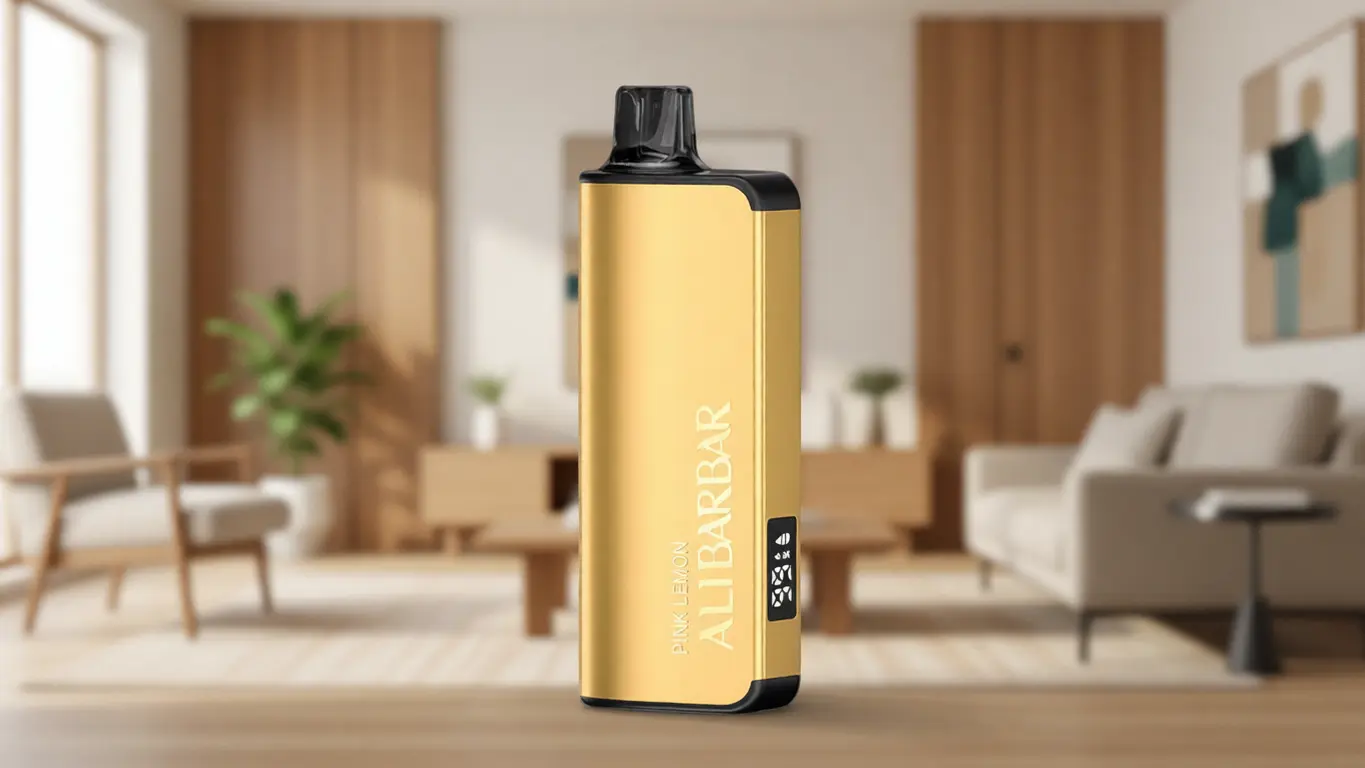
A device that dies before the end of a workday compels the user to carry a second unit, a charging cable, or a power bank – all of which multiply the bulk that must be concealed. Battery capacity and liquid volume are therefore indirect elements of discreetness. The ALIBARBAR INGOT 15000, for instance, is engineered with a capacity that aligns to a heavy full‑day usage pattern, eliminating the need for ancillaries. The user who selects a smaller unit but must also pocket a charger has only swapped one visibility problem for another. This trade‑off is rarely discussed in product listings, yet it governs real‑world inconspicuousness.
Applying These Criteria in Practice
The ALIBARBAR family illustrates how different engineering priorities meet different discreetness needs. None of these devices is perfect for every scenario, but each demonstrates a clear set of decisions that an informed user can evaluate.
Users who prioritise physical concealment above all else often gravitate toward the INGOT 9000. Its cylindrical, finger‑length profile slips into the small fifth pocket of jeans, a watch pocket, or the narrow sleeve of a backpack. The draw activation is silent, and the LED is positioned to be masked by a natural grip. The trade‑off is capacity: the 9000’s internal reservoir is suited to a typical day’s moderate use, not an extended event without access to a replacement. For a wedding or a long conference, the user might prefer a higher‑capacity sibling.
The INGOT 15000 represents a conscious choice to accept a marginally larger body – about the size of a stubby USB power bank – in exchange for near‑guaranteed all‑day independence. Its flat‑oval cross‑section slides into a shirt pocket or an internal blazer pocket without creating a pronounced edge. The vapour output is dialled for rapid dissipation, and the residual warmth drops off within seconds of exhaling. This is the device that a user selects when the penalty of a backup charger outweighs the slight increase in silhouette.
The Ice Adjust 12000 introduces the additional dimension of user‑controlled output intensity. By allowing the user to reduce the operating level, it can minimise both the visible vapour cloud and the operating sound to near‑negligible levels in quiet environments. The physical chassis remains slim enough to be misidentified as a premium pen or stylus in a breast pocket. However, that same adjustability relies on a small toggle that some users find too subtle to operate without looking; in a dark setting, that can create a brief fumble. The lesson is that a single feature rarely dominates – it must work in concert with the overall form.
Other device categories – refillable pod systems with replaceable coils, for example – offer extreme compactness but often require the user to carry a separate liquid container. That container reintroduces bulk and potential scent leakage. The sealed‑system approach, as seen across the ALIBARBAR collection, removes that variable. The decision then becomes not “which device is stealthiest” but “which design best aligns with the environments I actually inhabit.”
A Practical Framework for Independent Evaluation
Users who want to avoid relying on brand claims can apply a simple five‑point assessment before any purchase:
The Palm Test – Hold the device in your natural writing grip. Does any part protrude beyond the heel of the hand? If the answer is yes, it will likely be visible in a pocket and will catch light when you lift it to your mouth.
The Dark‑Room LED Audit – In a completely dark space, activate the device (or simulate activation if the LED triggers on draw). Observe from one metre away at face height. A visible pinpoint may be acceptable; a diffused glow that colours your chin is a risk factor.
The 30‑Second Heat Check – After a normal draw, press the body of the device against the inside of your wrist immediately, then again after 30 seconds. If residual warmth is still noticeable after half a minute, the device will transfer heat to clothing in prolonged close contact.
The Closed‑Space Scent Trial – Place the device inside a small zipped pouch or a folded scarf for five minutes after using it. Open and sniff. Any distinct aroma means the mouthpiece seal may be incomplete; it will similarly scent a handbag or glovebox.
The Daily Routine Capacity Equation – Estimate the number of draws you take in a typical day. If the device’s rated operational life falls short by more than 15–20%, you will inevitably need a backup, which undermines discretion. Err in favour of headroom.
Retailers that present standardised technical data, as OZVAPE Shop does for the ALIBARBAR range, make this comparisons quicker. The operative word is standardised: if two devices list battery capacity in different units, or one reports liquid volume and the other “puffs” without defining puff duration, you are comparing approximations, not facts. Consistent datasheets are a sign that a retailer respects your ability to judge.
Common Selection Errors and What the Industry Tends to Overlook
In years of observing adult users interact with portable electronics, certain patterns of error emerge consistently. These are not failures of intelligence; they are the predictable consequence of a market that over‑markets isolated specs.
Error 1: Equating “smallest” with “most discreet.” A device that sits unseen in a drawer is not the same as one that stays unseen during use. If a tiny unit produces an unusually dense cloud, or if its LED faces directly forward, it can be far more conspicuous than a slightly larger device with better‑integrated feedback. The user who chooses the absolute minimum dimensions without testing the vapour signature has solved the shelf‑stowage problem but not the public‑carry problem.
Error 2: Trusting that visual similarity implies engineering parity. Two cylindrical metal devices may look almost identical in website photography, yet one might discharge heat along a direct path from the coil to the exterior wall, while the other uses an insulating air gap. The outward similarity masks a gap in thermal management that translates to that tell‑tale warm spot on the trouser leg. Only specification sheets that disclose materials and architecture – or hands‑on testing – reveal this.
Error 3: Ignoring the logistics cost of a sealed‑vs‑refillable architecture. Users attracted to the compactness of a refillable pod often fail to account for the bulk and scent of the refill bottle. A sealed high‑capacity device, though larger as a single unit, may still represent less total concealment burden. The arithmetic is not about the device alone but about the complete carry system.
Error 4: Over‑relying on the term “stealth” in marketing language without interrogating it. The industry has appropriated the word so broadly that it has lost diagnostic value. A device labeled “stealth” might simply mean it lacks a bright LED or that it ships in a non‑descript package. Users are better served by asking specific questions: Is the draw activation silent? Does the vapour dissipate within two seconds under normal humidity? What is the exact brightness of the status indicator in lumens? Manufacturers that can answer these questions are the exception; when they do, their engineering shows it.
One industry‑wide reality seldom discussed is that regulatory packaging requirements often contradict discreetness at the point of delivery. A device that slips invisibly into a pocket may arrive in a box that broadcasts its contents through dimensions and labelling. The wisest users seek channels that offer plain outer packaging and documented shipment handling. This is not a trivial convenience; it closes the loop from online selection to in‑hand privacy.
Frequently Asked Questions
Q: What is the most concealable device within the ALIBARBAR range?
A: The INGOT 9000’s cylindrical profile and short overall length make it the easiest to fully enclose within a closed fist. It also carries the smallest visual signature when laid flat on a surface.
Q: Will the device emit an odour when stowed in a pocket after use?
A: Well‑sealed devices like those in the ALIBARBAR family are designed to minimise residual aroma. A short resting period of a few minutes typically renders the sealed mouthpiece odour‑neutral. If you notice a persistent scent, inspect the mouthpiece for damage or debris that may prevent complete sealing.
Q: Can I travel with these devices discretely?
A: Domestic travel policies regarding portable electronic devices vary; always check the latest carrier requirements. In terms of physical concealability, devices with no sharp edges and no detachable chargers pass through security screening like any personal electronics item. The key is to avoid storing them alongside liquids that might trigger secondary inspection.
Q: Does a device with adjustable output actually help with discreet use?
A: Yes. Lower output settings reduce both the visible cloud volume and the sound of the draw. However, the difference is most meaningful in quiet, indoor settings. Outdoors, wind and ambient noise often compensate, so the adjustable feature is best viewed as an indoor‑oriented tool.
Q: How does battery life relate to hidden carry?
A: Directly. A device that demands mid‑day charging forces you to carry additional items – a cable, a power bank, or a second device. A unit with sufficient headroom for your full day removes that ancillary clutter, which often constitutes the more visible element.
Q: What should I look for to confirm a device is genuine and not a poorly concealed counterfeit?
A: Genuine ALIBARBAR devices carry a unique verification code that can be checked through the manufacturer’s official channel. Purchasing through a retailer that sources directly from authorised distributors, such as OZVAPE Shop, is the most reliable guard against replicas that may lack the sealing and thermal management of the authentic design.
Q: Are there situations where no amount of device design can guarantee complete inconspicuousness?
A: Yes. Any device that produces a visible vapour will be detectable if someone is watching you directly at close range in still air. The goal of thoughtful design is to reduce the profile to a momentary wisp that doesn’t linger, not to achieve invisibility. Users must still exercise situational awareness.
Q: Does the device’s surface finish affect how easily it slides in and out of a pocket?
A: A smooth, hard‑anodised or lightly textured finish – as found on the ALIBARBAR INGOT series – resists snagging and does not fray fabric. High‑gloss or soft‑touch rubberised coatings can create friction that makes retrieval less fluid, which in turn draws attention.
Q: Is there a benefit to choosing a device with no physical buttons at all?
A: For discreet operation, yes. A draw‑activated mechanism eliminates the motion and sound of a button press, which can be the single most noticeable action in a quiet room. The entire ALIBARBAR line‑up relies on draw activation, which simplifies covert handling.
Q: What should I do if a device that was performing discretely suddenly starts producing thicker vapour or a lingering smell?
A: This usually indicates a change in the heating element’s condition or a partial obstruction in the airflow path. If the unit is within its rated operational life, inconsistent performance may be a defect. Customers of OZVAPE Shop can reach out to the support team with the batch information to determine eligibility for a replacement under the retailer’s accountability policy.
Conclusion
The pursuit of discreet carry is not a test of sleight of hand. It is an exercise in recognising that true inconspicuousness is achieved long before the device leaves your pocket. It resides in the thermal path that keeps the casing cool, in the seal that traps residual scent, in the LED that stays hidden beneath a natural grip, and in the endurance that obviates a second unit altogether. Devices that deliver on these fronts, such as those in the ALIBARBAR family, do so not by magic but through deliberate engineering choices that an informed user can audit independently.
The right device for your routine is the one that fades into the background of your day, not the one that boasts the most impressive statistic or the loudest claims of stealth. By applying the simple framework described here – and by choosing a retail partner that provides the standardised information needed to make those judgments, as OZVAPE Shop does for Australian users – you reclaim the decision from marketing calendars and place it back where it belongs: in your hands, in your context, on your terms.