
VAPE FAQs
How To Ghost On Vape?
Oct
It’s late. You’re seated in the quiet corner of a venue where exhaling a visible plume wouldn’t just draw glances — it would shut down the evening. Or maybe you’re on a balcony, three metres from a sleeping family member, and the last thing you want is a luminous cloud drifting through the window. The technique you’re hunting for isn’t a trick; it’s a discipline: ghosting, the practice of taking a deliberate draw and releasing nothing — or next to nothing — that can be seen, smelled, or remarked upon.
Perfect ghosting isn’t purely a lung exercise. It’s a partnership between user technique and the device in your hand. An adult who shops with intention, perhaps through OZVAPE Shop, quickly learns that not all personal electronic devices are cut from the same cloth. Some fight discretion at every puff; others seem designed for it. This article unpacks both sides of the equation so you can stop relying on guesswork and start matching your routine to the right engineering.
The Mechanics of Ghosting: More Than Just Holding Your Breath
Ghosting rests on a simple physical principle: the visible cloud you see on a typical exhale is not composed of permanently suspended particles. The aerosol — a combination of tiny liquid droplets and gas-phase constituents — condenses and dissolves rapidly when exposed to the warm, humid environment of the lungs and an extended residence time. By drawing the vapor deep and retaining it for five, ten, or even fifteen seconds before a slow, controlled release, the droplets undergo a phase change that drastically reduces their optical density. A secondary effect, the cooling of the aerosol against respiratory surfaces, further collapses the cloud.
The result is often a barely perceptible wisp or nothing at all. But the quality of that outcome is not solely determined by how long you hold your breath. It’s also shaped by the starting density of the aerosol, its temperature, and the consistency of the device’s output. A unit that fluctuates wildly between puffs will sabotage even the most disciplined user, because ghosting demands predictability — you need to know every draw will behave the same way.
Why Your Device Determines Half the Outcome
Imagine attempting to ghost with a device that suddenly delivers a hot, saturated burst after three milder pulls. Even with perfect technique, that surge overwhelms the absorptive capacity of the lungs, and a betraying plume escapes. The device’s internal architecture — its heating element geometry, power delivery, and airflow design — sets the envelope within which your ghosting skill operates. A machine engineered for tight, consistent output doesn’t just help; it makes the technique learnable in a matter of minutes rather than weeks of frustration.
Engineering Factors That Support a Ghosting-Friendly Experience
When deconstructing what makes a device cooperate with ghosting, four categories emerge. Treat these as a litmus test the next time you evaluate a unit.
Internal Architecture and Vapor Consistency
The heating element inside most modern devices is not a simple wire. It may be a mesh, a ceramic-embedded coil, or a vertically oriented cotton-and-coil assembly. Each configuration distributes heat and draws liquid differently. Designs that isolate the heating zone and maintain a stable wetting rate produce an aerosol with a narrower particle-size distribution, which translates directly into reproducible ghosting behaviour. A mesh-based architecture, for instance, often spreads thermal energy evenly, reducing the chance of hot spots that create unpredictable spikes in cloud density.
The practical takeaway: a unit that advertises a high puff count but delivers it through an unstable thermal pathway will frustrate discrete use. Look for design descriptions that mention thermal stability or vapour-path consistency — those are your ghosting allies.
Power Management and Battery Status Transparency
Ghosting frequently occurs in environments where stopping to troubleshoot is not an option. If a device dies without warning, you’re left holding inert hardware at a moment when you most needed dependability. Clear, multi-stage battery indicators — not a single colour that shifts only when the cell is nearly empty — matter more than many users realise. They allow you to manage your usage so you never enter a social situation with a device on the verge of shutdown.
Equally important is how the power output behaves as the battery voltage decays. In poorly regulated systems, the heating element delivers less energy as the cell drains, changing the aerosol density. You might master ghosting on a fresh charge only to find it unreliable at 40% capacity. Devices with constant-voltage output regulation eliminate that variable, keeping the ghosting experience predictable from first puff to last.
Physical Design and Discreet Ergonomics
A device that refuses to disappear in the hand works against ghosting before you even inhale. Compact, pebble-smooth units that nest fully inside a closed palm invite no questions. Raised textures, sharp edges, or oversized mouthpieces that force a visible “duck face” all telegraph the activity. Beyond aesthetics, consider the finish: a matte, slightly grippy surface holds up against pocket lint and daily abrasion, staying inconspicuous after weeks of carry. A glossy, fingerprint-magnet shell screams “look at me” — exactly the opposite of what discreet use demands.
Adjustable Airflow and Output Control
The single most valuable feature for ghosting is the ability to tailor the draw. A fixed, tight airflow forces a slow, dense pull, which suits ghosting well. But if the device is designed for an open, direct lung inhale, the volume of aerosol generated instantly overwhelms attempts to hold it all in. Some designs offer a physical slider or a pre-set mode that lets the user switch between a restricted and an airier profile. That control, combined with a lower output level, allows you to fine-tine the vapour volume to match your lung capacity and timing. Without such control, you’re locked into the manufacturer’s one-size-fits-all calibration, which may or may not align with ghosting.
ALIBARBAR Devices and Discretion: A Practical Match
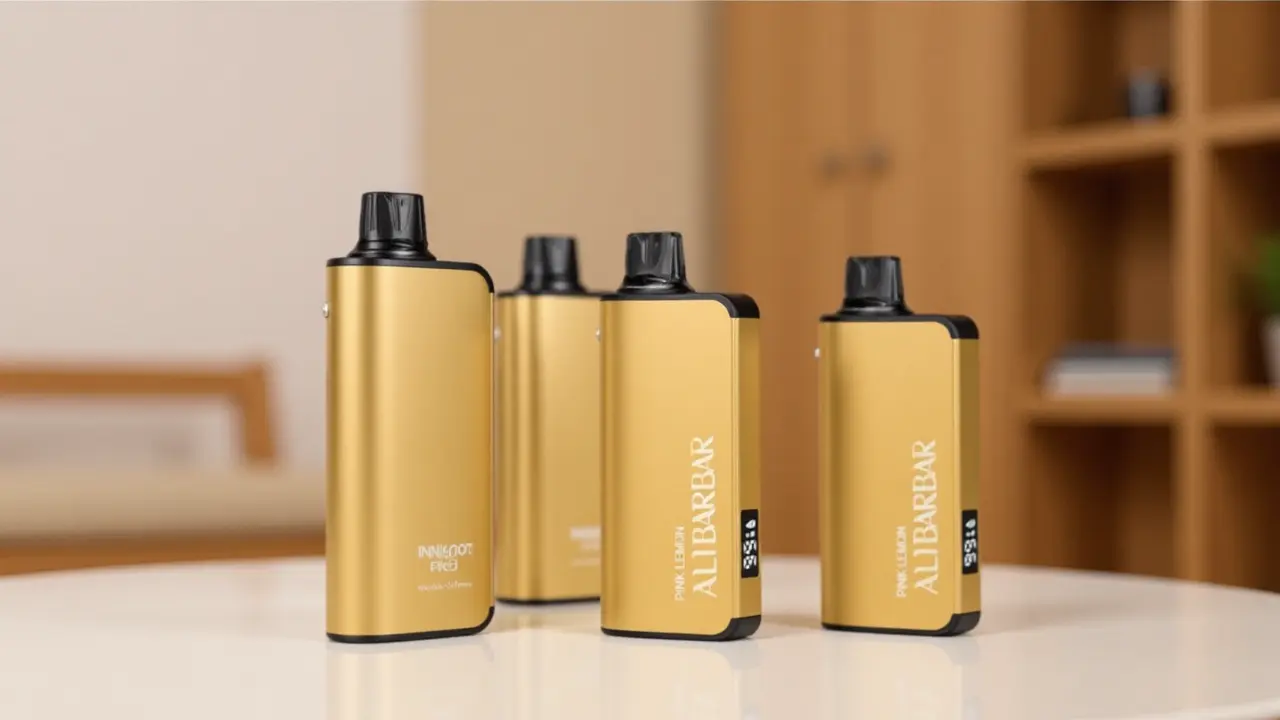
Several current platforms illustrate how these engineering principles manifest. The ALIBARBAR range, available through authorised channels that maintain factory-certified inventory, was built around the frustrations that ghosting exposes most sharply: erratic performance, dead batteries, and ambiguous status.
Take the ALIBARBAR INGOT 15000. Its mesh-driven heating element is tuned for a consistent, medium-density aerosol that holds steady across the stated operational life. The battery is paired with a four-stage LED indicator visible through the chassis, so you’re never guessing whether the device has enough charge for the next hour. The mouthpiece profile is shallow and angled for a relaxed lip seal — no exaggerated pursing required. These characteristics together mean an experienced user can ghost with minimal visible residue, puff after puff.
The Ice Adjust 12000 adds a practical layer: its e-liquid system incorporates a user-adjustable intensity setting that influences throat sensation and the perceived vapour volume. By dialling to a milder output setting, you reduce the initial aerosol load entering the respiratory tract, making the ghosting hold far easier to execute successfully. Meanwhile, the device’s rounded, low-profile shape disappears into an adult’s cupped hand with no protruding edges.
Even the more compact INGOT 9000 doesn’t sacrifice status transparency. It delivers a rated capacity that covers extended outings, and its tight airflow path produces a discreet drag that requires no forceful inhalation — helpful when you’re trying to remain inconspicuous.
These are not accidental traits. They reflect a product development focus that openly acknowledges the need for control, reliability, and inconspicuousness. When you evaluate devices through a ghosting lens, the gap between a generic utility unit and one deliberately engineered for consistent behaviour becomes impossible to ignore.
A User’s Framework for Choosing a Ghosting-Friendly Device
You don’t need to memorise every specification. Run any candidate through this checklist instead:
Does the device provide granular battery status? If you cannot tell 60% from 20% at a glance, you will inevitably carry a backup — or get caught without power.
Is the draw resistance fixed or adjustable? A tighter draw (or adjustability down to a tight draw) gives you more control over the initial aerosol volume entering your mouth and lungs.
Does the manufacturer describe the heating element’s stability? Words like “mesh,” “even thermal distribution,” or “consistent output” signal an architecture you can trust for ghosting.
How does the device behave when the battery is low? Ask retailers whether output remains regulated or tapers. If they don’t know, that opacity should give you pause.
Can you hold it entirely within a closed fist? Discretion starts with form factor.
Is the mouthpiece designed for comfort during extended use? A short, ergonomic tip keeps the device stable between your lips without drawing attention.
Use this framework before purchase, and you’ll eliminate most of the variability that turns ghosting from a reliable skill into a gamble.
The Mistakes That Undermine Discreet Use
Even well-informed adults sabotage themselves through a handful of easily avoidable errors.
Chasing clouds and then trying to ghost. Devices optimised for voluminous, high-temperature clouds are inherently difficult to ghost. Their entire engineering brief contradicts discretion. If you demand ghosting capability, start with a device built for moderate, consistent output, not peak wattage.
Assuming visual similarity means identical internals. Two devices that look like featureless polished pebbles may house entirely different heating systems, battery management boards, and airflow architectures. One may ghost predictably; the other may scatter aerosol density unpredictably. Research the engineering, not the silhouette.
Ignoring battery chemistry and capacity relative to usage. A device rated for 3,000 puffs but paired with a battery that sags after 2,000 means your last third of use is performed on a weakening cell. Ghosting success plummets. Match rated capacity to realistic daily usage so you’re always in the stable power zone.
Confusing “disposable” form-factor marketing with technical limitations. Some users dismiss compact, pre-filled units as inherently inferior for ghosting. Yet a carefully engineered unit with a mesh element and regulated output can ghost more reliably than an open-system device running a poorly matched coil. Evaluate the actual thermal management, not the category label.
These errors persist because the market moves fast and prioritises novelty over documentation. Taking the time to understand what’s under the hood separates the consistently satisfied user from the one who blames their technique.
Frequently Asked Questions
Q: What is the most common technique for ghosting?
A: Draw the aerosol slowly into the mouth, then inhale deeply into the lungs without immediately exhaling. Hold the breath for eight to fifteen seconds, then exhale gently through tightened lips. The visible cloud should be minimal or absent.
Q: Can any device be used for ghosting, or does the hardware truly matter?
A: Hardware matters significantly. Devices with inconsistent power delivery, high output volumes, or unstable thermal profiles make ghosting far harder to master. A unit engineered for steady, predictable aerosol production dramatically increases the technique’s success rate.
Q: Why does my device sometimes produce a small cloud even after holding the vapour for a long time?
A: If the battery is declining and output regulation is weak, the aerosol density may shift. Alternatively, the initial draw may have been larger than usual due to a prior resting period that saturated the wick. Consistency is the key variable.
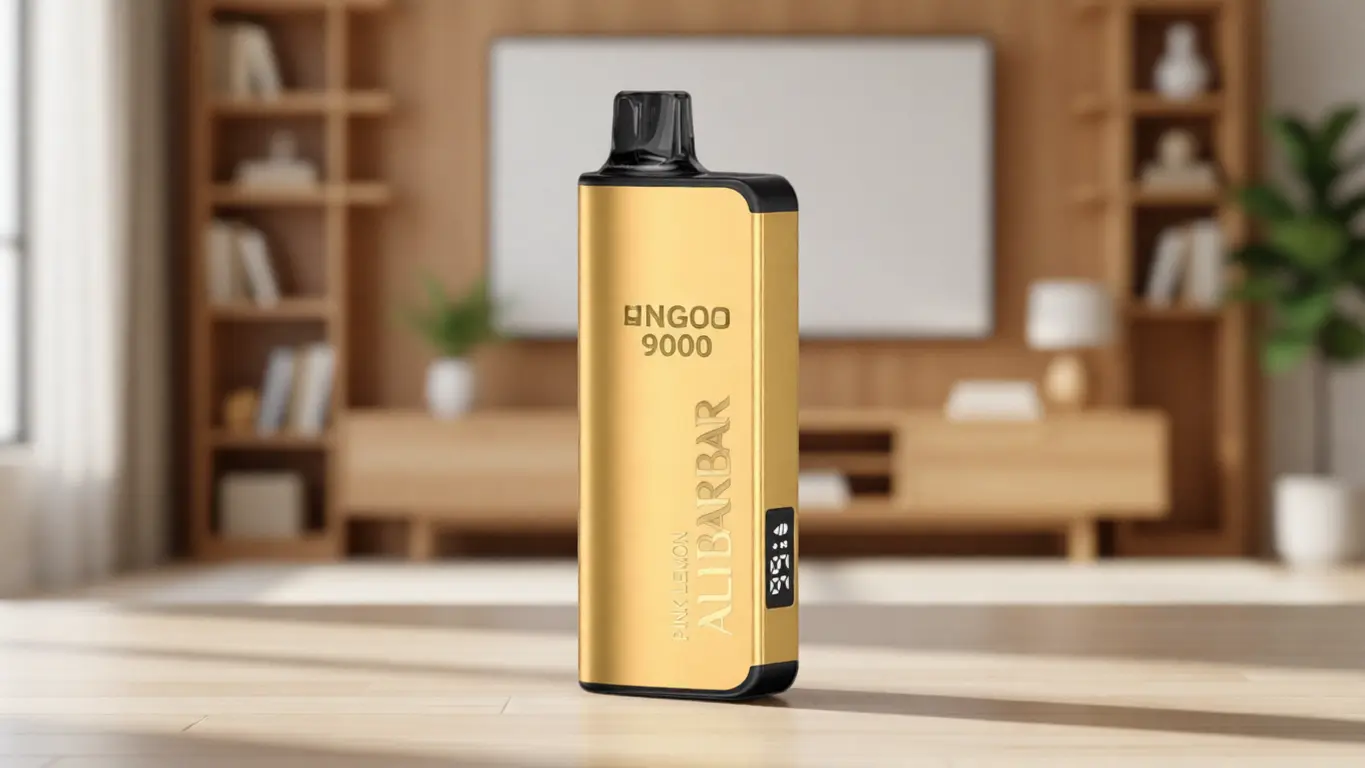
Q: How does the ALIBARBAR range specifically support ghosting?
A: The INGOT and Ice Adjust lines incorporate mesh-based heating, battery status indicators, and draw profiles that lend themselves to controlled, low-visibility use. The Ice Adjust 12000, in particular, lets the user reduce output intensity, directly aiding ghosting.
Q: Is OZVAPE Shop an authorised source for ALIBARBAR products in Australia?
A: Yes. OZVAPE Shop maintains factory-certified inventory sourced through authorised distribution networks, ensuring that every unit matches its documented specification.
Q: What should I do if a device doesn’t perform consistently for ghosting straight out of the box?
A: First, verify you are using the correct draw and hold technique consistently. If the issue persists, check the battery level and ensure the device hasn’t entered a protection mode. Should performance still fluctuate, contact the point of purchase — a reputable retailer will have a returns or replacement process based on manufacturing defects.
Q: Are there any considerations regarding shipping or age verification?
A: All orders through compliant retailers require age verification at the point of sale and upon delivery. Shipping times and packaging are typically discreet, with no branding visible externally.
Q: Can I ghost with a device that has a fixed airflow?
A: Yes, if the airflow is naturally restrictive and the output volume moderate. Many fixed-airflow devices with mesh elements perform perfectly for ghosting. The key is to test before relying on it in a sensitive setting.
Conclusion
Ghosting isn’t a party trick. It’s a practical skill for adults who move through spaces where visual cues must remain absent, and it depends as much on the device as on the user. When the internal architecture delivers steady aerosol density, the battery reports its status honestly, and the form disappears in the hand, discretion stops being a hope and becomes a repeatable outcome.
That’s why informed selection matters. Walking into a purchase armed with the five-point checklist above — and choosing a sourcing partner that documents its inventory chain rather than leaving you to guess — removes the friction that leaves people carrying multiple units “just in case.” OZVAPE Shop exists precisely to close that gap: factory-verified devices, directly comparable specifications, and support from people who understand the difference between a product that looks the part and one that performs it.
The right device for your ghosting routine isn’t the one with the biggest number on the box. It’s the one that maps to your real-world need for control, consistency, and quiet. Approach the decision with that clarity, and you’ll never again be left exhaling something you didn’t intend to show.