
VAPE FAQs
How To Fix Flooded Disposable Vape?
Jun
Flooded devices are one of those quietly maddening experiences that turn a reliable pocket companion into a frustrating liability. You pick it up, draw, and instead of a clean, measured output you get a gurgle, a sputter, or a thin stream of liquid where none belongs. The immediate impulse is to blame the device. In some cases, that is justified. In many others, a combination of environmental factors, usage patterns, and internal design compromises set the stage long before the first gurgle appears. This article unpacks the real mechanisms behind flooding, walks through what can be done in the moment, and—more importantly—explains how an understanding of internal architecture can prevent the problem from recurring.
OZVAPE Shop has consistently observed that a significant share of user dissatisfaction, from premature failure to inconsistent performance, traces back to a handful of engineering oversights that are entirely avoidable when a device is built with genuine attention to fluid dynamics and thermal stability. The analysis that follows is built on that observation.
Understanding Flooding: The Internal Chain of Events
Before any fix makes sense, it helps to see exactly what is happening inside a typical disposable device. The term “flooding” describes a condition where the heating element (coil) and the surrounding wicking material become oversaturated with e-liquid. Instead of vapour forming at the surface of the coil, liquid pools, blocking airflow paths and causing the characteristic bubbling sound. A properly functioning atomizer maintains a delicate balance: wicking material feeds e-liquid to the coil at the same rate that heat converts it into aerosol. Any disturbance to that equilibrium—on either the supply side or the demand side—can tip the scale toward flooding.
How the Wick and Coil Relationship Breaks Down
The wick, typically a silica or cotton-based material, draws e-liquid from the reservoir to the coil through capillary action. This process is passive and dependent on the wick’s density, the coil’s contact area, and the viscosity of the liquid. If a device is manufactured with a wick that is too loosely packed or a coil that sits too low relative to the liquid intake, saturation happens unpredictably. Temperature shifts further compound this: a device left in a warm pocket or parked car sees its e-liquid thin out, accelerating wicking beyond what the coil can vaporise during a typical draw.
The Airflow Path and Pressure Imbalances
Most disposable devices rely on a draw-activated switch and a fixed airway that runs from an intake hole, past the coil, and up through the mouthpiece. When that airway’s diameter is too generous or the intake opening too low relative to the liquid reservoir, gravity alone can push liquid into the chamber during storage. Hard, sharp draws create sudden negative pressure, pulling more liquid into the wick than the coil can handle. This is why aggressive puffing tends to precede flooding complaints.
Power Delivery Mismatches
In a non-adjustable device, the power output is fixed at a level the manufacturer deems suitable for the coil resistance and e-liquid composition. If the installed power cell begins to degrade—voltage sag—the coil runs cooler than intended. A cooler coil cannot atomise liquid efficiently, and the excess accumulates. This explains why flooding often becomes more frequent toward the end of a device’s rated life: it is as much an electrochemical problem as a mechanical one.
Engineering Defenses: What Sets Flood-Resistant Devices Apart
Not all disposables approach these challenges with equal rigour. When you compare internal architectures, certain design decisions repeatedly correlate with a lower incidence of flooding. These are the factors worth identifying before a purchase, not after frustration sets in.
Precision Wick Density and Coil Placement
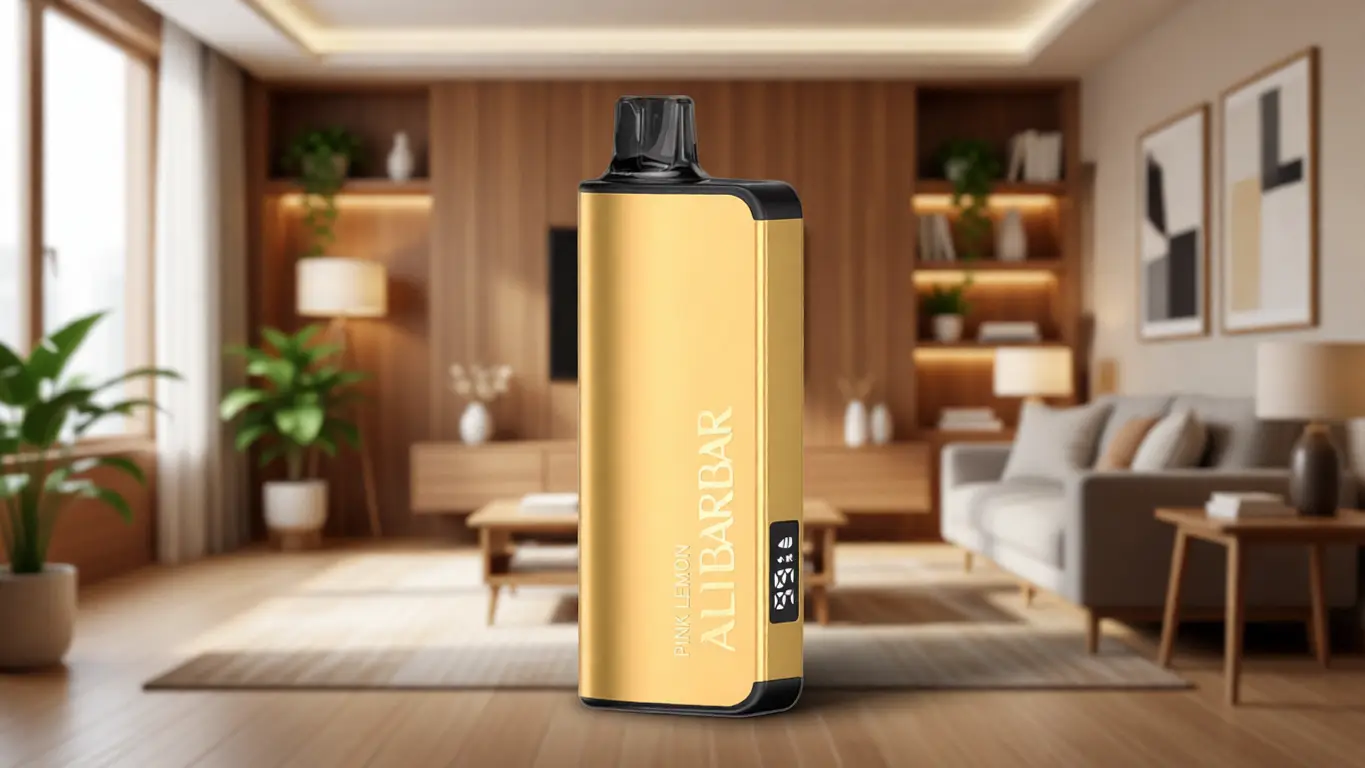
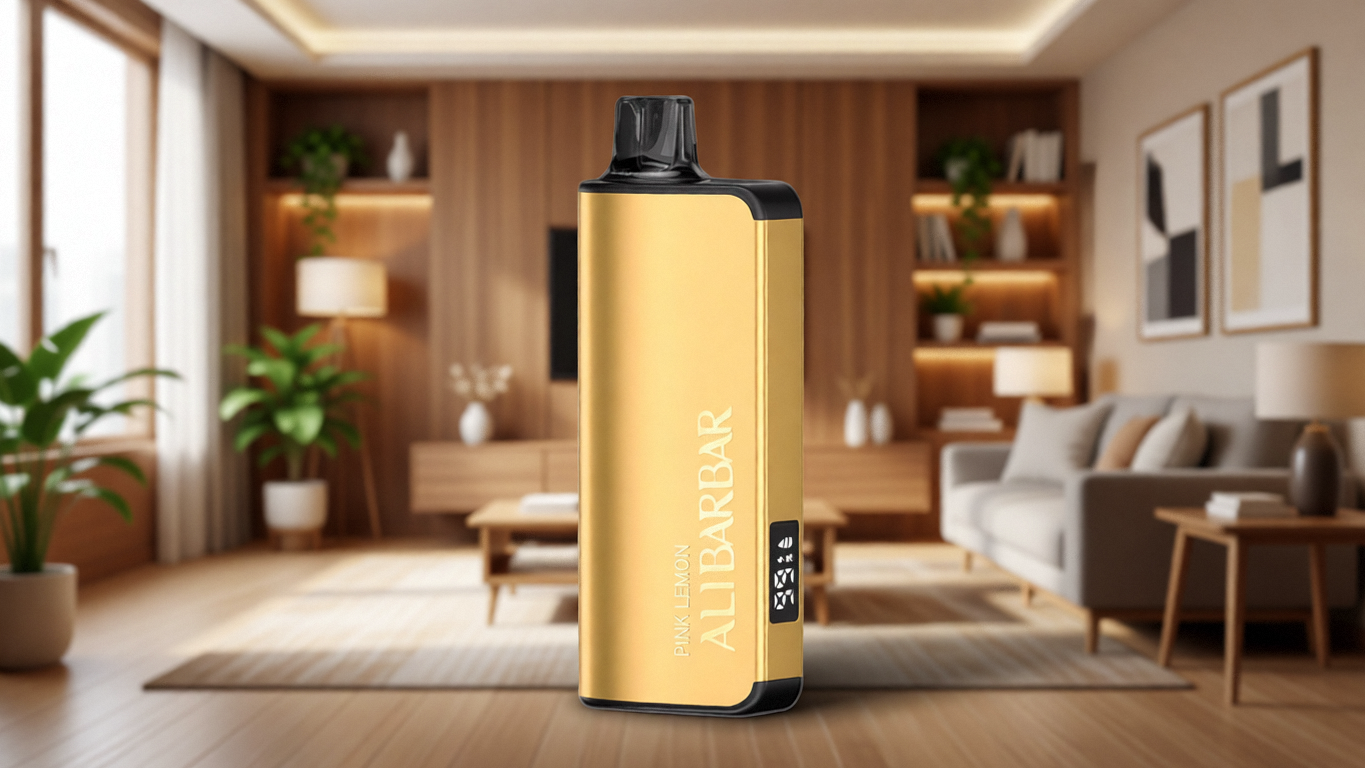
The difference between a device that floods and one that doesn’t can be as subtle as the compression of the cotton and the vertical positioning of the coil relative to the e-liquid intake holes. Devices engineered with vertical mesh coils, for example, tend to keep the heating surface elevated above any pooled liquid, reducing direct contact and relying on a more controlled capillary feed. The ALIBARBAR INGOT series is built around this principle: the coil assembly sits in a chamber that is deliberately separated from the bulk liquid reservoir by a regulated feed port, reducing the likelihood of sudden saturation spikes.
Air Intake and Internal Baffling
Well-designed devices incorporate micro-baffles or labyrinthine air channels that prevent liquid from travelling directly from the reservoir to the mouthpiece, even when the device is tipped. In the ALIBARBAR Ice Adjust 12000, the intake routes air from a point above the liquid level and passes it through a series of small chambers before reaching the coil. This not only muffles gurgling but also ensures that condensation—a natural by-product of vapour cooling in the chimney—drains back into the wicking system rather than settling in the airway.
Transparent Status Indicators
Flooding is often a progressive issue. A device that gives the user no feedback about remaining e-liquid or power level forces blind operation. When the liquid level drops dangerously low, the wick can begin to dry out and lose its capillary draw strength, causing an irregular feed that alternates between dry hits and sudden floods. Devices with reliable, multi-stage LED indicators—such as the ALIBARBAR INGOT 9000 and 15000—allow users to make informed decisions about usage cadence and avoid running the device into unstable territory.
Sealed Power Compartment
Disposable devices that house the battery in a compartment completely isolated from the e-liquid chamber eliminate one underappreciated flooding vector: e-liquid ingress into the electronics area, which can cause irregular firing or permanent switch damage. Welded, ultrasonically sealed bodies, as found across the ALIBARBAR collection, make this crossover essentially impossible under normal use.
Practical Recovery Steps: What You Can Do Right Now
If you are holding a flooded disposable device, a careful sequence of actions can sometimes restore function—at least temporarily. The success rate varies with the root cause, but the following steps are low-risk and worth trying before discarding the unit.
Remove the device from any power source and let it rest upright. Place it mouthpiece-up on a stable surface for 10 to 15 minutes. This allows gravity to draw excess liquid away from the coil and back toward the reservoir. Doing this with the device horizontal or inverted will only move liquid into the chimney.
Gently warm the device in your hand. Hold it loosely for a few minutes, avoiding direct heat sources. A slight temperature increase lowers e-liquid viscosity and can encourage pooled liquid to re-absorb into the wick uniformly. Never use a hairdryer, lighter, or radiator; the plastic housing can deform, and the battery can be compromised.
Clear the airway with a gentle, controlled blow. With the device still upright, place a tissue over the mouthpiece opening and blow very lightly from your mouth into the mouthpiece for one to two seconds. You are not trying to force liquid out under pressure—just displacing any liquid sitting in the chimney. Wipe the tissue away and any dislodged liquid from the tip. Blowing through the air intake (usually at the bottom) can push liquid deeper into the coil and is not recommended.
Perform a short, soft draw to test. If gurgling persists, stop. Repeated, hard pulls will only pull more liquid into the coil. At this point, the flooding is likely deep-seated and not recoverable by user intervention alone.
If the device offers variable airflow, open it fully for a few draws. A more open airflow reduces negative pressure inside the atomizer chamber, giving the coil a chance to vaporise the excess with each activation. Once the sound normalises, return to your preferred setting.
Important limitation: These steps address recent, incidental flooding—the kind caused by a sudden temperature change or an overly enthusiastic draw. If the device’s coil is permanently oversaturated due to a manufacturing defect or severe wick degradation, no amount of user manipulation will reverse it. Continuing to use a severely flooded device can cause liquid to leak into the battery compartment, creating a safety hazard.
A Framework for Choosing a Flood-Resistant Device
Given that recovery is unreliable once flooding has taken hold, preventing the condition from occurring in the first place is far more effective. The following evaluation framework can be applied to any product listing or specification sheet to gauge flood resistance before purchasing.
Look for Explicit Anti-Leak Design Markers
Manufacturers whose devices incorporate anti-leak structures will typically describe features like “sealed coil chamber,” “top-airflow intake,” “baffled mouthpiece” or “liquid isolation barrier.” If a product page makes no mention of any such engineering, the device likely relies on simple gaskets and friction-fitting alone—a design that works adequately when new but degrades with minor knocks and temperature cycles.
Assess the Airflow Path Orientation
Devices that draw air from a point on the side or top of the body are inherently less prone to gravitational flooding than those with air inlets at the very bottom. A bottom intake that doubles as a drain path is a common flooding vector. The ALIBARBAR INGOT 15000, for instance, uses a side-intake system that remains well above any pooled liquid, even if the device is stored at an angle.
Check for Power Consistency Mechanisms
Because voltage sag contributes to flooding, any indication that the device includes a regulated output—such as a constant-voltage circuit—is a positive sign. In the absence of regulation, the coil temperature drifts downward as the battery depletes, and the user experiences a progressive increase in gurgling. This is one reason why well-engineered devices maintain stable output until the very end of their charge cycle.
Prefer Devices with Detailed Status Feedback
A multi-level LED indication for both power and, where available, e-liquid reserve lets you retire the device before it enters the unstable end-of-life phase. Two or three lights are better than a single blink. Some ALIBARBAR models incorporate a smart power indicator that adjusts colour based on remaining charge, removing guesswork from the equation.
Use Standardised Comparison When Available
When product pages present specifications in a consistent tabular format—coil type, capacity, airflow configuration, indicator type—it becomes far easier to apply the above criteria without relying on subjective marketing language. This is a practical tool that reduces decision friction, particularly when moving between brands.
Common Selection Errors and Industry Observations
Even when armed with a solid framework, users inadvertently undermine their own satisfaction by falling for a handful of persistent misconceptions. Understanding these patterns is part of becoming a genuinely informed buyer.
1. Equating Visual Similarity with Equivalent Internal Engineering
Two devices that look nearly identical from the outside can house radically different coil and airflow architectures. The external shell is often a generic mold; the internals determine performance. Assuming that two devices from different brands are functionally equivalent because they share a form factor is one of the most frequent and costly errors observed in the market.
2. Overweighting Puff Count While Ignoring Thermal Stability
A high puff rating—9000, 12000, even 15000—is often the first number a buyer notices. But a device that promises 15000 puffs but cannot maintain a consistent coil temperature from the 3000-puff mark onward will spend a significant portion of its life operating in a flood-prone state. A lower nominal puff count backed by better power regulation almost always yields a more satisfying usable lifespan.
3. Undervaluing Modular Battery Indicators
A device with a single, mysterious blinking light forces the user to treat it as a black box. When a user cannot distinguish between “battery low” and “coil assembly fault,” the natural response is to keep trying—puffing harder, shaking the device, storing it in ways that invite flooding. The absence of clear, multi-level feedback is not a trivial omission; it is a design choice with direct operational consequences.
4. Confusing “Disposable” with “Indestructible”
The term “disposable” suggests something that can be treated carelessly. In reality, these devices contain sensitive electrochemical and micro-mechanical components. Exposure to direct sunlight, high-humidity environments, or constant vigorous shaking accelerates seal degradation and wick fatigue. Many flooding episodes that users attribute to a “bad batch” can be traced to a day spent in a hot glovebox.
Industry Observation
Across the broader disposable device category, there is a clear division between manufacturers who treat the coil-and-wick assembly as a commodity part sourced at the lowest cost, and those who invest in proprietary coil designs with tighter tolerances. This division is rarely visible on the outside but reveals itself rapidly in the rate of flooding complaints, the consistency of output, and the device’s ability to perform near its rated capacity. Informed sourcing channels—those that maintain relationships with manufacturers and verify production lots—play an essential role in filtering out designs that simply aren’t built for the Australian climate and usage patterns.
Frequently Asked Questions
Q: Can a flooded disposable vape be permanently fixed?
A: In many cases, no. If flooding is caused by a manufacturing defect or wick degradation, the condition cannot be reversed. Temporary user interventions may clear the airway, but the underlying imbalance remains. If the device is new and flooding occurs immediately, it may be eligible for replacement through the point of purchase.
Q: What does a flooded vape sound like?
A: A low-pitched gurgling or bubbling noise during a draw, often accompanied by reduced vapour production or spitting of liquid through the mouthpiece. This is distinct from the normal crackle of e-liquid vaporising, which is higher-pitched and intermittent.
Q: Is it safe to continue using a flooded device?
A: Continued use carries risk. Liquid can travel into the battery compartment, potentially causing a short circuit or corrosion of the trigger switch. If gentle clearing steps fail, the device should be retired and disposed of according to local electronic waste guidelines.
Q: Why does flooding happen more when the device is nearly empty?
A: At low liquid levels, the wick may not make consistent contact with the remaining e-liquid, leading to erratic feeding. Additionally, the battery voltage is often lower at this stage, providing less heat to the coil. Both factors push the system toward oversaturation rather than clean vaporisation.
Q: How does ALIBARBAR’s design specifically reduce flooding?
A: Models such as the INGOT 9000 and Ice Adjust 12000 use vertically oriented mesh coils separated from the main reservoir by a controlled feed port, side air intakes that sit above the liquid line, and sealed compartments that prevent cross-contamination between liquid and electronics.
Q: Can I prevent flooding by storing the device upright?
A: Upright storage is one of the simplest preventive measures. It keeps the liquid level below the coil’s feed ports and minimises gravitational flow into the airway. Combined with moderate, steady draws, it significantly reduces flooding frequency.
Q: Does temperature really matter that much?
A: Yes. Viscosity changes of even 5°C can alter wicking speed perceptibly. Devices left in a car on a warm day or carried in a pocket against the body are operating with thinner, faster-moving e-liquid. Allowing the device to acclimate to room temperature before use can help.
Q: Are certain e-liquid formulations more prone to flooding?
A: Within a sealed disposable device, the user has no control over formulation. However, device manufacturers tune wick porosity and coil power to the specific viscosity of their chosen fill liquid. Third-party refilling of a non-refillable device almost always results in flooding because the calibration is disrupted.
Q: Why do some disposables leak into the mouth but others don’t, even from the same brand?
A: Slight variations in coil installation during assembly can create internal gaps. This is a quality-control issue. Manufacturers with tighter production tolerances and post-assembly pressure testing exhibit far lower rates of such defects.
Q: What should I do if my device is flooding out of the box?
A: Cease use immediately, document the issue with clear photos if possible, and contact the retailer. At OZVAPE Shop, flood-related defects are treated as valid warranty claims provided the device is within its intended operational window and has not been subjected to misuse.
The Real Measure of a Reliable Device
Flooding is not a minor annoyance; it is a diagnostic event that says something specific about the engineering priorities of the device you are holding. A device that floods early and often is telling you, in the only language it has, that its internal balance was never truly stable. Conversely, a device that remains clean and consistent through its entire lifecycle is the product of deliberate choices: coil geometry, airflow routing, power regulation, and material selection all working in concert.
Choosing a device from a range that has been designed with these dynamics at the centre—rather than as afterthoughts—does not guarantee perfection, but it does shift the odds substantially in your favour. The ALIBARBAR collection, available through OZVAPE Shop, represents one such considered approach. From the sealed internals of the INGOT series to the intelligent airflow of the Ice Adjust platform, each model is built to address the specific failure modes that users encounter most frequently in daily use.
The right choice is not the one with the most advertising or the highest puff count. It is the one whose internal architecture aligns with how you actually move, work, and live. Pay attention to the design language beneath the shell, and flooding becomes something you read about, not something you reach for a tissue to fix.