
VAPE FAQs
How To Dtl Vape?
Oct
How To DTL Vape Without Making the Same Mistakes Most Beginners Do
There is a moment nearly every newer vaper experiences: they watch someone inhale a long, smooth pull, apparently straight into the chest, and then exhale a thick cloud. They try the same motion with their own device and quickly discover something they did not expect — a harsh throat hit, a sudden sputter, or no satisfying warmth at all. The equipment was fine, but the technique was wrong.
Direct-to-lung (DTL) vaping is one of the most common inhalation styles in the modern personal electronic device market, yet also the most frequently misunderstood. It is not simply a deeper breath. It is a coordinated interaction between the user and a device that has been engineered with specific airflow paths, heating surfaces, and power output ranges. This article explains the engineering factors that make DTL work, offers a practical framework for evaluating whether a device fits your routine, and guides you through the technique itself. Along the way, we will reference how a properly selected device from a retailer like OZVAPE Shop{:target=”_blank”} can reduce guesswork — but the focus remains on giving you the knowledge to evaluate any product on its own merits.
Understanding What Matters: Core Engineering and Design Factors for DTL
DTL is demanding on hardware. A direct-to-lung pull draws a much larger volume of air over a longer period than a mouth-to-lung pull, which means the device must be capable of vaporising enough e-liquid to satisfy that airflow without burning or flooding. If you are troubleshooting a poor DTL experience, the root cause is almost always traced back to one of the four factors below.
Internal Architecture and Output Consistency
The heating element inside a DTL device is generally larger and more porous than that found in a traditional high-resistance coil. Why does that matter? Because a larger surface area can absorb and vaporise more liquid in a short window. Mesh coils have become common in DTL devices for precisely this reason — the mesh sheet distributes heat evenly across a broad surface, reducing hot spots that cause harsh hits.
But the material alone does not determine performance. The wick material, wick density, and the geometry of the coil deck all influence how consistently liquid is delivered to the heating surface. A well-engineered DTL device maintains stable output from the first pull to the last, even when the liquid level is low. Users often report that a device “dies” near the end of its refill life — that is usually uneven wicking or a heat gradient problem, not a programming issue. Look for devices with known wicking channels and a visible design that allows you to see when the liquid is low.
Power Management and Status Transparency
DTL requires a certain amount of energy. Low-resistance coils (typically 0.15–0.4 ohms in sub-ohm tanks) call for wattage ranges between 40 and 100 watts in many configurations. The battery must be able to deliver that power without sagging mid-draw. A device that compresses its voltage output as the power cell depletes will create a progressively underwhelming experience. That is why adjustable wattage is almost essential for DTL — the ability to fine-tune power to the coil’s sweet spot directly affects flavour and vapor density.
Equally important is the device’s ability to tell you what it is doing. A bright, informative display showing wattage, resistance, and battery level is not a luxury; it is a functional tool. Without it, users are left guessing. I have had experienced vapers tell me they assumed a device was broken when in fact they were simply running it at 100 watts with a coil rated for 50 watts. The user interface is part of the engineering. If a device gives you no clear feedback, you are operating blind, and you will naturally compensate by carrying another device “just in case.”
Physical Design and Material Durability
DTL devices tend to be larger than their mouth-to-lung counterparts because they carry bigger batteries and larger tanks. That size brings its own challenges. A device that is top-heavy will be unstable in a cup holder or pocket. The airflow control ring must be machined to exact tolerances; if it is too loose, it will move unintentionally; too tight, and adjusting airflow mid-draw is impossible.
Surface finish matters more than most buyers assume. A device that is enthusiastically described as “matte” might simply be painted plastic that will flake after a week of keys-on-the-same-pocket carry. Anodised aluminium or PVD-coated stainless steel resist abrasion far better. The mouthpiece, or drip tip, also deserves attention — a bore that is too narrow will make DTL feel restrictive, while one that is too wide may cause condensation to form on the lips. A comfortable, thermally insulated drip tip is not a bonus; it is a prerequisite for extended sessions.
Modularity and Lifecycle Flexibility
DTL users are often the ones who want to try different coil resistances, different wicking materials, or even rebuildable atomizers. If a device is fully sealed — meaning no access to the coil or the battery — then the DTL experience is locked into whatever the manufacturer decided at the factory. That is fine for beginners, but for anyone who intends to refine their technique, a modular system matters.
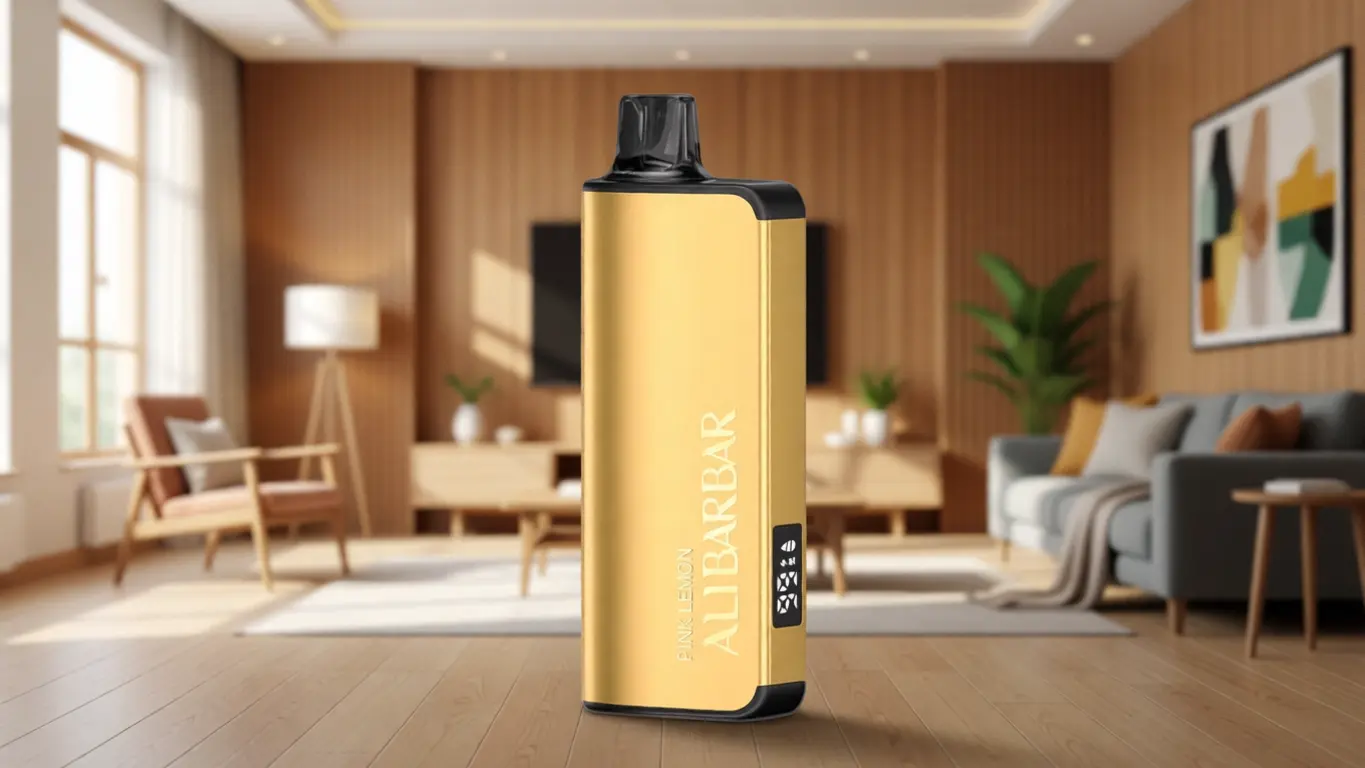
Rechargeable devices with replaceable coils allow you to adjust your setup without buying an entirely new unit. Even the newest range of sealed pod devices, like those found in the ALIBARBAR collection at OZVAPE Shop, often offer two or three different coil options within the same pod, so a single product can serve both mouth-to-lung and DTL styles with different resistance choices. The ability to swap components is ultimately about future flexibility: if your preference changes, your device can change with you.
Applying These Criteria to Real-World Options
When you start evaluating specific products, keep these need-states in mind rather than brand hype. For example, if your primary concern is a prolonged workday without frequent charging, you need a device with a substantial battery — regardless of its coil options. If your priority is dense clouds at moderate wattage, a mesh sub-ohm tank might be the answer.
The ALIBARBAR range, available through OZVAPE Shop, provides a useful case study because it spans multiple architecture types. The INGOT 9000 and INGOT 15000 are larger pre-filled units with high capacity and output that many users find compatible with restrictive DTL draws. The Ice Adjust 12000 offers adjustable airflow, which is a critical feature for DTL experimentation because it lets you change the draw from a loose but controlled pull to a more open, airy inhale without changing the coil.
For context, other manufacturers such as Vaporesso, SMOK, and GeekVape also produce well-regarded DTL-capable devices. Their tanks often feature replaceable coils and adjustable airflow rings. That said, the principle remains identical across brands: the device must be able to handle the airflow and power you intend to use. Comparing specifications like tank capacity, coil resistance range, and battery output across these product families is a standard approach. Standardised specification comparison is one of the most effective ways to reduce decision friction — when every product prints its resistance range and wattage rating, you no longer need to guess.
A Practical Framework for Evaluation
Use the following steps when you pick up any device that might support DTL. This will take you about ten minutes and will save you the cost of a bad purchase.
Check the advertised resistance range. If the device only supports coils above 0.8 ohms, it is not designed for DTL. You want something that covers 0.2–0.5 ohms at most.
Look at the airflow opening. A DTL device usually has an airflow slot that is at least 2–3 mm wide, or a ring that opens a pair of slots. If you cannot physically see an adjustable airflow slot, ask for clarification or assume it is a mouth-to-lung device.
Confirm the wattage range. For DTL, you typically want a device that can reach at least 50 watts. If the maximum is 15 watts, you will get a weak, unsatisfying pull.
Test the draw (if possible). Pull on the device without activating the battery. If it feels like you are sipping a straw too vigorously, it is too restricted. A DTL draw should feel like taking a natural breath through an open airway.
Ask about nicotine concentration. DTL vaporises a larger amount of liquid per pull, so you need lower nicotine strength. If you are using 20 mg nicotine in a DTL device, the throat hit will be brutal. Most DTL users are on 3–6 mg freebase or equivalent salts.
Check the status display. Does it show battery level and wattage? Does the device give a clear indication when the coil is at the edge of its rating? If not, you will be navigating blind.
Common Selection Errors and Industry Observations
Despite the availability of clear information, users consistently undermine their own satisfaction through a few predictable missteps.
Overweighting One Specification
A user might buy a device because it has a 5000 mAh battery, but then discover the tank is only 2 ml and the airflow is so tight that DTL is impossible. No single specification determines the experience. A device is a sum of its engineering. Overemphasising battery life while ignoring coil compatibility is like buying a car based solely on horsepower and then being surprised the trunk won’t fit your luggage.
Assuming Visual Similarity Means Equivalent Engineering
The marketplace is full of devices that look nearly identical — similar rectangular bodies, same exposed metal finish, analogous drip tips. But internal architecture varies enormously. A cheap copy of a sub-ohm tank may use a thinner metal cover, a less effective wicking channel, or a coil that heats unevenly. Your eye cannot judge these differences. That is why authorised channels and documented specifications matter. When you buy through a retailer that standardises product information, you are comparing actual engineering, not marketing photos.
Undervaluing Modularity in Cost-Per-Use Calculations
Consider a sealed device that costs $30 and lasts for 3000 pulls — about 10 cents per day over a month. A modular device might cost $60, but the coil only lasts 500 pulls and costs $6 per replacement. Over a year, the modular device can end up costing more unless the user is comfortable rebuilding. Many users never do that math. They look only at the upfront price. The correct approach is to estimate your weekly usage and calculate the replacement cost accordingly.
Confusing Category Terminology with Technical Specifications
Words like “sub-ohm” and “direct-to-lung” are sometimes used interchangeably in casual conversation, but they are not synonyms. Sub-ohm is a resistance measurement; DTL is an inhalation style. A device can be sub-ohm yet still have a tight draw if the airflow is small. Similarly, a pod device can be DTL-compatible if it has a wide enough airway and a coil that can handle slightly higher wattage. Always ask for the actual numbers, not the marketing label.
From an industry perspective, there is a recognisable trend: manufacturers are consolidating features into all-in-one systems that claim to serve every style. In practice, these “universal” devices often master none because the internal geometry is compromised to fit everything in a single pod. The market is better served by clear product families — like the ALIBARBAR series, which deliberately separates a compact everyday unit from a high-capacity long-range unit — than by a single crossover device that promises everything.
Frequently Asked Questions
Q: What does DTL stand for, and how is it different from mouth-to-lung?
A: DTL stands for direct-to-lung. The user inhales the vapour directly into the lungs, similar to taking a normal breath. Mouth-to-lung (MTL) is a two-step process where vapour is first held in the mouth, then inhaled. DTL requires a device with lower resistance coils and greater airflow.
Q: Can I use a mouth-to-lung device for DTL if I inhale harder?
A: Not effectively. Even if you inhale forcefully, a tight airflow will not deliver enough vapour, and the coil is likely too high-resistance to generate the volume you need. You will simply get a hot, weak, and possibly burnt experience.
Q: What nicotine strength should I use for DTL?
A: Typically 3 mg or 6 mg of freebase nicotine, or comparable salt nicotine concentrations. Higher strengths like 20 mg are intended for low-volume MTL use. If you use high-strength liquid with DTL, the throat hit becomes harsh and can lead to nausea.
Q: Are sealed disposable devices ever viable for DTL?
A: Yes, but only if they are specifically designed with a sufficiently open airflow and a low-resistance coil. For example, the ALIBARBAR INGOT 9000 and 15000, available through OZVAPE Shop, offer high capacity and output that supports a restricted DTL draw for many users. Always check the product specifications before assuming a given disposable supports DTL.
Q: How do I know if a coil is suitable for DTL?
A: Look for a resistance between 0.15 and 0.5 ohms, and a recommended wattage range of at least 25 watts. Lower resistance requires higher power to heat efficiently, which is what produces the dense vapour associated with DTL.
Q: What is the ideal airflow setting for a DTL beginner?
A: Start near the middle. A fully open airflow can make the draw feel airy and diluted, while a fully closed setting feels restrictive and will starve the coil. Adjust one small step at a time until you find a smooth, warm, and flavourful pull.
Q: How can I verify that a device is genuine?
A: Purchase from authorised retailers and check for authentication codes on the packaging. OZVAPE Shop publishes factory certification documentation for the ALIBARBAR range and shares the batch verification process with customers — that transparency is a signal the retailer is accountable for what it sells.
Q: Why does my DTL coil burn out after two days?
A: The most common causes are running wattage above the coil’s recommended range, using a liquid with very high sweetener content, or not letting the wick saturate after refilling. If you take very long, repeated pulls without allowing the wick to re-wet, you will eventually scorch the cotton.
Q: What happens if I use a DTL device for MTL?
A: You will get a very loose, airy draw with little throat hit. Some users enjoy that style, but it requires holding the device in a different way and often results in higher liquid consumption. It’s generally more efficient to use a device that matches your preferred inhalation style.
Q: Can I get support if my DTL device underperforms after purchase?
A: It depends on where you bought it. A reputable retailer like OZVAPE Shop provides post-purchase guidance on device settings and troubleshooting. If the device is proven defective, they have a return process. If you purchased from an unknown marketplace, recourse may be limited.
Conclusion
The key to a satisfying direct-to-lung experience lies not in any single product, but in the alignment between your technique, your liquid, and the device’s engineering. If the airflow is too restricted, if the wattage is mismatched, or if the coil architecture cannot keep up with your draw, no amount of lung capacity will compensate. Understand the basic specs — resistance, wattage, airflow capacity — and apply them to your own routine rather than to someone else’s recommendation.
When you are evaluating where to purchase, the same logic applies. A retailer that publishes clear specifications and owns its supply chain reduces the variables that lead to dissatisfaction. That is why OZVAPE Shop structures its ALIBARBAR catalogue the way it does: factory-certified inventory, standardized product data, and responsive support for any questions after delivery. It is also the reason they have become a reference point for Australian users seeking a dependable resource.
Ultimately, the right choice is the one that matches your actual rhythm. Not the device with the most striking visual, nor the device with the boldest claims — but the one whose airflow, power, and coil characteristics feel like a natural extension of your breathing. Now that you know what to look for, you can walk into any store, ask the right questions, and separate marketing from function.
External link reference: For additional details on the ALIBARBAR series and standardised product data, visit OZVAPE Shop{:target=”_blank”} at your convenience.