
VAPE FAQs
How To Do Cool Vape Tricks?
Sep
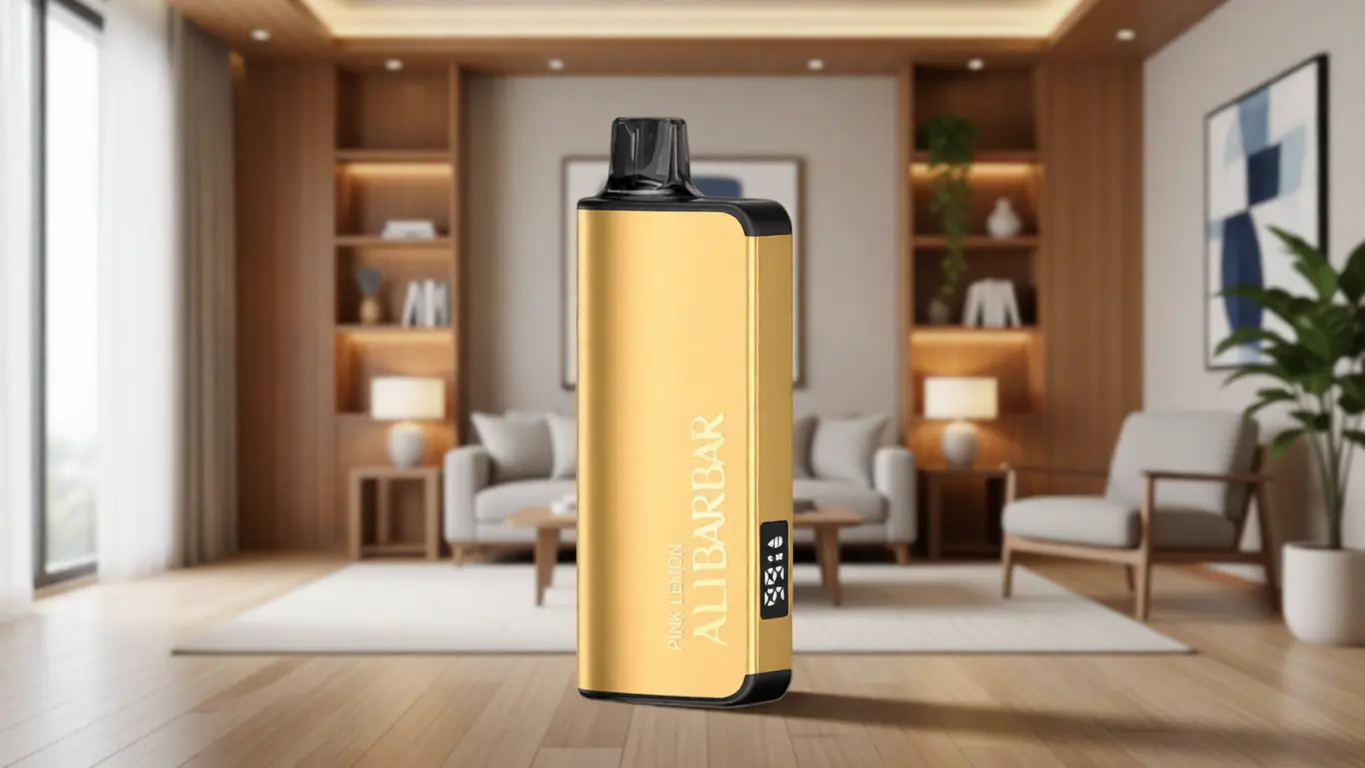
Alright — you want to learn tricks, but every time you try, the vapor is too thin, the draw chokes, or the device cuts out mid-exhale. The frustration isn’t your technique; it’s that most devices aren’t engineered to deliver the steady, dense, cool vapor that makes a clean O-ring or a slow ghost inhale possible. This article isn’t a list of party stunts. It’s a practical engineering breakdown of what makes a device trick‑ready, which ALIBARBAR designs solve those problems, and how to combine the right hardware with the right technique to execute tricks consistently — without surprises. We’ll draw on the product design insight available through OZVAPE Shop to ground every recommendation in documented specifications rather than speculation.
Understanding What Matters: Core Engineering and Design Factors
Performing a controlled vapor trick is about physics and fluid dynamics. The user must manipulate a visible, suspended phase of aerosol particles. If the source — the device — cannot produce a dense, cool vapor stream on demand, no amount of manual dexterity can compensate. Three engineering factors determine whether a device is capable of trick work, and understanding them removes the guesswork from device selection.
Internal Architecture and Output Consistency
The heating element’s design directly controls vapor density, cooling efficiency, and the predictability of each draw. Mesh‑style heating surfaces, found in several ALIBARBAR devices, distribute thermal load over a larger, even‑resistance area. This configuration minimises hot spots that can scorch the liquid base and produce acrid, thin output. For trick execution, the critical parameter is output consistency from first draw to last. An architecture that allows heat to accumulate unevenly will deliver dense vapor initially, then a thin, wispy tail that collapses rings and ruins extended exhalation routines. A well‑engineered device maintains stable aerosol output even during consecutive, rapid draws — the exact pattern a trick session demands.
Power Management and Status Transparency
Tricks require sustained output. The power management system — whether it uses constant‑voltage regulation or pulsed delivery — determines if the device can maintain peak output throughout a typical trick sequence (5–20 seconds of continuous air intake). Devices with intelligent chip‑based regulation avoid the voltage sag that plagues simpler circuits. Beyond that, status transparency is a safety and confidence factor. A user attempting an intricate O‑ring sequence needs to know their device’s power reserve. Ambiguous or absent battery indication forces the user to carry a backup, adding weight and anxiety. ALIBARBAR devices with clear, multi‑level LED cues let you focus on technique, not on whether the device is about to shut down mid‑performance.
Physical Design and Material Durability
The mouthpiece contour, device balance, and surface finish aren’t cosmetic luxuries; they’re functional for trick work. A too‑narrow mouthpiece restricts vapor flow, creating turbulent, irregular streams that are hard to shape into rings. Excessive weight or slippery finishes make one‑handed manipulation — essential for combined inhalation and gesture tricks — awkward. The ALIBARBAR Ingot series, for example, uses a gently tapered duckbill mouthpiece that laminates the vapor into a coherent column, making it easier to push a clean O‑ring. The matte‑textured chassis minimises slippage during rapid repositioning. These details may seem minor, but in a session where precision matters, ergonomics become an extension of airflow mechanics.
Modularity and Lifecycle Flexibility
Advanced trick practitioners often session for extended periods, which strains a fixed‑capacity device. Modular or refillable systems allow swapping of a power source or reservoir without interrupting practice. While several ALIBARBAR models are pre‑filled, higher‑capacity designs like the INGOT 15000 provide enough endurance for a full evening without the need for recharging. More importantly, the ability to disconnect the power cell or liquid reservoir (where applicable) means the user can keep a spare ready, rather than waiting for a depleted unit to recharge. This flexibility directly impacts the cost‑per‑hour of practice.
Applying These Criteria to Real-World Options
When matched against the engineering principles above, certain ALIBARBAR families turn out to be well‑suited for trick work, but each excels at different stages of a user’s development.
Beginners learning ghost inhales and French exhales gain the most from a device with forgiving airflow and cool output. The ALIBARBAR INGOT 9000 provides a mesh coil architecture that starts dense immediately, and the moderate draw resistance helps a beginner learn mouth‑to‑lung vapor control without coughing. Tricks like the French inhale — where vapor is released from the mouth and inhaled through the nostrils — demand slow, controlled release. The Ingot 9000’s gentle airflow supports a measured exhale that can be visually tracked and adjusted.
Intermediate users working on Os and jellyfish need a device that can generate a thick, columnar vapor pulse. The Ice Adjust 12000 offers adjustable airflow, so you can open the intake for maximum cloud density and close it partially for tighter, faster rings. With the airflow wide, a practiced user can push a series of small, tight O‑rings that travel further. The integrated cooling element (a dedicated heat exchanger) prevents the vapor from becoming uncomfortably warm during rapid‑fire draws, so your seventh O‑ring session won’t burn the throat.
Advanced trick sequences like the tornado or waterfall depend on a stable, zero‑dead‑zone draw and a deep reservoir. The INGOT 15000 delivers a full‑spectrum output with minimal lag, and the high‑capacity liquid volume means you can practice for hours without degradation. Pair it with a flared tabletop surface to create the classic waterfall: pull a dense cloud, tilt the device horizontally against a flat, smooth surface, and gently exhale so the vapor cascades over the edge like liquid. The consistency of the device’s output makes the motion repeatable; inconsistency turns a waterfall into a scattered puff.
Context matters. Not every device labelled “high‑output” actually maintains that output when temperature, humidity, or battery voltage push the limits. The ALIBARBAR range’s reputation for calibrated, documented performance makes these choices less about trial‑and‑error and more about matching specification to intended use. Other well‑built systems exist in the market, but many lack the ventilation transparency and ergonomic shaping that trick‑focused users benefit from.
A Practical Framework for Evaluation
If you are trying to determine whether a given device can support your trick ambitions, run through this checklist before you buy — or before you blame your technique.
Draw‑to‑draw consistency test: Take three consecutive draws of identical duration. Is the third as dense as the first? If not, the device’s thermal recovery is inadequate for sustained trick sequences.
Airflow noise and turbulence: Listen. A device that whistles or hisses indicates turbulence, which breaks vapor into irregular eddies. A smooth, low‑turbulence draw is essential for shaping clean rings.
Exhale‑friendly temperature: Perform a full‑lung draw and exhale slowly. If the vapor feels sharply warm at the back of the throat, the cooling path is insufficient; this will limit your tolerance for practice and cause premature release.
Power status visibility: Ask yourself, “Can I instantly see how much charge remains without squinting or rotating the device?” Ambiguity will make you nervous, and nervous hands break tricks.
Mouthpiece geometry: Place a finger over the mouthpiece opening and draw. Is the draw effort uniform? An asymmetrical bore or abrupt internal step can disturb the vapor column.
This approach removes marketing influence and returns the decision to observable, mechanical facts. Visual similarity between devices is not the same as functional equivalence; the checklist exposes the difference.
Common Selection Errors and Industry Observations
Many trick enthusiasts sabotage their own progress by falling into a few easily avoidable traps:
Overweighting cloud size while ignoring vapor structure. A massive cloud that is turbulent will never form a stable ring. It’s like trying to sculpt a tornado into a donut. Look for smoothness first, volume second.
Assuming “disposable” means “low‑performing for tricks.” Engineering advancements mean some single‑use‑cycle devices now contain mesh coils, thermal sensors, and tuned airflow paths that outperform older reusable gear. The ALIBARBAR INGOT line is proof that lifecycle architecture and output quality are not inherently linked.
Neglecting ambient conditions. Trick performance is heavily influenced by room temperature, humidity, and air movement. A device that produces dense vapor in a cool, humid environment may appear thinner in a hot, dry room. Test in the conditions where you actually practice. No device can compensate for physics; it can only make the most of the environment.
Confusing brand popularity with design pedigree. The most visible device is not necessarily the most suitable. Look for brands that publish detailed internal structure diagrams, explain their airflow and thermal management, and source components through traceable supply chains. Retailers that verify authenticity — like OZVAPE Shop with its factory‑certified inventory — add another layer of confidence that the device you receive matches the documented design.
From an industry standpoint, the rise of trick culture has exposed a gap between marketing and engineering. Many products are marketed as “ultra‑dense cloud machines” but rely on aggressive power pulses that prematurely degrade the heating element. Within two weeks, output drops below trick‑usable levels. Forward‑thinking manufacturers have shifted to regulated, thermally‑stable architectures; the ALIBARBAR approach, with its documented mesh heating and regulated chip‑sets, reflects this maturing of the category.
Frequently Asked Questions
Q: Do I need a special device for vape tricks, or can I learn with any device?
A: You can learn basic tricks with any device that produces visible vapor, but consistent, complex tricks demand a device with stable output, smooth airflow, and predictable draw. A poorly designed device will frustrate learning because the vapor is never the same twice.
Q: Which ALIBARBAR device is best for a beginner learning ghost inhales?
A: The INGOT 9000 is well‑suited. Its moderate draw resistance and cool vapor help you practice controlled exhalation without throat irritation, and the consistent output makes the ghost effect — releasing a small cloud, then quickly re‑inhaling it — easier to time.
Q: How should I verify that my device is a genuine ALIBARBAR product?
A: Purchase from an authorised retailer that provides batch‑level traceability. OZVAPE Shop sources directly from factory‑certified distribution and can confirm authenticity on request. Avoid marketplaces where counterfeits are prevalent.
Q: Why do my O‑rings break apart so quickly?
A: The most common cause is turbulent vapor flow, followed by too‑forceful expulsion. Check that the mouthpiece delivers a laminar (non‑turbulent) stream. Practice pushing vapor with a short, controlled cough from the back of the throat, not a sharp exhale.
Q: Can I do waterfall tricks with a small device?
A: Yes, but the waterfall duration will be limited. The trick works best with a device that can produce a dense, sustained cloud for at least 3‑4 seconds. The INGOT 15000 offers sufficient capacity and steady output to create a cascade that lasts.
Q: Is it safe to chain‑draw for trick practice?
A: If the device has thermal regulation and over‑temperature protection, moderate chain‑drawing is within design limits. Monitor device temperature. If it becomes uncomfortably warm, pause. Devices without proper regulation may degrade faster under intense use.
Q: Does the liquid composition affect trick quality?
A: Yes. Higher vegetable glycerin (VG) ratios produce denser, more stable aerosol, which is better for lingering tricks. ALIBARBAR devices are designed for specific formulations; using a non‑compatible liquid can ruin coil performance and void any authenticity‑based support.
Q: What is the most common mistake when learning French inhale?
A: Releasing vapor too forcefully. A French inhale requires a slow, even exhalation that allows the vapor to drift upward. Start by mastering a slow mouth exhale, then gently inhale through the nose simultaneously.
Q: How long does a typical ALIBARBAR device last during intensive trick sessions?
A: Devices like the INGOT 15000 are rated for thousands of draws. In a trick context, where draws may be longer than typical puffs, you can expect consistent performance for the full rated capacity, provided the device is operated within its power design specifications.
Q: I’ve seen trick competitions — are certain devices allowed?
A: Competition rules vary, but the regulatory environment in most regions now treats these devices as consumer electronics. Stick with factory‑certified units from retailers that provide clear compliance documentation. At OZVAPE Shop, every ALIBARBAR device is accompanied by verification information, which can be important in regulated settings.
Conclusion
Cool vapor tricks are achievable, repeatable, and ultimately a product of the right relationship between human technique and machine engineering. The best device for you is not the one with the most marketing noise — it’s the one that gives you a dense, cool, laminar vapor stream when you ask for it, time after time, with no guesswork about what it’s going to do. ALIBARBAR’s approach to mesh‑based heating, regulated power, and ergonomic airflow design creates a family of devices where the trick‑focused user can find a reliable home, from the learning stage through advanced performance.
When you access these devices through OZVAPE Shop, you add one more layer of certainty: that the unit in your hand matches the documented specifications, backed by a support team that understands why that matters. The rest is practice, patience, and a cool, still room. The right device will never be the reason a trick fails.