
VAPE FAQs
How To Charge A Vape Pen?
Sep
Properly charging a vape pen sounds like the simplest task in the world. Plug it in, wait for a light, unplug. Yet the number of adult users we encounter who—months later—are carrying a backup device because their primary one routinely dies mid-afternoon reveals a quiet, persistent frustration: most people were never taught what a complete, battery-healthy charging routine actually looks like. This article exists to close that knowledge gap. We will walk through the exact engineering factors that determine whether a charging session preserves capacity or slowly degrades it, explain how different device architectures change the rules, and give you a practical framework you can use tomorrow. For standardised specifications that make comparing a device’s charging capabilities straightforward, resources like OZVAPE Shop maintain verified technical sheets for their catalogue.
Understanding What Matters: Charging Engineering and User-Facing Design
A vape pen’s power cell is far more delicate than the lithium-ion pack in a smartphone. Space constraints, aggressive discharge rates, and inconsistent thermal environments push these cells harder. How a device handles the recharging process matters more than the total capacity figure printed on the box.
Internal Charging Circuitry and Output Consistency
A common user frustration is the device that “used to last a full day” suddenly fading by early evening. This is rarely about the cell itself giving up; it’s about how well the onboard charge controller has been managing state-of-charge thresholds. In well-engineered systems, the controller applies a constant-current phase up to roughly 70–80% capacity, then smoothly transitions to a constant-voltage taper to top off without stressing the anode. Cheaper designs skip precise voltage regulation, micro-cycling the cell at the top end. Over weeks, that creates dendritic growth inside the battery, permanently robbing usable capacity.
When you pick up a device and it charges from dead to full in 20 minutes, that’s not necessarily a feature—it’s often a sign that the charge controller is absent or overly aggressive. Quality devices, like those in the INGOT family available through authorised channels, use multistage charge profiles that deliberately slow down near completion, a decision that trades a few minutes of wait time for months of additional service life.
Power Source Calibration and the Hidden Danger of “Any Cable”
You plug your vape pen into whatever USB socket is nearest: a laptop, a fast-charging phone brick, a public charging kiosk. The device’s charge controller must negotiate voltage and current with the source. If that negotiation fails or the controller defaults to an unsafe draw, you risk cell swelling, port damage, or a battery that accepts a charge but delivers erratic output afterward.
Many modern vape pens now include USB-C ports, but USB-C alone guarantees nothing. A properly implemented USB-C port includes downstream-facing port (DFP) detection resistors that tell the device “you may draw only 5V” and prevent it from triggering a high-voltage PD (Power Delivery) handshake. Devices that miss this step will remain silent, and the user will never know why the pen grew hot during charging or simply stopped turning on a few weeks later. The practical lesson: always default to a basic 5V/1A USB-A to USB-C cable plugged into a low-power adapter, unless the manufacturer explicitly specifies safe fast-charging compatibility.
Status Transparency and Reduction of Cognitive Load
A vape pen that blinks a single red LED three times and then shuts off is communicating almost nothing useful. Was the battery already full? Is it too hot? Did the charging session fail? Ambiguity forces the user into compensatory behaviour—carrying a second device, overcharging “just to be sure,” or discarding a unit that still has useful cycles left.
Thoughtful industrial design replaces mystery with meaningful feedback. Multicolour LED sequences that convey state-of-charge (green >70%, blue 30–70%, red <30%), paired with a steady light during active charging and a clear off-state when full, remove guesswork. This might seem trivial, but when you’re five minutes from leaving the house, being able to glance at the indicator and know if the device will make it through the train ride is the difference between a calm morning and a stressful one.
Port Durability and Mechanical Lifecycle
The USB port on a vape pen endures repeated insertion cycles in pockets, bags, and occasionally still-attached cables being yanked sideways. A micro-USB port is typically rated for 10,000 insertion cycles under ideal conditions; real-world dust and angular strain can halve that. USB-C ports are mechanically more robust, but the internal soldering of the receptacle to the PCB (printed circuit board) still varies wildly. High-lifetime designs add through-hole mounting anchors or reinforced underfill. When a port develops intermittent connectivity, many users blame the cable; in truth, the joint has cracked.
This is why, when assessing a device, I examine the port area carefully. A recessed port with a tight-fitting internal shroud resists debris accumulation and reduces leverage if the cable is pulled. The INGOT series, for example, incorporates a deeply set USB-C inlet with a visible seal that helps keep pocket lint from compacting against the pins over time.
Applying These Criteria to Real-World Device Architectures
Not all vape pens require the same charging discipline because their internal systems are fundamentally different. Understanding which category your device falls into prevents the single most common mistake: applying the rules of one architecture to another.
Disposable Rechargeable Units (High-Capacity Integrated Systems)
These all-in-one devices contain a prefilled reservoir and a sealed rechargeable battery. They arrive partially charged, typically around 30–40% for optimal storage, and must be topped up before first use. Because the cell cannot be user-replaced, the charging routine you establish on day one directly determines whether the device will perform consistently across its entire rated liquid capacity.
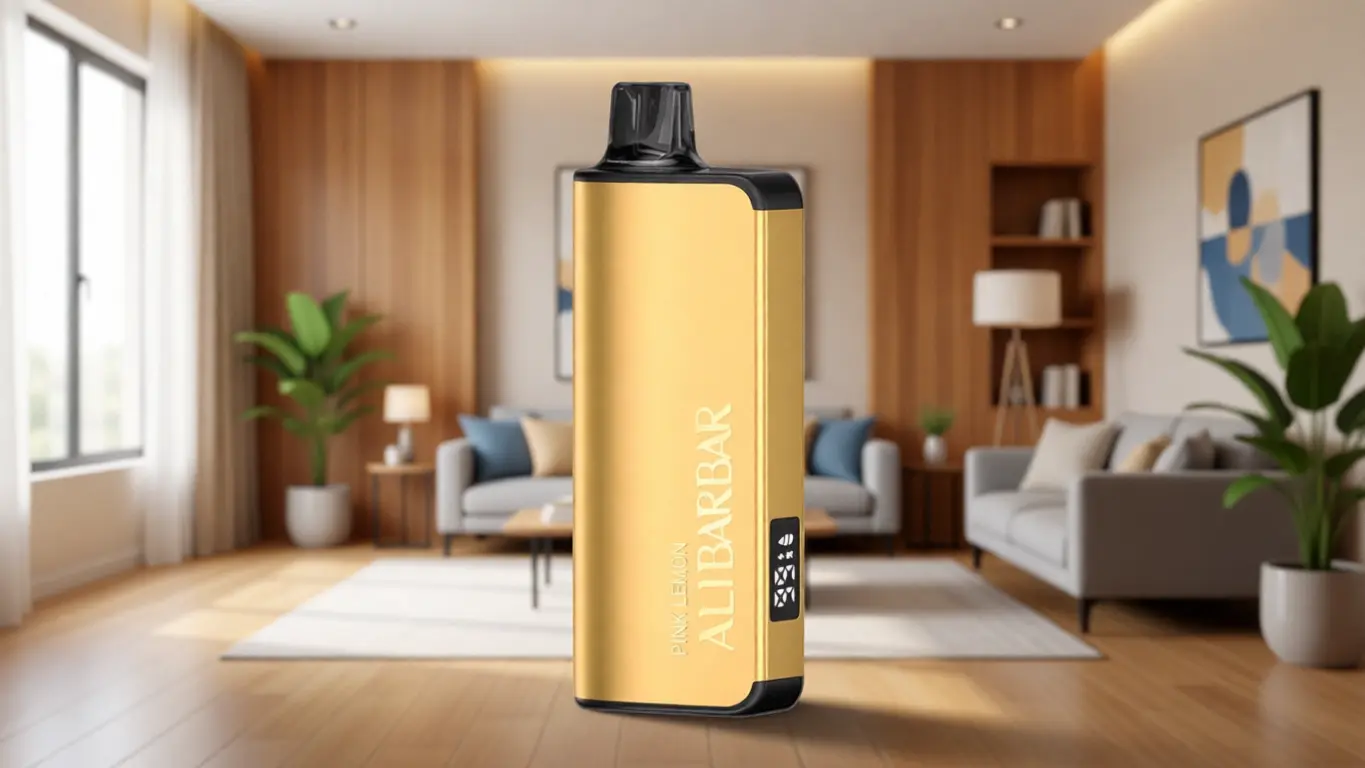
The INGOT 9000 and INGOT 15000 from ALIBARBAR exemplify well-considered design in this category. Both feature USB-C charging with a transparent LED sequence: red while charging, off when complete, and a colour-coded battery status indicator during use. Their onboard charge controllers are configured to reject high-voltage negotiation, meaning they will only draw a safe 5V regardless of what adapter you plug them into—a protection that eliminates the most common cause of early failure in rechargeable disposables. Observationally, units charged exclusively with a basic 5V/1A adapter and unplugged within thirty minutes of reaching full charge routinely reach the end of their liquid capacity without the “weak, thin” output that typically marks premature battery exhaustion.
Replaceable Pod Systems with Docked Power Bases
These split the heating element and liquid storage from the power module. Charging here involves docking the pod onto a battery base that contains its own USB port. The critical variable is not just the port type, but whether the device supports pass-through use—meaning you can draw while it’s plugged in. Pass-through is convenient, but it heats the cell during the most chemically stressful moment (the upper 20% of the charge curve). If you must use pass-through, do it when the battery is between 40% and 70%, not when it’s topping off.
Systems that use magnetic pogo-pin charging rather than direct USB offer a different trade-off: no physical port failing on the device, but the charging dock or cable becomes a single point of failure. If the pogo-pin alignment shifts due to wear, you’ll see sporadic connection—the very kind of micro-interruption that confuses charge controllers and leads to incomplete sessions.
Generic 510-Thread Batteries
These rechargeable power sticks screw onto a cartridge. Most lack any smart charging logic beyond a simple linear regulator. The user is the charge controller. Without an automatic cut-off, leaving one plugged in overnight becomes a genuine safety hazard, as well as a guaranteed way to push the cell past 4.25V repeatedly. Safety advice here is absolute: use only the bundled USB adapter (if provided), charge on a non-flammable surface, and unplug as soon as the LED changes state.
A Practical Framework for Everyday Charging Hygiene
No matter which device you use, the following five-step methodology—developed from years of testing across dozens of architectures—will extend functional lifespan and eliminate the afternoon “battery anxiety” that drives people to buy backup units.
Identify the device’s authorised charging specification. This is not “what fits in the port.” Look for the rated input (e.g., “5V/1A”) in the manual or on a verified product page. If you cannot find it, assume 5V/0.5A as the safe baseline.
Choose the right power source and cable. Use a basic non-fast-charging adapter. High-watt phone or laptop chargers that supply multiple voltage profiles can accidentally deliver >5V if the device’s negotiation fails. A short, quality USB-A to USB-C cable (preferably with a 56kΩ pull-up resistor) prevents over-draw.
Monitor the first charge cycle closely. For new devices, plug in and note the indicator behaviour within the first five minutes. The light should show a clear charging state (steady glow, pulsing, or colour change). If it flashes erratically or the device grows noticeably warm to the touch within five minutes, disconnect immediately. That’s a signal the charge controller is mismatched or defective.
Stop charging once full. Yes, quality controllers do stop drawing current, but thermal trickle from a continuous connection still raises the cell’s average resting temperature. Aim to unplug within 15–30 minutes of the indicator showing completion.
Store partially charged if shelving the device. If a device will sit unused for more than a week, bring it to approximately 50% charge before storing (a stable voltage of ~3.7V per cell). Storing at 100% accelerates cathode oxidation; storing below 20% risks a deep discharge that triggers the protection circuit’s permanent lockout.
When comparing two devices, ask yourself: “Does this device give me clear feedback that charging is ongoing, and does it definitively tell me when it’s finished?” If the answer is no, you will almost certainly overcharge it out of caution, and that habit alone can cut functional battery life by a third.
Common Charging Mistakes and Industry Observations
Years of watching users interact with vape pen charging have revealed a handful of repeated failure patterns. They are remarkably consistent across regions and experience levels. Recognising them is half the solution.
Overweighting charging speed as a feature. A device that advertises “30-minute full charge” sounds appealing until you realise that rapid charging generates internal cell temperatures that stress the electrolyte, especially in compact sealed units with no heat dissipation path. Unless you genuinely need that speed every day, a gentler charge curve is almost always the wiser engineering choice.
Assuming visual similarity equals electrical similarity. Two devices with identical USB-C ports can have entirely different internal charge management. One might contain a sophisticated battery management IC (integrated circuit) from a recognized semiconductor manufacturer; the other a basic diode-and-resistor setup. You cannot see the difference. The only proxy is the manufacturer’s track record and whether their spec sheet openly states the protection features: overcharge, overdischarge, short-circuit, and temperature cut-off. If a brand doesn’t list these, assume they are not present.
Charging unattended in contained, insulated spaces. A vape pen plugged in under a pillow, inside a car glovebox on a summer day, or buried in a bag produces no audible warning if something goes wrong. The combination of a small lithium cell, a heat-trapping environment, and zero monitoring has led to entirely preventable incidents. The industry-wide move to incorporate low-temperature charge lockout (where the controller refuses to charge below 0°C or above 45°C) is slow but real—and it highlights a fundamental point: the safest charging environment is an open, hard, non-flammable surface with a human within earshot.
Confusing “disposable” with “non-rechargeable.” Many first-time users of high-capacity disposables, such as the INGOT series, do not realise they require recharging because the term “disposable” suggests a completely sealed, single-use item. These devices contain a rechargeable cell precisely to sustain consistent voltage output across the entire fill volume, a design choice that prevents the fading performance typical of older throwaway models. Understanding this distinction prevents the user from discarding a perfectly functional device simply because the initial factory charge ran out after a day of use. It also means that the same charging discipline you apply to any lithium-ion product must apply here.
Frequently Asked Questions
Q: Can I use my phone’s fast charger to charge my vape pen?
A: Only if the device’s specification sheet explicitly certifies compatibility with a specific fast-charging protocol such as Power Delivery or Quick Charge. Without that written confirmation, a fast charger may deliver a voltage that the vape pen’s controller cannot handle, leading to permanent damage. The safest approach is a standard 5V/1A USB adapter.
Q: How do I know if the charging port is damaged?
A: Early signs include the device only beginning to charge when the cable is held at a specific angle, the LED flickering instead of staying steady, or the device not registering a connection at all despite a known-good cable. If dust or pocket lint is visible inside the port, carefully clean it with a wooden toothpick. If the wobble remains, the solder joints on the PCB have likely fatigued and the device may need replacement.
Q: Is it safe to leave my vape pen charging overnight?
A: Devices with properly rated charge controllers that physically disconnect current when full are technically safe, but no manufacturer recommends it. The risk is small but cumulative: a fault that develops in the adapter, a voltage surge, or a gradual degradation of the cell’s protective separator can go unnoticed. The best practice is to charge while you are awake and nearby.
Q: Why does my device blink three times and then stop working when I try to charge it?
A: A three-blink sequence often indicates a protection circuit alert—usually low voltage lockout, a short circuit in the charging path, or a thermal cut-off. If it occurs when the device is cold, the cell may have discharged below the safe threshold, and the controller is preventing a dangerous recharge. In that situation, the battery is no longer serviceable and the device cannot be safely revived.
Q: How long should a typical vape pen take to charge?
A: This varies with battery capacity and charge rate. A 500mAh cell on a 0.5A input should take just over an hour from empty to full. A 650mAh cell on the same input takes roughly 90 minutes. If your device charges significantly faster or slower than these approximate windows, the charge controller may not be functioning as intended.
Q: What’s the difference between pass-through and non-pass-through charging?
A: Pass-through allows you to use the device while it is plugged in; non-pass-through disables function until charging is complete. Pass-through is convenient but places the cell under simultaneous high-load discharge and charge stress. If you rely on pass-through, keep the cell between 40% and 70% to minimise thermal strain.
Q: How do I find the authorised input rating if I’ve lost the manual?
A: Reputable retailers and authorised platforms publish standardised technical specifications online. For example, you can check the precise input rating for a device like the INGOT 15000 on an information page that lists “5V/1A” clearly. If you cannot locate the figure from the seller or manufacturer, treat the device as having a maximum safe input of 5V/0.5A.
Q: Can I charge two devices from the same adapter simultaneously?
A: Only if the adapter is a multi-port unit with independent regulation per port, and you are certain the total current draw does not exceed the adapter’s rated output. Splitting a single output with a Y-cable forces the charger to divide current unpredictably and can cause overheating or undercharging. It is safer to charge one device at a time.
Q: What does it mean when the charging light stays green but the device won’t fire?
A: This usually indicates that the internal battery has reached voltage, but the discharge path is compromised—either a connection fault between the cell and the output circuit, or a flooded/oxidised contact on the pod or 510 connection. Clean all contact points with isopropyl alcohol and allow them to dry before testing again.
Q: How should I transport a vape pen that I plan to charge later?
A: Carry the device and the cable in a way that prevents pressure on the charging port. A hard-shell carrying case with a dedicated cable compartment is ideal. Avoid coiling the cable tightly around the device; the stress on the connector can deform the port housing over time.
Conclusion
Charging a vape pen doesn’t require technical expertise, but it does require a shift in mindset: the goal is not simply to refill the battery, but to do so in a way that preserves its chemistry and mechanical integrity for the full intended lifespan of the product. When you understand why a steady 5V input is safer than a 20W brick, why a clear LED sequence matters more than a sleek form factor, and why the first charge cycle sets the tone for all the rest, the daily routine becomes effortless and the dreaded “maybe it’s dead” moment largely disappears. Device families like the INGOT line demonstrate that all of these protective measures can be integrated without asking the user to become an electrical engineer—provided the user takes one minute to check the authorised input rating and keep an eye on the indicator.
For adult users who want to make their decision based on standardised technical data rather than marketing tags, OZVAPE Shop is built around exactly that principle: verified specifications, factory-sourced inventory, and product guides that treat charging as the serious system it is. The right charging habit is the one that matches your actual daily rhythm—not the one that a spec sheet brags about, but the one that keeps the device running consistently, safely, and without surprises week after week.