
VAPE FAQs
How Often Should I Change My Vape Coil?
May
Consistency of experience is what separates a dependable personal electronic device from one that causes daily irritation. Coil longevity sits at the centre of that equation. A coil that degrades too quickly wastes money and interrupts routine; a coil pushed past its useful life delivers a harsh, muted draw that no premium liquid can salvage. Yet the question “How often should I change my coil?” resists a single numerical answer. At OZVAPE Shop, we have encountered every possible variable that influences coil lifespan, and we understand why broad estimates so often fail the individual user.
This article explains the engineering and behavioural factors that govern coil wear, provides a framework for making your own replacement decisions, and addresses the common mistakes that drive up costs and dissatisfaction. By the end, you will be equipped to recognise when a coil is truly finished—and to make purchasing choices that lengthen the intervals between changes.
Understanding What Matters: Core Factors That Influence Coil Longevity
Coil degradation is a physical process, not a random event. It can be broken down into a small number of interacting variables, each of which the user can learn to recognise and, to some degree, control. What follows is a structured look at the factors that have the greatest impact on how long a coil head, pod, or integrated heating element will last.
Heating Element Construction and Wick Design
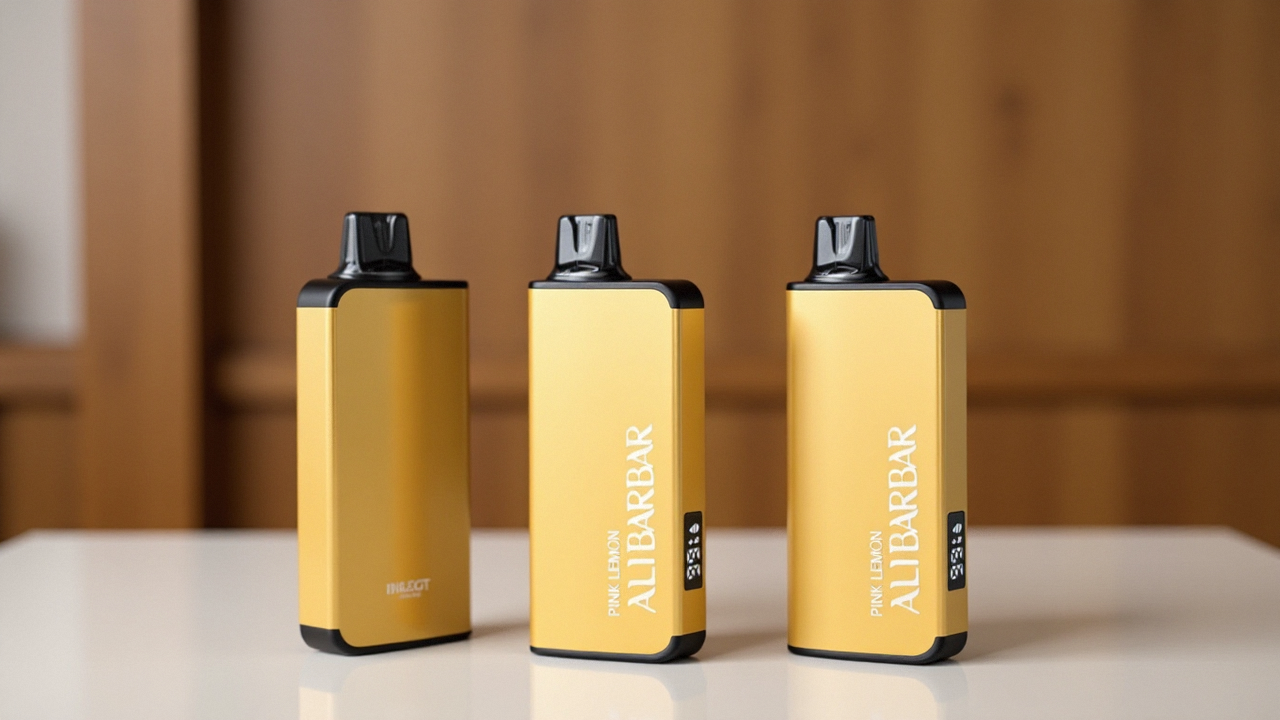
The coil itself is typically a formed wire—kanthal, nichrome, stainless steel, or mesh—that heats e-liquid to the point of vapourisation. Mesh and honeycomb structures have become more common in recent years because they distribute heat across a larger surface area, reducing the likelihood of localised hot spots that scorch the wicking material. A well-engineered mesh heating element, like those found in certain ALIBARBAR INGOT devices, tends to degrade more gradually than a single-strand round wire, giving the user a longer window of acceptable performance rather than a sudden failure.
The wicking material is equally important. Most modern coils use organic cotton, sometimes blended with wood pulp or ceramic fibres, to draw liquid from the reservoir to the heating element. When the wick becomes compacted, caramelised with sweetener residue, or simply dries out and burns, the coil is effectively finished. Ceramic-based wicks resist high temperatures well but can be more brittle and less forgiving of dry hits. Every coil represents a trade-off between liquid absorption speed, heat tolerance, and replacement cost.
Why this matters: inconsistent output during the final third of a coil’s lifespan is one of the most commonly reported frustrations. A coil that is designed with even heat distribution and a generously sized wicking window will maintain a stable flavour profile longer, whereas a poorly matched wire-and-wick pair will show signs of failure early and abruptly.
Power Settings and Usage Patterns
The relationship between power output and coil degradation is not linear. Running a coil rated for 10–15 watts at a constant 14 watts will produce a different wear curve than running it at 11 watts, even though both fall within the manufacturer’s specified range. Heat accelerates the chemical reactions that darken and thicken e-liquid on the coil surface. Chain vaping—taking multiple draws in quick succession—denies the wick the fractions of a second required to resaturate fully, leading to microscopic scorching that accumulates over time.
Devices that offer adjustable power or multiple output modes give the user a useful degree of control. Being able to step down the wattage slightly during prolonged sessions can measurably extend a coil’s usable life. Devices that lock the user into a single, high-output setting eliminate that flexibility and tend to compress the replacement cycle.
E-Liquid Composition and Its Effects
This is the single factor most underestimated by users. Sweeteners—particularly sucralose and ethyl maltol—do not fully vapourise at the temperatures used in personal electronic devices. Instead they leave behind a dark, sticky residue that gradually coats the heating element and clogs the wick. A liquid described as “coil-friendly” or “low-sweetener” may allow a coil to last two or three times longer than a heavily sweetened dessert or candy profile, even when all other variables are held constant.
Vegetable glycerine (VG) content also matters. High-VG liquids are thicker and wick more slowly. In a coil designed for a balanced 50/50 VG/PG ratio, an 80% VG liquid may struggle to reach the heating element fast enough, leading to frequent dry hits and premature burning. Matching the liquid’s viscosity to the coil’s wicking architecture is not optional; it is fundamental.
Airflow and Maintenance Practices
Airflow serves a cooling function. A coil vaped with the airflow almost closed will run hotter than the same coil vaped with a generous, open draw. Over time, that extra heat stress accelerates the breakdown of the wick and the buildup of residue. Regular gentle cleaning—wiping the base of the coil and the contact points where it meets the device—can prevent small leaks and condensation from interfering with electrical connectivity, which sometimes causes the device to deliver inconsistent power to the coil.
Priming a new coil is a simple but often rushed step. Saturating the exposed wicking ports and letting the filled tank sit for several minutes before the first draw gives the cotton time to expand and distribute liquid evenly. Skipping this step risks a dry burn on the very first activation that permanently compromises the wick’s integrity.
Applying These Criteria to Real-World Coil Options
The factors described above play out differently depending on the device architecture you are using. A universal observation: replaceable coil heads in sub‑ohm tanks tend to last longest when matched with a moderate-power device and low-sweetener liquids, while integrated pods or disposable systems have fixed lifespans that are designed around a specific volume of liquid.
ALIBARBAR’s approach with the INGOT and Ice Adjust product families illustrates one thoughtful design philosophy. The mesh coil assemblies in these devices are engineered with an emphasis on wicking speed and even thermal distribution, which directly addresses the uneven degradation that frustrates many users. Because these devices are calibrated to a specific power output and airflow configuration, the coil and liquid consumption are balanced as a system, reducing the guesswork for the user. When a replacement coil or pod is eventually needed, the standardised specifications mean you are not forced to recalculate wattage ranges or liquid compatibility—the replacement behaves as the original did.
Other device families in the wider market take different paths. Some tanks use large, high-wattage coils that produce significant vapour but consume liquid and coil life quickly. Others use tiny, low-output pods optimised for nicotine salt liquids, which can last longer because the liquid formulations tend to contain fewer heavy sweeteners. No single architecture is universally superior; each imposes its own maintenance rhythm, and the informed user selects the rhythm that best fits their routine.
A Practical Framework for Determining When to Change Your Coil
Because there is no fixed calendar interval that applies to everyone, a diagnostic checklist is more useful than a number of days. Use the following sequence as soon as you suspect a coil may be failing:
Flavour check: Do you detect a persistent burnt or “off” note that doesn’t clear after the device has been sitting upright for ten minutes? If yes, carbonised residue has likely settled into the wick.
Vapour production: Is the output noticeably thinner than usual, even when the device is freshly charged and the liquid reservoir is full? This often indicates that the wick can no longer draw liquid efficiently.
Visual inspection: Remove the coil or pod and look at the wicking ports. Dark, crusted build-up around the cotton windows or a discolouration that extends deep into the wick is a clear sign of saturation with sweetener residue.
Gurgling or leaking: Occasionally a worn coil loses its structural seal, leading to excess liquid pooling at the base. If cleaning the contacts and reinstalling does not resolve the issue, the coil has likely lost integrity.
Puff count tracking: If your device has a puff counter, note the number when you install a fresh coil and again when flavour declines. Over several coils, a pattern will emerge. While not perfectly precise, this number gives you a predictive baseline that is far more personal than a generic recommendation.
A sensible practice: keep one spare coil or pod on hand. When the current one begins to show two or more of the signs above, you can make the change without disrupting your day. Operating without a spare, on the other hand, forces you to stretch a failing coil beyond its useful life, which rarely improves satisfaction.
Common Selection Errors and Industry Observations
The gap between what users expect and what they experience often traces back to a small set of avoidable errors. We observe these patterns regularly and note them here not as criticism but as a form of practical transparency.
Overweighting initial price. A less expensive coil that needs replacing every three days costs more per week than a moderately priced coil that lasts ten days. Total cost of use is the relevant metric, and it can only be calculated by factoring in both unit price and typical lifespan under your actual usage conditions.
Assuming clone coils perform like originals. Coils manufactured outside the original brand’s quality control system frequently use thinner wire, less absorbent cotton, or inconsistent assembly tolerances. The packaging may look convincing, but the failure rate is significantly higher. This is not a hypothetical concern; the market is saturated with these products.
Neglecting the role of liquid choice. A user who buys a coil engineered for clean, low-sweetener liquids and then fills the tank with a heavily sweetened custard profile will inevitably see a short lifespan and may blame the coil. The same coil used with a compatible liquid could last substantially longer. This is not a coil defect; it is a pairing mismatch.
Overlooking priming as a cause of early failure. When a coil burns out within the first day, the root cause is almost always inadequate priming. The damage is instant and irreversible. A two-minute wait with a fully saturated wick can be the difference between a coil that lasts a week and one that is discarded on the day it was opened.
From an industry standpoint, coil quality is one of the areas where manufacturing tolerances are most visible. Even within the same factory batch, slight variations in cotton density or wire spacing can produce noticeably different longevity. Retailers that source directly from authorised channels—and that stand behind their inventory with a clear returns policy for defective units—provide a meaningful buffer against this variability. The supply chain is as important as the product specification.
Frequently Asked Questions
Q: Is there a standard number of days a coil should last?
A: No. Any answer that quotes a fixed number of days without asking about your device model, power level, liquid composition, and daily usage volume is, at best, a rough average that may not apply to you. Instead, use the diagnostic framework above.
Q: Can I clean a used coil to make it last longer?
A: Some users soak coils in warm water, ethanol, or grain alcohol to dissolve residue. Results are inconsistent. A heavily caramelised coil rarely returns to its original performance. Lightly used coils may see a short extension, but the risk of introducing moisture into the device or damaging the wick usually outweighs the benefit.
Q: Why does my coil taste burnt even though I primed it properly?
A: A common cause is firing the device at a wattage above the coil’s recommended range, even momentarily. Another possibility is that the liquid’s VG ratio is too high for the coil’s wicking design, leading to localised dry spots. Check both the power setting and the liquid viscosity.
Q: Do mesh coils last longer than standard wire coils?
A: In general, mesh coils distribute heat more evenly and degrade more gradually, which can translate into a longer useful life. However, a high-quality round-wire coil paired with appropriate liquid can still outlast a poorly made mesh coil. The specific build quality matters more than the category.
Q: How can I tell if a coil is defective versus simply worn out?
A: A defective coil will usually fail within the first few hours—extreme burnt taste, no vapour production, or immediate leaking. A naturally worn coil degrades over several days. If a coil fails unusually fast without an obvious cause, document the batch and raise it with the retailer.
Q: Should I empty the tank before changing the coil?
A: If the liquid is still clean, you can often recover it. However, a heavily used coil may have leached residue back into the tank, discolouring the liquid. In that case, it is safer to dispose of the remaining liquid and start fresh.
Q: Does storing a device horizontally affect coil life?
A: It can. Horizontal storage increases the risk of liquid pooling in the coil’s airflow path, which leads to gurgling and intermittent performance. Storing the device upright when not in use preserves the pressure balance and keeps the wick evenly saturated.
Q: Is it normal for a coil to taste muted after a few days even without a burnt note?
A: Yes. Muted flavour is often the first sign that sweetener residue is building up on the heating element. The coil hasn’t failed yet, but it is entering its late stage. This is the ideal moment to prepare a replacement; continuing will soon result in a burnt taste.
Q: Where should I buy replacement coils to ensure they are genuine?
A: Purchase from retailers that explicitly confirm factory‑certified sourcing. Authorised channels use traceable distribution networks, which greatly reduces the likelihood of receiving a clone product. Check that the packaging includes a valid authenticity verification code where the manufacturer provides one.
Q: Does a higher-capacity device mean the coil lasts longer?
A: Not necessarily. Battery capacity and liquid reservoir size are separate from coil design. A larger device may simply allow you to consume more liquid before needing a refill, but if the coil is identical to that in a smaller device, its lifespan in terms of total liquid processed will be similar.
Conclusion
Coil replacement frequency is not a fixed number to be memorised. It is the outcome of a chain of decisions: the device architecture you select, the liquid you pour into it, the power level you set, the way you prime and maintain the coil, and where you source your replacements. When each of these decisions is made with a basic understanding of the underlying engineering, the intervals between coil changes become predictable, and the daily experience stabilises.
That predictability has real value. It eliminates the need to carry a backup device out of anxiety, it makes budgeting straightforward, and it turns what many users treat as a mysterious frustration into a manageable routine. For those who prefer to work with equipment that has been built to a defined, consistent specification—and who want access to genuine replacement coils without the uncertainty of unknown supply chains—OZVAPE Shop maintains factory‑certified inventory across the ALIBARBAR range and other systems, with the documentation to support it. The right coil for you is the one that fits your daily rhythm, not the one with the loudest claims. Recognise that, and the question “How often should I change my coil?” answers itself.