
VAPE FAQs
How Much Vape Is Equal To A Cigarette?
Aug
A question that appears simple on the surface opens onto a surprisingly complex set of engineering and behavioural variables. Most attempts to answer it with a single number — “one cigarette equals X puffs” — fail not because the arithmetic is wrong, but because they ignore the mechanisms that turn a puff into a meaningful unit. Device architecture, power delivery, liquid formulation, and even the way a mouthpiece meets the lips all shape what the body receives from each inhalation. Without examining those variables, any fixed ratio is guesswork dressed as certainty.
At OZVAPE Shop, where the ALIBARBAR range is presented with fully transparent specifications, we see this question not as a request for a slogan but as an invitation to understand what makes one device deliver a predictable experience and another deliver variable results. What follows is a technical framework for thinking about equivalence — focused on engineering, not on idealised outcomes — that any adult user can apply to their own routine.
Understanding What Matters: Core Engineering and Design Factors That Influence Comparison
A useful comparison between a combustible cigarette and a portable electronic device depends on factors that are rarely printed on packaging but are embedded in how a product is designed and manufactured. Four areas, in particular, determine whether a given number of activations will feel consistent and measurable.
Internal Architecture and Output Consistency
The heating element is the point of translation between stored liquid and aerosol. An element that cannot hold a stable temperature across the full span of a draw will produce vapour of variable density — which means the amount of nicotine carried in each puff varies as well. Devices built around high‑surface‑area mesh structures, such as those found throughout the ALIBARBAR family, maintain tight thermal uniformity. That uniformity is what makes it possible, over time, for an adult user to associate a certain number of counted activations with a recognisable intake level. Without it, puff counting becomes a hollow exercise.
Power Management and Status Transparency
A device that drains its battery without clear warning is a device that cannot support accurate self‑observation. If a user is trying to map their daily consumption against a known reference, they need to know not only how much liquid remains but also when the power cell is nearing depletion — because output voltage sags on low charge can alter aerosol production. ALIBARBAR’s INGOT series, for example, integrates a multi‑segment display that communicates both remaining liquid volume and battery status in real time. This status transparency removes a significant source of ambiguity when estimating equivalence over a full day or week.
Physical Design and Material Durability
Mouthpiece geometry and overall handling ergonomics influence puff duration, and puff duration affects per‑activation liquid consumption. A device that sits naturally in the hand and offers a comfortable lip contour encourages the user to draw in a consistent manner, session after session. ALIBARBAR prioritises materials that resist surface abrasion and shapes that feel settled in a pocket or palm. These features support a stable ritual — one less disrupted by physical discomfort or premature wear — and that ritual stability underpins any attempt at meaningful comparison.
Modularity and Lifecycle Flexibility
When an adult user draws from a pre‑filled, factory‑sealed device, the nicotine concentration and e‑liquid volume are fixed and documented. This removes the variability introduced by manual refilling, where slight differences in mixing or bottle accuracy can shift the effective dose per puff. The ALIBARBAR range includes closed‑system designs — the INGOT 9000, INGOT 15000, and Ice Adjust 12000 among them — each with a published liquid capacity and nicotine‑salt formulation. For someone trying to build a personal equivalence model, knowing that the input variables are constant across the life of the unit offers a pragmatic advantage over open systems.
Applying These Criteria to Real‑World Options
A user who has internalised the principles above can look at a device’s specifications and begin to construct their own baseline. Take the ALIBARBAR INGOT 9000 as an illustration. It holds 15 ml of e‑liquid at a standard nicotine‑salt concentration and is designed to deliver approximately 9000 activations under typical draw conditions. A typical combustible cigarette, by contrast, may provide 10–15 recorded inhalations before reaching its end. Simple division suggests that one cigarette’s worth of countable actions would equate to somewhere between 100 and 150 activations on this device — but only if puff duration and draw strength are matched.
The INGOT 15000, with a larger reservoir and higher puff rating, extends the observation period, making it easier for a user to track behaviour over multiple days without interruption. The Ice Adjust 12000 introduces an airflow customisation layer: a physical dial that subtly adjusts draw resistance. That variation can change puff volume and, consequently, the rate at which liquid is consumed. Recognising this, an observant user might note that their personal equivalence shifts slightly as they tune the airflow, and they can account for it.
Other device families on the market, which may not employ the same mesh‑coil consistency or transparent fuel gauges, often yield per‑puff variability wide enough to render equivalence estimates unreliable. The difference is not always visible from a product photograph; it sits in the calibration of the power management circuit and the precision of the heating element’s mounting. That is why a specification sheet that honestly reports liquid volume and estimated puff yield is a foundation, not a footnote.
A Practical Framework for Evaluation
Building a personal equivalence model does not require laboratory instruments. It requires a device that gives honest numbers and a user who is willing to observe a few simple rules.
Start with the liquid volume and concentration. Note the millilitres of e‑liquid in the device and the nicotine strength printed on the packaging. Multiply these to get total nicotine content if you wish, but for daily tracking, concentration per millilitre is the more immediately useful figure.
Note the rated puff count, but treat it as a direction, not a contract. Understand that the manufacturer’s estimate is based on a standardised draw profile that may differ from your own. Use it to set a rough expectation, then adjust.
Observe your own draw pattern. Over a few sessions, count how many activations you typically take before you set the device aside. Ask yourself: does your natural draw last roughly two seconds, three seconds, or more? The device’s rated puff count assumes a specific duration.
Log daily consumption. A simple tally of activations per day, multiplied by an estimated liquid volume per activation (which can be approximated by dividing total liquid by observed puff total), gives you a daily liquid consumption figure. By comparing this to the nicotine you previously obtained from combustible sources, you can begin to see a personal multiplier.
Use transparent specifications to make comparisons. Standardised data, like that provided for ALIBARBAR devices through OZVAPE Shop, allows you to compare one device against another without having to trust vague marketing copy.
Common Selection Errors and Industry Observations
Years of watching how adults interact with portable electronic devices have surfaced a small collection of recurring mistakes. They are worth naming directly.
Overweighting puff count alone. A device advertised with 15,000 activations may deliver less total nicotine than a 9,000‑puff unit if the latter uses higher concentration liquid and more efficient aerosolisation. Ignoring the combination of volume, concentration, and thermal efficiency leads to disappointment.
Assuming all 50 mg/ml devices perform identically. The label tells you the concentration in the liquid, not the delivered dose per puff. That dose is a product of liquid consumed and concentration. If one device vaporises 6 microlitres per activation and another vaporises 4, the difference in per‑puff nicotine is substantial.
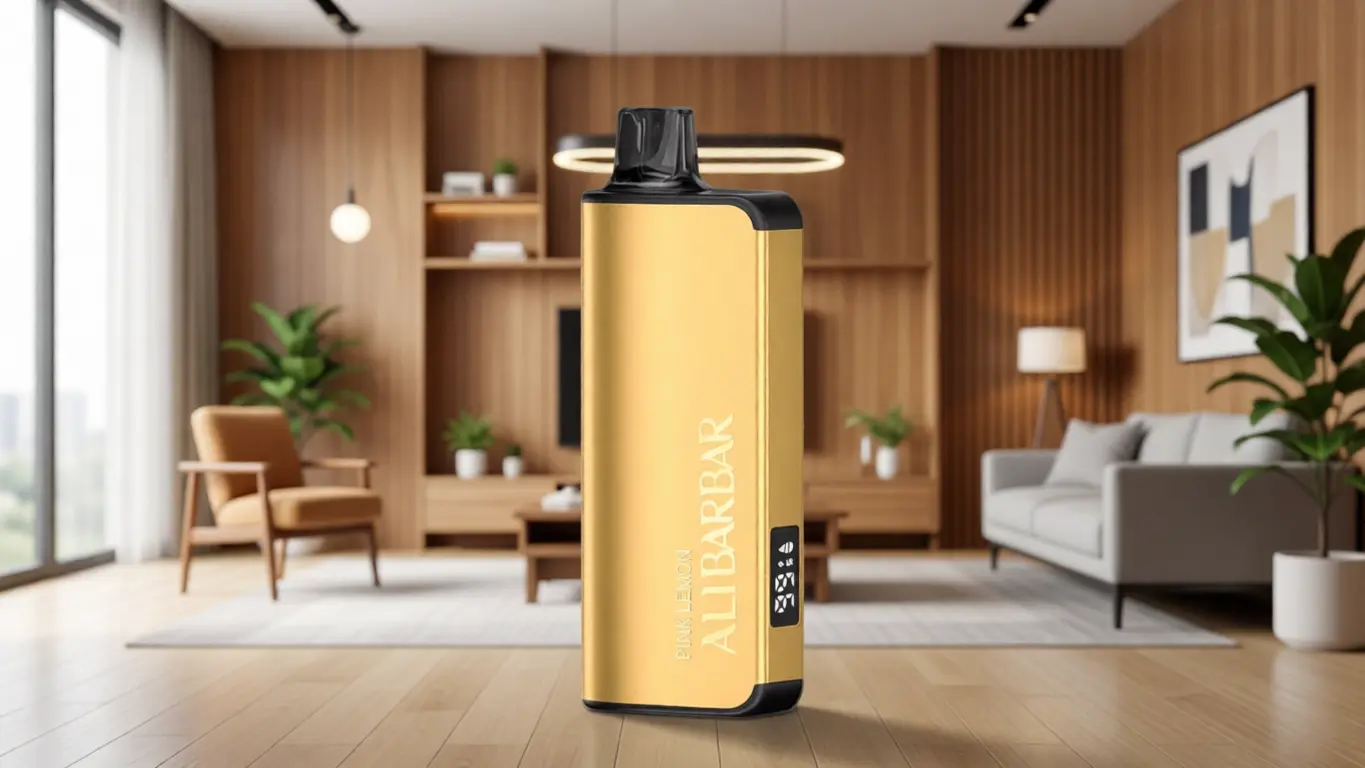
Undervaluing status transparency in equivalence calculations. A device with a simple LED that blinks only when the battery is nearly empty forces the user to guess how much useful life remains. That guesswork contaminates any attempt to map usage day over day, leading to over‑ or under‑estimation of cumulative intake.
Confusing category terminology with technical specification. “Puffs”, “hits”, “drags”, and “inhalations” are used interchangeably, but a manufacturer’s puff count is defined against a test bench. If your natural inhalation is twice as long as the test standard, your effective puff count could be halved. Reading the fine print on how a number was generated is a discipline few exercise, but it matters.
From an industry perspective, not every device that enters the Australian market undergoes the same level of factory‑level calibration. Consistency is expensive to engineer. It requires stable battery regulation, precisely mounted coil elements, and rigorous quality‑control sampling — all of which leave a trace in the price, the packaging, and the real‑world experience. When a brand like ALIBARBAR commits to a fully documented specification sheet and a sealed‑system architecture, it is making a set of engineering choices that directly support a user’s ability to understand their own behaviour.
Frequently Asked Questions
Q: How many puffs of an ALIBARBAR INGOT 9000 equal one cigarette?
A: There is no single authoritative number, because individual smoking and usage patterns differ widely. However, if one assumes a combustible cigarette yields roughly 10–15 inhalations and an INGOT 9000 is engineered to deliver approximately 9000 activations from its 15 ml reservoir, then one cigarette’s worth of counted activations might fall in the range of 100–150 puffs — under the condition that personal puff duration aligns with the manufacturer’s test–bench profile.
Q: Does nicotine concentration affect how I calculate equivalence?
A: Yes. The figure printed on the packaging — typically in milligrams per millilitre — refers to the concentration in the liquid. To estimate per‑puff nicotine delivery, you must multiply that concentration by the volume of liquid consumed during each activation. A device with a higher concentration can deliver more nicotine per equal‑volume puff.
Q: Can ALIBARBAR devices be used to track and adjust nicotine intake over time?
A: While OZVAPE Shop does not offer health or behavioural advice, it is a fact that adult users sometimes choose devices with different nicotine concentrations as their personal preferences evolve. The closed‑system design of ALIBARBAR products makes such transitions predictable, because each unit has a fixed and documented formulation.
Q: Why do some devices with the same puff rating feel different?
A: Puff rating is only one variable. Differences in heating element efficiency, airflow design, and liquid wicking consistency mean that volume per activation — and thus nicotine per puff — can vary noticeably between brands or even between units from the same production run if quality control is inconsistent.
Q: How does the Ice Adjust 12000’s airflow control affect equivalence?
A: Adjusting the airflow changes the resistance during inhalation and can alter both the volume and density of each puff. Tighter airflow may lead to a slightly smaller per‑puff volume but a denser aerosol, while a more open setting may increase volume but reduce density. Users who tune this setting repeatedly should expect small shifts in their personal equivalence estimate.
Q: Is it safe to rely on puff count estimates from the manufacturer?
A: They are an engineering estimate derived from standardised test conditions. They provide a useful reference point, but adult users should treat them as the starting framework for their own observation, not as a precise guarantee of personal results.
Q: What should I do if my device runs out of liquid or power earlier than expected?
A: First, compare your draw duration and frequency to the manufacturer’s assumptions. Some variability is normal. If the discrepancy is large and persistent across multiple units, it may indicate a quality issue. OZVAPE Shop’s support team can assist with such cases, drawing on direct relationships with the factory‑certified supply chain.
Q: How does OZVAPE Shop help me make a more informed choice?
A: The store publishes standardised specification sheets for every ALIBARBAR device, including liquid volume, nicotine concentration, battery ratings, and estimated activations. These data points allow direct comparison without relying on marketing language. Additionally, inventory is sourced exclusively through authorised channels, so the published figures represent the actual unit in your hand.
Q: Are ALIBARBAR devices designed with any safety or quality certifications relevant to Australia?
A: Yes. The devices meet the requirements for battery and material safety applicable to the Australian market. Documentation confirming these certifications is available upon request through OZVAPE Shop.
The search for an exact numerical equivalence between a portable electronic device and a combustible cigarette is, at heart, a search for control — for some reliable metric that makes a new behaviour legible. That reliability is not found in marketing copy. It is built into the engineering of the device, into the honesty of its status indicators, and into the transparency of the channel that supplies it. When those elements are present, an adult user can stop looking for someone else’s number and start observing their own.
The right device is rarely the one with the most dramatic claims. It is the one that does something repeatably, that reports its state clearly, and that fits naturally into the ordinary rhythms of a day. By curating ALIBARBAR products with openly documented specifications and local accountability, OZVAPE Shop provides a practical reference point for that kind of self‑informed decision. Whatever path a user takes, the most useful tool will always be an accurate understanding of what is in their hand — and a willingness to measure against their own experience, not against a slogan.