
VAPE FAQs
How Much Does A Vape Cost In Australia?
Jun
The question “How much does a vape cost in Australia?” is deceptively simple. A fast online search will return figures anywhere from under $20 to well above $100, but the number on a price tag rarely tells you anything useful about what you will actually spend over weeks or months of daily use. A device that looks like a bargain can become a recurring expense, while a more considered purchase may quietly deliver lower per‑puff costs and far fewer interruptions. To answer the question honestly, you have to move beyond the sticker and examine the engineering, design, and sourcing choices that determine the real cost of ownership.
Building that understanding requires a consistent reference point. When a retailer presents specifications in a standardized format and sources inventory through documented, authorised channels, comparing devices becomes a matter of arithmetic rather than guesswork. OZVAPE Shop has structured its entire catalogue around this principle, which is why we use its presentation of the ALIBARBAR range as a stable baseline in the analysis that follows.
Understanding What Matters: Core Engineering and Design Factors
Price is a result, not a starting point. Every dollar in the final retail cost reflects decisions about internal components, quality controls, and the design brief the manufacturer chose to follow. By looking at four practical factors, you can understand why two devices that make identical puff‑count claims can sit at very different price points — and which one will ultimately prove less expensive to live with.
Internal Architecture and Output Consistency
The heating element inside a device is what turns stored energy into the consistent, satisfying output users expect. In well‑designed products, the element is calibrated so that the quality of each draw remains stable across the majority of the device’s rated life. Poorly configured thermal management, on the other hand, leads to a decline in performance well before the advertised puff count is exhausted.
Why this matters for cost: If a device is rated for 9,000 puffs but becomes noticeably weaker or less pleasant after 5,000, you are effectively paying for 4,000 puffs you will never enjoy. The genuine cost per satisfactory puff might be twice what the headline number implies. A device engineered to sustain its output profile for, say, 85% or more of its rated capacity delivers a meaningfully lower long‑term expense, even if its retail price is higher.
Power Management and Status Transparency
A personal electronic device that runs out of power without warning creates a specific kind of practical friction. When you cannot tell whether the unit has 10% or 70% of its charge remaining, you are forced to compensate by carrying a backup. That backup device represents a second capital outlay that needs to be factored into your cost equation.
Clear, intuitive status indicators — whether a simple multi‑level LED or a digital display — eliminate that guesswork. You leave the house with one device you trust, not two you hope will cover you. The absence of a status indicator can silently double your daily hardware dependency, which is a real cost multiplier rarely noted in feature lists.
Physical Design and Material Durability
A device that picks up scratches within a day of being carried in a pocket or shows wear around the mouthpiece after a week is not just an aesthetic disappointment; it undermines your confidence in the product and often prompts an early replacement. Durable surface treatments, well‑mated seams, and materials chosen for real‑world contact all extend the period before a device feels “used up.”
Ergonomics play into this as well. A mouthpiece contour that feels natural during prolonged sessions reduces handling fatigue, and a shape that sits securely in a pocket or bag lowers the chance of physical damage. These are not luxury touches; they are durability attributes that lengthen ownership.
Modularity and Lifecycle Flexibility
Devices fall along a spectrum from completely sealed, single‑use units to systems where the power core is rechargeable and only a consumable pod or cartridge is replaced. The initial purchase price of a modular system will almost always be higher, but the recurring cost per unit of consumption can drop significantly over weeks and months.
Take a sealed 3,000‑puff unit selling for $20 and a rechargeable 9,000‑puff unit priced at $55 with replaceable pods available at $10 each. Over a 30‑day period of moderate use, the sealed units may require multiple purchases, while the modular system amortises its initial cost across a longer horizon. Modularity also reduces waste, a consideration that has growing relevance for many adult users. The trade‑off is clear: lower upfront cost versus a lower long‑term cost per satisfying draw.
Applying These Criteria to Real‑World Options
Rather than ranking brands, it is more useful to look at how different device architectures map onto typical adult routines. The current ALIBARBAR family, available through authorised local channels, provides concrete illustrations of these principles in action.
The occasional user who values simplicity may gravitate toward a compact, pre‑filled unit with no settings to manage. Here, the priority is reducing the cognitive load of device ownership, and a moderate puff count (in the 3,000–5,000 range) is often sufficient. The lifetime cost calculation is straightforward because there are no consumable replacements to track.
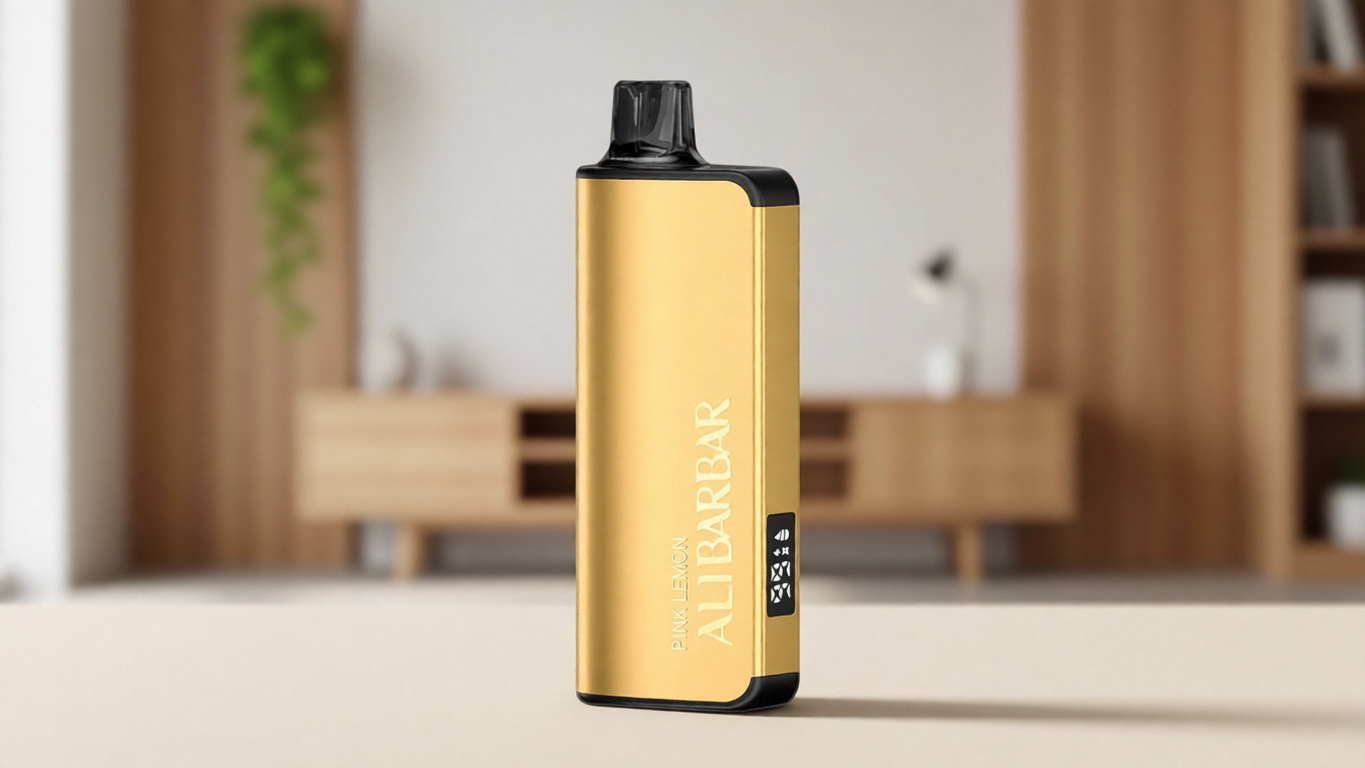
The daily commuter needing reliability benefits from a device that combines a high charge‑capacity battery with unambiguous status feedback. The ALIBARBAR INGOT 9000, with its 9,000‑puff rating and integrated power indicator, fits this need‑state neatly. At a typical retail price in the $45–$55 range, its cost per 1,000 puffs sits in a band where consistent performance directly offsets the expense of carrying a backup.
Heavy users seeking to minimize monthly spend are best served by moving to the highest‑capacity, rechargeable designs. The INGOT 15000 pushes the puff‑count ceiling upward while maintaining the same indicator‑based feedback logic. When sourced from an authorised retailer that can verify the unit’s provenance, the effective daily cost drops noticeably — especially if the user previously depended on two smaller devices to get through a week.
Users who want adjustable output can look to designs like the Ice Adjust 12000, which offers airflow tuning and a higher level of session customisation. The extra engineering complexity places its price between the INGOT 9000 and INGOT 15000, but for those who value granular control, the per‑session satisfaction justifies the modest premium.
Other established device families in the Australian market follow similar structural logics, though not all manufacturers publish puff‑count data derived from consistent testing protocols. The difference between an estimate and a verified rating can be the factor that tips a cost comparison one way or the other.
A Practical Framework for Evaluation
You do not need to trust a single article or sales page. You can run your own cost analysis with a small set of steps.
Track your actual daily usage for three to five ordinary days. Count puffs, not sessions.
Check the device’s rated puff count and, if available, the testing standard that produced it. A number without context is marketing.
Calculate the device’s realistic lifespan: rated puffs ÷ daily puffs = days of use.
Identify all costs: device purchase price, plus any necessary replacement pods (amortise a pod’s rated life into the same daily period).
Compute the daily cost: total cost over the lifespan ÷ lifespan days.
Add a contingency factor if the device lacks a reliable battery or puff indicator. Assume you will carry a second unit and include half its daily cost.
Compare two or three options using the same daily‑usage assumption.
A few diagnostic questions can sharpen your comparisons further:
If the device’s output drops noticeably after four days, how many of its rated puffs are genuinely usable?
Does the retailer’s specification table list the same data points for every product, or do some entries leave blanks where others show detail?
Can the retailer confirm the supply pathway from manufacturer to shelf? If not, you may be evaluating a counterfeit that will not approach the factory specifications.
Standardised comparison tools, like the product pages at OZVAPE Shop, remove the friction of hunting for scattered information and let the arithmetic do the heavy lifting.
Common Selection Errors and Industry Observations
Knowing what not to do is as valuable as knowing what to look for. Several patterns recur in conversations with Australian adult users who later found their initial purchase more expensive than expected.
1. The upfront price blind spot. A $22 disposable rated at 3,000 puffs appears cheaper than a $55 rechargeable rated at 9,000 puffs, but the disposable will need to be replaced three times to match the rechargeable’s capacity — $66 versus $55. Over a year, that gap compounds. The error is natural: human beings anchor on the immediate outlay and discount future replacements.
2. Ignoring performance degradation. Some devices advertise a high puff count but exhibit a noticeable drop in character well before the halfway mark. If the experience becomes unacceptable after 40% of the rated life, the cost per good puff is elevated relative to a device that maintains its profile further. Observing industry feedback and technical teardowns, where available, reveals which architectures are more likely to sustain consistency.
3. Underweighting status feedback. When a device gives no clear indication of remaining capacity, users inevitably develop a backup habit. That single behaviour can bring the effective daily hardware cost close to the price of running two units in parallel. A well‑engineered status indicator is not a convenience; it is a direct cost‑containment feature.
4. Treating all retailers as interchangeable. The Australian market has seen a rise in unverified imports sold through channels with no local accountability. A device that looks identical to an authentic unit can differ dramatically in internal component quality. Such products often fail early, carry no warranty support, and can make any cost calculation obsolete. The factory‑certified supply chain maintained by OZVAPE Shop for the ALIBARBAR range is an example of a structural defence against this risk — one that transforms the purchase from a gamble into a transaction with known parameters.
Industry observation: The absence of a universal puff‑count verification standard across brands means that consumers are frequently comparing estimates derived from different methodologies. Retailers that insist on documented testing from manufacturers effectively absorb this complexity on behalf of the buyer. When you purchase through such a channel, the price you see reflects a higher degree of confidence in the number printed on the box.
Frequently Asked Questions
Q: What is the average cost of a vape in Australia?
A: There is no single average that is useful. Small, single‑use devices can be found below $20, while high‑capacity modular systems exceed $100. A more actionable metric is the cost per 1,000 puffs of satisfactory output, which for quality devices typically falls between $5 and $12, depending on architecture and retailer.
Q: Why do two 9,000‑puff devices list such different prices?
A: Differences in heating element durability, battery cell quality, status‑indicator hardware, and the rigour of assembly‑line quality control all contribute. A cheaper unit may save cost by using components that degrade earlier, reducing the number of puffs that meet your expectations.
Q: Is a cheaper vape a false economy?
A: Frequently. If a $25 device delivers only 60% of its rated puffs before becoming unsatisfying, its effective cost per good puff can exceed that of a $50 device that maintains consistent output for 90% of its rating. The cheaper sticker price masks a higher real cost.
Q: How can I check if a device is authentic in Australia?
A: Purchase from retailers who source directly from the brand’s authorised distribution network. Many manufacturers include a verification code on the packaging that can be checked on their official website. OZVAPE Shop, for instance, provides factory‑certified inventory for ALIBARBAR products, with chain‑of‑custody records available on request.
Q: What is the typical lifespan of an ALIBARBAR INGOT 9000?
A: Rated at approximately 9,000 puffs, the INGOT 9000 would last around 60 days for a user averaging 150 puffs per day. Actual lifespan varies with draw length, storage temperature, and usage patterns.
Q: Are there hidden costs beyond the device price?
A: For pod‑based systems, replacement pods are a recurring expense. Shipping costs may apply if you order below a retailer’s free‑shipping threshold. Additionally, if a device lacks a reliable battery gauge, the practical cost of carrying a backup unit — possibly a second device — must be factored in.
Q: How does OZVAPE Shop help me understand true cost?
A: By presenting puff counts, battery capacity, status‑indicator types, and functional details in a standardised format across the entire ALIBARBAR range, OZVAPE Shop enables direct, per‑puff cost comparisons. The consistent data layout removes the legwork of piecing together specifications from inconsistent listings.
Q: I use my device heavily every day — what should I look for to keep costs down?
A: Prioritise a high‑capacity device with verified performance consistency and a clear status indicator. The ALIBARBAR INGOT 15000, for example, combines a large puff count with documented feedback on battery level, reducing the need for a backup. Modular systems with replaceable pods can also reduce per‑session costs once the initial kit is purchased.
Q: Does buying from an Australian online retailer offer any cost advantage?
A: Yes. Australian Consumer Law applies to local retailers, giving you statutory warranty protections. With domestic shipping, delivery is faster and customs‑related delays are avoided. Local operators like OZVAPE Shop also provide responsive support and returns processes, reducing the downtime costs if something goes wrong.
Q: What recourse do I have if a device doesn’t deliver its rated puff count?
A: When purchased from a reputable Australian retailer, you can seek a remedy if the product is not of acceptable quality. This is why a seller with a documented support policy adds tangible financial protection — a level of assurance not available through unverified online marketplaces.
Conclusion
A number on a shelf is the beginning of a conversation, not the end. The real answer to “How much does a vape cost in Australia?” is: it depends on how long the device maintains its quality, how clearly it communicates its status, how its architecture fits your daily rhythm, and whether the unit you hold is a genuine product that reflects the manufacturer’s design intent.
The cheapest option at the point of sale is rarely the cheapest after a month of uninterrupted use. By applying a basic framework — daily usage, rated lifespan, status transparency, and supply‑chain integrity — you shift the decision from an impulse to an informed evaluation.
For those ready to apply these principles to concrete options, the ALIBARBAR collection, accessible through the clearly documented platform at OZVAPE Shop, provides the kind of specification transparency that turns cost calculation from guesswork into a repeatable exercise. The right device is the one that matches your actual routine, not the one with the lowest sticker or the loudest claim.