
VAPE FAQs
How Much Cigarettes Are Equivalent To A Vape?
Sep
The Challenge of Comparing Incompatible Habits
The question seems simple enough: “How many cigarettes are in a vape?” It gets asked by every adult trying to make sense of unfamiliar product descriptions, and it is reinforced by marketing that leans on shortcuts like “equivalent to one pack.” The reality is that cigarettes and vapor devices deliver nicotine through fundamentally different mechanisms, at different rates, with different pharmacokinetic profiles, and they are used in different patterns. Trying to force a clean numerical equivalence — without first understanding which variables you are comparing and which ones you are ignoring — nearly always leads to confusion.
At OZVAPE Shop, we have watched this question surface again and again in conversations with adult users. Rather than offer a single misleading number, the more honest approach is to break down the mechanics that would be needed to build a meaningful comparison, along with the inherent limits of that exercise. That is what this article sets out to do.
Understanding the Engineered Factors That Shape Nicotine Delivery
Any attempt to correlate vapor devices and combustible cigarettes must begin with the device architecture itself. Two units that look outwardly similar can yield completely different per‑puff nicotine delivery simply because of how they manage heat, airflow, and power stability. These are not abstractions — they are the specific design choices that determine whether a fixed volume of nicotine‑containing solution translates into the sensory and pharmacological experience a user is actually seeking.
Internal Architecture and Output Consistency
The heating element and wicking system inside a vapor device directly govern how much liquid is aerosolised per draw and how efficiently nicotine transfers into the inhaled stream. In a device with tightly controlled coil geometry and consistent wicking, each second of activation produces a predictable output. In a device where the wick can dry unevenly or where the temperature oscillates beyond a narrow band, the amount of nicotine delivered per puff can vary by a factor of two or more over a single session. This is the first reason why a static “cigarette equivalent” on a packaging label should be treated with extreme caution: the delivery consistency it assumes often does not match the hardware in hand.
Power Management and the Role of Battery Stability
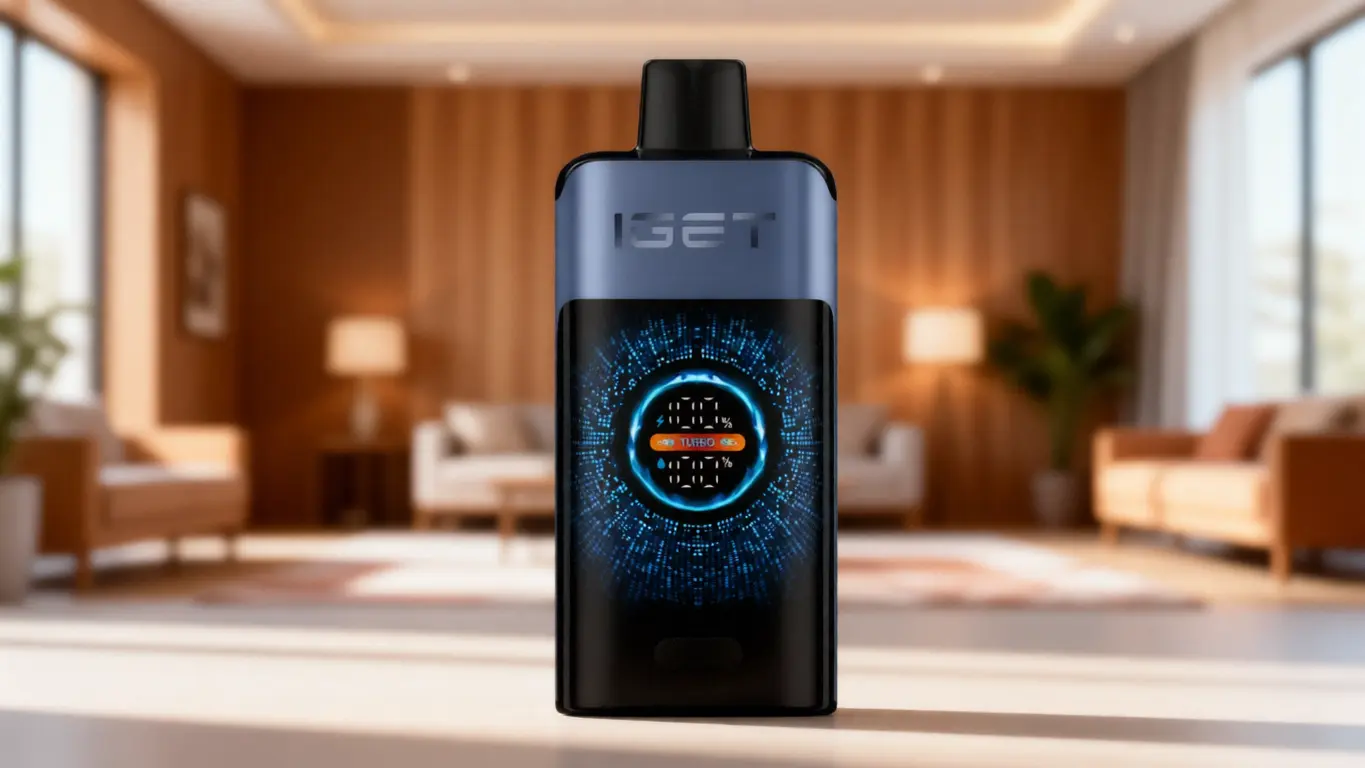
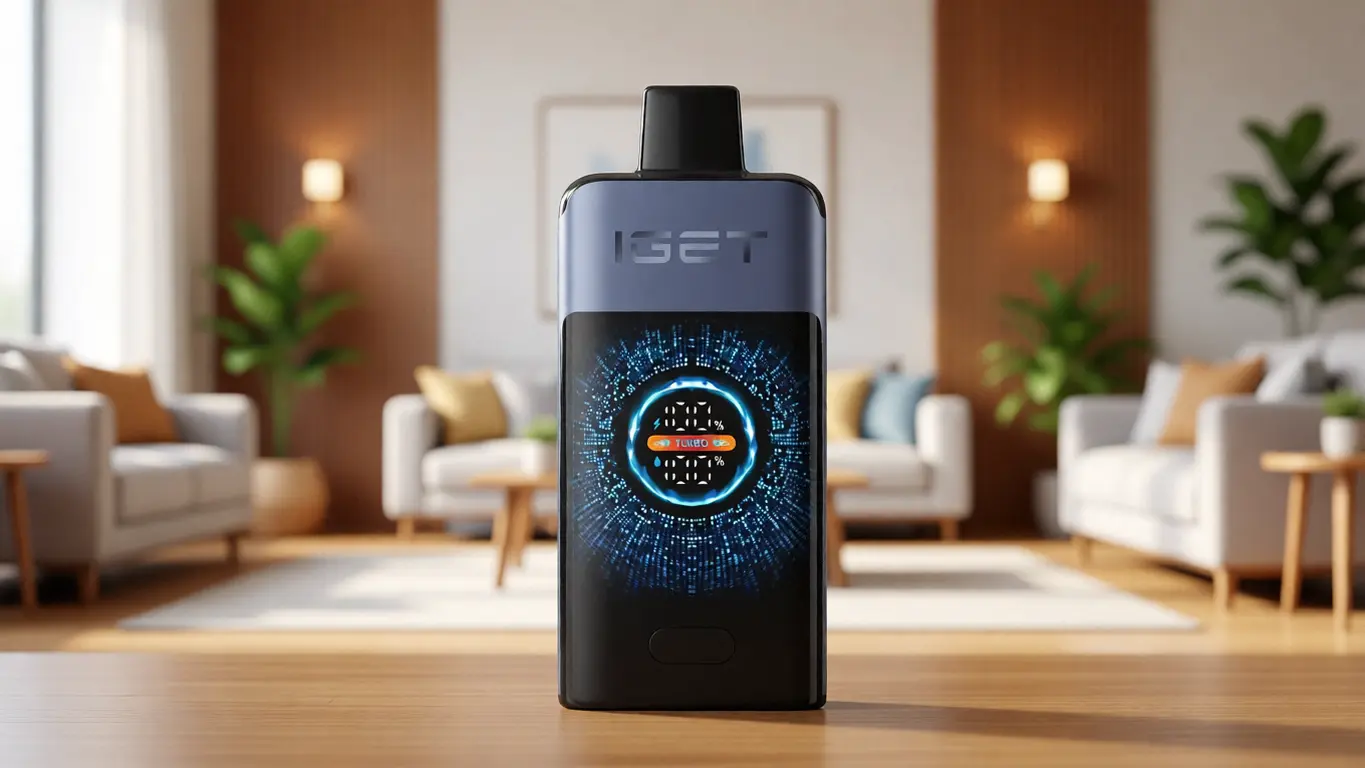
Nicotine delivery is not solely a chemistry problem; it is also an electronics problem. When a device’s power output sags as the battery depletes, aerosol production decreases even if the user draws identically. That means the 50th puff from a half‑charged unit may deliver materially less nicotine than the 5th puff from a freshly charged one, despite coming from the same reservoir. Without transparent status indicators — something that separates thoughtfully designed units from generic alternatives — the user is operating partially blind, and any calculation of “puffs per cigarette” becomes a moving target that drifts with the charge cycle.
Physical Design and Inhalation Dynamics
Mouthpiece contour, draw‑activation sensitivity, and airflow restriction are not aesthetic afterthoughts. They shape the user’s inhalation depth, duration, and pace. A device designed with a tight, cigarette‑like draw will be puffed in shorter, sharper bursts; an airier device may invite longer, slower draws that pull more aerosol per pull. These behavioral differences are enough to throw off equivalence models that rely solely on e‑liquid volume, because two devices containing identical nicotine concentrations can still deliver radically different amounts of nicotine per session, simply due to how users interact with them physically.
Modularity and the User’s Control Over Nicotine Load
The architectural distinction between sealed units and systems with replaceable pods or refillable reservoirs matters enormously in an equivalence discussion. A sealed disposable fixes the nicotine concentration and total volume — the user gets exactly that amount, no more, no less. A refillable device, by contrast, allows the user to choose a lower or higher nicotine strength, or to alter consumption pattern without changing hardware. This flexibility makes equivalence estimates not merely device‑dependent, but user‑dependent, because the same device can represent anything from a lighter alternative to a heavier nicotine source depending on the choices the user makes. That kind of variability is precisely why responsible manufacturers avoid printing simplistic “equals X cigarettes” claims on products that were never designed to correspond to cigarette consumption in the first place.
Bridging the Gap: Practical Estimation Frameworks
With the engineering variables in view, the next step is to build a usable mental model. None of the methods below should be mistaken for a definitive formula, but each provides a more honest starting point than the numbers printed on a box.
Nicotine mass per unit. Cigarettes, on average, deliver roughly 1–1.5 mg of absorbed nicotine per unit for a typical smoker, though published estimates range wider depending on brand and smoking topography. A vapor device that contains 2 mL of 20 mg/mL nicotine solution holds 40 mg of nicotine total. If that device were to be consumed to completion in a single session, the theoretical nicotine load would be comparable to 25–30 cigarettes. But — and this cannot be stressed enough — the amount of that nicotine that actually enters the bloodstream depends on device efficiency, puff duration, and the user’s inhalation technique. Absorption from vapor is typically slower and lower‑peak than from smoke, meaning the body processes it over a longer window. The number on paper overstates the pharmacological impact that most users will feel.
Puff‑count extrapolation with behavioral correction. Some devices state a puff count (e.g., “up to 1500 puffs”). A tobacco cigarette might be consumed in 8–15 puffs depending on smoking style. Simple division gives a physical‑action equivalence: 1500 puffs / 12 puffs per cigarette ≈ 125 cigarettes. But this math treats all puffs as identical, which they are not. Vapor puffs are often shorter and shallower than cigarette puffs, meaning the effective nicotine dose per puff is lower. Applying an area‑under‑the‑curve correction typically reduces the perceived equivalence by 30–50% in real‑world experience.
Session‑based comparison. Many adult users find it more useful to compare how long a device lasts relative to their previous smoking routine. A heavy smoker who consumed a pack a day might find that a high‑capacity device from a well‑designed product family (such as the ALIBARBAR INGOT 15000 series) sustains them for roughly 7–10 days of heavy use. That is not a chemical equivalence; it is a behavioral observation that answers the practical question: “Will this device get me through the same number of days as a carton of cigarettes would have?” For those switching from smoking, that functional frame often proves more actionable than any number.
Common Selection Errors and Industry Observations
Understanding why equivalence estimates fail is as important as understanding how to build a better one. Several recurring patterns emerge across consumer feedback and industry practice.
Overweighting volume without accounting for efficiency. It is tempting to treat a device containing 10 mL of e‑liquid as “ten times more” than a 1 mL device, but if the larger device delivers aerosol less efficiently — for example, through a looser draw that sends more aerosol into the air between puffs — the effective nicotine yield does not scale linearly. Volume is a starting point, not a conclusion.
Assuming all “puff counts” are measured to the same standard. There is no regulated, industry‑wide protocol for what constitutes a single puff on a vapor device. One manufacturer might test under extremely brief, low‑power actuations; another might use a more realistic draw curve. The numbers are best understood as relative indicators within a brand’s own ecosystem, not as cross‑brand conversion factors.
Ignoring user pacing entirely. A smoker might finish a cigarette in 5–7 minutes and then not smoke again for 45 minutes. A vapor device, being less immediately self‑limiting in terms of sensory cues, often gets used in a more distributed manner — a few puffs here, a few puffs there — without clear session boundaries. This changes the cumulative nicotine intake rhythm in ways that make any static “per device” comparison unreliable.
Misunderstanding the role of nicotine salt versus freebase formulations. Nicotine salts, which are common in many compact and disposable devices, allow higher nicotine concentrations with reduced throat harshness. This means a 20 mg/mL salt device can deliver a smoother draw than a 12 mg/mL freebase device, yet carry more nicotine per puff. Comparisons that ignore formulation chemistry can be off by a factor of two or more in user‑perceived strength.
Frequently Asked Questions
Q: Can I trust the “equivalent to X cigarettes” label on a device package?
A: Not as a scientific measure. These labels generally attempt a very rough puff‑count conversion and do not account for differences in nicotine absorption, device output consistency, or individual usage patterns. Use them as the loosest of guides, not as a factual statement.
Q: How much nicotine is in a typical cigarette compared to a vape puff?
A: A cigarette delivers roughly 1–2 mg of absorbed nicotine. A puff from a vapor device might contain anywhere from 0.05 mg to 0.2 mg of nicotine in the aerosol, depending on device power, coil, and e‑liquid strength. The number of puffs to deliver an equivalent dose therefore varies widely — anywhere from 5 to 40 puffs to approximate one cigarette’s nicotine effect.
Q: Why does a disposable device sometimes feel stronger than a refillable one with the same nicotine concentration?
A: Disposables often use optimized coil and wicking systems that deliver a more consistent and vigorous aerosol per draw. Refillable systems may have more variable coil saturation and user‑adjustable airflow, which can dilute the per‑puff intensity. The design, not just the labeled strength, governs the sensation.
Q: Is a high‑capacity device always more cost‑effective from a nicotine perspective?
A: If cost per milligram of nicotine is the only metric, high‑capacity devices can appear more efficient. However, if a device outlasts the user’s actual pattern — meaning it is still functioning when the user would have naturally stopped — the practical efficiency may be lower. The best economic choice is the device whose capacity aligns with your real consumption rhythm, not the highest number.
Q: How can I get a more accurate personal equivalence estimate?
A: Track how many days a device lasts you under normal use, then compare that to the number of cigarettes you previously consumed in the same period. This observational method accounts for your unique puff duration, frequency, and inhalation style better than any generic formula.
Q: What factors from the device side make equivalence harder to calculate?
A: Battery sag lowering power output over a charge cycle, inconsistent wicking leading to dry hits, and lack of clear status feedback all introduce variability that no static conversion chart can capture. A device with well‑engineered power management and a transparent battery indicator (such as a digital display) reduces that unpredictability.
Q: Are there devices designed for users who want a cigarette‑like experience in terms of timing and ritual?
A: Yes. Devices with tighter draws, higher nicotine salt concentrations, and shorter puff‑to‑activation windows are often described as closer in ritual to smoking. But even these remain a different category of product; the sensation is analogous, not identical, and expectations should be set accordingly.
Q: What if a device’s stated puff count seems to run out much sooner?
A: Puff counts are derived under standardized test conditions. Actual use involves longer draws, more frequent activation, and real‑world battery behavior, all of which reduce the effective number of puffs. A 30% overestimation is not unusual. When evaluating a device, it is wise to factor in a practical discount from the printed figure.
Q: How does OZVAPE Shop ensure I receive accurate product information for making these comparisons?
A: We maintain a centralised specification database for every device we carry, including the full ALIBARBAR range, and we document the factory‑stated parameters alongside practical usage notes gathered from extensive user feedback. This is not a substitute for personal testing, but it gives you a more reliable baseline than a single marketing number.
Conclusion
Equivalence between vapor devices and cigarettes is not a fixed ratio waiting to be discovered; it is a multi‑variable estimation that shifts with device engineering, user behavior, and the specific question being asked. The adult who pauses to understand those variables — who looks past the marketing and checks the consistency of the hardware, the transparency of the status indicators, and the actual duration a device provides under everyday conditions — will always arrive at a more useful answer than the one printed on a package.
When the objective shifts from finding a single number to finding a device that fits how you actually use it, the evaluation process becomes clearer. OZVAPE Shop exists to support that clarity: specifications are documented, product families like ALIBARBAR are presented with the technical detail that lets you make a sober comparison, and no equivalence claim is ever taken at face value. The right choice isn’t the one that claims the highest number — it’s the one that aligns with your real routine, without surprises, day after day.