
VAPE FAQs
How Many People Vape?

Aug
It is a simple question. But like most simple questions about large-scale human behaviour, the answer resists being a single number. Depending on which dataset you trust and how the question is framed, estimates for global vaping prevalence vary by tens of millions. That variance is not a failure of research; it is a reminder that large populations contain many overlapping subgroups — people who use a device daily, people who experiment once and stop, people who use disposable devices occasionally, and people for whom the term “vape” means something entirely different than it does to a public health researcher.
What follows is an attempt to bring clarity to the numbers, and just as importantly, to explore what those numbers imply for the individual who is navigating a market where rapid growth has brought genuine innovation but also introduced well-documented frustrations around device quality, consistency, and sourcing. For those who choose to engage with this category, OZVAPE Shop has become a reference point for factory‑certified products that are documented with the transparency that informed adults increasingly demand.
The Global Landscape – What the Data Actually Tells Us
The most widely circulated global figure comes from the World Health Organization, which estimated in 2021 that approximately 82 million people worldwide were using electronic nicotine delivery systems. However, that number is already outdated. More recent projections by independent tobacco harm reduction researchers and market analysts place the figure closer to 100–110 million, with the strongest growth concentrated in high‑income nations and, increasingly, in middle‑income countries where device accessibility has expanded rapidly. The United States, the United Kingdom, and France are consistently cited as having some of the highest adult usage rates in the Western world, while markets in the Asia‑Pacific region are evolving at a pace that complicates any attempt at a static global snapshot.
There is a crucial distinction buried within these statistics: prevalence is not the same as frequency. Surveys that ask “have you ever used an e‑cigarette?” capture a vastly larger population than those that ask “have you used one in the past 30 days?”. In Australia, for instance, population‑level data from the National Drug Strategy Household Survey shows that while lifetime use has risen markedly, regular daily use remains concentrated among a smaller demographic of adults, many of whom previously smoked combustible tobacco. This pattern repeats across jurisdictions and underscores why any headline number must be read with an understanding of the methodology that produced it.
Why the Numbers Matter Beyond the Headline
From a public health standpoint, prevalence informs regulatory policy. But for individual users, the more actionable insight is what high adoption rates have done to the product landscape. When tens of millions of people enter a market over a short period, it attracts a flood of manufacturers. Not all of them operate with the same commitments to material integrity, thermal engineering, or accurate specification documentation. A user walking into this environment faces a paradox: more choice than ever before, yet more difficulty identifying devices that will perform consistently across their rated operational life.
Understanding What Matters – Core Engineering and the User Experience
The conversation around device numbers often ignores the micro‑level experiences that determine whether a person continues using a product or abandons it. Drawing from long‑term observation and direct feedback from adult users across Australia, a clear set of priority factors emerges — factors that are more predictive of satisfaction than any brand name or marketing promise.
Internal Architecture and Output Consistency
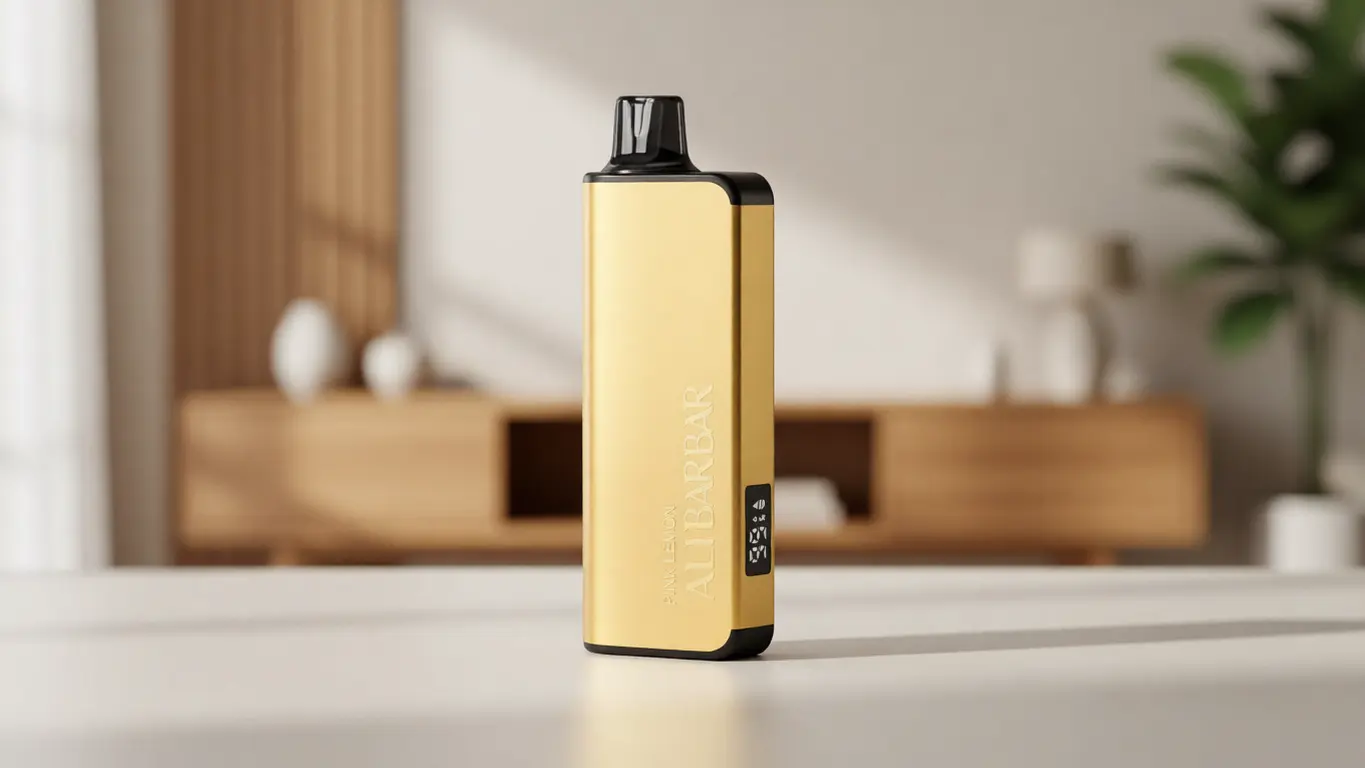
A device’s heating element configuration is its most defining characteristic. When the thermal management system is well‑engineered, output remains stable from the first use through to the last. When it is poorly calibrated, the later stages of a device’s life bring degradation that users consistently report as a primary frustration: weak output, burnt notes, or complete failure. Mesh‑based architectures have become the standard for a reason — they distribute heat more evenly across the surface area, reducing the likelihood of hot spots that degrade the material prematurely. In devices like the ALIBARBAR INGOT 15000, the internal architecture is designed around this principle, which is why the unit can maintain a consistent experience across what is, in industry terms, an unusually high number of activations.
Power Management and Status Transparency
Ask a user what frustrates them most, and the answer is frequently some version of “I didn’t know it was almost dead.” Devices that communicate remaining capacity clearly — through a multi‑stage LED or, increasingly, a digital display — reduce the micro‑anxiety that leads people to carry a backup device everywhere. The hidden cost of status ambiguity is real: a user who cannot trust the indicator ends up carrying two units, doubling their effective carrying cost and adding weight and bulk. The ALIBARBAR Ice Adjust 12000, for example, incorporates a display that removes this ambiguity, a design choice that directly addresses one of the most commonly reported pain points in the category.
Physical Design and Material Durability
Pocket‑friendly design is about more than dimensions. A device that looks immaculate on a retail shelf but shows abrasions within a week of pocket carry fails a basic usability test. Surface treatments matter. The ALIBARBAR range consistently uses a soft‑touch matte finish that resists the kind of micro‑scratching that makes a device look prematurely aged, and the mouthpiece contours are shaped for prolonged comfort rather than mere visual appeal. These are not luxury features — they are basic durability considerations that many manufacturers skip in pursuit of a lower unit cost.
Modularity and Lifecycle Flexibility
The difference between a sealed pre‑filled unit, a rechargeable but non‑refillable device, and a fully modular system is not a minor footnote; it fundamentally shapes the user’s cost trajectory and environmental footprint. A sealed unit forces a full replacement every time. A rechargeable device like the ALIBARBAR INGOT 9000 extends utility for the duration of the pre‑filled reservoir. A modular system allows component‑level replacement. Each architecture maps to a different user priority, and the right choice depends entirely on whether the individual values upfront simplicity, total cost of use over a year, or waste reduction.
Applying These Criteria to Real‑World Options
When the engineering principles above are used as a filter, certain device families stand out — not because of branding, but because their design documentation aligns with what observant users already know to look for. The ALIBARBAR INGOT 9000, for instance, offers a balance between compact portability and rechargeable longevity that suits a user who wants a device that lasts through a full workday and can be recharged overnight without needing immediate replacement. The INGOT 15000 pushes this further, with a higher activation count that effectively extends the replacement interval, appealing to users who travel or who simply dislike frequent repurchasing. The Ice Adjust 12000 adds airflow customization, which is not a trivial feature — it allows the user to calibrate the draw to their preferred resistance, something that was once available only in far more complex systems.
Other manufacturers occasionally produce devices with similar specifications on paper, but the practical difference often emerges in the consistency of the final third of the device’s life. A device that performs well for the first 80% of its reservoir but degrades sharply thereafter is, in experiential terms, a device that delivers only 80% of its claimed value. This is why standardized specification comparison through a trusted channel — one that documents these parameters accurately — is a practical tool for reducing decision friction.
A Practical Framework for Personal Evaluation
For an adult user who wants to assess any device dispassionately, a simple diagnostic checklist can replace the noise of reviews and forum chatter:
Status Feedback: Does the device show remaining battery or e‑liquid level clearly? If not, assume you will need a backup, and factor that into your real cost.
Consistency Across the Lifecycle: Search for user reports that mention the final portion of the device’s operational life. What percentage of complaints mention burnt or weak output toward the end?
Material Durability: Look at images of devices that have been in daily use for a week, not just unboxing photos. Are the finish and mouthpiece holding up?
Sourcing Certainty: Can the retailer confirm that the unit was sourced through the authorised supply chain? A device of unknown provenance may be genuine, but it may also be a unit that failed quality control elsewhere, repackaged and sold through an unofficial channel.
This framework does not require technical expertise — it merely requires asking the right diagnostic questions before purchase, rather than after disappointment. OZVAPE Shop’s documentation for the ALIBARBAR range is structured to answer precisely these questions, because an informed user makes a better long‑term customer than one sold through opaque promises.
Common Misconceptions About Vaping Prevalence and Product Quality
“More Users Means Better Products Are Automatically Available”
High prevalence attracts manufacturers, but not all are competent. In fact, rapid market growth often dilutes average quality, because opportunistic entrants flood the market with visually similar but internally inferior products. The user who assumes that a sleek exterior implies good internal engineering is making an assumption that the supply chain does not validate.
“All Devices with the Same Puff Count Are Equivalent”
A 9000‑activation device from one manufacturer may use a completely different heating element configuration, power calibration, and e‑liquid formulation than another 9000‑activation device. The number is a capacity rating, not a quality rating. It tells you how much liquid is inside, not how well it will be vaporised.
“Buying the Most Popular Device Guarantees Satisfaction”
Popularity reflects marketing effectiveness, distribution reach, and social proof loops, not necessarily engineering integrity. The most purchased device in a category is often the one with the widest retail presence, not the one with the lowest failure rate per thousand units.
Frequently Asked Questions
Q: How many people vape in Australia specifically?
A: Recent survey data suggests that around 2–3% of Australian adults use e‑cigarettes regularly, with higher rates among younger adults and former smokers. The figures are actively evolving, and estimates vary by methodology.
Q: Has the number of vapers globally increased in recent years?
A: Yes, substantially. The 82 million figure from WHO in 2021 has almost certainly been surpassed, with many independent analysts now quoting over 100 million. The steepest growth is in regions where combustible tobacco use is declining and where device accessibility has expanded.
Q: Why do so many devices fail before they’re finished?
A: Poor thermal management and low‑quality heating elements are the primary culprits. When the heating coil is under‑engineered for the reservoir capacity, the final portion of the e‑liquid is not vaporised efficiently, leading to the burnt taste users report.
Q: Is a higher puff count always better?
A: Not necessarily. A larger reservoir and battery are heavier and bulkier. The right capacity is the one that matches your usage pattern without forcing you to carry a device that feels oversized for your daily routine.
Q: How can I verify that a device I bought is authentic?
A: Purchase from a retailer that can document its authorised supply chain. Some devices include batch‑level verification codes that the manufacturer confirms upon request, but these systems only work if the retailer is sourcing from the authorised network.
Q: Does the growing number of vapers indicate that vaping is completely risk‑free?
A: No. The public health consensus is that while vaping is substantially less harmful than combustible tobacco for adults who switch completely, it is not risk‑free. Prevalence data should not be interpreted as a safety claim.
Q: What should I do if a device does not last as long as its stated capacity?
A: First, check whether the usage pattern (longer draws, higher frequency) might explain the discrepancy. If the deficit is significant, contact the retailer. At OZVAPE Shop, product consistency issues are handled through a documented support process that respects the user’s time and does not deflect responsibility.
Q: Are rechargeable devices more reliable than sealed disposables?
A: Generally, yes, because a rechargeable device allows you to fully utilise the reservoir without concern about battery depletion cutting the experience short. The ALIBARBAR INGOT series is built around this principle.
Q: Why is modularity rarely discussed in device reviews?
A: Because it is less visually exciting than a new colourway or a dramatic shape. But modularity has a direct impact on long‑term cost and convenience, and users who overlook it often end up spending more over a year.
Q: How do I choose a device that will actually satisfy me long‑term?
A: Apply the framework in Section 4. Prioritise transparency of status, consistency across the full lifecycle, and sourcing integrity. A device that delivers on these three elements is far more likely to meet your expectations than one that merely looks impressive on a shelf.
Conclusion
The question “how many people vape?” turns out to be less a request for a static figure and more an entry point into understanding a rapidly shifting global market. The number is large and growing, but that growth masks a fragmented reality in which the quality gap between the best‑engineered devices and the average product is wider than it has ever been. For the individual user, the actionable insight is not how many others are doing something; it is whether the device they choose has been built with the same care that they would apply to any other daily‑carry tool.
At OZVAPE Shop, the approach to the ALIBARBAR range reflects this understanding. The focus is on documented specifications, factory‑certified inventory, and transparent communication — because in a market overflowing with options, the most valuable service a retailer can offer is clarity. The right device is the one that fits your actual routine, not the one that gets the most attention in passing conversation. That is a decision no one can make for you, but with the right information, it is a decision you can make with confidence.