
VAPE FAQs
How Many People Vape In Australia?

Oct
With Australia’s adult population increasingly turning to portable electronic devices as part of their daily routines, one question surfaces with growing frequency: how many people actually use these devices? The answer is more than a statistic. It points to a rapidly expanding user base — millions of people — many of whom are navigating a market where reliable performance, clear status indicators, and enduring builds are harder to find than the glossy packaging suggests. At OZVAPE Shop, we see the consequences of this mismatch every day: users who have cycled through underperforming units, spent more on replacements than on the original device, or carried a backup simply because they cannot trust the one in their pocket.
This article offers an evidence‑based look at the prevalence of vaporizer use in Australia, then equips you with an engineering‑focused framework to distinguish thoughtfully made devices from the rest. Rather than a list of products, you will gain a lens through which to evaluate any device — alongside a practical understanding of why ALIBARBAR’s design approach has earned the trust of so many adult users who refuse to gamble on inconsistency.
Understanding What Matters: Core Engineering and Design Factors
Every frustration traced back to a personal electronic device — sudden failure, fading output, ambiguous charge status — stems from compromises made during design and component selection. Recognising these factors before purchase transforms a speculative buy into a calculated decision.
Internal Architecture and Output Consistency
The heating element, its configuration, and the quality of the power delivery circuitry determine whether a device performs uniformly from first use to last. In poorly engineered units, the coil degrades unpredictably, or voltage sags under load, creating a characteristic drop‑off that users describe as “hitting a wall” halfway through a session. Well‑engineered devices employ precision‑tuned chipsets that regulate power delivery irrespective of the cell’s state of charge, and heating elements with grain‑stabilised alloys that resist oxidation. When you encounter a device that delivers a predictable experience across hundreds of cycles, you are holding a product whose thermal architecture was treated as a priority, not an afterthought.
Power Management and Status Transparency
A device that shuts off without warning is not simply inconvenient — it fractures the user’s ability to plan. The sophistication of the on‑board power management system, together with how clearly it communicates remaining capacity, directly impacts daily usability. Look for multi‑stage LED indicators that offer granular feedback rather than a simple “on/off” blink, and for short‑circuit and low‑battery protections that prevent catastrophic failure. The hidden cost of a device that cannot tell you its status is the backup unit you will inevitably buy — an expense that multiplies the original outlay.
Physical Design and Material Durability
Beyond aesthetics, the choice of aluminium alloy, stainless steel, or polycarbonate housing, the finish treatment (anodised versus painted), and the mouthpiece geometry significantly influence how a device wears over weeks of pocket carry. Soft‑touch coatings may feel premium on day one but abrade quickly. Ergonomic mouthpieces that spread contact pressure reduce fatigue during prolonged use. Every surface that encounters skin or fabric must be scrutinised not for how it looks on a shelf, but for how it handles the real world — keys, lint, drops, and repeated handling.
Modularity and Lifecycle Flexibility
The spectrum runs from sealed single‑use units through rechargeable systems with replaceable cartridges, to fully modular platforms. A sealed device trades ultimate simplicity for a shorter service window. A rechargeable platform extends the investment but adds the responsibility of cable management and charge‑cycle monitoring. The right choice depends on your usage pattern: someone who uses a device intermittently may prize a sealed unit’s no‑fuss nature; a daily, all‑day user will quickly find rechargeability pays for itself. A third option — devices built with easily replaceable power cells — reduces waste and keeps the upfront hardware in service far longer, though it demands a degree of user involvement.
Applying These Criteria to Real-World Options
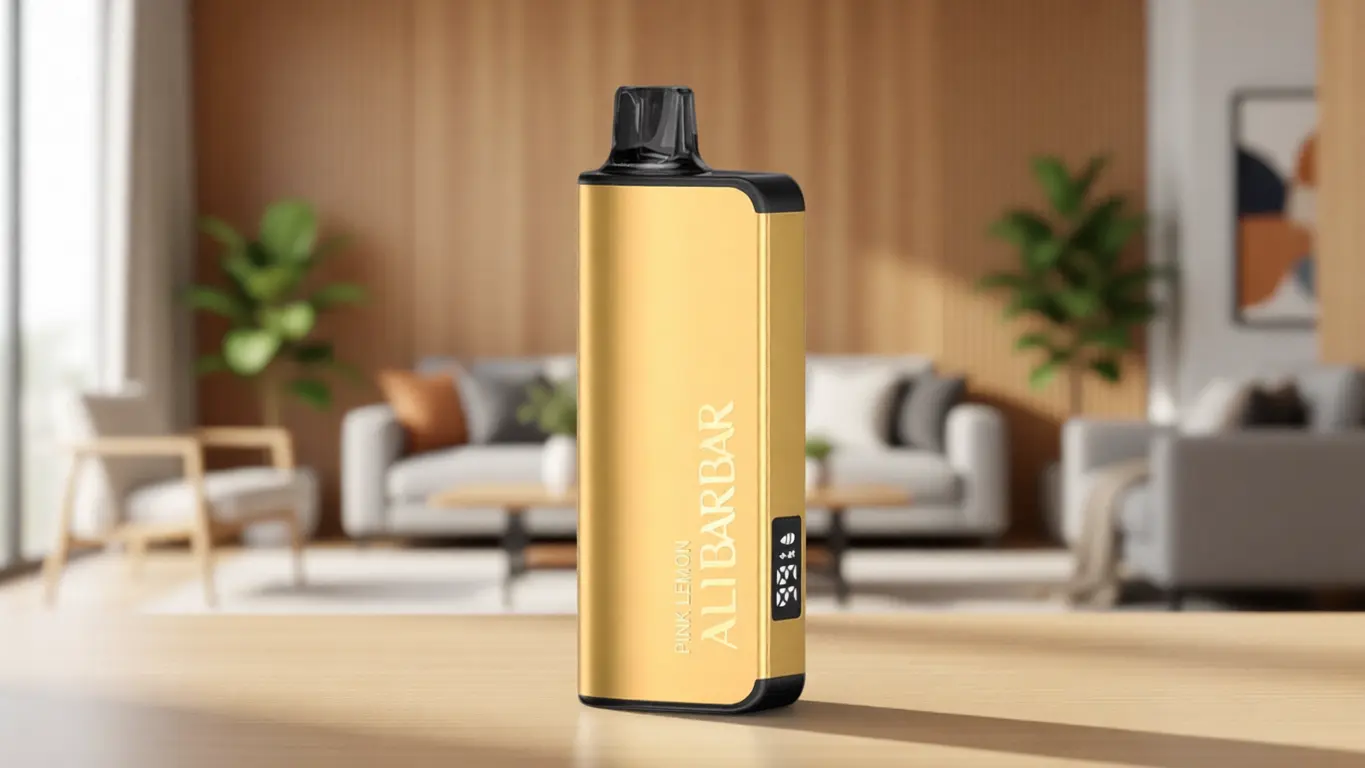
When the design principles above are used as a sieve, certain product families separate from the undifferentiated mass. ALIBARBAR’s current catalogue illustrates how a manufacturer can address distinct need‑states without diluting the engineering discipline.
For the user who values extreme portability and a worry‑free day, the INGOT 9000 adopts a sealed, compact form‑factor built around a finely calibrated heating element that maintains output consistency up to the device’s rated cycle. Its status indicator strips uncertainty: a series of illuminations conveys battery life and operational readiness. The alloy body, treated for scratch resistance, holds up under hard daily carry.
When capacity is paramount — long shifts, travel, or social settings where recharging is impractical — the INGOT 15000 extends the same design language into a higher‑capacity rechargeable chassis. It incorporates a Type‑C port, over‑current protection, and a more sophisticated power management IC that adjusts draw behaviour based on remaining charge. The result is a device that behaves almost identically at 10 % and 90 % capacity, eliminating the weak‑battery fade that plagues inferior units.
Between these sits the Ice Adjust 12000, which introduces user‑controlled output adjustment, allowing the individual to fine‑tune the sensory experience without swapping devices. The modularity here is functional rather than structural; it acknowledges that a single output level rarely suits every context.
No device is without trade‑offs. A sealed unit cannot be recharged, meaning the environmental footprint and cost‑per‑cycle are higher over time. Rechargeable units introduce a charging routine that must be respected. The Ice Adjust’s control ring adds a mechanical component that, while tested for thousands of actuations, represents a potential point of wear not present in fixed‑output designs. These are not flaws — they are inevitable consequences of choosing one priority over another, and an informed buyer accepts them willingly.
OZVAPE Shop carries the full ALIBARBAR range with factory‑certified provenance, ensuring that when you evaluate a unit based on its published specifications, those specifications are reliably reflected in the device you receive.
A Practical Framework for Evaluation
Use the following sequence to assess any device before purchase, whether you are inspecting a unit in person or reviewing technical documentation online.
Request the power management protocol: Does the manufacturer disclose undervoltage protection, short‑circuit protection, and charge‑cycle thresholds? If not, assume the device may fail unpredictably.
Decode the status indicator language: How many distinct states does the LED communicate? A single‑colour blink is insufficient. Multi‑colour or stepped brightness reveals genuine design effort.
Examine the housing material and finish: Anodised surfaces resist micro‑abrasion far better than painted or soft‑touch alternatives. Run your fingernail across a display model — if it marks, it will look worn quickly.
Simulate your longest typical day: Calculate the device’s rated cycles against your expected usage. If the number just meets your daily average, add 20 % as a buffer. A device that dies at 8 p.m. once a week is a device you will resent.
Assess modularity honestly: If you resent having to charge devices, a sealed unit may actually suit you better despite higher per‑cycle cost. If you hate waste, a rechargeable or replaceable‑cell architecture reduces it.
Verify source: Authorised distribution channels carry units from controlled production batches with traceable quality records. Unauthorised sources may sell factory‑seconds or units with substituted components. Cross‑reference the retailer’s supplier declarations with the brand’s published distributor list.
Ask yourself: “If this device fails to communicate its status, will I be stranded without a backup?” If the answer is yes, only units with granular status feedback should be considered.
Common Selection Errors and Industry Observations
Over years of observing purchasing patterns, several mistakes repeat with such regularity they deserve explicit attention.
Overweighting puff count
A device marketed as “10 000 puffs” says nothing about how consistent the output will be at puff 9 500. Manufacturers that prioritise longevity often de‑rate their batteries or use conservative coil specifications, delivering a slightly lower total cycle count but vastly better consistency. Users who fixate on the upper number frequently end up with a device that lingers days in a weakened state.
Assuming visual similarity signals equivalent internals
The Australian market is flooded with devices that share a common shell but differ fundamentally in chipset, battery cell grade, and heating element composition. Two units that look identical on a shelf may perform as differently as a precision instrument and a disposable tool. Spec‑sheet transparency is the only reliable differentiator.
Undervaluing modularity in cost‑per‑use calculations
A sealed unit priced at $30 may appear cheaper than a $55 rechargeable platform, but if the rechargeable unit lasts for five times the total cycles, the effective cost per hundred cycles flips. The calculation becomes even more dramatic when replacement pods or pre‑filled cartridges are involved. Users who buy purely on upfront price are often those who pay most per week.
Confusing category terminology with technical specifications
Terms like “mesh coil” or “adjustable airflow” are not standardised. A mesh coil in one product may be a precision‑etched element with uniform heating; in another, it may be a loosely woven wire prone to hot spots. Without third‑party testing or manufacturer‑supplied test data, these labels are marketing, not engineering. Trust the observable behaviour — consistency over time — rather than the badge.
From an industry perspective, the rapid growth of the Australian market has encouraged many quick‑entry operators to source generic, unbranded platforms from contract manufacturers. These units often arrive without a traceable bill of materials, firmware version control, or quality‑assurance batch records. The result is a landscape where the brand name on the outer box may be the only thing distinguishing two physically identical devices — and where post‑purchase accountability vanishes the moment the shipment is delivered.
Frequently Asked Questions
Q: How many Australian adults currently use personal vaporizers?
A: The most recent nationally representative data from the Australian Institute of Health and Welfare indicates that approximately 8–9 % of the population aged 14 and over — roughly 2.5 million people — report current use. This figure has risen steadily since 2019, with particularly strong growth among adults under 40.
Q: How can I verify that an ALIBARBAR device from OZVAPE Shop is genuine?
A: OZVAPE Shop sources exclusively through ALIBARBAR’s authorised distribution network. Each device arrives with batch‑trackable packaging and a verification QR code that links to the manufacturer’s authenticity database. You can also cross‑reference the serial number with ALIBARBAR’s customer support.
Q: Does a higher puff count always mean the device lasts longer in real‑world use?
A: Not necessarily. Puff count ratings are measured under standardised laboratory conditions (consistent draw duration, ambient temperature, and rest intervals). Real‑world usage deviates, and a device with a high nominal count but poor power regulation may produce a noticeably weaker output well before reaching its theoretical limit. Consistency of output is a separate dimension from total cycles.
Q: What is the practical difference between a rechargeable device and a sealed unit?
A: A rechargeable device has an integrated battery that can be recharged via a USB‑C or similar port, extending its total usable cycles. A sealed unit is used until its internal power cell or consumable element is depleted and then responsibly recycled. Rechargeable devices lower cost per cycle over the medium term but require charging discipline. Sealed units eliminate charging logistics but increase long‑term expense.
Q: I carry my device in a pocket with keys and coins. Will an ALIBARBAR unit scratch?
A: ALIBARBAR’s current range uses hard‑anodised aluminium alloy bodies with a matte finish that resists micro‑abrasions notably better than painted or rubberised surfaces. While no surface is completely impervious to sharp metal objects, field reports indicate these devices hold their appearance well under daily pocket carry.
Q: Does OZVAPE Shop ship to all Australian states and territories?
A: Yes. OZVAPE Shop dispatches from a Sydney‑based fulfilment centre to all states and mainland territories using tracked courier services. Delivery times vary by postcode, with most metropolitan orders arriving within 1–3 business days.
Q: What should I do if an ALIBARBAR device does not perform as described?
A: Contact OZVAPE Shop’s support team with your order number and a description of the issue. The team will assess the fault against the product’s documented performance parameters. If a manufacturing defect is confirmed, a replacement or refund is arranged in accordance with Australian consumer law.
Q: Are adjustable output devices more prone to failure than fixed‑output models?
A: Adjustable systems introduce a mechanical or electronic control interface that fixed‑output devices lack, so they carry an additional potential failure point. However, ALIBARBAR’s Ice Adjust 12000 uses a sealed control mechanism tested to well beyond typical usage cycles. When engineered correctly, the long‑term reliability difference is negligible — provided the adjustment mechanism is cleaned and operated within design limits.
Q: How does OZVAPE Shop handle customer data and privacy?
A: All personal information is handled in compliance with the Australian Privacy Principles. Transaction data is encrypted, and no customer details are shared with third parties beyond what is necessary for order fulfilment (courier details). Full details are available in the privacy policy published on the OZVAPE Shop website.
Q: Where can I find the technical specifications for ALIBARBAR devices before purchase?
A: Full specification sheets — including battery chemistry, heating element resistance, charge current, and rated cycles — are published on each product’s dedicated page at OZVAPE Shop. You can also request technical documentation by contacting the support desk directly.
Conclusion
Australia’s vaporizer user base now numbers in the millions, but the difference between a device that supports a routine and one that disrupts it comes down to engineering discipline — nothing more, nothing less. When you prioritise transparent power management, durable materials, and honest status feedback over inflated headline numbers, you stop being a consumer who guesses and become a user who knows exactly what to expect from the moment they open the package.
OZVAPE Shop exists to remove the guesswork: standardised specifications, factory‑certified ALIBARBAR inventory, and a direct‑to‑expert support path that treats your time and your budget as equally valuable. The right device is not the one with the most extreme claims — it is the one that quietly, consistently, fits the shape of your actual day. Match the device to your routine, and you may find you never need a backup again.