
VAPE FAQs
How Many Packs Of Cigarettes Is One Vape?

Aug
The question surfaces with predictable regularity — in online forums, at retail counters, and in conversations between people who are simply trying to make a practical, cost‑conscious choice. Someone transitioning from one product category to another wants a direct, numerical answer: How many packs of cigarettes is one vape? The instinct behind the question is entirely reasonable. The answer, however, cannot be a single figure without misleading the person asking. Equating a complex electronic device to a combustible product involves a chain of variables that rarely align from one user to the next.
This article moves past the oversimplified replies and instead provides a structured, transparent method for evaluating any vapour device through the lens of duration, consumption rate, and personal usage patterns. It draws on design engineering principles, observed user behaviour, and the type of reliable specification data available when products are sourced through responsible channels like OZVAPE Shop. By the end, you will not have a one‑size‑fits‑all number, but you will possess a repeatable framework for calculating a meaningful, personalized equivalent — and a clear understanding of why the industry’s most commonly quoted figures often fail in daily practice.
Understanding What Matters: Core Engineering and Design Factors
Before any equivalence calculation can hold weight, we need to isolate the design elements that directly influence how long a device lasts and how it delivers its contents. Reducing the comparison to “puff count vs. pack count” ignores physics, ergonomics, and the psychology of self‑regulation. Four interdependent factors shape the real‑world answer.
Puff Count vs. Puff Depth: The Measurement Problem
Device manufacturers label products with a puff count. A cigarette smoker might count drags per stick. Superficially, dividing one by the other yields a pack equivalent. This approach collapses under scrutiny.
Laboratory puff tests use a standardised machine puff — typically a 35‑millilitre draw of about two seconds. Human puffing behaviour is wildly inconsistent. One person draws lightly and frequently; another draws deeply and infrequently. A 150‑puff session on a low‑resistance device might consume the same e‑liquid volume as 300 shallow puffs on a tight‑draw mouthpiece. The variable here is not merely the count but the effective dose per draw. Consequently, two users of the same device will report strikingly different durations and satisfaction levels. When evaluating any puff count specification, recognise that it represents a machine‑generated maximum, not a user‑guaranteed minimum. The user’s own draw depth acts as a hidden multiplier on liquid consumption.
E‑Liquid Volume and Consumption Rate
More fundamental than puff count is the reservoir capacity, measured in millilitres. E‑liquid is the consumable resource. A device with 2ml of liquid and a heating element that consistently atomises 0.012ml per standard puff will deplete in roughly 165 puffs. Another device with 15ml of liquid and similar efficiency can exceed 1200 puffs. The direct relationship is: total puffs ≈ reservoir volume ÷ liquid consumption per puff.
The consumption rate per puff is itself a function of heating element surface area, wicking material porosity, and applied power. A well‑engineered system that maintains a stable temperature throughout the discharge cycle will exhibit a predictable, linear consumption rate. A poorly regulated system that runs hotter as the power cell drains will burn through liquid faster in the second half of its life, making puff count estimates increasingly inaccurate. When comparing device claims, the presence of precise, constant‑power output regulation is a far more reliable predictor of usable lifespan than the headline puff number alone.
Nicotine Delivery and Self‑Regulation
A combustible cigarette delivers nicotine alongside a cocktail of other compounds; a vapour device delivers nicotine dissolved in a carrier. The rate of absorption and the sensory feedback differ. Users therefore adjust their behaviour unconsciously. A person accustomed to the quick onset from smoke may draw longer or more frequently on a vapour device to achieve a subjectively equivalent sense of satisfaction, particularly in the first days of substitution. This behavioural compensation alters the per‑day consumption rate. A device that might mathematically last a week for one person can be emptied in two days by another, purely because the latter user draws twice as often to reach a comparable comfort level.
This is not a failure of the device. It is a known characteristic of a different delivery architecture. For the purposes of equivalence estimation, any calculation must include a behavioural multiplier: a personal observation of how many draws you actually take to reach your point of satiation, compared to whatever your previous habit was. Without that multiplier, the numerical comparison will be off by a factor that varies enormously between individuals.
Device Architecture and Long‑Range Efficiency
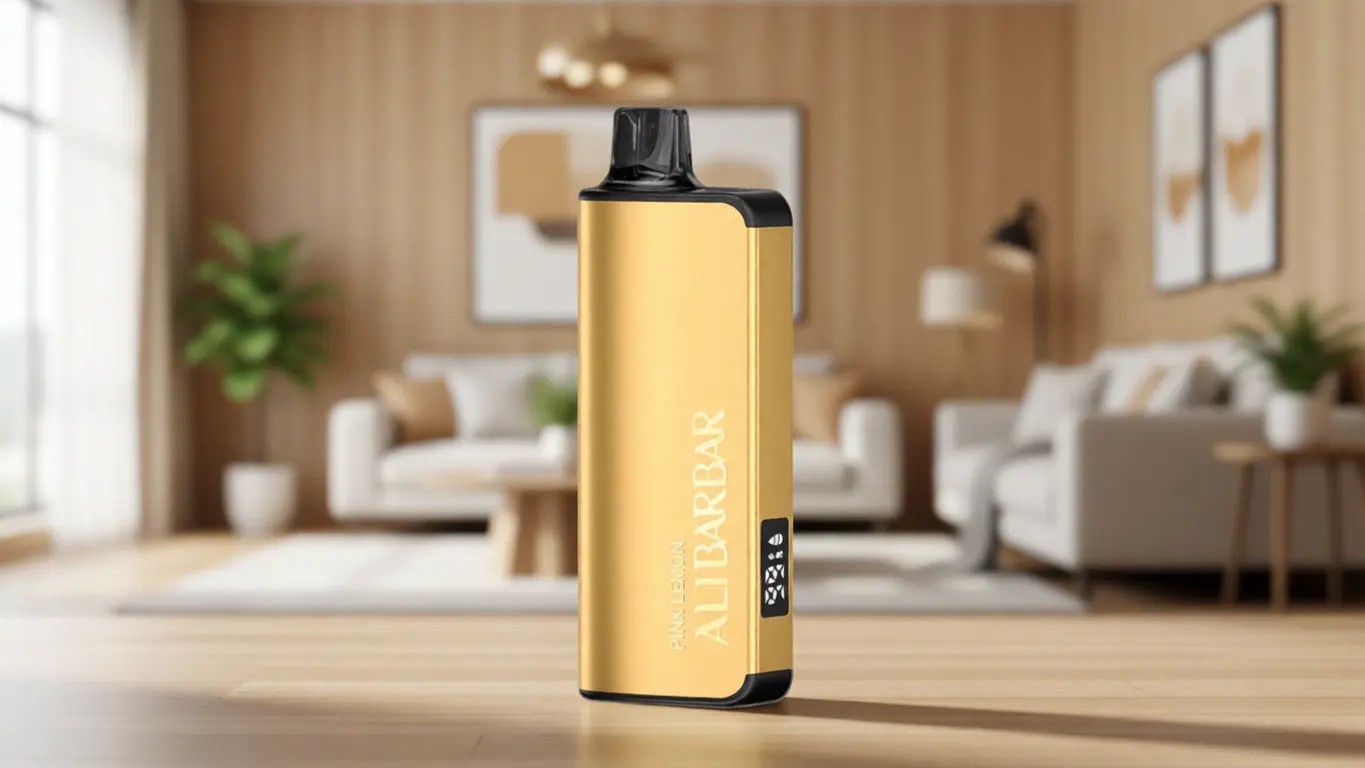
The physical design of the device — whether a sealed disposable unit, a rechargeable pod system, or a high‑capacity pre‑filled device — introduces efficiency variables that compound over the life of the product. A sealed device with a modest battery may begin to under‑deliver power as the voltage sags, resulting in cooler, less efficient atomisation in the later stages. This means the same volume of e‑liquid yields fewer effective puffs toward the end. Conversely, a device built with robust power management, such as a constant‑output chipset and ample battery headroom, will maintain consistent vapour production from first puff to last. The ALIBARBAR INGOT series, for example, was engineered specifically to address this decay curve. Its power architecture holds the chosen voltage level steady until the liquid is depleted, meaning that the rated puff count reflects genuinely usable draws, not merely an extrapolation from an optimised laboratory window.
From a longevity perspective, modular or high‑capacity systems that allow recharging and re‑e‑liquid use further complicate the pack‑equivalence question by delinking hardware lifespan from consumable volume. These devices are effectively indefinite platforms whose per‑session cost is determined solely by the e‑liquid pod or tank, not by the entire unit.
Applying These Criteria to Real‑World Options
With the engineering factors clarified, the next step is to apply them to actual device categories. Rather than issuing a ranking, this section illustrates how the same analytical lens yields different equivalence outcomes depending on the device type and the user’s own draw style.
Compact sealed devices — the most commonly encountered type — typically hold between 1.2ml and 2ml of e‑liquid and carry a manufacturer‑stated puff count of 300 to 600. If we assume an average cigarette yields 10–15 draws per stick (a widely cited observational range) and a pack contains 20 cigarettes, one pack equates to between 200 and 300 draws. A 500‑puff device, on paper, therefore represents roughly 1.7 to 2.5 packs. But this naive arithmetic ignores the draw‑depth variable. Users who draw twice the standard volume will cut the effective puff count substantially, potentially consuming the same device in the equivalent of a single pack of cigarettes. This is not a design flaw; it is a natural consequence of a more efficient delivery mechanism.
High‑capacity rechargeable devices, such as the ALIBARBAR INGOT 9000 and INGOT 15000, change the calculation considerably. The INGOT 9000 carries approximately 12ml of e‑liquid and is rated for up to 9000 puffs; the 15000 variant doubles both battery capacity and liquid reservoir size. Using the same 200–300 puff per pack benchmark, the 9000 translates to between 30 and 45 packs — but only for a user whose draw pattern matches the machine‑test parameters. In practice, a deep‑drawing user might see the equivalent of 20–25 packs, while an exceptionally light‑draw user might exceed the 45‑pack estimate. The critical insight is that the range is predictable once you fix your personal draw volume. The device’s engineered consistency — no power fade, no wicking starvation under normal use — ensures that the per‑puff liquid consumption remains stable, which is the precondition for any repeatable estimate.
Adjustable‑airflow devices, like the ALIBARBAR Ice Adjust 12000, introduce an additional dimension. By allowing the user to physically restrict or open the intake, the same device can behave like a tight mouth‑to‑lung system (slower liquid consumption, more puffs per ml) or an open direct‑lung system (faster consumption, fewer puffs). A single unit can deliver profoundly different pack‑equivalent outcomes depending purely on the airflow collar position. Users who treat adjustable airflow as a feature to be set once and forgotten are effectively choosing their consumption rate without realising it. This flexibility is valuable but also demands the user accept that no fixed equivalence number can be printed on the package.
A Practical Framework for Evaluation
Rather than depending on a magic conversion factor, adopt this step‑by‑step methodology whenever you need to estimate how many packs a device might replace in your routine.
1. Determine your personal puffs per cigarette. Spend one day counting your draws on a regular cigarette. Many people average between 8 and 15. Record your own observed number — this is the most important variable in the entire calculation and it is unique to you.
2. Identify the device’s rated puff count and, if available, its liquid volume. Reputable sellers like OZVAPE Shop publish specification tables directly on product pages. Look for the puff count, but also note whether the device features constant‑output regulation and what type of airflow it provides.
3. Apply a draw‑depth adjustment. If you know you draw unusually deeply — say, double the typical volume — consider dividing the rated puff count by a factor between 1.5 and 2. If you draw lightly, you may reasonably exceed the rated count. This is not an exact science, but applying a consistent adjustment improves the estimate dramatically.
4. Calculate the pack equivalent:
Packs = (Adjusted puff count) ÷ (Your puffs per cigarette × 20)
For example, for a 9000‑puff device where you expect 70% utilisation due to deeper draws (6300 effective puffs), and you take 12 puffs per cigarette:
6300 ÷ (12 × 20) = 6300 ÷ 240 = 26.25 packs.
5. Observe and refine. Track the actual calendar days the device lasts and compare with your cigarette consumption over the same period. Adjust the draw‑depth factor accordingly. After one or two devices, you will possess a personalised conversion constant that holds for any device from the same brand with similar power characteristics.
Common Selection Errors and Industry Observations
Observations drawn from retail conversations and returns data reveal several recurring errors that inflate expectations and breed disappointment.
Overweighting puff count while ignoring draw style. A user who buys a 15,000‑puff device expecting it to last “like 50 packs” based on an online comment, but then draws heavily, may see half that duration. The device performed exactly as engineered; the expectation was misaligned. Every puff count carries an invisible asterisk: under standardised test conditions.
Assuming visual similarity implies engineering equivalence. Two devices of the same shape and size may have fundamentally different internal power regulation, wicking material, or coil architecture. One may maintain consistent output for 90% of its liquid volume; the other may begin degrading after 50%. The external casing reveals nothing about this. This is why transparent specification documentation — the kind that authorised stockists like OZVAPE Shop provide — carries disproportionate value. Without it, the user is buying a sealed mystery.
Undervaluing real‑world efficiency features in cost‑per‑use calculations. Rechargeable devices with consistent power delivery often appear more expensive at the point of purchase than basic disposables. When cost is amortised over the actual usable puff count, however, the efficient device frequently delivers a lower cost per puff. A cheaper device that fades early is not a bargain; it is a partially utilised product.
Confusing category terminology with technical specification. Marketing language such as “long‑lasting” or “high‑capacity” is not a standardised claim. One brand’s “high‑capacity” might hold 5ml; another’s, 15ml. Always scrutinise the physical millilitre volume and the presence of regulated output, not the adjectives.
From an industry perspective, the movement toward high‑capacity, rechargeable platforms reflects an understanding that users value prolonged predictability. Early disposable products generated a steady stream of complaints about premature decline, which in turn drove demand for devices where the performance curve is flat. The ALIBARBAR engineering philosophy — chargeless or robustly rechargeable architectures, constant‑voltage output, and accurate liquid metering — is not unique, but it represents a disciplined response to the most frequently observed failure modes. Anyone evaluating pack equivalence should recognise that architecture‑driven consistency is the difference between a mathematical estimate that holds and one that unravels within the first day of use.
Frequently Asked Questions
Q: Is the puff count on the package a reliable number?
A: The number represents performance under a standardised machine‑puff protocol. It is reliable as a benchmark among devices tested to the same standard, but individual draw depth and frequency will cause variation. Treat it as the ceiling, not the floor.
Q: Can I compare the cost of a vape device to the cost of cigarette packs using puff count?
A: To a first approximation, yes — but only after adjusting for your personal puff count per cigarette. Without that personalisation, the comparison risks being off by up to 50%. Once calibrated, it becomes a useful budgeting tool.
Q: How many packs of cigarettes is a 3ml vape device?
A: The answer depends on the device’s efficiency and your draw style. A 3ml device might provide 300–600 puffs depending on power level. If you take 10 puffs per cigarette, that’s 15–30 packs. But the range is wide; confirm the device’s rated puff count and apply your own adjustment factor.
Q: Does a higher nicotine strength change the pack equivalent?
A: Higher nicotine strength may reduce the number of puffs you take to reach satisfaction, thereby extending the device’s calendar life. The puff total remains the same, but your usage rate drops. This is a behavioural effect, not a change in the device’s liquid capacity.
Q: Are rechargeable high‑capacity devices more accurate in their puff claims?
A: Devices with rigorous power regulation maintain a consistent per‑puff efficiency throughout the life of the device, so the rated puff count is more representative of the whole experience. Accurately regulated output ensures that puffs 100, 500, and 1000 are similar, whereas unregulated devices often become less efficient as the battery voltage drops.
Q: What should I do if a device’s actual duration doesn’t match my estimate?
A: First, review your draw depth. Deep draws consume disproportionately more liquid. If your draw depth has remained constant and the device underperforms substantially against its specifications, contact the retailer. Authorised channels like OZVAPE Shop maintain documented sourcing that allows traceability when deviations occur.
Q: Can adjustable airflow help me control how long a device lasts?
A: Yes. A tighter airflow setting generally results in a slower, more restricted draw that consumes less liquid per puff, extending total puff count. Opening the airflow fully encourages deeper draws and faster consumption. This allows a single device to serve different usage patterns, but it also means the equivalent pack count is under your direct control.
Q: Does the device’s battery life affect the pack‑equivalent estimate?
A: Only in sealed disposable devices where battery depletion ends the device’s useful life. If the battery fades prematurely while e‑liquid remains, the effective puff count drops. Rechargeable designs eliminate this variable, as you can always restore full power.
Q: How do I verify that I’m getting an authentic device with accurate specifications?
A: Purchase from retailers that provide factory‑certified inventory and publish standardised specifications. Transparent supply chains reduce the risk of receiving a unit with unverified performance characteristics.
Q: Is it possible to calculate a precise pack equivalent for every user?
A: No, because human behaviour varies. However, a personalised calibration process — counting your own puffs and adjusting over a few devices — can yield an estimate that is accurate enough for practical planning and budgeting.
Conclusion
The search for a single conversion figure — how many packs of cigarettes is one vape? — reflects a desire to impose order on a category defined by individual variability. The order exists, but it is personal, not universal. It emerges when you stop treating puff count as an absolute and start treating it as the starting point of a calibration anchored to your own breathing habits, your own draw depth, and your own satisfaction thresholds.
The engineering that makes this calibration worthwhile is now accessible in devices that prioritise consistent output and transparent specifications. When product data is truthfully documented and buyers are equipped with a method rather than a slogan, decisions improve and disappointment recedes. For those who want to work from reliable numbers — verified reservoir capacity, rated puff count, and documented power regulation — channels like OZVAPE Shop exist precisely to bring that level of clarity to the transaction.
In the end, the most accurate answer to the question is not a digit someone hands you. It is the number you calculate after spending a week paying attention to your own usage, comparing it against a device whose performance you trust. That number will serve you far better than any claim on a package ever could.