
VAPE FAQs
How Many Ml In A Vape?
Oct
Understanding the Real Question Behind “How Many Ml In A Vape”
When someone asks “How many ml in a vape?”, the question is rarely about the number printed on a specification sheet. It is almost always a proxy for deeper, more practical concerns: Will this device last me through the weekend? Am I carrying a backup for no reason? Did I get what I paid for? The answer — as with most things in precision engineering — is that the raw number tells you very little unless you understand the system around it.
At OZVAPE Shop (open in a new window), we see this dynamic every day. Adult users arrive seeking a quick fact, but what they genuinely need is a framework for interpreting that fact. This article provides exactly that. It explains what e-liquid volume actually means in the real world, which design factors determine how much you can use before a device is spent, and how to avoid the common mistakes that turn a specification into a source of regret. The goal is not to tell you what to buy, but to give you the analytical tools that make any purchase decision more durable.
What Determines Usable Volume: Core Engineering and Design Factors
E-liquid capacity is not a standalone feature. It is the outcome of a conversation between three separate engineering choices — storage, delivery, and power — and none of them can be evaluated in isolation.
Wick Saturation and the Efficiency Drain
A reservoir might hold 2 ml, 10 ml, or 20 ml of e-liquid, but you only experience the portion that the wicking material can reliably draw to the heating element. When wicking is undersized relative to the coil’s consumption rate, the last millilitres never reach the user. They remain trapped against the reservoir walls, giving the appearance of capacity that the device cannot actually convert into output.
This is why some high-capacity disposables are rated for “up to” a certain puff count with fine-print disclaimers. The engineering reality is that usable capacity — not total fill volume — is what shapes your daily experience. Discerning manufacturers address this by oversizing the wicking ports or using multi-layer capillary materials, but these choices are invisible from the outside. Users can only infer quality from the consistency of output across the device’s lifespan, which is precisely where cheaply made units fall short.
Power Calibration and the Rate of Consumption
Imagine two devices, both containing 12 ml of e-liquid. One is paired with a coil operating at 8 watts, the other at 14 watts. All else being equal, the second device will run through its reservoir considerably faster. The ml figure alone did not change, but the user’s perception of “how long it lasts” did.
The practical implication is that capacity must always be read alongside the device’s power architecture. A modest 2 ml refillable pod used with a low-wattage, mouth-to-lung coil can comfortably support a full day for many users. A high-wattage sub-ohm tank with 5 ml capacity might empty before lunch. When manufacturers publish a capacity figure without transparently stating the nominal power range, the consumer is being handed a number stripped of its context — and therefore stripped of its usefulness.
Physical Design: Form Factor as a Binding Constraint
There is an inescapable trade-off between portability and reservoir size. A device that disappears into a coin pocket cannot house the same internal volume as one built for a long-haul flight. This is not a failure of ambition; it is physics.
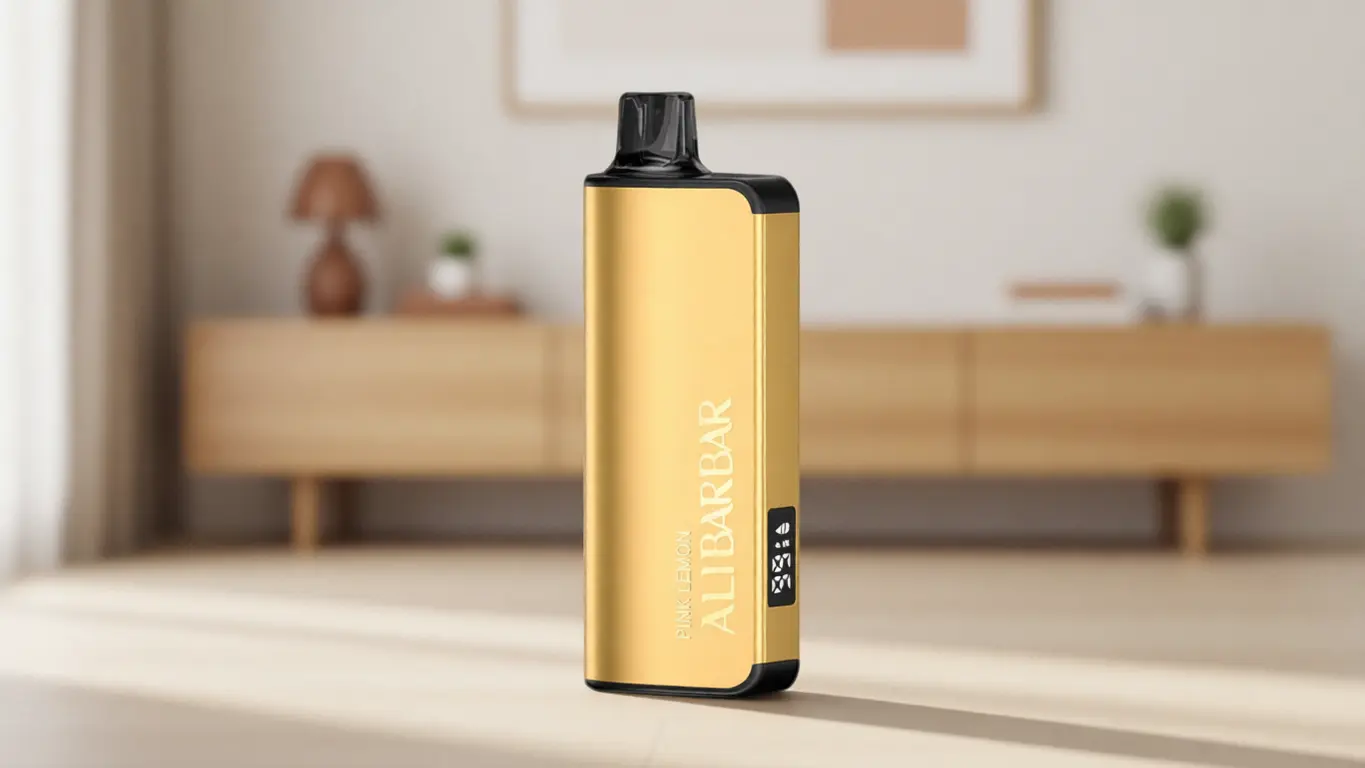
What separates thoughtful product design from indifferent design is how the manufacturer manages that constraint. Some brands, for example, use vertically oriented reservoirs that maximize capacity without increasing thickness. Others accept the limitation and instead invest in faster charging or simpler refill mechanisms so that the smaller capacity never feels like a burden. The ALIBARBAR Ice Adjust 12000 series, for instance, integrates a generous pre-filled reservoir into a chassis that remains pocket-friendly, achieving a balance that many competitors miss — not through a larger number, but through tighter internal packaging and more efficient component layout.
Modularity: When Less Capacity Is More Practical
Sealed, single-use devices offer convenience at the cost of discretion over capacity. You receive whatever volume the factory selected. Modular systems — replaceable pods, refillable tanks — hand that control back to the user, but they also introduce a new variable: the capacity you experience today might not be the capacity you choose tomorrow.
An adult who refills a 2 ml pod system when it is convenient, rather than when it is empty, effectively gains the flexibility of a much larger device without having to carry one. Conversely, someone who treats a modular system as if it were a sealed unit and vapes it dry repeatedly will encounter the irritation of dry hits and premature coil burnout. The capacity number is a constant, but the user’s behavior transforms it into a variable. Recognizing this is one of the clearest signs of an informed consumer.
Applying These Criteria to Real-World Devices
The most instructive way to use this framework is to observe how it plays out across the devices ordinary adults reach for every day. Consider two categories frequently encountered in the Australian market.
First, the high-capacity integrated device, exemplified by the ALIBARBAR INGOT 9000 and INGOT 15000. These units are engineered as closed systems, factory-filled with a specific volume of e-liquid and paired with a coil optimized for that exact volume and a consistent power output. Because the manufacturer controls every variable, the relationship between ml and usable puff count is predictable — if you know what to look for. A device with 12 ml might deliver around 3000 measured puffs at a tightly regulated wattage, while a 20 ml unit in the same family can sustain 5000 puffs or more. The number on the box starts to mean something only when you recognize that the entire electrical and fluid system was designed around it.
Second, the modular refillable ecosystem, where a standard pod might hold 2 ml. Taken at face value, this seems like a fraction of the capability of a sealed high-capacity device. But a user who pairs that pod with a separate bottle of e-liquid effectively carries days of capacity distributed across small, lightweight components. The trade-off shifts to the user’s willingness to manage refills and carry supplies. There is no objectively superior architecture; there is only better or worse alignment with how someone actually lives.
Comparable observations from other established manufacturers reinforce this point: when a high-capacity disposable and a well-executed pod system are placed side by side, the deciding factor is almost never the ml figure. It is the user’s tolerance for micro-management versus their desire for uninterrupted sessions over many hours.
A Practical Framework for Evaluating Any Device’s Capacity
Rather than asking “how many ml?”, use the following sequence of checks to build a full picture of what the capacity actually means for your routine.
Identify whether the volume is total fill or usable. If the manufacturer does not state this, assume the usable volume is at least 10–15% lower than the total. The absence of clarity is itself a signal.
Ask for the nominal wattage range. If it is not published, the device’s capacity cannot be meaningfully compared to another. A 10 ml tank at 8 W and a 10 ml tank at 15 W are different tools for different days.
Observe the wicking system. For a sealed device, you cannot see it. You must rely on reputation and documented consistency. For a modular system, a pod that uses organic cotton with dense fibre packing generally transfers e-liquid more completely from the reservoir to the coil, resulting in less stranded volume.
Map capacity to your actual daily pattern. If you routinely take 150 measured draws per day, a device that rates for 3000 draws will last roughly 20 days. If your usage spikes unpredictably, add a margin of 20%. Uncertainty about your own pattern is the single biggest cause of dissatisfaction, not the device’s ml.
Check for transparency about end-of-life behaviour. A well-engineered device will taper, alter taste, or blink a status light when the usable e-liquid is nearly exhausted, giving you time to plan. A device that simply cuts out without warning leaves you stranded. Capacity is meaningless if you cannot tell when it is depleted.
Common Selection Errors and Industry Observations
Even experienced users misread the ml figure. Here are the most persistent errors, observed across years of market engagement.
Error 1: Treating Puff Count as Directly Derivable from Ml
There is no universal conversion formula. Puff count depends on the duration of each draw, the coil’s efficiency, the wick’s ability to keep the coil wet, and the power curve. A 10 ml device from one factory can deliver 2500 puffs; a 10 ml device from another, 4000. Using ml alone to estimate lifespan is like using engine displacement alone to judge a car’s fuel range — incomplete to the point of misleading.
Error 2: Overlooking the Hidden Cost of “High Capacity”
Larger sealed devices carry an economic risk. If a 15 ml disposable fails before the liquid is finished — due to a depleted battery or a burnt coil — the user loses not only the remaining ml but the entire investment. Modular systems, by contrast, isolate the failure to a replaceable pod. The headline capacity might be lower, but the cost-per-useful-ml can be significantly better. Consumers who understand this often graduate from sealed units to modular systems not because they want less capacity, but because they want less waste.

Error 3: Equating Visual Size with Reservoir Volume
A device that looks large might house a substantial battery and a surprisingly modest reservoir. The reverse is also true: some of the most compact units on the market conceal surprisingly large internal reservoirs through clever vertical stacking of components. Visual size is a poor proxy, and yet it remains the most common heuristic in first-time purchases. The industry, for its part, rarely corrects this misconception because it serves the interests of visually impressive but undersized devices.
Error 4: Confusing Category Terminology with Technical Meaning
Terms like “max capacity” or “e-liquid volume” are not legally standardized across all jurisdictions. A figure printed on packaging might represent the reservoir capacity before wick priming, after priming, or under ideal laboratory conditions. The responsible approach is to treat every published number as a nominal reference, not a contractual promise, and to validate it against observable performance.
Frequently Asked Questions
Q: How many ml does a typical disposable vape hold?
A: It varies widely. Compact units may contain 1.3 ml, while high-capacity models designed for extended use hold 12 ml to 20 ml or more. The number is always a design choice, not a category standard.
Q: Can I refill a disposable device to add more ml?
A: No. Disposable devices are sealed units. Any attempt to refill them bypasses factory safety protocols, risks damaging the integrated battery and coil, and voids any expectation of consistent performance or warranty.
Q: Does a higher ml number always mean a longer-lasting device?
A: Not necessarily. A high-capacity device combined with a high-wattage coil can deplete the reservoir faster than a smaller device run at low power. Always consider the power specification alongside the volume.
Q: How do I know when the e-liquid is nearly gone in a sealed device?
A: Quality devices will signal through a change in output (flavour drop-off), a visible reservoir indicator, or a dedicated status light. Devices that provide no feedback force the user into guesswork and are best avoided.
Q: What is the relationship between ml and puff count?
A: There is no standard conversion. Puff count is a function of draw length, coil temperature, wick saturation, and power regulation. A device rated for 3000 puffs with 10 ml will deliver that only under the exact test conditions set by the manufacturer.
Q: Why would someone choose a 2 ml refillable pod over a 12 ml disposable?
A: For control. A refillable pod allows the user to choose their own e-liquid, manage cost, and replace only the pod when the coil degrades. The smaller capacity is offset by the ability to refill in seconds, making the system more flexible for some lifestyles.
Q: Is there an industry standard for measuring ml in vape products?
A: There is no universally enforced standard. Reputable manufacturers use internal protocols, but consumers should treat labeled volumes as nominal and look for consistency in real-world usage rather than absolute precision.
Q: How can I verify the actual ml of a device I already own?
A: Without lab-grade measuring equipment, you cannot. A more practical approach is to track your daily usage pattern and note when the device depletes. Over several units, you can establish whether a brand’s stated capacity aligns with your lived experience.
Q: Does storing a sealed device for a long time affect its ml?
A: Over extended periods (many months to a year), some e-liquid may slowly evaporate or change viscosity if the seal is imperfect. This is rare in well-manufactured devices but can affect very old inventory.
Q: What should I do if a device runs out of e-liquid far earlier than expected?
A: First, rule out an abnormally high personal usage rate. If the discrepancy persists, the unit may have a wicking defect or the battery may have been miscalibrated. Contact the retailer from whom you purchased it — authorized sellers like OZVAPE Shop can verify if the unit’s behaviour is consistent with the product family’s documented performance and can advise on next steps.
The Number That Matters
The question “How many ml in a vape?” is a natural starting point, but it has no universal answer because the answer is never about the number alone. It is about the design integrity behind it, the power management that governs its use, and the honesty of the feedback mechanisms that tell you when the ml are gone.
A device with transparent specifications, a track record of consistent output, and an authorized supply chain gives you something more valuable than a number on a label. It gives you the ability to plan your day without carrying unnecessary backups and without the low-grade anxiety of unexpected dead air. For adults who want that assurance, OZVAPE Shop (open in a new window) maintains a catalogue of factory-certified devices where the stated capacity is backed by documented design standards and local accountability.
Your daily routine determines which architecture suits you. The right volume is the one that disappears from your awareness — not because it is large, but because it never forces you to think about it. Choose with that standard, and you will rarely be disappointed.