
VAPE FAQs
How Many Hits Of A Vape Is Bad?
Oct
It’s a question that comes up constantly in user communities and support tickets: at what point does a device stop delivering what it was designed to deliver? Not in a theoretical sense, but practically — when the vapour quality drops, when the battery becomes unreliable, when you realise you’re no longer receiving the experience you originally chose. Framing the conversation around a single number (hits) misses the point, because two devices with identical puff ratings can behave entirely differently depending on their internal architecture, power management, and how honestly they communicate their status.
At OZVAPE Shop, we see this not as a question with a convenient one-size-fits-all answer, but as an invitation to understand the engineering constraints that determine operational lifespan. The following analysis explains what “bad” actually means in the context of a personal electronic device — not in terms of health, but in terms of performance degradation, design integrity, and the small frustrations that accumulate when a device is pushed beyond its intended envelope.
Understanding What Matters: Core Engineering and Design Factors
Users often talk about “number of hits” as if it were a fixed, guaranteed volume. In practice, that number is a rating derived under laboratory conditions, and what matters more than the figure on the packaging is whether the device can maintain consistent output throughout its rated life — and whether it gives you enough information to know when it cannot.
Internal Architecture and Output Consistency
The element that changes most over repeated use is the heating component. In sealed units, a resistive wire embedded in a wicking medium gradually accumulates byproduct deposits. As these deposits build, the resistance characteristics shift, the temperature at the coil surface can rise unevenly, and the vapour quality can degrade into what users commonly describe as “burnt” or “dry” hits. This is not a sudden failure; it is a progressive curve, and the inflection point varies with the design of the liquid-delivery system and the temperature regulation — if any — built into the device.
Why this matters: users consistently report that the latter third of a device’s rated puff count feels markedly different from the first third. If you keep using a device that has entered this zone, you are essentially overriding the design intent and experiencing output that the manufacturer would not stand behind as representative.
How to recognise well-engineered thermal management: devices that incorporate multiple parallel coils, structured wicking channels, and, where the category permits, temperature-limited power delivery tend to exhibit a longer plateau of stable performance. Devices that rely on a single simple wire and passive wicking may hit their degradation point much earlier, even if the fluid reservoir is not fully exhausted.
Power Management and Status Transparency
A puff count rating assumes a baseline power draw per activation. Real-world usage varies: longer draws, back-to-back activations, or environmental conditions can shift the actual current flow. More critically, many compact devices lack any meaningful fuel gauge. The user operates blind, guessing how much usable life remains. This ambiguity has a hidden cost: people carry backup devices unnecessarily, or, conversely, are caught out with a device that expires without warning at an inconvenient moment.
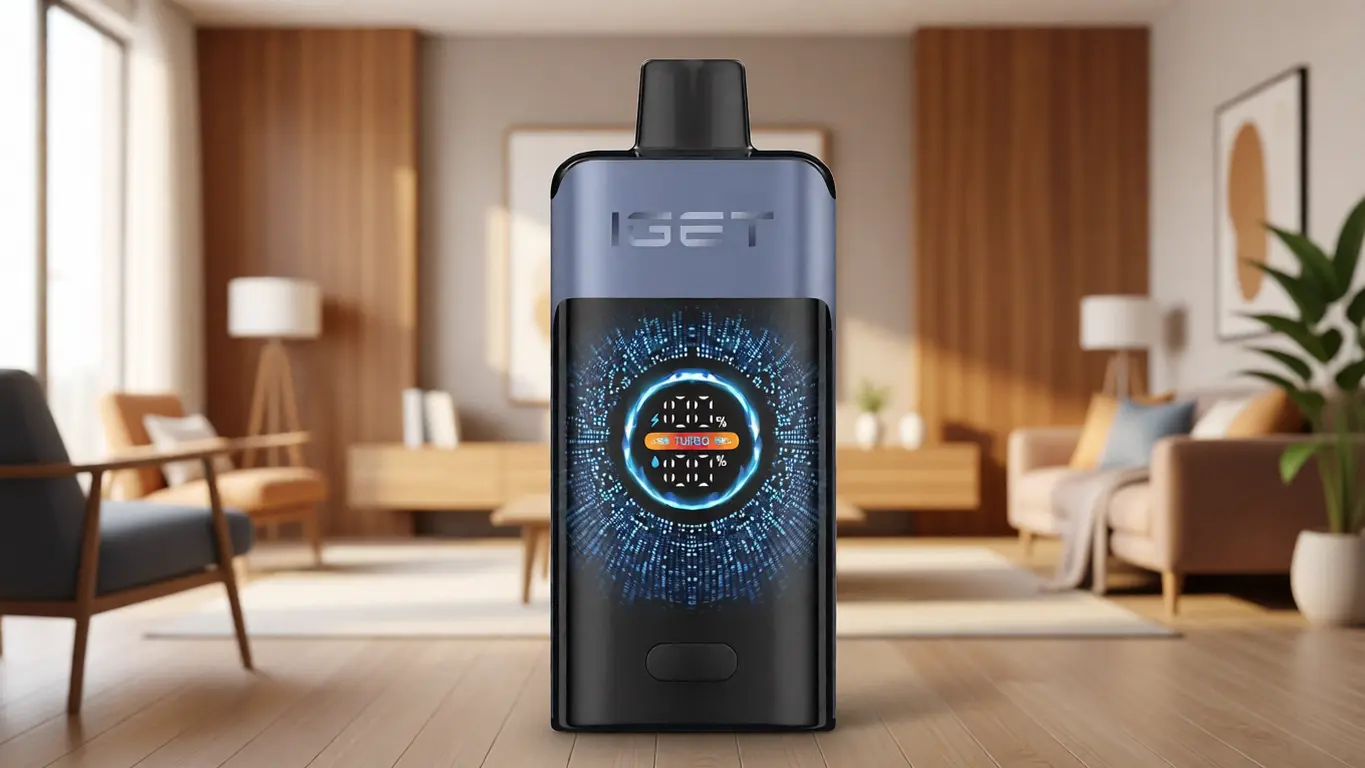
Status transparency transforms this relationship. A clear, graduated indicator — whether a multi-segment LED, an e-ink bar, or a simple digital readout — allows the user to correlate their own usage patterns with the device’s internal state. It effectively answers the “how many hits are left?” question before it becomes urgent. Devices that provide no such feedback force the user into a pattern of reactive, cautious behaviour, which undermines the very convenience the format is supposed to offer.
Physical Design and Material Durability
Puff count is one dimension; mechanical durability across those puffs is another. A device that handles beautifully for the first 200 activations but whose mouthpiece finish wears, whose body develops stress cracks, or whose contacts lose tension after pocket carry is failing on physical grounds long before the power cell is depleted. Surface treatments matter. Soft-touch coatings can delaminate under friction. Poorly toleranced seam joins can separate with repeated thermal cycling.
Ergonomics matter over sustained use. If the mouthpiece geometry causes lip fatigue after a few minutes, the device remains technically functional but practically avoided. A design that has been tested across a range of real-world holding angles and face shapes will be used to its rated limit willingly; a design that hasn’t will be abandoned early, making any hit-count rating irrelevant.
Modularity and Lifecycle Flexibility
The question “how many hits is bad?” changes fundamentally when components can be replaced independently. In a sealed, single-use system, the entire unit becomes waste when any one subcomponent — battery, heating element, or fluid — reaches its end. In a system with a rechargeable power unit and replaceable pod or cartridge, the user can manage cost and waste by swapping only the exhausted element. Here, “bad” is not a terminal device death; it is a signal to replace a module.
The trade-off is additional user responsibility: you must correctly seat pods, keep contacts clean, and remember to charge. For some, that adds unacceptable friction; for others, it reduces long-term cost and avoids the annoyance of discarding a perfectly good power cell because a small heating element failed. Recognising which architecture fits your routine is perhaps the single most important decision you make before looking at any puff rating.
Applying These Criteria to Real-World Options
Different users reach for a device in different contexts. Someone who wants a zero-maintenance tool for a social evening has a fundamentally different need-state from someone who uses a device throughout a 12-hour shift and wants predictable, all-day performance with status feedback. The market has responded to these states by branching into several device families that embody different engineering priorities.
For the shift-worker or frequent traveller, the primary concern is run-time certainty. A device that offers a defined operational window with clear depletion feedback aligns best. The ALIBARBAR INGOT series — available in 9000 and 15000 puff variants — is an example of a design built around this exact anxiety. The integrated digital display shows remaining charge and fluid level as a readable percentage, removing the guesswork that otherwise drives users to carry spares. The internal architecture uses a sealed but optimised coil-and-wick system that delivers consistent vapour density across the majority of its rated capacity, precisely because the power management is calibrated to a known pod resistance and air inflow profile.
For the user who values control over sensory profile, a device with adjustable output becomes relevant. The ALIBARBAR Ice Adjust 12000 follows a similar transparency philosophy — status screen, pre-defined ratings — but adds hardware-level airflow tuning. This allows the user to shift between a tighter, more concentrated draw and a more open, airy one without changing units. The life of the device does not change, but the experience can be modulated to suit the moment, reducing the impulse to overuse by keeping the draw satisfying.

For users committed to reducing waste, replaceable-pod architectures — common across various manufacturers — offer the advantage of separating the power cell from the consumable. These systems rarely carry a simple “puff count” on the box because the number of puffs is only meaningful for the pod itself. A rechargeable body might last months; a pod might deliver 2000–4000 activations before the taste profile shifts. In such systems, “bad” is defined not by a total number but by the moment the pod’s coil has lost its wicking efficiency. The user learns to recognise the first sign of a muted or slightly scorched note and swaps the pod.
It’s worth noting that visual similarity means nothing. Two devices that look nearly identical externally may house completely different coil geometries, different wicking materials, and different battery management circuitry. Assuming one will last as long as another because the shape is the same is a common path to disappointment.
A Practical Framework for Evaluation
Rather than asking “how many hits is bad?”, a more productive question is: “At what point does this specific device stop delivering the characteristics I care about, and how will I know when that point is approaching?”
Use this five-step methodology before you commit to any device:
Identify the degradation signal. Does the device give any indication of remaining life? If not, plan to treat the last third of its rated puff range as end‑of‑life, because you have no way of knowing when performance may decline.
Read the rating in context. A “10,000 puff” rating assumes standardised laboratory draws. Your actual draws might be longer or more frequent. Multiply the rating by 0.7 to estimate a conservative real‑world figure if you tend toward extended activations.
Check for staged performance. Some designs deliberately taper output as the device depletes to prevent overheating. This may be marketed as a “consistent” experience, but in practice, the vapour volume often decreases in the final stage. If that matters to you, look for devices that maintain plateau output until cutoff rather than those that slowly fade.
Inspect the power delivery chain. Devices that use regulated output (constant voltage or constant wattage) tend to hold their performance curve flatter than unregulated direct-output units. If the packaging does not mention regulation, assume unregulated.
Adjust for your cadence. Chain-puffing can temporarily dry the wick even if fluid remains, leading to a burnt hit that tricks you into discarding a device prematurely. If you pause 20–30 seconds between activations, the wick can resaturate, and the actual usable puff count may closely match the rating. If you’re a rapid user, expect a shortened effective life.
This framework doesn’t give you a fixed number. It gives you a way to interpret the numbers and behaviours you actually observe.
Common Selection Errors and Industry Observations
The way users undermine their own satisfaction is remarkably consistent. Over years of observing returns, complaints, and forum discussions, several patterns stand out.
Overweighting a single specification. Focusing exclusively on puff count while ignoring status feedback, coil architecture, or power regulation is like judging a vehicle solely by tank capacity without asking about fuel consumption. A 15,000-puff device with poor thermal management may deliver a worse overall experience than a well-engineered 9,000-puff device. The number on the box is not the experience.
Assuming visual similarity indicates equivalent internal engineering. The personal electronic device market has a proliferation of OEM-derived housings. Two devices may share the same outer shell while containing entirely different internals sourced from different factories. One might use a high-quality mesh coil with consistent resistance; another might use a cheaper round-wire coil that degrades rapidly. Without specifications or a trusted source that verifies supply chain, the user is left guessing.
Undervaluing modularity in cost-per-use calculations. A sealed 12,000-puff device might appear cheaper than a rechargeable pod system until you factor in that the pod system continues to function over dozens of pod replacements, while the sealed device is discarded in its entirety. The long-term cost equation often favours modularity, especially for frequent users who care about predictable budgeting.
Confusing category terminology with technical specifications. Terms such as “mesh coil,” “boost mode,” or “capacity” are used inconsistently across marketing materials. A “mesh coil” might refer to a true mesh heating element with even heat distribution, or it might be a marketing label for a standard wire arrangement. An informed approach cross-references what the specification implies with what you can actually observe — such as charge time, weight, or the presence of a status indicator.
From an industry perspective, the push toward higher puff counts has largely been a response to consumer demand for specification-based comparison. Manufacturers competing on numbers have sometimes traded away thermal headroom to achieve the rating, resulting in devices that technically deliver the count but cannot maintain output quality for the full duration. That’s why a specification that looks impressive on a shelf can translate into a frustrating user experience — and why a transparent retailer’s role in curating inventory matters more than most buyers realise.
Frequently Asked Questions
Q: What does a puff count rating actually measure?
A: It typically represents the number of standardised laboratory draws (defined by duration, volume, and interval) that a device can sustain before reaching a pre-determined performance endpoint, usually a reduction in vapour output or a change in resistance beyond a threshold.
Q: Can I safely use a device beyond its rated puff count?
A: You can continue to activate it, but the performance will likely degrade. The coil may produce inconsistent heating, the flavour profile will shift, and, in sealed units, the battery may continue to drain, potentially causing undervoltage conditions that can lead to unpredictable shutdown.
Q: How do I know when my device is truly finished?
A: A sharp, persistent burnt note, a significant drop in vapour volume that doesn’t recover after a rest period, or a status indicator showing fully depleted charge/fluid are the universal signs. If the device repeatedly shuts off prematurely, it has reached its end.
Q: Does charging a device too often reduce its lifespan?
A: For devices with rechargeable lithium-based power cells, partial charge cycles generally do less cumulative wear than full discharge–recharge cycles. Frequent top-ups are usually fine; repeatedly running the cell to zero before charging may shorten overall battery life.
Q: Are puff counts consistent across different brands?
A: No. There is no universal testing standard, and each manufacturer may use slightly different draw parameters. This means a 5,000-puff device from one brand is not directly equivalent to a 5,000-puff device from another. The only way to compare is to look for reviews that measure actual longevity under similar usage patterns.
Q: What role does liquid viscosity play in coil life?
A: Thicker liquids wick more slowly. If a device is optimised for a specific formulation, using a substantially thicker alternative can cause dry hits well before the rated puff count is reached, because the wicking cannot keep up.
Q: Why does my device sometimes feel hot after multiple draws?
A: All heating elements generate waste heat. If the device lacks thermal breaks or if you’re using it in rapid succession, the body temperature can rise. Occasional warmth is normal; heat that makes the device uncomfortable to hold suggests the thermal management is inadequate and that continued use may accelerate component degradation.
Q: How should I store a device I’m not using daily to preserve its life?
A: For sealed units, store at room temperature, away from direct sunlight and moisture. For rechargeable modular systems, store the power unit at around 50–70% charge if it won’t be used for an extended period. Pods or cartridges should be kept in their sealed packaging until use.
Q: Can a device’s puff counter be inaccurate?
A: Yes, especially if it counts puffs by tracking activation triggers rather than measuring delivered energy. A long draw and a short draw may both register as one “puff,” so the counter is best viewed as an approximation, not a precise fuel gauge.
Q: What support can I expect if a device fails substantially earlier than its rating?
A: That depends on the retailer and the manufacturer’s warranty policy. Authorised retailers with a defined return and support process — such as OZVAPE Shop — can often verify the failure and provide a remedy, whereas informal channels may offer no recourse. Always check the seller’s handling policy before purchase.
The real insight is this: a vape device becomes “bad” not at some universal hit count, but when it stops delivering what you reasonably expected based on its design. That tipping point is influenced by your draw style, your attention to status cues, and the margins the manufacturer built into the coil and wicking system. Informed users don’t chase numbers — they choose devices that communicate honestly, degrade gracefully, and align with the rhythm of their actual day.
OZVAPE Shop functions as a touchpoint for that kind of informed selection, providing consistent, factory-certified access to device families — including the ALIBARBAR INGOT and Ice Adjust series — that are built around status transparency and engineered consistency rather than headline figures alone. The right choice is the one that matches your routine, not the one with the most attention-grabbing claim.