
VAPE FAQs
How Many Cigs Is Equivalent To 1 Vape?
Sep
Understanding how an electronic device compares to combustible cigarettes is a question that arises whenever someone moves from one format to another. The request appears simple: “Give me a number.” In practice, arriving at a meaningful number requires accounting for device engineering, liquid formulation, and the way human behavior interacts with both. Relying on a single multiplier without understanding these layers leads to misplaced expectations and avoidable frustration. At OZVAPE Shop, we have observed that the most confident choices happen when adult users are equipped to evaluate claims rather than simply accept them. This article dismantles the “1 vape = X cigarettes” shorthand and replaces it with a structured way to think about nicotine delivery, device consistency, and what a well-engineered unit actually contributes to the equation.
Understanding the Variables: Why a Single Number Is Misleading
A cigarette is a relatively standardised product: a fixed mass of tobacco, burned in a predictable way, releasing a known range of nicotine. A portable electronic device is not. Its output depends on heating architecture, power stability, airflow, and the formulation of the liquid it carries. Reducing the comparison to a static figure ignores the very factors that determine whether a device feels satisfying or falls short. Below are the core layers that actually govern any equivalence estimate.
Nicotine Delivery and Absorption Kinetics
Cigarettes deliver nicotine through combustion, producing an aerosol of fine particles that is absorbed rapidly across the lungs, with peak blood levels reached in seconds. Vapour from a heated coil generates a different particle size distribution, with nicotine absorption that is often slower and less spike‑driven, especially with newer nicotine salt formulations. The subjective “head rush” of a cigarette is not simply a function of the total nicotine mass per unit but of the rate at which that nicotine enters the bloodstream. A device may contain a total nicotine payload numerically equal to several packs of cigarettes, yet the experience of using it will not feel like several packs because the pharmacokinetics are fundamentally different. This is why a capacity‑based calculation can mislead: a 15 mL pod containing 5 % nicotine salt (50 mg/mL) holds 750 mg of nicotine. If a single cigarette yields roughly 1–2 mg of absorbed nicotine, the arithmetic suggests equivalence to 375–750 cigarettes. But that assumes perfect transfer, identical absorption efficiency, and continuous usage patterns that no person replicates. The true behavioural equivalence is always lower — and more variable — than the chemical inventory.
Device Architecture and Output Consistency
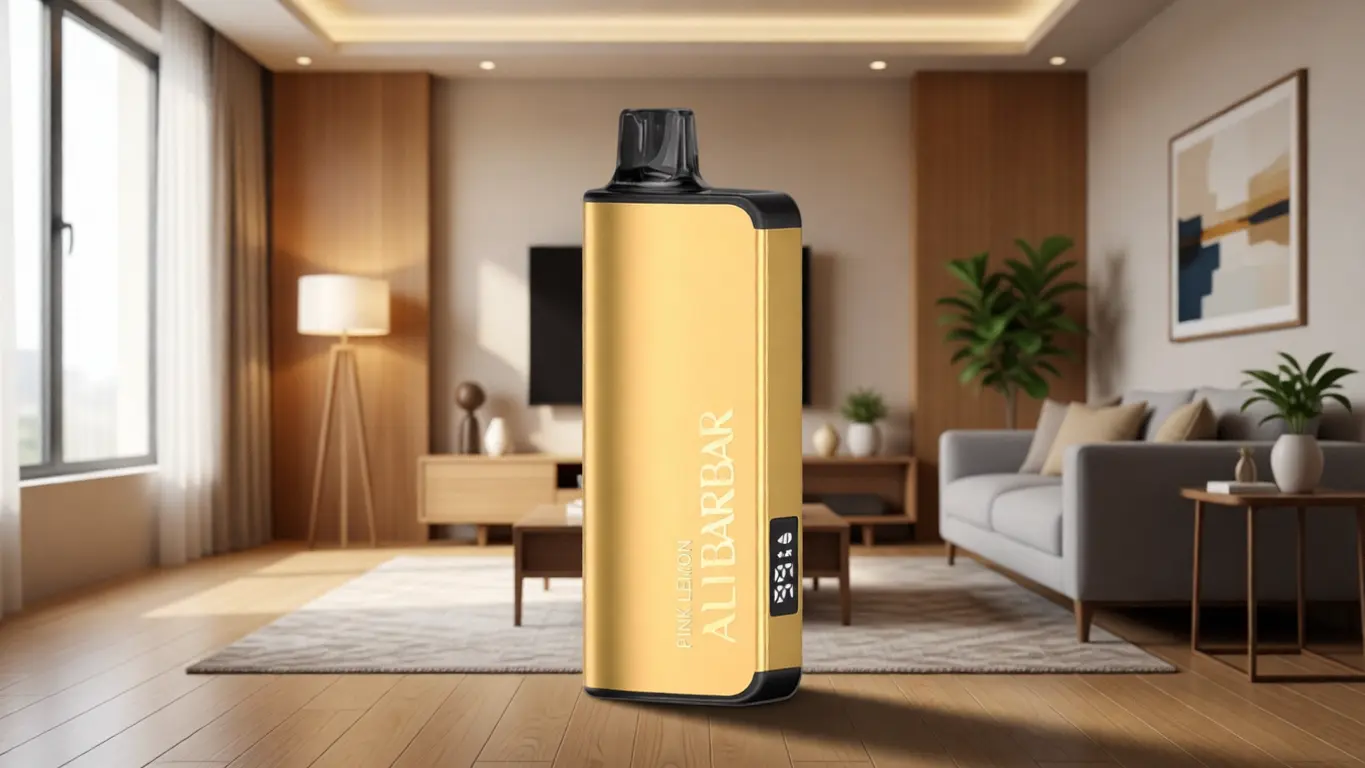
A meaningful comparison depends on repeatable per‑puff delivery. If a device produces a dense, warm vapour in the morning but a weak, thin output by evening, no single conversion factor can hold. Heating elements with uneven thermal distribution, poor wicking, or inconsistent voltage regulation introduce uncontrolled variation. Among the ALIBARBAR collection, a deliberate choice has been made to use mesh‑type coils with expanded surface contact areas. This architecture promotes even heat transfer across the e‑liquid, which reduces the “hot spot” effect that can cause some hits to deliver disproportionately more nicotine while others deliver less. For a user trying to estimate equivalence, a device that demonstrates narrow puff‑to‑puff output variability — like the INGOT 9000 or Ice Adjust 12000 — provides a more stable basis for any personal benchmark. Conversely, a device with undocumented coil geometry or unmonitored power delivery renders such benchmarks meaningless.
Power Management and Puff‑to‑Puff Reliability
Nicotine output is energy‑dependent. As a battery sags, the coil temperature drops, vapour density declines, and the amount of nicotine per draw can shift noticeably. Devices that lack clear status communication — leaving the user unaware of diminishing power — create a scenario where the last quarter of a unit’s rated life feels significantly weaker than the first. The ALIBARBAR INGOT 15000, for instance, includes integrated battery management that maintains a stable voltage window across the majority of its discharge cycle, and the device’s indicator system removes the guesswork. When building personal equivalence data, the user can trust that the 20th draw today resembles the 20th draw tomorrow, which is not a given across all category offerings.
E‑Liquid Formulation and Nicotine Type
The form of nicotine matters for equivalence because it governs throat sensation and titration behaviour. Freebase nicotine tends to deliver a sharper throat hit, which can cause users to take shorter, more tentative draws at higher concentrations. Nicotine salts, which dominate the ALIBARBAR device range, use a buffering agent that smooths the inhalation, making it comfortable to draw more volume of vapour in a single puff. This means that a device with 5 % (50 mg/mL) nicotine salt may deliver a higher per‑puff nicotine dose through natural user behaviour — longer, fuller draws — than a freebase device of the same concentration. Any equivalence claim that fails to account for nicotine chemistry and its effect on draw depth will be factually incomplete.
User Behaviour Variance
Finally, the most influential variable is the person using the device. A former heavy smoker accustomed to deep, frequent inhalation will extract more nicotine from the same hardware than someone taking occasional, shallow puffs. Stress, distraction, social setting — all modulate draw behaviour. True equivalence is therefore necessarily personal and requires self‑observation, not a printed number. A device with consistent architecture provides a stable platform for that observation; an inconsistent one makes it impossible.
Applying These Factors to Real‑World Scenarios
The ALIBARBAR family illustrates how design choices translate into a more predictable usage experience — and thus into a more reliable personal equivalence estimate. Take the INGOT 9000. It carries 15 mL of 5 % nicotine salt e‑liquid and is engineered to deliver a specified number of draws under standardised laboratory conditions. In absolute nicotine mass, it is equivalent to over 30 packs of cigarettes. Yet no user reports a sensation of smoking three cartons of cigarettes because the absorption profile is spread across hundreds of discrete sessions. The practical takeaway: a single device like the INGOT 9000 can displace a multi‑week cigarette consumption volume for many former pack‑a‑day smokers, but the daily behavioural rhythm feels more like smoking 5–8 cigarettes — the number of individual breaks, not the chemical total.
The Ice Adjust 12000 offers a different insight. Its adjustable airflow alters draw resistance and vapour density, which in turn shifts nicotine uptake per puff. Users who dial the airflow open tend to draw larger volumes and reach a satiating effect with fewer drags per session, while those who prefer a tighter draw may take more frequent, smaller puffs. This interaction between physical design and behaviour underlines why no fixed ratio exists: even within the same device model, personal preference changes the effective cigarette equivalence.
The INGOT 15000, with its large liquid capacity and robust power management, is built for users who prioritise multi‑day reliability. By maintaining consistent output until near exhaustion, it allows a person to establish a reliable daily count of sessions without the creeping weakness that forces early replacement. This consistency is the foundation of a trustworthy personal cigarette‑replacement benchmark.
A Practical Framework for Evaluating Your Own Equivalence
Instead of chasing a universal number, adult users can adopt a diagnostic approach that respects their own patterns. The following steps form a method you can use with any device, including those available through OZVAPE Shop.
Establish your baseline cigarette consumption — be honest about daily quantity and session length.
Choose a device with documented nicotine concentration and coil architecture — a mesh coil paired with 5 % nicotine salt, common across the ALIBARBAR range, provides a good starting platform.
Track sessions, not puffs — count how many times you pick up the device to satisfy a cigarette‑like urge. For a pack‑a‑day smoker, a device that provides 2–3 attentive sessions per hour across a waking day might point to roughly 20–30 usage moments.
Note how long a unit lasts — if a 15 mL device endures 5 days, that equates to 100 packs of cigarettes in nicotine inventory, but only about 20–25 “perceived cigarette equivalents” per day. The discrepancy illustrates why inventory‑based conversions are misleading.
Adjust for your draw behaviour — if you inhale deeply and hold, you will feel satisfied with fewer sessions; if you take shallow frequent puffs, you may need more sessions but still extract less nicotine per hour.
Observe when the device falls off — if the last day feels weak, lower your effective usage estimate for future planning. A device that remains steady until the end yields a more calculable personal conversion.
Common Selection Errors and Industry Observations
Even with a solid framework, adult users regularly undermine their own satisfaction through a few predictable mistakes.
Overweighting nicotine strength while ignoring device volume. A 5 % nicotine salt device with only 2 mL of liquid provides a smaller total nicotine payload than a 2 % device with 20 mL. Focusing solely on the percentage leads to the false conclusion that the former is “stronger” for all purposes, when in reality frequent repurchasing may be required.
Assuming visual similarity indicates equivalent internal design. Many devices share a cylindrical form factor but differ fundamentally in coil type, battery regulation, and wicking material. A cheap knock‑off that mimics the look of an INGOT 9000 will not reproduce the thermal consistency, rendering any personal equivalence data from the original device invalid.
Misinterpreting puff‑count specifications. A stated puff number is a laboratory benchmark derived under controlled conditions, often using a 1‑second draw. Real‑world draws are longer, with the result that a device rated for 9,000 puffs may deliver closer to 6,000 in practice. When calculating equivalence, use a conservative scaling factor of 0.7–0.8.
Confusing phrase “nicotine equivalent” with “smoking sensation.” Some retailers imply that X mg of e‑liquid nicotine equals Y cigarettes in subjective experience. No regulatory body endorses such conversion; the two experiences operate on different time‑intensity curves. An informed user treats any such figure as a rough inventory estimate, not a behavioural promise.
From an industry perspective, the drive toward larger‑capacity, mesh‑coil, nicotine‑salt systems — exemplified by the ALIBARBAR catalogue — is a direct response to these misunderstandings. When a device provides consistent output across its life, users can rely on their own observations and stop fixating on an elusive conversion factor. The presence of clear LED status, factory‑calibrated power curves, and mesh‑based heating has gradually shifted the conversation from “how many cigarettes is this?” to “does this device give me a predictable, repeatable experience?” That is a maturation of the market.
Frequently Asked Questions
Q: How many cigarettes is a 5 % nicotine vape like the ALIBARBAR INGOT 9000?
A: In raw nicotine mass, roughly 375–750 cigarettes, but the behavioural experience is spread across many days and feels far less intense than those numbers suggest. Users often report that one device displaces 1–2 weeks of smoking for a pack‑a‑day habit, but this is highly personal.
Q: Is vaping stronger than smoking?
A: “Stronger” is ambiguous. Nicotine per puff can be higher, but absorption is slower and less peaked. Most users find that when they use a device with high‑quality salt nicotine, the experience is smoother, not more overwhelming.
Q: Why does my device feel weaker toward the end?
A: This is typically a sign of power sag or wicking degradation. Devices with stable power management, like the ALIBARBAR INGOT 15000, are engineered to minimise this effect. If you experience it consistently, your personal equivalence calculations should discount the last 10–20 % of rated puffs.
Q: Can I use puff count to directly calculate cigarette equivalence?
A: Puff count is a device‑centric measure; cigarettes are a session‑centric measure. A heavy smoker might take 10–15 puffs per cigarette. So a 9,000‑puff device might equate to 600–900 cigarettes in raw draw terms. But as draws per session vary, this remains a rough starting point. Use the framework in this article to refine.

Q: Do ALIBARBAR devices use freebase or salt nicotine?
A: The current ALIBARBAR range uses nicotine salt formulations. This allows higher nicotine concentrations without unacceptable throat irritation, which tends to produce a more consistent per‑draw uptake.
Q: How do I know I’m getting an authentic ALIBARBAR device?
A: Authenticity relies on an authorised supply chain. At OZVAPE Shop, inventory is sourced directly from factory‑certified distribution channels, and every unit is shipped with the documentation required for verification. Checking the source eliminates the most common reason for inconsistent performance.
Q: What if I always use two different devices — can I still calculate equivalence?
A: Yes, but you will need to treat the combination as a system. Track how many days each unit lasts and allocate sessions accordingly. The total nicotine inventory then maps onto your combined usage pattern. Modular or high‑capacity devices simplify this because they reduce the number of changeovers.
Q: Does a higher liquid capacity always mean stronger nicotine delivery?
A: Not stronger per puff, but longer duration. The concentration, not the volume, determines dose rate. A 5 % concentration in a small pod and a large tank will deliver the same per‑draw nicotine, but the large tank lasts much longer before refill or replacement — which affects equivalence planning but not acute intensity.
Q: Why is the absorption from vaping slower?
A: The particle size from heated e‑liquid is larger than from combustion, and nicotine tends to deposit in the upper airways rather than deep in the lungs. This produces a gentler rise in blood nicotine, which many former smokers find less compulsive but still satisfying when used consistently.
Conclusion
The persistent question “How many cigarettes is equivalent to 1 vape?” reveals a deeper desire: the need to trust that a new device will meet a personal standard. Answering it honestly requires stepping back from misleading marketing shortcuts and understanding the layers of device engineering, nicotine chemistry, and user behaviour that determine the real-world result. A device that delivers a steady, well‑managed output — such as those within the ALIBARBAR range — provides the stable foundation needed to develop a personal equivalence that actually holds up day after day.
When you are ready to examine specifications and compare devices with this framework in hand, OZVAPE Shop offers a documented catalogue and responsive local support to help you make an informed choice. The right decision is not the one that claims the highest puff count or the strongest nicotine — it is the one that aligns with how you actually use the device, session by session, through the ordinary rhythm of your day.