
VAPE FAQs
How Many Cigarettes Per Vape?
Aug
The question seems straightforward enough: “How many cigarettes does this device replace?” But anyone who has spent time in this space knows the answer is rarely simple. Manufacturers sometimes publish a figure, users share anecdotal claims, and online forums swirl with conflicting calculations. The reason for the confusion is not malice—it is that the relationship between a cigarette and a modern electronic device involves variables that resist easy conversion.
This article does not promise a single magic number. Instead, it provides a structured way to think about equivalence so that you can arrive at an estimate that matches your actual use. The goal is to help you evaluate devices with clarity, whether you are comparing options at OZVAPE Shop or anywhere else.
Understanding What Matters: Core Engineering and Design Factors
Before estimating how many cigarettes a particular device might replace, it is essential to understand the engineering choices that determine output. These factors directly influence the user experience and the practical amount of nicotine delivered.
Internal Architecture and Output Consistency
The heart of any device is its heating element and the material it interacts with. In pre-filled units, the coil resistance, wick density, and airflow path all affect how efficiently the nicotine-carrier solution is vaporised. A well-engineered architecture delivers consistent output from the first draw to the last. A poorly engineered one degrades noticeably, often within the first third of the device’s rated life.
This matters for equivalence because a device that loses its heating efficiency partway through will deliver less than its theoretical capacity. A user relying on it to replace a fixed number of cigarettes per day may find themselves unsatisfied earlier than expected, leading to supplementary use that undermines any calculation.
Power Management and Status Transparency
The power source—whether a sealed battery or a replaceable cell—needs to be calibrated to the heating profile. Devices with clear status indicators (such as LED fuel gauges or puff counters) allow the user to monitor remaining capacity. Without such feedback, the user operates blind and often compensates by carrying a backup, which distorts the real-world replacement ratio.
A device that shuts down abruptly with no warning forces the user to switch to another source, breaking the continuity of use. This is not a trivial annoyance; it is a design failure that makes any claimed equivalence unreliable.
Physical Design and Material Durability
The device’s form factor and materials affect how often it is actually used. A pocket-friendly, durable device with a comfortable mouthpiece encourages consistent use. A bulky or fragile one may be left at home, reducing its practical replacement value. Over a typical day, the difference between a device that stays with you and one that sits in a drawer can be substantial.
Modularity and Lifecycle Flexibility
Some devices are sealed units; others allow recharging or component replacement. A rechargeable device with replaceable pods or pre-filled cartridges can potentially serve as a longer-term replacement for cigarettes because the user can maintain it. A sealed disposable unit is by nature finite, and its replacement ratio is strictly bounded by its total capacity. Understanding which architecture you are dealing with is critical to any honest estimate.
Applying These Criteria to Real-World Options
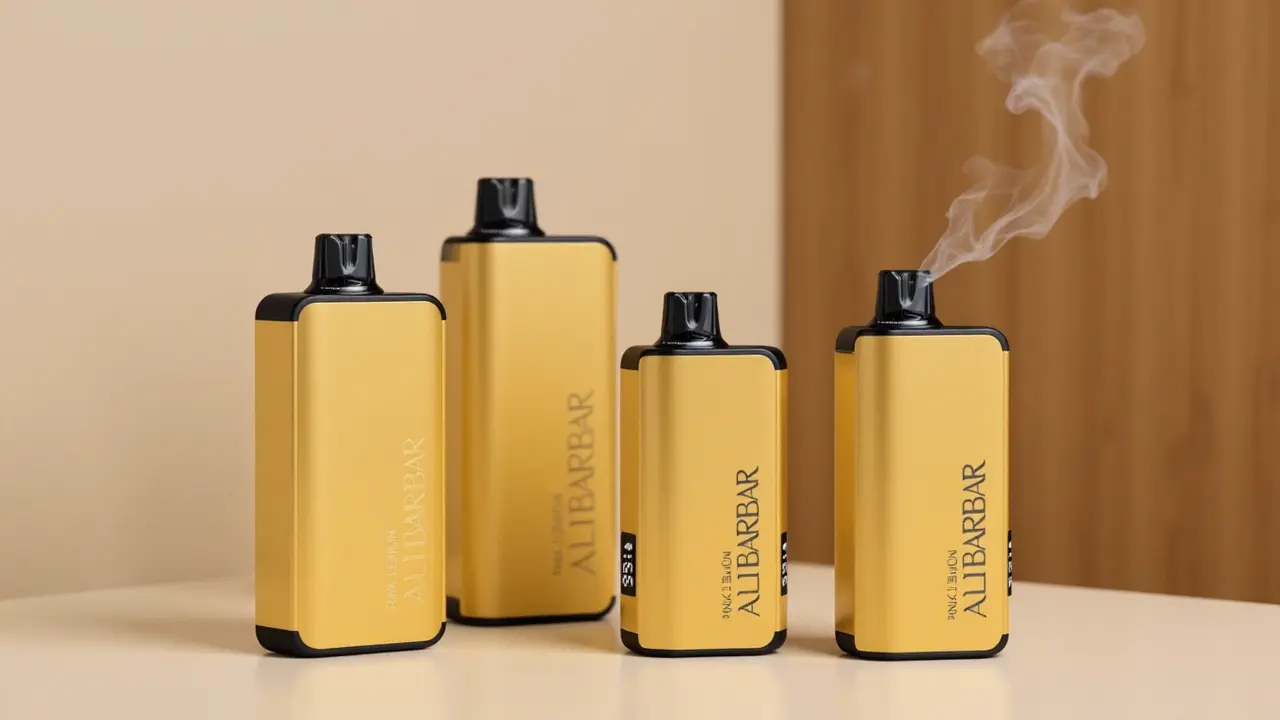
Rather than ranking brands, it is more useful to consider how different device families handle the engineering factors above. For example, the ALIBARBAR range from OZVAPE Shop includes sealed units like the INGOT 9000 and INGOT 15000, which are designed for straightforward, no-maintenance use until depletion. These devices have fixed power cells and pre-filled reservoirs, and their output consistency holds well within a predictable range.
A different architecture—say a rechargeable pod system—offers the flexibility to replace only the solution component while keeping the power source. This can shift the effective cost-per-use and the user’s ability to calibrate intake. Neither is inherently superior; the right choice depends on whether the user prioritises simplicity or adjustability.
In practice, a typical sealed device rated for a certain number of puffs will, under average use patterns, cover a range of cigarette replacement values. The exact number depends on the user’s draw length, frequency, and nicotine tolerance. The engineering consistency determines whether that range is narrow and reliable or wide and unpredictable.
A Practical Framework for Evaluation
To estimate how many cigarettes a specific device might replace, follow this step-by-step method:
Identify the device’s total nicotine content (typically stated in milligrams or as a percentage of the solution volume).
Estimate the nicotine per puff by dividing total content by the manufacturer’s stated puff count.
Compare to the nicotine in a typical cigarette. This varies widely—between 0.5 mg and 2 mg absorbed per cigarette depending on smoking style. Assume 1 mg as a conservative baseline for a moderate smoker.
Factor in user behaviour. A person who takes long, deep puffs will extract more nicotine per draw than someone who takes short, shallow ones.
Apply a waste factor. No device converts 100% of its nicotine into inhalable vapour. A realistic range is 50–80% efficiency depending on coil design and usage habits.
Calculate the replacement range. For example, a device with 50 mg total nicotine, 5000 puffs, and 60% efficiency yields about 30 mg absorbable nicotine. At 1 mg per cigarette, that is approximately 30 cigarette equivalents—but only if the user finishes the entire device, which the power management and consistency constraints may prevent.
This framework is not a formula for a precise answer. It is a diagnostic tool to help you ask the right questions about any device you consider.
Common Selection Errors and Industry Observations
Overweighting puff count. A device with a high puff count but poor consistency may deliver far less usable output than a lower-count device with stable performance.
Assuming visual similarity means equivalent internals. Two devices of the same size and shape can have dramatically different heater designs, wick materials, and airflow characteristics.
Ignoring the role of the user’s own variability. The same device used by two people will yield different replacement values. A heavy smoker may need more puffs to feel satisfied, while a lighter user may stretch the device further.
Mistaking category terminology for technical specifications. “Disposable” and “rechargeable” describe form factor, not performance. A rechargeable unit with a poor coil can be less consistent than a well-engineered disposable.
From an industry perspective, the most honest approach is to avoid fixed claims. The market has shifted toward more transparent labelling—puff counts, nicotine percentages, and device capacity are now more commonly listed than ambiguous “cigarette equivalency” numbers. This is a positive trend because it lets the user make their own calculation based on their own habits.
Frequently Asked Questions
Q: How many cigarettes are in a typical disposable vape device?
A: It depends on the device’s total nicotine content and the user’s smoking style. For a device with 50 mg nicotine and 5000 puffs, a rough estimate is 20–40 cigarette equivalents, but this varies significantly.
Q: Is the “cigarette equivalent” number on packaging reliable?
A: Not always. Many manufacturers use simplified calculations that assume ideal conditions. It is better to use the nicotine content and puff count as raw data and apply your own efficiency estimate.

Q: Does a higher puff count mean more cigarette replacements?
A: Not necessarily. Puff count is measured under standardised lab conditions, which may not match real-world draw length and frequency. Actual output depends on device consistency and user behaviour.
Q: How can I verify the nicotine content of a device?
A: Look for the milligram per millilitre (mg/mL) concentration and the total volume. Multiply them to get total nicotine. OZVAPE Shop lists these specifications clearly for all ALIBARBAR products.
Q: Can I use a device to gradually reduce nicotine intake?
A: Yes, but only if you choose a device with known, stable nicotine output. Sealed disposables have a fixed concentration, while some pod systems offer multiple strength options.
Q: What happens if I use a device past its stated puff count?
A: The heating element may degrade, wick can dry out, and output becomes unpredictable. It is generally not recommended to continue use beyond the manufacturer’s claim.
Q: Are there legal limits on nicotine content in Australia?
A: Yes. Nicotine-containing devices sold legally require a prescription or are restricted to nicotine‑free solutions. Check current regulations and purchase from authorised channels.
Q: How does OZVAPE Shop ensure product authenticity?
A: We source exclusively from factory‑certified distribution networks and provide standardised specifications so customers can make informed comparisons.
Q: What is the best device for someone who smokes 10 cigarettes per day?
A: A device with a nicotine content equivalent to about 10–15 cigarettes per full use cycle, combined with consistent output and clear status feedback, would be a reasonable starting point. Consider a sealed disposable or a rechargeable pod system based on your preference for simplicity vs. adjustability.
Q: Can I trust online reviews that claim specific cigarette equivalents?
A: Be cautious. Many reviews are based on anecdotal experience. Use them as one data point, but rely on the engineering factors described in this article for a more objective evaluation.
Conclusion
The question “How many cigarettes per vape?” does not have a single correct answer because it depends on engineering choices, user behaviour, and the device’s real-world consistency. What matters is not the number itself but the method you use to arrive at it. By understanding the factors that influence output—heater design, power management, physical durability, and modularity—you can evaluate any device with greater confidence.
OZVAPE Shop (external link: https://ozvapeshop.com.au/) is one place where you can find detailed, standardised specifications that allow you to apply this framework. But the framework itself is portable: it works for any device from any reputable source. The best choice is the one that matches your actual routine, not the one with the most attention-grabbing claim. Use the information, test assumptions, and let your own experience be the final judge.