
VAPE FAQs
How Many Calories In A Vape Hit?
Aug
Introduction
Among the many questions that circulate within adult user communities, few attract as much curiosity—and as much casual misinformation—as the simple query, “How many calories are in a vape hit?” The concern is understandable. People track caloric intake for reasons ranging from athletic performance to medical dietary control, and anytime a substance is inhaled regularly, the possibility of unaccounted energy intake deserves examination. At OZVAPE Shop{target=”_blank”}, we see this question surface repeatedly in customer conversations, and we believe an honest, technically grounded answer is far more useful than a dismissive one‑liner.
This article steps back from sensationalised claims and instead applies a materials‑science perspective to the problem. It explains what a vapour hit actually contains, how to estimate its energy contribution, and why the answer, while numerically tiny, reveals a great deal about how personal electronic devices interact with the body. By the end, the reader will have a framework for evaluating not only the calorie question but also the broader set of misconceptions that surround everyday device usage.
Understanding the Energy Basics: E‑Liquid Composition and Caloric Potential
To calculate the energy in a single inhalation, we first need to know what that inhalation delivers. The liquid used in the majority of contemporary devices—including the ALIBARBAR INGOT and Ice Adjust families available through authorised Australian retailers—is composed primarily of two carrier fluids: vegetable glycerin (VG) and propylene glycol (PG). These are supplemented by nicotine in measured concentrations and a small percentage of food‑grade flavouring compounds.
Both VG and PG are classified chemically as polyols, or sugar alcohols. Their caloric values are well documented in nutritional science:
Vegetable glycerin provides approximately 4.2 kcal per gram (comparable to carbohydrates).
Propylene glycol provides roughly 4.0 kcal per gram.
These figures are not theoretical—they are the values assigned when these substances are used as food additives or pharmaceutical excipients, and the human body metabolises them through standard biochemical pathways. The critical detail, however, is the quantity actually present in a single puff.
How Much Liquid Does a Single Hit Vaporise?
Laboratory studies and device‑specific measurements consistently place the mass of e‑liquid consumed in a single puff within a surprisingly narrow range. For a typical mouth‑to‑lung draw from a compact pod‑style device, the amount of liquid atomised lies between 0.02 ml and 0.05 ml. For a deeper, direct‑to‑lung draw from a higher‑power unit with sub‑ohm coil architecture, consumption can rise to 0.08 ml to 0.12 ml.
Given that blended e‑liquid has a density close to 1.1 g/ml, these volumes translate to a per‑puff mass of roughly 22 mg to 132 mg. Applying the caloric values above:
At the low end (22 mg, mostly PG), the caloric content is around 0.09 kcal.
At the high end (132 mg, high‑VG blend), it may reach 0.55 kcal.
Even a series of heavy draws produces a caloric contribution that is trivial in the context of a daily energy budget. The user would need to consume approximately two full millilitres of e‑liquid—a significant daily volume for many—to take in roughly 8–10 kcal, about as much as a single grape. This finding is robust across all mainstream device architectures: the thermal vaporisation process does not chemically alter the inherent caloric value of the carrier fluids, and the inhaled mass is simply too small to matter in dietary terms.
Engineering Factors That Shape Per‑Hit Consumption
The variance in consumption per puff is not random; it is a direct consequence of deliberate engineering choices made by device designers. Recognising these factors helps adult users understand why two products that look superficially similar can produce markedly different usage patterns.
Coil Architecture and Power Delivery
The heating element inside a cartridge or pod is designed around a specific resistance (measured in ohms) and a recommended wattage range. Low‑resistance, high‑power coils generate more heat over a larger surface area, aerosolising more liquid with each activation. This design is common in devices targeted at users who prefer a direct‑lung experience, and it predictably increases per‑puff consumption relative to higher‑resistance, lower‑wattage mouth‑to‑lung designs.
From a calorie perspective, the practical implication is straightforward: a device that consumes 0.10 ml per draw will contribute roughly twice the energy of one that uses 0.05 ml, but both numbers remain below what any clinical dietician would consider worth logging.
Puff Duration and User Behaviour
Laboratory testing often standardises puff durations at 3 seconds, yet individual habits vary widely. A slow 6‑second draw from a temperature‑controlled device can vaporise as much liquid as two shorter draws from a less regulated unit. This behavioural component is one reason why exact calorie numbers cannot be given without qualifying the device, the liquid formulation, and the user’s draw style. Nevertheless, the extremes remain bounded: even an exceptionally long draw rarely exceeds 0.15 ml, keeping the caloric ceiling well under 1 kcal.
The Negligible Role of Flavourings and Nicotine
Flavouring compounds are present at concentrations typically between 0.5% and 5% of total liquid mass. Their caloric contribution is vanishingly small—most food flavourings are used at such high dilutions that they add less than 0.01 kcal to a puff. Nicotine itself carries no meaningful calories in the quantities inhaled. Thus, the entire energy story of a vape hit is carried by the VG and PG base, and even that story is a quiet one.
Common Misconceptions and Industry Observations
Despite the clear arithmetic, distorted ideas persist. Understanding where they come from provides a clearer picture of how the broader personal electronics market communicates—and sometimes fails to communicate—with its users.
“Vape calories add up and cause weight gain.” This claim collapses under simple multiplication. A heavy user consuming 5 ml of e‑liquid per day would ingest at most 22 kcal—the energy equivalent of a single almond. For comparison, a standard 330 ml can of soft drink contains around 140 kcal. The body’s energy balance is not meaningfully affected by inhaled VG/PG in normal use.
“Inhaled calories are absorbed differently.” VG and PG, once inhaled, deposit on the mucosal surfaces of the respiratory tract and are absorbed into the bloodstream. They are subsequently metabolised through the same hepatic and extra‑hepatic pathways as when ingested. No special “lung‑to‑fat” conversion pathway exists. The metabolism of polyols has been studied extensively in clinical nutrition; the route of entry changes the speed of absorption but not the eventual energy yield per gram.
“The appetite‑suppressing effect of nicotine confuses the issue.” This is a genuine confounder. Nicotine is a sympathomimetic agent that transiently suppresses appetite. Some users report lower caloric intake from food when using nicotine‑containing devices, which can lead to weight loss—an effect sometimes misattributed to an imagined caloric penalty from vaping itself. In reality, any weight change is mediated by reduced food consumption, not by the calories in the aerosol.
Observations from the Australian supply chain reveal that few device manufacturers voluntarily publish per‑puff caloric data. This is not an evasion; it is a recognition that the number is so small as to be practically irrelevant for informed adult consumers. Retailers and distributors who attempt to market devices on a “zero‑calorie” platform are engaging in a technical untruth—there are calories, but their magnitude is irrelevant.
A Practical Framework for Evaluating Personal Intake
For the small number of users who wish to track every source of energy, a simple method can provide a reliable estimate.
Determine your average daily liquid consumption. Track the amount of e‑liquid you use over three typical days, measuring by the refill mark or pod capacity.
Identify the VG/PG ratio of your liquid. Most products clearly label this on packaging. A 70/30 VG/PG blend yields a slightly higher energy density than a 50/50 blend.
Apply the per‑millilitre formula. Multiply 4.2 kcal by the VG fraction, 4.0 kcal by the PG fraction, and add the two results per millilitre of liquid. For a 50/50 blend, that is approximately 4.1 kcal/ml.
Calculate your daily total. If you consume 3 ml of 50/50 liquid, you ingest around 12.3 kcal.
This framework makes clear that any serious dietary tracking should focus on food and drink, not on personal electronics. If a user finds themselves concerned about these numbers, the issue is more likely anxiety about the unknown than a genuine nutritional problem—a reminder that clear, public‑facing education is a responsibility the industry should take seriously.
Frequently Asked Questions
Q: Do vape calories count toward my daily caloric intake?
A: Technically yes, but the quantity is so small (typically under 20 kcal per day for even heavy users) that it is nutritionally negligible. No credible dietary guidelines require tracking at this level.
Q: Will swapping to a high‑VG liquid increase my calorie intake significantly?
A: VG carries about 4.2 kcal per gram versus PG’s 4.0, a difference of only 5%. The increase is proportional to consumption volume and remains trivial.
Q: Can I absorb calories through my lungs just as effectively as through my stomach?
A: Yes, the mucosal membranes of the respiratory tract absorb VG and PG into the bloodstream efficiently. The body then metabolises them normally. The route does not alter calorie content.
Q: Does the device’s wattage affect the calorie count per puff?
A: Indirectly, by influencing how much liquid is vaporised per puff. Higher wattage often correlates with greater per‑puff consumption, but even an extreme direct‑lung draw rarely exceeds 0.6 kcal.
Q: Is there any evidence that vaping contributes to weight gain?
A: No credible clinical evidence links the calories in e‑liquid aerosol to measurable weight gain. Any observed weight changes are more plausibly explained by nicotine’s appetite‑suppressing effect or behavioural substitution.
Q: Why don’t product labels show calorie information?
A: Because the amounts are well below any threshold that regulatory bodies require for “significant source” declarations (usually >5 kcal per serving). A serving, in this context, would be an entire 2 ml pod.
Q: How does the calorie content of a vape hit compare to a cigarette?
A: A tobacco cigarette delivers no meaningful calories through smoke. Combustion destroys most organic matter, and what is inhaled is predominantly gases and particulate matter without caloric value. The comparison is not straightforward, but both are negligible in dietary terms.
Q: Could vaping a whole 2 ml pod in a short time cause a spike in blood sugar?
A: VG is metabolised slowly; it has a low glycaemic index and does not produce acute insulin responses typical of sugars. Clinical data do not support concern over glycaemic impacts from these small quantities.
Q: If I am on a strict ketogenic diet, should I count vape calories?
A: Even a strict keto dieter tracking 20–50 g of carbohydrates per day will find the 1–2 g of metabolisable carbohydrate‑equivalent from a full day’s vaping irrelevant. You may count them if you wish, but they will not affect ketosis.
Q: How can I be sure my device isn’t delivering more liquid than I think?
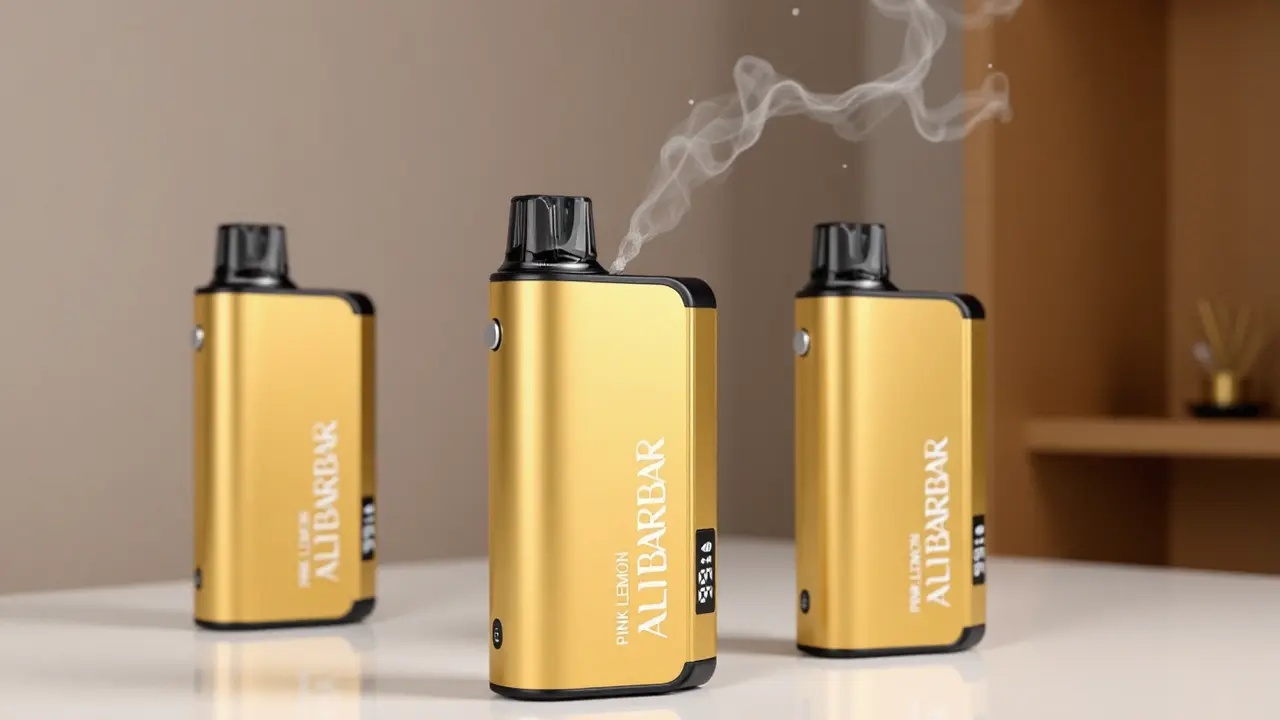
A: Choosing a device from an authorised source that provides clear specifications—such as the ALIBARBAR range available through dedicated Australian channels—gives you access to documented coil resistance, wattage ranges, and pod capacities. Standardised product information reduces guesswork.
Conclusion
The biological arithmetic is settled: a single vape hit delivers a caloric load so small that it would be lost in the rounding error of any ordinary diet log. The real value of the question lies not in its numeric answer but in the process of reaching it. Understanding the relationship between a device’s engineering, its liquid formulation, and the body’s absorption pathways equips adult users to separate fact from hyperbole across a range of similar topics.
At OZVAPE Shop{target=”_blank”}, we hold that access to factory‑certified devices and unambiguous technical information is the most effective antidote to confusion. Caloric content is one small data point in a much larger conversation about how responsible adults evaluate the tools they use every day. The point, in the end, is not the calories—it is the willingness to ask a direct question and expect a transparent, physics‑based answer.