
VAPE FAQs
How Many Calories Are In A Vape Per Puff?
Jun
For adult users mindful of daily caloric intake, a common question arises: how many calories does each puff from a portable electronic device contribute? Conflicting online claims and vague product information often lead to unnecessary concern, with some sources overstating the impact while others dismiss it entirely. The truth lies in understanding the core ingredients and engineering choices that define each device’s output. As a trusted source of factory-certified products, OZVAPE Shop provides standardized specification sheets that allow users to calculate this with precision, eliminating guesswork.
Core Factors Determining Calorie Content in Each Puff
Base Ingredients and Caloric Density
The primary contributors to calorie content are propylene glycol (PG) and vegetable glycerin (VG), the base liquids used to carry flavorings. PG has a caloric density of approximately 3.4 kilocalories per gram, while VG is slightly higher at 4.3 kilocalories per gram. These values are consistent across most mainstream products, as PG and VG are industry-standard ingredients due to their ability to produce vapor and carry flavor effectively. While some niche formulations may use alternative bases, these are rare and often noted explicitly in product specs.
Puff Volume and Device Engineering
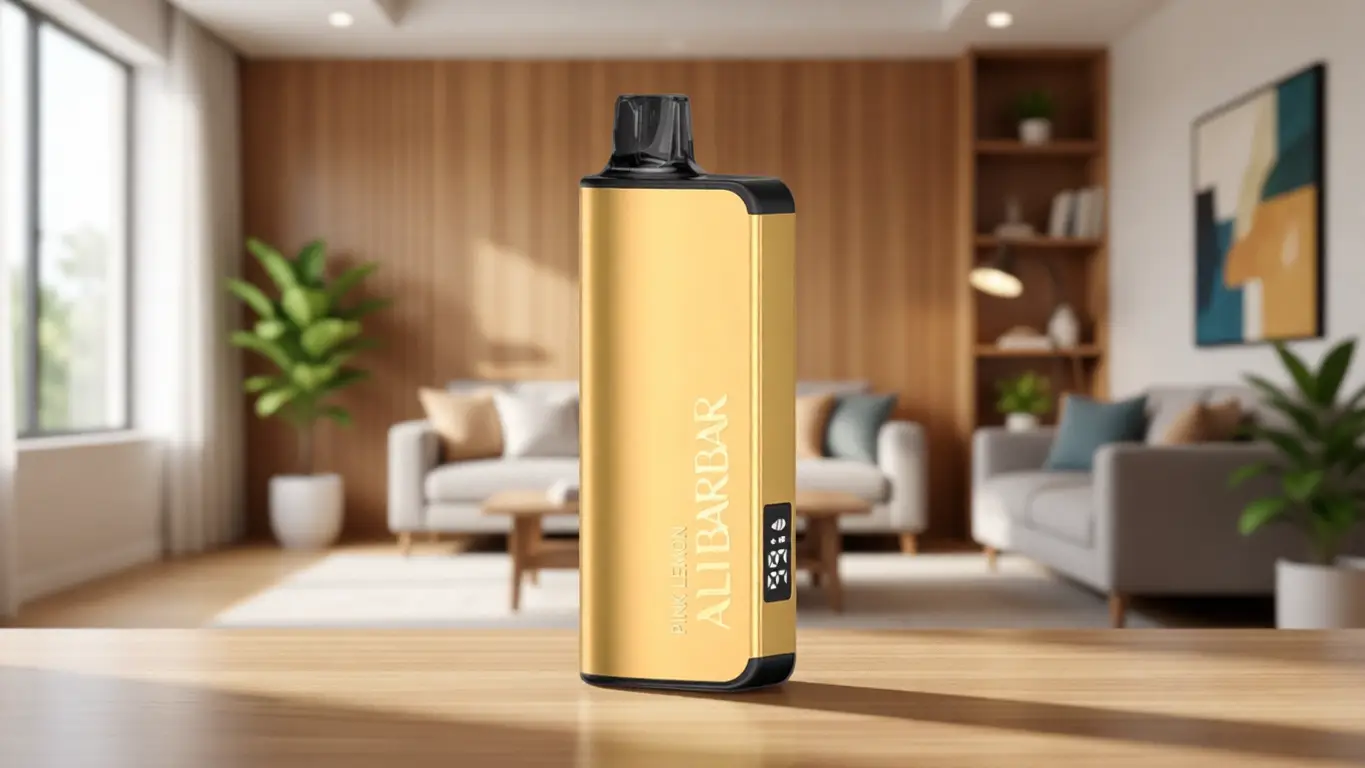
The amount of base liquid delivered per puff is the most variable factor in calorie calculation. This depends entirely on the device’s heating element design and airflow configuration. For example, fixed-output devices like the ALIBARBAR INGOT series are engineered to deliver a consistent volume per puff—typically between 0.07 and 0.09 mL—ensuring predictable calorie counts. In contrast, variable-mod devices allow users to adjust airflow and power, leading to fluctuating puff volumes that range from 0.05 to 0.2 mL per puff, making calorie estimates less reliable.
Flavorings and Additives
Flavorings and other minor additives contribute minimally to calorie content. Most flavoring concentrates are used at concentrations of 5-15% by volume, and their caloric density is often lower than PG or VG. Even in the highest concentrations, the calorie contribution from flavorings is less than 10% of the total per puff, making it negligible for practical purposes. Nicotine, another common additive, is calorie-free and has no impact on caloric count.
Applying These Criteria to Real-World Devices
To put this into perspective, let’s compare popular device families. The ALIBARBAR INGOT 9000, available exclusively through authorized retailers like OZVAPE Shop, delivers a consistent 0.08 mL per puff. Assuming a 50/50 PG/VG blend, this translates to approximately 0.31 kilocalories per puff—less than the calorie content of a single drop of tap water (to frame it: far less than a single mint or a sip of soda).
In contrast, a high-power variable mod might deliver 0.15 mL per puff, resulting in up to 0.58 kilocalories per puff. Even so, heavy daily use (200 puffs) would only total 116 kilocalories—about the same as a small handful of almonds. This is far less than the calorie content of traditional alternatives like sugary snacks or smoking-related oral habits.
A Practical Framework for Calculating Calories Per Puff
Users can estimate calorie content using three simple steps:
Identify puff volume: Check the device’s specification sheet for the manufacturer’s stated average puff volume. For devices sold at OZVAPE Shop, this information is clearly listed on product pages.
Determine base liquid ratio: Most pre-filled devices use a fixed PG/VG blend (often 50/50 or 70/30 VG/PG). Reusable devices let users choose their own blend.
Calculate calories: Multiply the puff volume (in grams, since PG/VG are ~1g/mL) by the weighted average caloric density of the blend. For example, a 50/50 blend has an average density of (3.4 +4.3)/2 = 3.85 kcal/g. A 0.08 mL puff would be 0.08g ×3.85 = ~0.31 kcal.
Common Misconceptions and Industry Observations
Overestimating Calorie Impact: Many users assume daily use contributes significant calories, but even 200 puffs a day totals less than 100 kilocalories—insufficient to cause weight gain unless paired with other dietary excesses.
Equating Vapor Cloud Size to Calories: Thicker clouds do not mean higher calories. VG produces larger clouds than PG but has a slightly higher caloric density, but the difference per puff is minimal.
Ignoring Device Consistency: Users often overlook the importance of consistent puff volume. Fixed-output devices like ALIBARBAR’s range eliminate this variability, making calorie estimates more accurate than variable mods.
Confusing Nicotine with Calories: Nicotine is calorie-free, so devices with higher nicotine content do not have more calories than those with lower or no nicotine.
Frequently Asked Questions
Q: Do nicotine-containing devices have more calories than nicotine-free ones?
A: No. Nicotine is a calorie-free compound, so its presence does not affect the caloric content of each puff.
Q: Can flavored devices contribute more calories than unflavored ones?
A: Only minimally. Flavorings are used in trace amounts, and their caloric contribution is typically less than 10% of the total per puff.
Q: How do ALIBARBAR devices compare to other mainstream brands in terms of calories per puff?
A: ALIBARBAR’s fixed-output design ensures consistent, low-calorie delivery (0.2–0.4 kilocalories per puff). Many variable-mod devices have wider fluctuations, but even their maximum is still negligible.
Q: Is calorie content listed on portable electronic device packaging?
A: In most regions, including Australia, calorie labeling is not mandatory for these devices. However, users can calculate it using manufacturer-spec puff volume and base ingredient ratios.
Q: Could using a portable electronic device lead to weight gain?
A: Extremely unlikely. Even heavy daily use (200+ puffs) contributes less than 100 kilocalories per day, which is not enough to cause weight gain unless paired with other significant dietary changes.
Q: Where can I find accurate puff volume data for devices?
A: Authorized retailers like OZVAPE Shop provide standardized specification sheets on product pages, including average puff volume and base ingredient ratios.
Q: Are there any devices with zero calories?
A: No. All devices use PG and/or VG as base liquids, both of which have caloric content. However, the amount per puff is negligible for practical purposes.
Q: Do reusable devices have different calorie counts than single-use ones?
A: The calorie count per puff depends on the e-liquid used, not the device type. Reusable devices allow users to choose their own PG/VG blend, while single-use devices have fixed blends.
Conclusion
The key takeaway is that calories per puff from portable electronic devices are negligible, rarely exceeding 0.5 kilocalories per puff and often much less. The variability comes down to device engineering and base liquid composition, but even the highest estimates are unlikely to impact daily caloric intake. For users seeking precise information, relying on authorized retailers with transparent specification data is critical. OZVAPE Shop’s commitment to providing factory-certified products with clear, standardized specs ensures users can make informed decisions without guesswork. Ultimately, the most important factors in choosing a device are performance, durability, and alignment with your lifestyle—not caloric content.