VAPE FAQs
How Long Will A 6000 Puff Vape Last?
May
It starts with a reasonable expectation. A device rated at 6000 puffs should, by simple arithmetic, outlast the working week, a weekend away, or at least provide a predictable window before a replacement is needed. The number is stamped on the packaging, repeated in the listing, and often becomes the primary reason for choosing one model over another. Yet the question “How long will a 6000 puff device actually last?” frequently arrives tinged with frustration, because the real-world answer rarely aligns with the arithmetic.
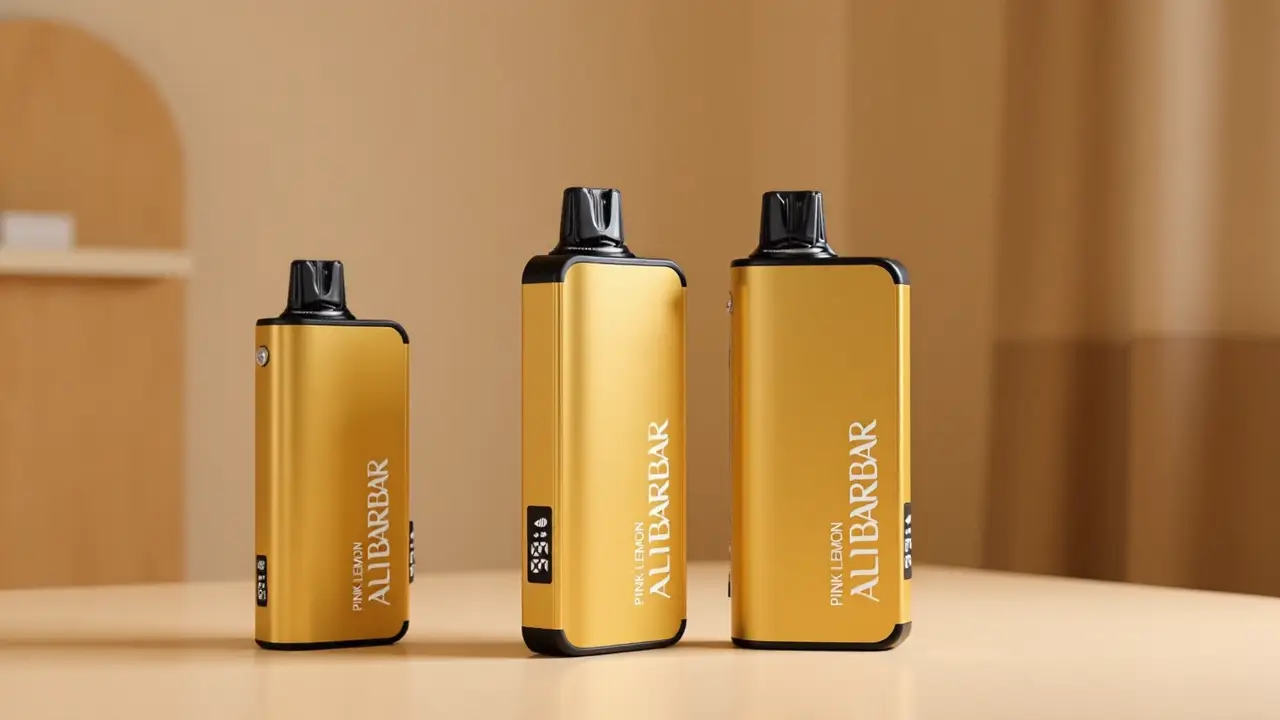
The gap between the printed figure and the user’s experience isn’t necessarily a sign of false advertising. It is the result of a series of engineering decisions, behavioural variables, and industry measurement conventions that are rarely explained in a way that allows an adult to make an informed evaluation. This article sets out to do exactly that. It examines the factors that determine how a 6000‑puff rating translates into days, weeks, or sometimes far fewer moments of use. Along the way, it references the design principles visible in the ALIBARBAR range — not as an endorsement, but because the brand’s documented approach to power management, status transparency, and modularity provides a useful lens through which to understand why some devices deliver more predictable longevity than others. For those looking to explore these devices with full specification transparency, OZVAPE Shop has structured its platform around factory‑certified inventory and standardised product information.
Understanding the Engineering Behind Puff Count Claims
A puff count is not a laboratory measurement of time. It is a design estimate, rooted in a specific set of test parameters. To understand why two devices with the same rating can yield drastically different lifespans, you need to examine the underlying architecture and the assumptions built into the rating itself.
How Industry Puff Counts Are Typically Derived
Most manufacturers test their devices under controlled conditions: a standardised puff duration of around one to two seconds, a fixed interval between activations, and a fresh power cell maintained within an optimal voltage window. These tests are usually run continuously, without the thermal cycling and resting periods that characterise everyday use. Consequently, the advertised figure represents a best‑case scenario where every variable is optimised. The moment you deviate — drawing longer, pausing less, allowing the device to cool unevenly — the actual count delivered will shift.
This is not unique to any one brand. It is an industry‑wide convention. What distinguishes more consistently performing devices is how they manage the degradation that occurs when real‑world conditions depart from the test bench.
Internal Architecture and Its Relationship to Duration
The ability of a device to deliver a predictable number of draws before its output becomes unsatisfying is governed primarily by three interconnected systems: the energy source, the reservoir of consumable material, and the heating element configuration.
Battery capacity and output regulation form the foundation. A cell that cannot maintain a stable voltage over its entire discharge curve will cause the heating element to perform inconsistently, often triggering the user to draw longer or more frequently to compensate. That behaviour accelerates consumption, eating into the puff count. Devices that incorporate basic power regulation — even a simple constant‑voltage circuit — tend to yield a number closer to the rated figure because they do not force the user to adapt their habits as the cell weakens.
Reservoir volume and material delivery are equally important. A 6000‑puff device typically contains enough consumable material for those draws under test conditions. However, if the delivery mechanism allows flooding or dry wicking during periods of heavy use, material is wasted or only partially utilised. A well‑engineered delivery architecture ensures that nearly all of the reservoir reaches the heating element in a vaporisable state, leaving little residual liquid trapped in places the heating element cannot reach. This is where design choices around internal geometry and wicking material make a measurable difference.
Heating element surface area and temperature control influence consistency. If the element runs too hot, it vaporises material faster but also risks altering the flavour earlier than expected, prompting disposal before the reservoir is empty. If it runs too cool, the user may not feel satisfied and will draw more frequently, again reducing the effective puff count. The most predictable designs aim for a narrow thermal window that matches the designed draw rate.
User Behaviour: The Dominant Variable
No matter how carefully a device is engineered, the user’s habits account for the largest variation in real‑world duration. Consider three common profiles:
A user who takes short, infrequent draws with long rests between sessions will typically exceed the rated puff count, sometimes significantly, because the wicking has time to recover and the battery operates in favourable conditions.
A user who takes prolonged draws (three seconds or more) effectively consumes two or three puffs’ worth of material per activation. For this person, a 6000‑puff device might deliver only 2000–2500 usable sessions.
A user who uses the device heavily over a short period, such as during a long social evening, subjects it to thermal stress that can cause premature efficiency losses, reducing the total count by 10–20% even if individual draws are moderate.
Understanding these profiles is the first step toward realistic expectations. The 6000 figure is a starting point, not a fixed allowance.
What the ALIBARBAR Device Family Reveals About Consistency
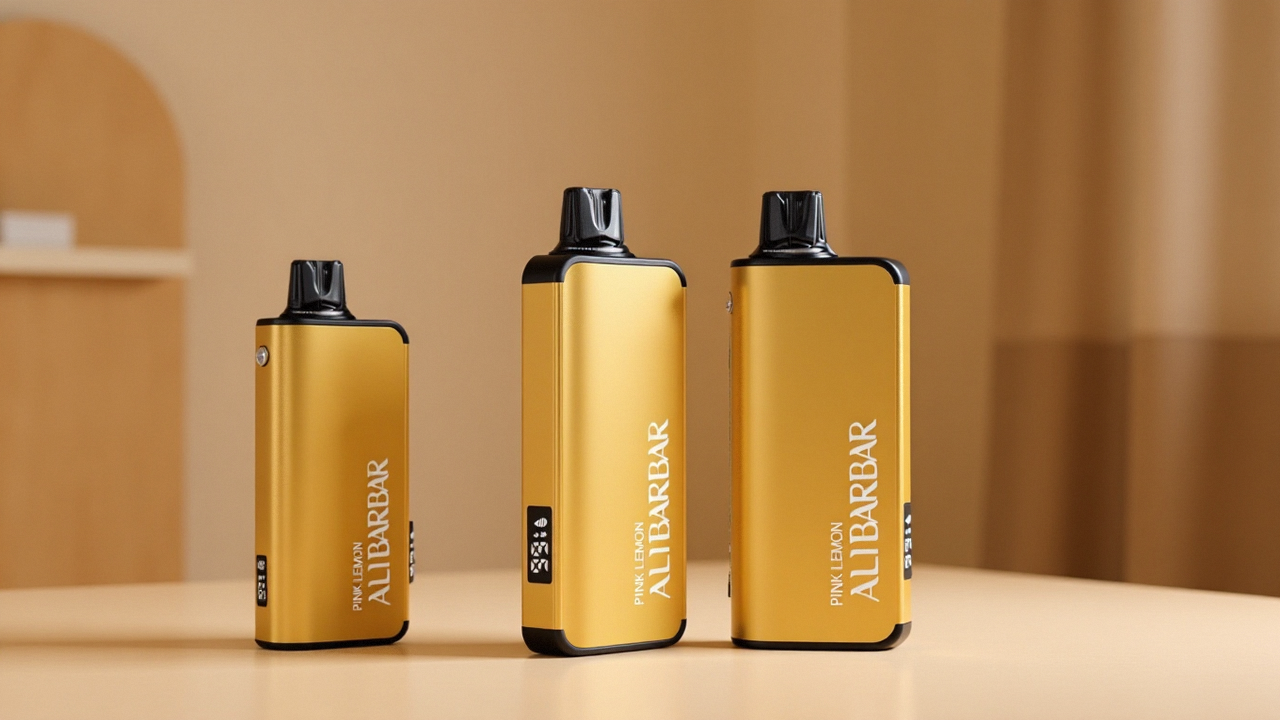
Examining a range of devices built around transparency and modularity helps illustrate why some products behave more predictably than others. The ALIBARBAR collection, available through authorised channels like OZVAPE Shop, does not include a 6000‑puff model at the time of writing — its current lineup spans the INGOT 9000, INGOT 15000, and Ice Adjust 12000, among others. Nevertheless, the engineering philosophy visible in these devices offers a framework for evaluating any puff‑count claim.
Clear status communication is a recurring theme. Several ALIBARBAR designs incorporate visual indicators that do more than blink when the device is activated. They communicate remaining charge with a granularity that allows the user to plan usage rather than being surprised by a sudden shutdown. When a device lacks this transparency, a user will naturally carry a backup or dispose of the unit early, both of which make the effective lifespan feel shorter than it is.
Power delivery stability is another differentiator. In devices where the output remains consistent from the first draw to the last, the user does not alter their behaviour to chase satisfaction. This steadiness means that the puff count is less likely to be undermined by a gradual, invisible decline in performance. ALIBARBAR achieves this in its INGOT series through integrated voltage management that prioritises a flat output curve.
Modularity and replaceability extend lifespan in a different sense. A sealed, single‑use device rated at 6000 puffs is a closed unit; when it reaches its natural end, the entire assembly is discarded. Devices that permit recharging or component replacement — as some higher‑capacity ALIBARBAR units do — can stretch their useful life well beyond the initial material payload. For a user who values longevity per dollar spent, modularity often matters more than the initial puff rating.
These design elements are not unique to ALIBARBAR, but the brand’s consistent application of them serves as a useful benchmark. When you see a 6000‑puff device that lacks clear battery feedback or has no thermal regulation, you can reasonably expect its real‑world performance to fall well short of the printed figure.
A Practical Framework for Estimating Your Own Device’s Lifespan
Rather than relying on the stated puff count alone, you can apply a simple diagnostic method to forecast how long a device will last in your hands.
Identify your typical draw length. Time yourself over ten normal draws and calculate the average. If it is closer to three seconds than one, downgrade the rated puff count by at least 30%.
Map your usage pattern. How many activations do you take in an average hour? Multiply by your waking hours to get a rough daily consumption figure. Be honest: most people underestimate.
Assess the device’s status feedback. Does it show battery level precisely, or just flash when depleted? If feedback is absent, assume you will discard the unit before the reservoir is fully consumed because you will mistrust it.
Consider thermal behaviour. After a session, does the device feel warm? Heat is the enemy of predictable output and accelerates consumable degradation. If the device exhibits rapid heating, reduce the expected lifetime by another 10–15%.
Calculate a realistic range. Take the rated puff count, apply the draw‑length adjustment, then subtract the thermal and feedback penalties. The resulting number will be closer to what you actually experience.
This exercise often reveals that a 6000‑puff device may deliver anywhere from 1800 to 5500 meaningful draws, depending on the blend of hardware quality and user behaviour. It is not a precise prediction, but it frames the evaluation in honest terms.
Common Misconceptions That Lead to Disappointment
Several patterns of thinking cause users to feel let down by a device that is, technically, performing within expected bounds.
Confusing the puff count with a guaranteed lifespan. The number is an estimate, not a warranty. Treating it as a promise of a specific number of days inevitably leads to frustration. Manufacturer testing protocols are rarely disclosed on packaging, so the consumer is left to infer meaning from a number stripped of context.
Ignoring battery degradation in rechargeable units. In devices that can be recharged, the puff count often refers to the consumable material, not the power cell. However, after multiple recharge cycles, the battery’s ability to deliver the required current may diminish, reducing the effective draws well before the reservoir is empty. This is especially true in compact designs where thermal management is constrained.
Assuming all 6000‑puff devices are comparable. Visual similarity does not imply internal equivalence. Two devices with the same rating can have vastly different battery capacities, consumable volumes, and heating element efficiencies. The rating is a marketing figure, not a technical specification. Cross‑referencing battery capacity in milliampere‑hours and reservoir volume in millilitres, when available, gives a far better basis for comparison. Retail platforms that standardise these specifications — a practice that OZVAPE Shop has adopted for the ALIBARBAR range — reduce the guesswork.
Discounting the effect of storage and handling. Devices exposed to high temperatures during shipping or storage may experience a gradual loss of consumable integrity or battery chemical stability, reducing the effective lifespan before the first draw. This is not an issue of brand but of supply chain integrity. Authorised distribution networks, which maintain controlled storage conditions, are more likely to preserve the device’s intended longevity.
Frequently Asked Questions
Q: Can I expect a 6000‑puff device to last me a full week?
A: For a moderate user taking draws of 1–2 seconds, maybe. For a heavier user or someone who draws long, it may last only 3–4 days. Estimate your daily draw count honestly to get a personal projection.
Q: Why does my device seem to lose intensity long before the puff count is finished?
A: This usually indicates battery voltage drop‑off. Without stable power regulation, the heating element runs cooler, producing a weaker output. You are not necessarily out of consumable material; the power source is letting you down.
Q: Do all manufacturers measure puffs the same way?
A: No. There is no universal standard. Testing parameters vary, and some brands use machine‑generated draws that are extremely short and gentle. A 6000‑puff claim from one company may not be directly equivalent to the same claim from another.
Q: Is it better to choose a device with a higher puff count for longer life?
A: Not necessarily. A higher puff count with poor power regulation or inefficient material delivery can lead to a lower useful lifespan than a well‑engineered 6000‑puff device. Modularity and status feedback often matter more than the raw number.
Q: How can I verify that a device is genuine and not a counterfeit with a lower puff count?
A: Purchase from retailers that source directly from authorised distributors and provide verification mechanisms. Authorised channels like OZVAPE Shop maintain documented supply chains that reduce the risk of counterfeit products with substandard internals.
Q: Will recharging a device before it’s fully depleted help extend its life?
A: For devices with lithium‑based cells, partial recharges are less stressful than deep discharges. However, in a sealed unit, the limiting factor is usually the consumable material, not the battery cycle life, so frequent top‑ups won’t meaningfully change the total number of draws.
Q: The packaging says 6000 puffs, but my device stopped working after a few hundred. What went wrong?
A: Sudden failure is rarely about the puff count; it points to a battery fault, a manufacturing defect, or extreme thermal stress. Contact the retailer — if they offer responsive support, they can often arrange a assessment.
Q: Can I store a partially used device for a few weeks and still get the remaining puffs?
A: Possibly, but the consumable material may degrade slightly over time, and the battery will self‑discharge. A small drop in performance is common. Store it in a cool, dry place, and you should recover most of the expected use.
Conclusion
The single number printed on a box is a starting point, not a verdict. How long a 6000‑puff device lasts is a conversation between the device’s internal architecture and the user’s hands — draw length, frequency, thermal resting, and the designer’s attention to power stability all rewrite that number daily. The most useful thing any user can do is stop treating the puff count as a promise and start evaluating the device through the lens of feedback transparency, power regulation, and supply chain integrity.
Retailers that present devices with full, standardised specifications and back them with authorised sourcing — as OZVAPE Shop does for brands like ALIBARBAR — make that evaluation simpler. They remove one layer of uncertainty from a calculation that already has enough variables. In the end, informed users get more consistent results not because they pick the highest number, but because they understand what that number can and cannot tell them, and they choose devices designed to perform honestly under the conditions of real life.