
VAPE FAQs
How Long To Stop Craving Vape?
Aug
It rarely begins the way most people expect. The question “How long until I stop craving?” surfaces not as a theoretical enquiry but as a quiet, persistent frustration—often felt at 3 p.m. on a Tuesday, when everything else is under control yet the familiar hollow sensation refuses to lift. The answer, uncomfortable as it may be, is that craving duration does not follow a single timetable. It is shaped by the tool you are using, the consistency of its output, and the visibility it offers into its own operation. At OZVAPE Shop, we have observed that adults who select a device engineered for predictable delivery and unambiguous feedback tend to describe the arc of their cravings differently from those who settle for whatever is conveniently at hand. This article provides a clear, unvarnished look at the craving timeline and, more importantly, the device characteristics that can make that timeline shorter and less disruptive.
The Craving Timeline as a Function of Device Consistency
Any discussion that treats “nicotine craving” as a purely biological countdown misses half the story. The subjective intensity of a craving is heavily influenced by how steadily your body’s receptors are occupied throughout the day. A device that surges and then fades introduces its own kind of instability—sharp peaks followed by troughs that the brain reads as a deficit, prompting a craving sooner than necessary. Conversely, a device that delivers with minimal variation gives the user something more valuable than a single specification: predictability.
Internal Architecture and Output Consistency
The heating element is not just a replaceable part; it is the nervous system of the experience. In devices where the element is poorly regulated or overdriven early in its life, output degrades subtly over days or weeks. The user unconsciously compensates by drawing differently or reaching for the device more often, mistakenly interpreting the change as a personal failure of willpower. A well-engineered thermal management system, by contrast, maintains its setpoint through the majority of the device’s rated life, giving the user a steady baseline against which to measure genuine craving, not a phantom triggered by irregular hardware.
What this means in practice: if you are on a reduction plan and your device’s output drifts by even 10-15% over the course of a charge cycle, you may feel increasing urgency that has nothing to do with actual need. The craving that arises is real in its discomfort but avoidable in its origin.
Power Management and Status Transparency
The frustration of a device that quits without warning is more than logistical—it creates a low-grade anxiety that can amplify craving sensations. When a user cannot tell whether a device has 8 hours or 8 minutes of function remaining, the rational response is to carry a spare. The psychological cost is a constant, low-level vigilance that keeps the thought of use front of mind, exactly the opposite of what someone trying to quieten cravings needs.
A device that communicates its status clearly—through meaningful battery indicators or puff remittance data—reduces that mental load. The user is no longer guessing, so the device recedes into the background. And when the device does reach its endpoint, it does so without a panic-inducing surprise. Many adults report that the single biggest change in their craving pattern came not from a new strength of nicotine but from switching to a device that finally told them the truth about its remaining charge.
Physical Design and Prolonged Comfort
Cravings are not only chemical. A mouthpiece that feels sharp after twenty minutes, a metallic finish that becomes slippery in warm hands, a device too heavy to carry comfortably in a shirt pocket—these small irritations accumulate, pulling attention back to the act itself. A device designed with chamfered edges, a textured grip surface that resists pocket abrasion, and an oral profile shaped for extended contact makes it easier to consume only what is needed and then put the device down. When comfort is absent, people tend to rush, leading to uneven intake and the return of wanting sooner than expected.
Modularity and Stepped Reduction
The most overlooked variable in craving duration is the user’s ability to ratchet down delivery without buying an entirely new device. Sealed, disposable units offer no granularity; you accept the factory-set output until the device is exhausted. Modular architectures—where power output, airflow, or consumable strength can be swapped—let a user create a series of small, almost imperceptible reductions. Because the shifts are minor, the body adapts with less resistance, and the acute craving phase that follows a large drop is never triggered. Over a period of weeks, the cumulative effect can be significant, yet the user never felt the abrupt discontinuity that traditional cessation models assume.
How the ALIBARBAR Collection Is Engineered Around These Principles
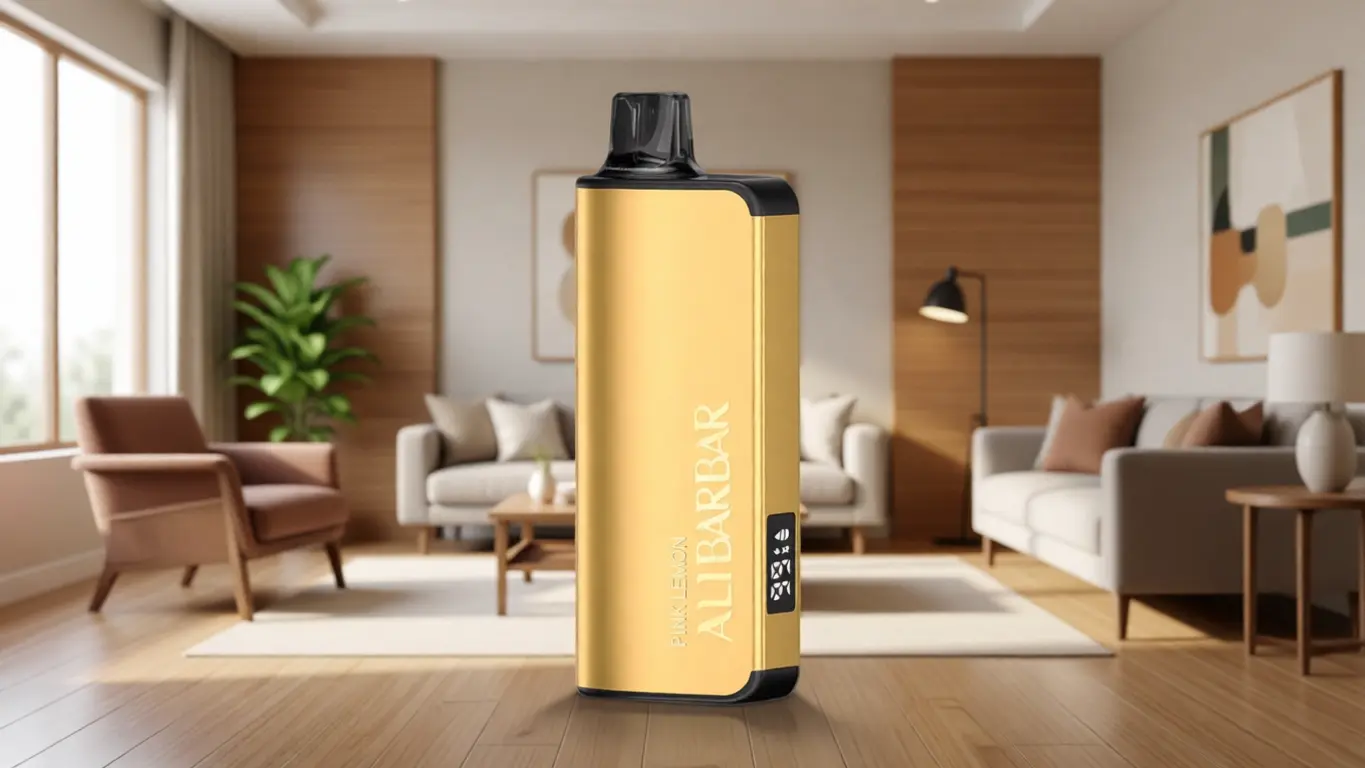
Design philosophy rarely makes headlines, but it shows unmistakably in daily use. The ALIBARBAR family, developed through years of field observation, addresses the craving cycle not through marketing language but through a series of deliberate hardware decisions that any informed user can verify.
Consistency across charge cycles: The INGOT 9000 and INGOT 15000 models employ a thermal regulation algorithm that prioritises stability over maximum initial intensity. The heating element is not permitted to exceed a narrow temperature window, which means the first draw of a fresh unit and the last draw before recharge are noticeably similar. Users who track their daily usage often report that they simply forget about the device for longer stretches—a sign that the craving reflex is not being artificially triggered by hardware drift.
Unambiguous status feedback: Instead of a blinking light that can mean three different things depending on cadence, ALIBARBAR devices provide a direct readout of remaining charge and, on several models, an approximate count of consumable life. This transparency eliminates the “I should top up now just in case” behaviour that keeps nicotine on the mind.
Tactile durability for daily carry: The surface coatings selected for the INGOT and Ice Adjust lines are specifically tested against pocket abrasion. The matte finish resists the polished wear spots that cheap metallic paints develop within a week. A device that still looks and feels intact after a month of daily handling encourages a more deliberate, less compulsive interaction pattern.
Adjustable output for user control: The Ice Adjust 12000 offers stepped airflow and output tuning without requiring a new unit. By incrementally adjusting airflow restriction, an adult can subtly alter the sensation of each draw, which has a measurable effect on how rapidly consumables are consumed. This feature, often overlooked in specifications, hands a practical reduction tool to the user without any additional cost.
None of this should be read as a promise. Engineering determines conditions, not outcomes. But the conditions matter enormously when you are trying to understand your own cravings.
A Practical Framework for Evaluating Whether Your Device Is Helping or Hurting
Before asking how long cravings will last, ask whether your current device is making the timeline longer. The following diagnostic questions, drawn from extended observation at OZVAPE Shop, require no technical instruments—only honest attention.
Stability check: Over the past week, have you noticed that you reach for the device more urgently during the final third of its charge? If yes, the output profile is likely inconsistent, and some of what you call craving is a predictable hardware artefact.
Status check: Can you tell, within a 10% margin, how much functional life remains? If not, you are carrying a cognitive burden that maintains cue-reactivity. Swap to a device with explicit remaining-life feedback.
Wear check: Examine the body, mouthpiece, and any prominent edges. Is there visible degradation that makes holding or using the device less pleasant than when it was new? Surface friction and oral comfort influence how often you use a device, and a unit that has become unpleasant can inadvertently increase craving frequency as you try to extract the same satisfaction from a compromised tool.
Taper feasibility: Does your device allow you to make any downward adjustment—strength, airflow, output—without discarding the entire unit? If the only path to a lower level is a new purchase, you face an all-or-nothing switch that can prolong the craving adjustment period.
These are not abstract ratings. They translate directly into the felt experience of craving duration. A user who can answer “yes” to all four is likely already experiencing shorter craving windows than someone who cannot.
Common Errors That Extend the Craving Phase
Over years of watching how adults select and use their devices, a few patterns appear repeatedly. They are rarely discussed because they invite the uncomfortable conclusion that the user’s own evaluation process, not the product category itself, is the weak point.
Overweighting a single specification. Many buyers fixate on one number—total puffs, maximum battery capacity, nominal strength—and ignore the systems that keep that specification stable over time. A device that promises 15,000 draws but delivers consistent output for only half that span will produce more cravings than a modestly rugged device that holds its performance envelope throughout.
Assuming visual similarity equals internal equivalence. The market is full of devices that look nearly identical from the outside yet house fundamentally different power delivery circuits. A user who replaces a well-regulated unit with a lookalike from an unvetted source may suddenly find themselves craving far more intensely, not because anything changed in their physiology but because the new device’s jagged output is triggering false signals.
Undervaluing modularity in long-term cost and craving management. The initial price of a modular system can appear higher than a stack of disposable alternatives. But when the goal is to step down gradually, the sealed unit actually costs more in physiological disruption. The acute craving that follows an abrupt switch from one fixed strength to a lower one can last days longer than a comparable gradual taper, and that lost comfort is a cost no receipt shows.
Confusing category labels with technical capability. Terms like “adjustable” or “long-life” are used loosely across the industry. A device labeled adjustable may only offer two preset power levels, while a truly adjustable system gives continuous control. Learning to read spec sheets rather than marketing copy is the single most effective defence against unwittingly prolonging your own cravings.
Frequently Asked Questions
Q: What is the typical peak period for cravings after stopping nicotine entirely?
A: Most people report the strongest cravings during the first 3–5 days, with a noticeable decline after approximately two weeks. However, psychological or situational cravings—those triggered by specific environments or habits—can persist for several months and gradually fade.
Q: Can a well-designed device actually make cravings less intense?
A: A device that maintains consistent delivery and provides clear status feedback can reduce the frequency of artefact-triggered cravings, which account for a larger share of daily urges than many users realise. It cannot eliminate the underlying neurochemical adaptation, but it can remove unnecessary amplification.
Q: How do I know if my device is triggering false cravings?
A: Two clear signs: you feel a sudden, disproportionate urge to use the device when the battery is low or the consumable is nearing depletion, and the urge diminishes immediately after charging or replacing the consumable, even though no significant time has passed.
Q: Are modular devices genuinely helpful for reducing over time?
A: Yes, when they offer meaningful adjustment steps. The ability to reduce output or airflow by small increments avoids the shock of a large step-down, which can provoke intense compensatory cravings.
Q: What is the difference between a craving and a habit cue?
A: A craving is typically experienced as a bodily sensation—restlessness, tension, a hollow feeling. A habit cue is situational: finishing a meal, getting into the car, seeing someone else use a device. Both are real, but they respond to different management strategies.
Q: How does surface wear on a device influence cravings?
A: Indirectly. A device that has become unpleasant to hold or use may lead to hurried, less satisfying draws, which in turn can create a sense of incomplete satiation and prompt earlier re‑use. This cumulative effect can make craving patterns appear worse than they are physiologically.
Q: Is it better to taper using a single device or to switch between devices with different strengths?
A: For most people, a single device with adjustable output reduces the variables and makes it easier to track consumption accurately. Switching between devices introduces inconsistency in form factor and delivery, which can confuse the body’s adaptation.
Q: What should I do if I am blaming myself for continued cravings that may be device-related?
A: Start a simple log for three days. Record each urge, the time, and what you were doing. Then cross-reference against your device’s status and age. If a pattern links urges to low charge or device wear, the problem is largely hardware, not willpower.
Q: Where can I find reliable, manufacturer‑certified devices that support consistent delivery?
A: Look for retailers that source directly from authorised supply chains, publish full specifications including output tolerance data, and maintain transparent post‑purchase support. Verifiable authenticity is the first filter.
Q: How long should I expect situational cravings to last?
A: They can persist for months but typically become weaker and less frequent over time. Changing your environment or routine around key triggers—for example, taking a short walk after meals instead of reaching for a device—helps extinguish the cue-response link faster.
Conclusion
The question “How long to stop craving?” is incomplete without asking what tool you are using to navigate that craving. A device that provides honest, stable, and adjustable delivery gives you a timeline governed by your own physiology, not by the hardware’s unpredictability. Every erratic output curve, every ambiguous status light, every surface that degrades after a week in your pocket steals time from that timeline and adds unnecessary discomfort.
At OZVAPE Shop, the focus remains on making the ALIBARBAR range accessible through a documented, authorised channel so that adults can evaluate these devices on their engineering merits, not on marketing promises. The right device is the one that aligns with your actual daily rhythm—not the one with the most sensational claim—and that alignment is the single factor most likely to shorten the distance between where you are and where you want to be.