
VAPE FAQs
How Long Should A 3000 Puff Vape Last?

Aug
It began as a quiet frustration. You selected a device clearly labelled “3000 puffs,” used it steadily for a few days, and then — sooner than felt reasonable — the output weakened and the indicator showed nothing. The count you relied on during purchase had little connection to what you actually experienced. This is not an isolated incident. Many adult users have learned the hard way that puff-count claims are among the least standardised specifications in personal electronic devices. There is no industry‑wide testing protocol, no mandatory verification, and no universal definition of a “puff” — one manufacturer’s puff may be a shallow one‑second draw, while another’s is a deep, sustained pull.
Understanding why these discrepancies occur, and what genuinely determines how long a 3000‑puff device should last, changes how you select, budget, and use your equipment. It also protects you from the lingering unease of having to carry a backup device simply because you cannot trust the one in your hand. At OZVAPE Shop, our role is to provide the structured information that makes such uncertainty unnecessary. This article unpacks the engineering factors behind puff‑count estimates so you can form your own realistic expectations, regardless of which device family you ultimately prefer.
Understanding What Matters: Core Engineering and Design Factors
A puff count is not a promise; it is a projection made under laboratory conditions that rarely match real‑world usage. To determine how long a device will actually serve you, it is more productive to examine four concrete design elements that correlate far more closely with practical lifespan.
Internal Architecture and Output Consistency
The heating element inside a device — usually a mesh or wire coil — degrades with every activation cycle. In a well‑engineered product, the wicking material feeds liquid at a rate that keeps the coil saturated but never flooded. When this balance is maintained, each puff draws a predictable amount of liquid and produces stable vapour. Poorly matched wicking and coil resistance, however, lead to progressive dry spots, scorching, and waste. A device might be technically capable of delivering 3000 draws, but if after 2000 puffs the coil begins to carbonise and the taste turns harsh, the user will naturally discard it early. The practical lifespan becomes 2000 puffs, not 3000.
Why this matters: users frequently report that devices labelled identically behave very differently after the first week. A device with a vertically oriented mesh and generous cotton reservoir tends to maintain its output far longer than one with a simple looped silica wick, even if both are marketed with the same puff number. When you evaluate a new model, ask what coil architecture it uses, not just how many puffs it claims.
Power Management and Status Transparency
A 3000‑puff device typically integrates a lithium‑ion cell of between 400 mAh and 1500 mAh, depending on whether the unit is rechargeable. Puff count is inextricably linked to battery capacity, because every draw requires a burst of power. A 400 mAh cell may run out of energy long before the liquid is exhausted if the coil resistance is low and the draw duration is high. Alternatively, a well‑designed power management board can pace output so that the cell’s discharge curve supports the full liquid volume, but only if the user has visibility into what is happening.
Devices that lack a clear, multi‑stage battery indicator force users to guess. The hidden cost of this ambiguity is substantial: people carry backup units not because they know they need them, but because they do not know they will not need them. Transparent status feedback — whether through a simple LED traffic‑light system or a small digital display — eliminates that second‑guessing and extends the perceived reliability of the 3000‑puff rating.
Physical Design and Material Durability
Puff count is also affected by physical ergonomics. A mouthpiece that becomes uncomfortable after an hour of intermittent use discourages sustained sessions and leads users to switch devices sooner. Surface finishes that flake or show fingerprints after a day in a pocket degrade the perceived value, even if the internal components remain functional. A device that still has liquid but looks worn is often set aside. Durability of the outer chassis, the tightness of the draw‑activated switch, and the clarity of the indicator window all contribute to whether someone will actually use all 3000 puffs.
Furthermore, draw‑resistance variability — some devices are too tight, others too airy — changes how long each puff lasts. A looser draw may encourage longer inhalations, depleting the e‑liquid more rapidly. The manufacturer’s lab test likely used a fixed draw duration and vacuum pressure; your own instinctive pattern may be entirely different.
Modularity and Lifecycle Flexibility
A sealed, single‑use 3000‑puff device is a self‑contained promise. Once the battery dies or the liquid runs out, it goes into a drawer or a recycling stream. There is no way to intervene, no way to recover unused capacity on either side. In contrast, a rechargeable system that allows the user to replenish the power cell — or even replace a pod — can often realise the full 3000 puffs and beyond. The critical difference is not in the marketing number, but in whether the engineering allows you to manage resources yourself.
For users who prioritise cost predictability, a device that can be recharged several times during its liquid life almost always delivers a lower effective cost per puff. But modularity also introduces complexity: you need to remember to charge, you need to verify that the coupling between battery and pod remains clean. The choice is not between “better” and “worse” but between a completely hands‑off experience and one that offers more control.
Applying These Criteria to Real-World Options
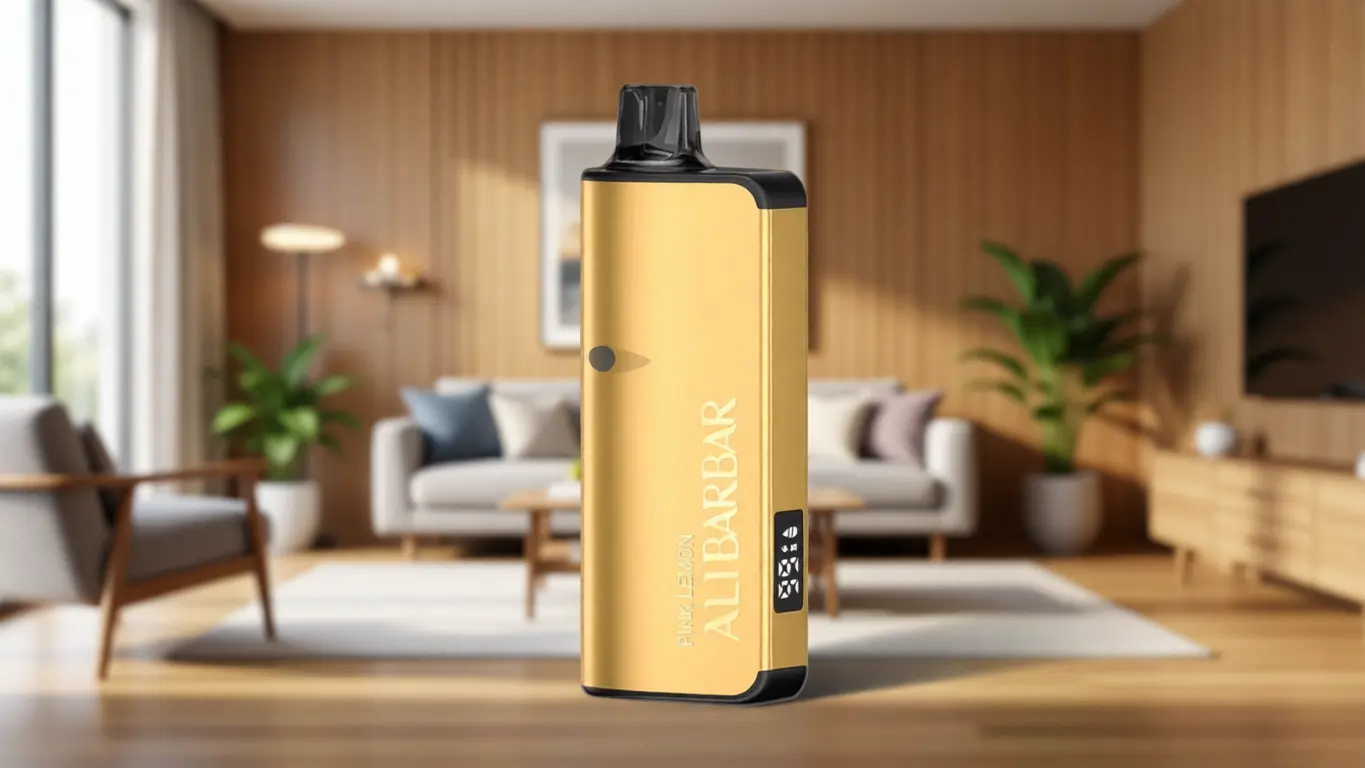
To make these concepts tangible, consider how they surface in a few current device families. The ALIBARBAR range, for instance, includes several models that approach puff‑count claims with different engineering strategies. The INGOT 9000 and INGOT 15000 units use high‑capacity internal batteries and dual‑mesh architectures to maintain consistent vapour production over a very large number of declared puffs. Their status transparency — often a clear digital or multi‑colour indicator — directly addresses the user frustration of not knowing when a device will expire. Meanwhile, the Ice Adjust 12000 introduces user‑controllable airflow, which allows individuals to tweak their own draw length and resistance, meaning that the 12000‑puff claim will track more closely with personal usage patterns because the user can align the device to their habits rather than adapt their habits to the device.
In the broader market, many 3000‑puff devices are built on a simpler template: a 650 mAh sealed battery, a basic mesh coil, and no recharge capability. They will work predictably for a light user who takes short, infrequent draws. A heavy user who takes deep, prolonged draws may exhaust the battery before consuming half the liquid. This disparity does not reflect deception; it reflects the absence of a shared testing standard.
When you browse through specifications on a platform like OZVAPE Shop, what you encounter is not a curated sales pitch but a consistent set of technical parameters — battery capacity, coil type, material composition, charge interface — that allow you to compare devices across the same dimensions. That standardised presentation is a practical tool for reducing the guesswork described above.
A Practical Framework for Evaluation
You do not need an engineering degree to gauge how a 3000‑puff device will behave in your hand. Use these steps, ideally before you commit:
Check the mAh‑to‑puff ratio. Divide the puff count by the battery capacity. A ratio around 2–3 puffs per mAh (e.g., 3000 puffs / 1200 mAh = 2.5) is common for single‑use devices. A lower ratio often indicates a higher‑power coil that will discharge the battery faster; a higher ratio may suggest a very low‑power device or a generous battery.
Identify coil resistance and power. If the manufacturer discloses ohms and wattage, you can estimate how much liquid each puff consumes. Lower resistance (e.g., 0.8 ohms) draws more current and vaporises more liquid per activation than higher resistance (e.g., 1.4 ohms). All else being equal, a 3000‑puff device at 0.8 ohms will go through its e‑liquid noticeably faster than one at 1.2 ohms.
Look for status transparency. Does the device show multiple power levels or just a single blinking light when it is nearly empty? A multilevel indicator gives you time to plan; a binary “dying” signal means you will likely carry a backup.
Decide on rechargeability. If the device cannot be recharged, ask yourself: will I be in a situation where I can afford to have it die without warning? If not, a rechargeable 3000‑puff unit — even if marginally larger — may remove a significant source of daily anxiety.
Common Selection Errors and Industry Observations
Over years of watching how users interact with these devices, several persistent patterns emerge that undermine satisfaction:
Overweighting the puff number alone. A 3000‑puff rating is the headline, but the real story is in the interaction between battery, coil, and liquid reservoir. Users who ignore mAh figures often express surprise when a 400 mAh device claiming 3000 puffs lasts only a day, while a 1000 mAh device with the same puff claim handles a weekend trip comfortably.
Assuming visual similarity indicates equivalent internals. Two devices can share a slender, pen‑style silhouette and yet house completely different power management circuits. One might throttle output to preserve battery life, stretching the liquid further, while the other delivers full power until the battery abruptly cuts off. Appearance is a poor proxy for engineering.
Undervaluing modularity in cost‑per‑use calculations. A low‑cost sealed 3000‑puff unit may appear cheaper at the checkout, but if you consistently discard it with 20–30% of its e‑liquid unused because the battery fails, the effective cost per actual puff can exceed that of a rechargeable alternative that costs more upfront but reaches its full liquid capacity.
Confusing category terminology with technical specifications. Terms like “mesh coil” or “adjustable airflow” are sometimes used as generic quality signals, even when the implementation is minimal. A small mesh strip powered by an under‑sized battery does not behave the same as a full‑surface honeycomb mesh mated with an efficient power board. The presence of a feature matters less than how it is executed.
From an industry perspective, the absence of a standardised puff‑testing protocol is partly structural. Testing laboratories operated by different manufacturers use proprietary draw machines with varying parameters. There is no independent body that audits puff‑count claims. This means that the most reliable information travels not through advertising but through communities of experienced users and retailers who transparently document the specifications that actually predict performance. That is why OZVAPE Shop publishes detailed product data sheets rather than relying on catch‑all marketing language — the intent is to give you the raw material for your own evaluation.
Frequently Asked Questions
Q: What does a “3000 puff” rating actually mean?
A: It is a manufacturer’s estimate, usually derived from a mechanical testing rig that takes short, consistent draws at a fixed voltage. It does not account for human variability in draw length, frequency, or device orientation. Treat it as a rough relative indicator, not a guarantee.
Q: How long should a 3000 puff device last for an average user?
A: If “average” means 150–200 puffs per day, you might expect 15–20 days. However, if the battery is non‑rechargeable and undersized, you could see 7–10 days instead. Heavy users who take long draws may see as few as 5–7 effective days.
Q: Why does my 3000 puff device lose flavour after a week?
A: Coil degradation. Carbon build‑up on the heating element alters the thermal transfer, leading to muted or burnt notes. A device with better wicking and temperature control will delay this effect, but all coils eventually degrade.
Q: Can I recharge a “disposable” 3000 puff device?
A: Only if it is designed with a charging port. Many are sealed and should never be opened or connected to a power source. If you need recharging capability, select a device that explicitly includes it, such as certain ALIBARBAR models with USB‑C ports.
Q: How do I verify that a 3000 puff device is authentic?
A: Purchase from authorised retailers that source directly from factory‑certified distribution channels. At OZVAPE Shop, every ALIBARBAR device comes with traceable batch codes and tamper‑evident packaging so you can confirm provenance independently.
Q: Does puff count change if I use adjustable airflow?
A: Yes. Opening airflow often leads to longer, deeper draws, increasing liquid consumption per puff. Tightening airflow can extend the total number of draws you get, but may also concentrate heat and reduce coil life.
Q: Are 3000 puff devices environmentally worse than modular systems?
A: A single‑use device with a non‑rechargeable battery and sealed body generates more waste per puff than a rechargeable unit that lets you replace only the pod. If waste reduction matters to you, prioritise devices with separate rechargeable batteries or at least recycling programmes.
Q: What should I do if my device clearly fails before reaching 3000 puffs?
A: Document the batch number and return it to the retailer. OZVAPE Shop maintains a local support team that handles such cases against documented factory‑certified performance expectations, not marketing claims alone.
Q: Is there a legal standard for puff‑count claims in Australia?
A: Not at present. The Therapeutic Goods Administration does not regulate puff‑count advertising for these devices. Consumer law requires that products be fit for purpose and match their description, but enforcement relies on documented evidence rather than a prescriptive testing standard.
Q: How can I extend the life of a 3000 puff device?
A: Take shorter, gentler draws. Let the wick recover between puffs. Store the device upright at room temperature. Avoid charging a rechargeable unit in extreme heat or cold. These small habits can add several days of usable life.
Conclusion
The question “How long should a 3000 puff vape last?” has no single answer, and that is exactly the point. Its lifespan is determined not by the figure printed on the box, but by the interplay of coil design, battery capacity, power management, and your own daily habits. A well‑matched combination of these factors can make a 3000‑puff claim feel entirely justified; a mismatched one can make it feel like a fiction.
Recognising this changes how you approach device selection. Instead of searching for the highest number, you begin cross‑referencing mAh, coil resistance, and status feedback. You stop being surprised by early failure and start predicting it — and avoiding it. At OZVAPE Shop, we have structured our entire product presentation around the belief that an informed user is the only kind of user who can truly be satisfied. Whether you ultimately choose a compact single‑use unit or a high‑capacity rechargeable system, the right decision is the one that matches your actual routine, not the one with the most attention‑grabbing number.