
VAPE FAQs
How Long Is A Vape Good For?
May
You pull a device from a drawer—something you bought a while back, maybe a spare that never made it into daily rotation. The packaging is intact. It’s never been opened. The question that immediately surfaces is practical, not academic: Is this still usable? Will it perform the way it should, or has time quietly eroded something essential? These concerns are not trivial. They sit at the intersection of materials science, electrical engineering, and honest supply-chain practices, and they deserve a clear answer.
At OZVAPE Shop{:target=”_blank”}, we’ve spent a considerable amount of time fielding this exact question from adults across Australia. The answer isn’t a simple number of weeks or months—it depends on the architecture of the device, the chemistry inside it, and the conditions in which it has been stored. What follows is a guided walk through the factors that actually determine how long a vape remains good for, structured so you can evaluate any device in front of you with confidence, whether it’s an ALIBARBAR INGOT, a refillable pod system, or something you’ve had sitting in a cupboard for half a year.
Understanding What Matters: Core Engineering and Storage Realities
Longevity in a personal electronic device isn’t a single specification; it’s the outcome of a chain of design decisions. When we talk about “how long is a vape good for,” we’re actually asking about three distinct timelines: the chemical stability of the consumable medium, the retention of electrical charge in the power cell, and the physical integrity of seals that isolate internal components from air and moisture. Each of these can degrade on its own schedule, and their interaction is often what catches users off guard.
Internal Architecture and Chemical Stability
Most portable electronic devices rely on a solution that contains propylene glycol, vegetable glycerin, and, importantly, a range of volatile aromatic compounds. Over time, even at room temperature, these components undergo slow oxidation. Nicotine, where present, can degrade into cotinine and other by-products that alter sensory characteristics. The rate of this degradation is not linear; it accelerates with exposure to heat, light, and oxygen.
Devices with sealed, factory-filled reservoirs—such as the ALIBARBAR INGOT 9000 and INGOT 15000—are designed to minimise oxygen ingress. The reservoir material, often a food-grade PCTG polymer, acts as a barrier that slows but does not entirely stop oxidation. Under controlled storage conditions (stable temperatures, absence of direct sunlight), the chemical stability window for such a sealed unit typically extends well beyond 18 months from the date of manufacture. That’s not an expiration date in the regulatory sense; it’s an engineering reality documented through accelerated ageing tests conducted by reputable manufacturers.
Why this matters: Users who assume that an unopened device from a year ago will taste exactly like a fresh unit are often disappointed. The degradation is rarely dangerous, but it can be noticeable. Understanding this helps set realistic expectations.
Power Management and Battery Chemistry
The lithium-ion cells inside modern vape devices are subject to calendar ageing regardless of use. Even when not cycled, the electrolyte slowly reacts with electrode materials, increasing internal resistance and reducing usable capacity. A device stored at full charge in a hot environment can lose 20% of its capacity in a year; stored at roughly 50% charge in a cool place, the loss might be under 5%.
Pre-charged disposable units, like the ALIBARBAR Ice Adjust 12000, leave the factory with a predetermined state of charge that balances shelf‑life against immediate usability. The battery management circuitry is configured to minimise parasitic drain, but it’s never zero. So when you ask, “How long will this last in storage?” you’re really asking about the quality of the cell’s formation process and the integrity of the protection circuit. A well-engineered device will still deliver a near‑full cycle count after 12 months of reasonable storage; a poorly made one might show significantly reduced runtime after just six.
The practical value of clear status indicators cannot be overstated. If your device gives no feedback about remaining charge or alerts you only when it’s already dead, you’re carrying unnecessary uncertainty. That ambiguity imposes a hidden cost: you bring a backup you might not need, simply because the device refuses to communicate.
Physical Integrity and Seal Durability
Beyond chemistry and electronics, there is the straightforward business of whether the device stays sealed. Mouthpiece caps, silicone plugs, and press‑fit seams all represent potential failure points. A device left in a hot car or in a pocket that gets pressed against hard objects can develop micro‑cracks that admit air. Once oxygen enters, oxidation accelerates dramatically, and leakage can occur.
Material choices matter here. Some surface finishes—soft‑touch coatings, for example—degrade faster under mechanical stress than anodised aluminium or textured polycarbonate. The ALIBARBAR INGOT series employs a continuous‑body construction with a recessed airflow channel that inherently reduces the chance of physical damage to the seal around the reservoir. That’s not marketing; it’s a practical design observation that translates into a longer usable shelf life under less‑than‑ideal handling.
Manufacturer Intended Lifespan and Usage Patterns
Most manufacturers specify a rated puff count—700, 9000, 15000—derived from standardised draw profiles. But a puff in a laboratory is a precisely timed, constant‑pressure event. Real‑world usage varies wildly: a long, slow draw consumes more solution and drains more battery per inhalation than a short, sharp one. Consequently, the usable life of a device in days or weeks is only loosely correlated with that printed number.
The more instructive metric is the actual volume of consumable inside and the efficiency of the heating element. For example, the ALIBARBAR INGOT 15000 contains a known volume of pre‑manufactured solution paired with a mesh coil optimised for linear delivery. Users who take consistent, moderate draws will typically see the device perform steadily until the reservoir is functionally dry, with no mid‑life drop‑off in output consistency. However, if you take deep, rapid successive draws, you may exhaust the solution in fewer total puffs, because each draw is effectively two puffs in terms of consumed mass. Understanding this helps you project real‑world longevity from the stated specifications.
Applying These Criteria to Real-World Options
When you hold a specific device family up against the engineering principles above, the differences become clear. Consider the ALIBARBAR range as a reference case, not because it’s the only one that works, but because its design choices illustrate each factor in a concrete form.
The INGOT 9000 and INGOT 15000 are sealed, pre‑configured units. Their reservoirs are factory‑filled under nitrogen‑blanketed conditions to minimise dissolved oxygen. The power cells are cell‑matched at production to ensure consistent discharge curves. These choices mean that, from a storage perspective, the devices exhibit a predictable shelf life: around 18 to 24 months before noticeable chemical changes occur, assuming ambient storage. After the first draw, the clock speeds up, because oxygen is now inside the chamber, but by then you’re actively using the device, so the degradation timeline merges with the consumption timeline.
The Ice Adjust 12000 takes a slightly different approach. It offers adjustable airflow and a larger reservoir, which shifts the power‑management equation. Users who set tight airflow may consume less per puff, extending the calendar life of a single unit, but they also need to be more careful about storage after opening, because the adjustable mechanism introduces additional potential ingress points. The design accounts for this with tight‑tolerance seals, but it’s still a factor worth noting.
In contrast, refillable pod systems—which rely on user‑filled reservoirs and replaceable pods—offer a different kind of longevity. The power unit itself (the battery and control board) can last for years if the cell is quality and the charging circuit is well‑designed, but the chemical longevity of the consumable is entirely in the user’s hands. If you buy a bottle of solution and leave it half‑used in a warm drawer for six months, you’ll experience far more oxidation than a factory‑sealed device would show over the same period. So the “how long is it good for” answer splits: the device is good for years, but the consumable’s window is much shorter and depends entirely on your handling.
A Practical Framework for Evaluation
If you find yourself staring at a vape of uncertain age, go through this sequence of diagnostic questions. It will give you a far more reliable answer than any generic expiry date.
Is the packaging intact and the device sealed? If the original tamper‑evident wrapper is broken, assume some oxygen ingress has occurred. The timeline shifts from “shelf life” to “accelerated consumption.”
What does the device smell like? A solvent‑like, sharp, or acrid smell is a sign of oxidative degradation. A faint sweetness with the characteristic notes of the original profile is a positive indicator.
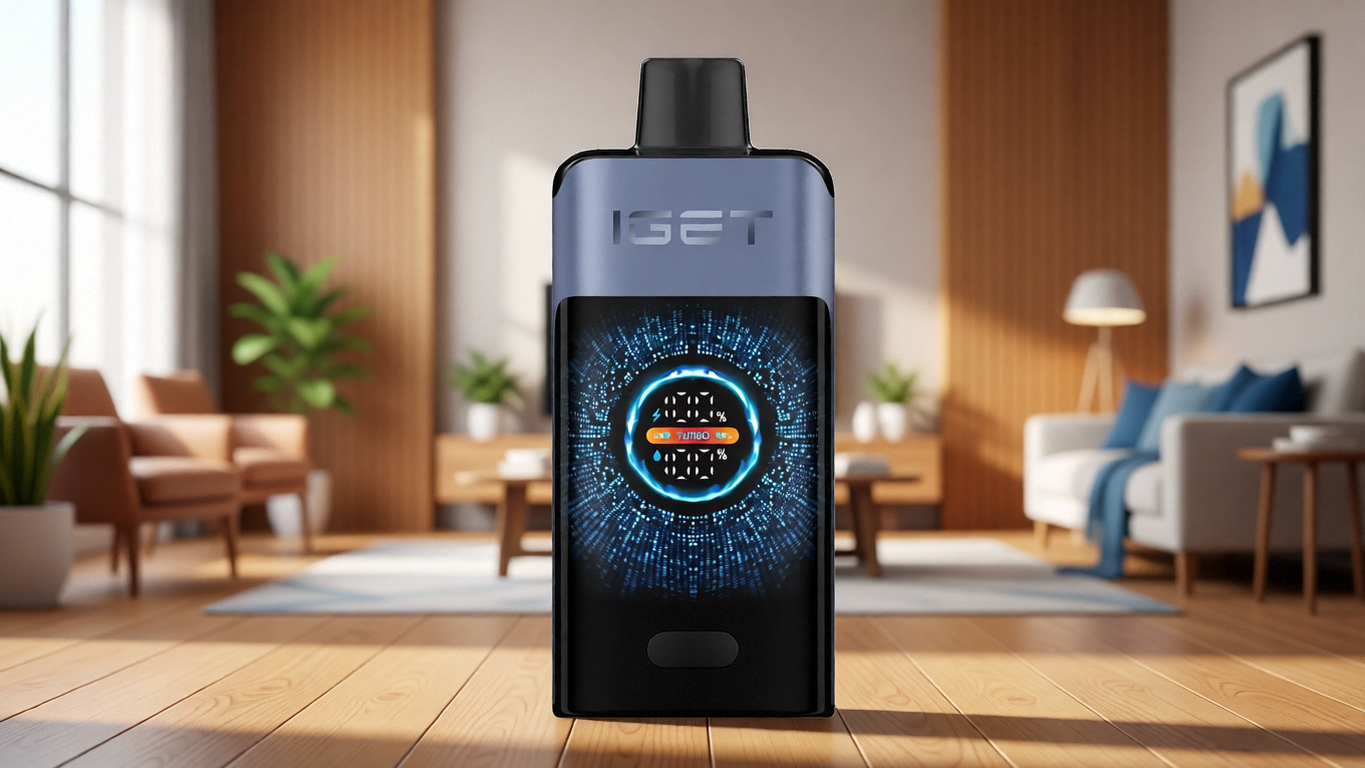
Does the device show any battery‑level feedback? If you can activate it and the indicator shows a healthy charge, you at least know the cell hasn’t dropped below deep‑discharge voltage, which would permanently damage it. If there is no indicator at all, you’re flying blind, and the only way to judge is to use it and see if performance holds.
How has it been stored? If it’s been in a climate‑controlled room, out of direct sun, and away from heat sources, the degradation timeline is likely close to the manufacturer’s expectations. If it’s been in a glove compartment through an Australian summer, expect significantly shortened chemical and electrical life.
What does the manufacturer’s documentation say? Reputable suppliers, such as those sourced through OZVAPE Shop{:target=”_blank”}, maintain clear batch records and can often provide the manufacturing date. Cross‑reference that with the storage conditions for a realistic picture.
Using standardised specification comparisons—volume, cell capacity, rated cycles, and seal design—eliminates much of the guesswork. It’s a tool often overlooked in favour of puff‑count marketing, but it’s far more predictive of real‑world performance.
Common Selection Errors and Industry Observations
In our experience, adults regularly undermine their own satisfaction through a handful of recurring evaluation missteps. These are not failures of the product; they’re failures of the decision framework. Learning to recognise them can save you from disappointment.
Overweighting puff count while ignoring chemical stability. A 15000‑puff device might seem like it should last twice as long as a 7000‑puff device, but if the solution chemistry in the larger unit is less stable—perhaps because the reservoir material allows higher oxygen transmission—the last 3000 puffs could taste noticeably stale. The number on the box tells you nothing about how long the last third of the reservoir will remain palatable.
Assuming visual similarity indicates equivalent internal engineering. Two devices may share the same form factor, but one may use a lower‑grade cell with a steeper self‑discharge rate. When a device that looks identical to a known good performer unexpectedly fails after three months of storage, the problem usually lies in the battery’s formation quality, not in the aesthetic. This is why supply‑chain transparency matters; a retailer that can demonstrate factory‑certified inventory, like OZVAPE Shop does for ALIBARBAR products, reduces the likelihood that you’re holding a grey‑market unit with substandard internals.
Undervaluing modularity in cost‑per‑use calculations. A sealed disposable has a clear upfront cost, but if you use it infrequently and it degrades before you finish it, your cost per usable session skyrockets. A modular system with replaceable pods and a rechargeable power unit may have a higher initial outlay, but the per‑day cost over months can be dramatically lower, because you’re not throwing away unused reservoir capacity. The optimal choice depends on your usage pattern, not on theoretical puff counts.
Confusing category terminology with technical specifications. Terms like “mesh coil,” “adjustable airflow,” or “boost mode” describe features, but they don’t directly tell you how long the consumable remains stable or how well the battery holds a charge. A device can have all the right buzzwords and still be a poor long‑term keeper if the seals are flimsy or the cell chemistry is optimised for low cost rather than low self‑discharge.
From an industry perspective, we observe that many supply chains are optimised for throughput, not for shelf‑life consistency. A distributor may hold inventory for months in non‑climate‑controlled warehouses. A retailer may inadvertently store stock near a heat source. These invisible variables erode the usable life of any device, regardless of the brand, unless explicit quality protocols are enforced. That’s a practical reality rarely discussed in customer‑facing content, but it’s central to understanding why longevity can vary even between two units of the same model.
Frequently Asked Questions
Q: How long can I store an unopened ALIBARBAR device before it starts to lose quality?
A: Based on the engineering of the sealed reservoir and pre‑managed cell, anticipate optimal performance within 18 to 24 months from the manufacture date when stored at room temperature, away from direct sunlight and heat. After that window, some degree of flavour change or slight capacity reduction is possible but not guaranteed.
Q: Is there a formal expiration date printed on these devices?
A: Australian regulations do not mandate a specific expiration date for devices in this category. Reputable manufacturers may include a production date or lot code. At OZVAPE Shop, batch tracking allows us to verify product age upon request.
Q: What are the signs that a stored device has gone bad?
A: A sharp, unpleasant odour (different from the intended flavour profile), visible discolouration of the liquid if the reservoir is transparent, leakage around the seals, or a battery that fails to activate / rapidly depletes are all clear indicators that the device should not be used.
Q: Does refrigerating a device extend its shelf life?
A: Not recommended. Condensation and temperature cycling can compromise seals and battery chemistry. Cool, stable room temperature around 20°C is ideal. Extreme cold can increase internal resistance and damage the cell.
Q: Once I start using a disposable vape, how long will it last before the performance drops?
A: If the device is fairly fresh out of storage, it should deliver consistent output through the majority of the rated puffs. Performance drop‑off near the very end is due to reservoir depletion, not degradation. If you notice a burnt or dry taste midway, it’s often a sign of chain‑vaping (overdriving the wicking), not an age issue.
Q: Can I use a vape that’s been sitting in a drawer for over a year?
A: If it was originally from a reliable source, the packaging is undamaged, the device shows no signs of leakage or degradation, and it activates normally, using it is likely acceptable, though the flavour may have mellowed or changed slightly. Trust your senses; if something seems off, don’t use it.
Q: How does OZVAPE Shop ensure the devices it sells are fresh?
A: We source exclusively from authorised distribution channels and maintain a high inventory turnover. Our storage facilities are climate‑controlled, and we track lot numbers so that no unit sits in our care beyond a reasonable period. This is documented in our operational guidelines, which any customer can ask about.
Q: Do refillable pod devices have a longer overall lifespan than sealed disposables?
A: The power unit itself can last several years if the battery is reasonably maintained. The consumable (e-liquid) shelf life remains similar to factory‑sealed units, typically 12–24 months from manufacture if stored properly. So the system’s longevity is higher, but the per‑pod or per‑bottle chemical stability follows the same rules.
Q: Does the ALIBARBAR Ice Adjust 12000’s adjustable airflow affect how long the device stays good?
A: The device itself remains stable under the same conditions. Adjusting airflow changes the per‑puff consumption, which alters how many puffs you get, not the chemical stability. However, ensure the adjustment collar is not dislodged during storage, as a damaged seal could accelerate oxidation.
Q: What should I do if a device I bought from OZVAPE Shop doesn’t last as long as expected?
A: Contact our local support team with your order details. We’ll review the batch information and storage history. If the performance deviates significantly from documented specifications and the device has not been mishandled, we have a clear process for resolution rooted in our supply‑chain accountability.
Making Informed Choices About Device Longevity
The question “How long is a vape good for?” unravels into a surprisingly rich set of considerations. It’s never just about a single date stamped on a package. It’s about the way heating elements are built, the oxidation‑barrier properties of reservoir materials, the parasitic drain characteristics of power cells, and the unglamorous but crucial integrity of silicone seals. A device that accounts for all of these factors—as the ALIBARBAR engineering team has demonstrably done—gives you a much broader window of reliable use. But even the best design cannot outrun poor storage.
When you access products through a channel like OZVAPE Shop{:target=”_blank”}, you add an additional layer of predictability. The inventory hasn’t baked in a container at a port for months; the lot numbers are tracked; the people on the other end of the support line can actually tell you when a unit was manufactured and under what conditions it’s been kept. That doesn’t make the devices immortal. It simply removes a layer of invisible risk that otherwise clouds the entire evaluation.
Ultimately, the right choice is the one that aligns with your actual routine—how often you use a device, where you store it, and what consistency of experience you’re unwilling to compromise. No number of puff ratings or clever features can substitute for clear thinking about those basics. The informed user, armed with a framework for judging storage and engineering, makes decisions that last.