
VAPE FAQs
How Long Does Vape Smoke Stay In Your System?
Aug
Introduction
Every adult who relies on a personal electronic device for everyday use has, at some point, wondered about the residue that lingers after the visible vapour disappears. It is a question born from practical curiosity — not about health markers or detection windows, but about the physical behaviour of the aerosol inside the device itself. When vapour condenses, it leaves behind moisture, flavour compounds, and sometimes unvaporised liquid in the airway, the heating chamber, and the mouthpiece. The length of time that “vape smoke” (more accurately, condensed vapour) remains in the device system depends entirely on the engineering choices made by the manufacturer — the materials used, the airflow path, the power regulation, and the overall architecture. Understanding this retention behaviour is the first step toward maintaining consistent performance, avoiding flavour degradation, and knowing when a device genuinely needs attention.
This article is written from the perspective of an industry observer. It explains the mechanisms behind internal residue accumulation, provides a framework for evaluating how different device designs handle this issue, and offers practical guidance for users who want their equipment to perform predictably over its intended lifespan. OZVAPE Shop, as a dedicated platform that documents these engineering details transparently, offers a useful reference point for accessing devices that allow users to monitor and manage internal conditions.
Understanding What Matters: Core Engineering and Design Factors
The question “how long does vapour stay in the system” cannot be answered with a single number because every device is a distinct thermal and fluidic system. Three interdependent factors govern residue persistence: the heating element’s architecture, the power management logic, and the physical material choices. Each of these can be evaluated independently before purchase, which gives users real control over their long-term experience.
Internal Architecture and Output Consistency
The heating element configuration determines how completely the liquid is converted into aerosol and how much unvaporised material remains behind. Devices using porous ceramic cores tend to retain less residual liquid in the immediate heating zone because the material distributes heat evenly across a larger surface area, reducing hot spots that cause localised charring. Cotton-based wicking systems, while excellent at capillary transport, can absorb and hold leftover liquid between puffs, especially if the power output drops toward the end of the device’s rated life.
A well-engineered thermal management system maintains a consistent operating temperature band across the device’s usable life. This means the aerosol remains homogeneous, and condensation within the airway is minimised. Signs of poor architecture include a noticeable change in draw resistance after the first third of usage, or a progressively heavier flavour that hints at accumulated residue.
Power Management and Status Transparency
Power-source calibration directly affects how much material lingers. If a device reduces power output as the battery depletes without clearly communicating this, the user continues drawing at the same pace while the heating element operates below its optimal range. This produces incomplete vaporisation, and the vapour that does form condenses more readily inside the chamber.
Clear status indicators — such as a real-time battery gauge or a consistent colour-coded output level — allow the user to adjust their draw technique or replace the device before performance degrades. When status is ambiguous, the user operates blind and will naturally compensate by drawing harder or longer, which accelerates residue build-up. The hidden cost of this ambiguity is more frequent cleaning cycles and a shorter overall lifespan for the unit.
Physical Design and Material Durability
Beyond aesthetics, the finish and internal geometry of a device determine whether residue can be easily removed or whether it becomes trapped. Hard polymer or metal walls with smooth, non-porous surfaces allow residue to be wiped or rinsed away if the device is designed for maintenance. Textured or matte finishes on internal surfaces can trap finely dispersed aerosol particles, creating a permanent film that alters flavour over weeks of use.
Mouthpiece contour also matters: a narrow, long airway promotes condensation before the vapour reaches the user, while a shorter, wider path reduces internal surface area for deposition. Users who prioritise long-term flavour consistency should look for devices with repairable or replaceable mouthpiece sections, as these components accumulate the most detectable residue.
Modularity and Lifecycle Flexibility
The most practical way to manage residue is to design the device so that the user can isolate and replace the affected components. Sealed, single-use units force the user to discard the entire device when performance declines. Rechargeable systems with replaceable pods or cartridges allow the user to reset the internal environment without replacing the power source. Fully modular architectures — where the heating element, airway, and mouthpiece are each independently replaceable — give the user maximum control over residue accumulation.
Each architecture involves trade-offs. Sealed units are simpler and often more compact. Replaceable-component systems offer longer usable life per unit of material consumed. The right choice depends on whether the user values absolute convenience or the ability to maintain peak performance over many refills.
Applying These Criteria to Real-World Options
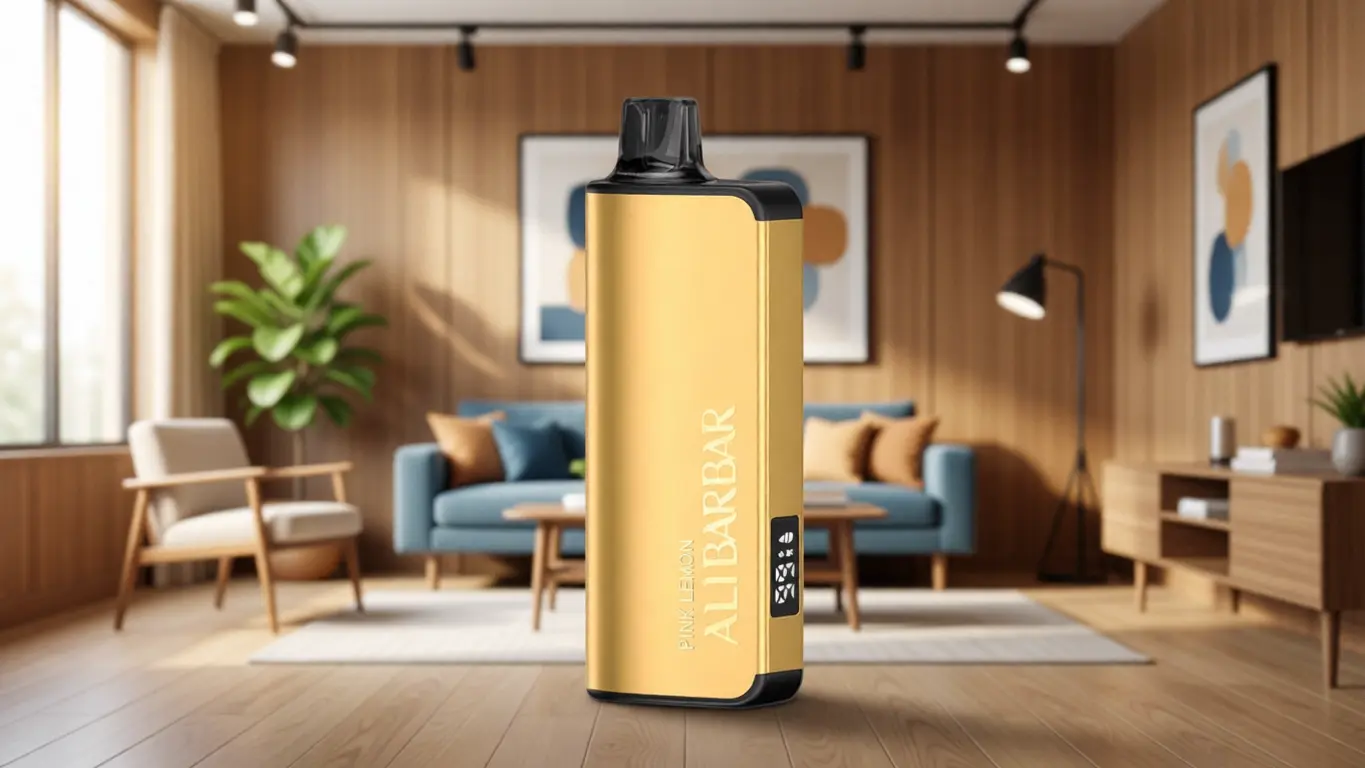
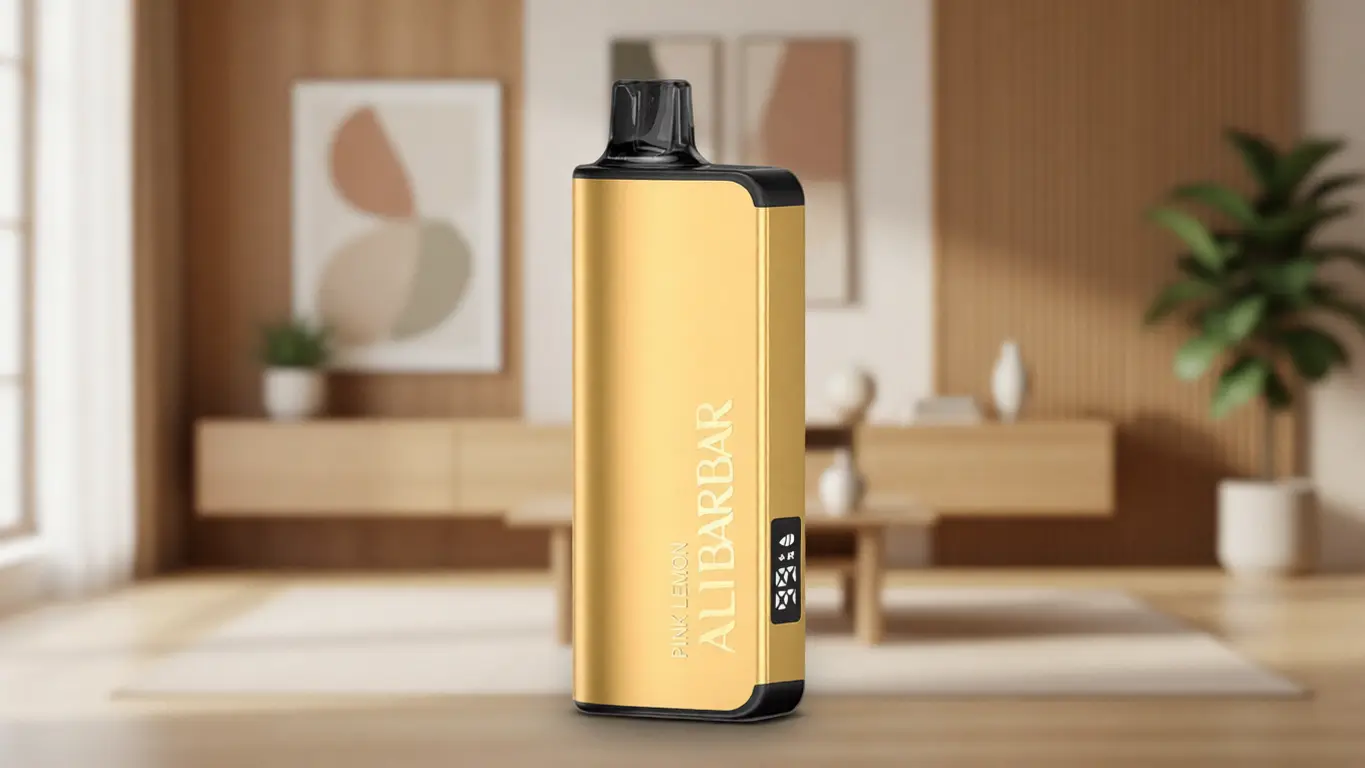
The engineering principles outlined above become concrete when examined across actual device families. Consider the ALIBARBAR series as a reference point for how deliberate design choices address residue management. The INGOT 9000 and INGOT 15000, for example, integrate a ceramic-based heating core calibrated to maintain output consistency until the liquid level reaches its minimum. The power management system uses a stepped indicator that changes colour as the battery depletes, so the user knows exactly when the operating temperature shifts. This transparency reduces the likelihood of incomplete vaporisation and the condensation that follows.
The Ice Adjust 12000 takes a different approach — it uses a variable airflow mechanism that allows the user to tune draw resistance, which in turn affects how much vapour condenses in the airway at different power levels. For situations where maximum flavour preservation is the priority (such as a long social event), a wider airflow setting can be selected to reduce internal dwell time and thus residue formation.
For comparative perspective, devices from established manufacturers such as SMOK (with their mesh coil designs) and Vaporesso (with their COREX technology) also address vapour condensation, but through different material sets and heating geometries. SMOK’s mesh elements provide rapid heat-up that improves conversion efficiency, though users report that the cotton-based wicking can hold residual liquid if the device is left unused for several days. Vaporesso’s ceramic cores offer a smoother thermal profile but are less tolerant of thick liquid compositions. None of these approaches is inherently superior — each favours a different balance between conversion efficiency, flavour clarity, and maintenance frequency.
The key insight for the user is that residue behaviour is not random. It is a predictable outcome of specific engineering trade-offs. By identifying which design features a given device employs, the user can estimate how often they will need to clean or replace components, and whether the device will maintain its intended performance profile over its full rated life.
A Practical Framework for Evaluation
To assess any personal electronic device for its residue management characteristics, use the following step-by-step methodology. These questions are designed to be answered from publicly available specifications or from a few minutes of hands-on inspection.
Step 1: Identify the heating element material.
Is it porous ceramic, woven mesh, or fibre-based?
Does the manufacturer specify an operating temperature range?
A ceramic or mesh element generally indicates higher conversion efficiency and lower residual liquid.
Step 2: Check the power management interface.
Does the device provide a clear, unambiguous indication of remaining power?
Is the indicator graduated (multiple levels) or binary (on/off)?
A graduated indicator allows you to adjust your draw technique before performance degrades.
Step 3: Examine the airway geometry.
Is the vapour path short and wide, or long and narrow?
Can you access the internal airway for cleaning?
A short, cleanable path reduces the surface area available for condensation.
Step 4: Determine the modularity level.
Is the device single-use, rechargeable with a replaceable pod, or fully modular?
Does the manufacturer sell replacement mouthpieces or heating elements separately?
Higher modularity means you can reset residue accumulation without replacing the entire device.
Step 5: Review the device’s rated lifespan in terms of usage cycles, not calendar days.
A device rated for 9000 puffs will behave differently in the last 1000 puffs than in the first 1000.
Look for user observations about when performance changes occur. If the consensus points to a specific usage milestone, plan your cleaning or replacement schedule accordingly.
Step 6: Verify that the device’s specifications are standardised across retail sources.
Inconsistent specifications (different puff counts or coil resistance values depending on where you look) indicate poor documentation, which often correlates with inconsistent engineering.
Standardised specification comparison tools, such as those provided by OZVAPE Shop, reduce decision friction by presenting verified data in a uniform format.
Common Selection Errors and Industry Observations
Even experienced users make systematic errors when evaluating how a device handles internal residue. These mistakes arise from incomplete information or from applying assumptions that do not match the engineering reality.
Error 1: Overweighting puff count while ignoring conversion efficiency.
A device that claims 15000 puffs but uses a low-temperature heating element will produce incomplete vapour for much of its life. The user experiences a gradual decline in satisfaction long before the liquid is depleted. Puff count is meaningless without a corresponding specification for the heating element’s operating parameters.
Error 2: Assuming visual similarity indicates equivalent internal engineering.
Two devices that look nearly identical on the outside may have entirely different heating architectures. The shell is designed for ergonomics and aesthetics; the internal engineering determines residue behaviour. Judging by exterior alone leads to unpredictable performance outcomes.
Error 3: Undervaluing modularity in cost-per-use calculations.
A cheaper sealed device that must be discarded after residue degrades flavour may actually cost more per satisfying session than a modular device that costs more upfront but allows the user to replace only the affected component. The true cost-per-use must account for the frequency of replacement due to residue accumulation, not just the initial price.
Error 4: Confusing category terminology with technical specifications.
Terms like “mesh coil,” “ceramic core,” or “adjustable airflow” are category descriptors, not performance guarantees. Two devices using “ceramic core” may differ in pore size, density, and thermal conductivity, producing dramatically different vapour conversion rates. Users should seek quantitative specifications (operating temperature range, resistance tolerance) rather than relying on category labels alone.
Industry observation: The market has moved toward higher puff counts and more compact form factors in recent years. This creates a tension: compact devices have less internal volume for residue to settle without affecting airflow, while high puff counts require sustained thermal stability over more usage cycles. Manufacturers that invest in precision power management and user-accessible cleaning mechanisms are better positioned to deliver consistent satisfaction over the device’s full rated life. Conversely, devices that prioritise absolute size reduction over internal engineering overhead tend to show performance degradation earlier in their stated lifespan.
Frequently Asked Questions
Q: Does residue inside a device pose any safety risk?
A: In well-engineered devices using food-grade materials and tested heating elements, the residue consists of condensed flavouring compounds and base liquids. It is not hazardous in normal use. However, accumulated residue can harbour bacterial growth if the device is stored in a warm, damp environment for extended periods. Regular cleaning or component replacement is recommended.
Q: How often should I clean a rechargeable device’s airway?
A: For moderate daily use (approximately one full cycle per day), inspect the mouthpiece and airway every two weeks. If you notice a change in draw resistance or a dulling of flavour, clean immediately. For modular devices, replacing the mouthpiece every four to six weeks maintains optimal performance.
Q: What is the best way to clean a sealed device?
A: Sealed devices are not designed for internal cleaning. The most effective approach is to store the device upright when not in use, which allows any condensation to drain naturally toward the bottom of the chamber. Avoid storing a sealed device in a pocket or bag where it may be jostled, as this can redistribute residue.
Q: How can I tell if residue has built up enough to affect performance?
A: The most reliable indicator is flavour change. If the vapour tastes noticeably different from the first ten puffs — often described as “heavier,” “muted,” or “slightly burnt” — residue has accumulated. Draw resistance may also increase slightly. If both changes occur simultaneously, the device has reached its performance limit and should be replaced or serviced.
Q: Are devices with replaceable pods more resistant to residue issues?
A: Yes, because the pod (which contains the fluid chamber and often the heating element) can be swapped when flavour degrades. The power unit remains unaffected. This modular approach effectively resets the residue clock with each pod replacement, extending the overall lifespan of the device.
Q: Does airflow adjustment affect residue accumulation?
A: Significantly. A more open airflow moves vapour through the device faster, reducing the time for condensation to occur on internal surfaces. A more restricted airflow increases dwell time and therefore residue formation. Users who prioritise flavour clarity should use the widest airflow that still produces the desired vapour volume.
Q: Where can I find verified specifications for a device’s heating element?
A: Look for sources that publish standardised technical data sheets, not just marketing descriptions. Authorised retail platforms such as OZVAPE Shop provide consolidated specifications that include heating element type, resistance range, and operating temperature where available. Cross-referencing multiple trusted sources helps confirm accuracy.
Q: What should I do if a device performs well initially but degrades within a week?
A: This pattern usually indicates that the power management system is not maintaining consistent output as the battery depletes. Check the device’s status feedback. If it provides no warning before performance drops, consider replacing the device with one that has graduated power indicators. In the meantime, draw gently and consistently to reduce the load on the heating element.
Q: Is there a difference in residue behaviour between high-nicotine and low-nicotine formulations?
A: The focus here is on device engineering rather than liquid composition. However, formulations with higher viscosity (typically those with higher vegetable glycerin content) condense more readily inside the airway. Devices designed with wider, shorter vapour paths handle these formulations better than narrow, long-path designs.
Q: Can a device’s residue behaviour be improved after purchase?
A: Limited improvements are possible. Storing the device upright, cleaning accessible surfaces with a dry cotton swab, and avoiding rapid, forceful draws can reduce accumulation. For sealed devices, these are the only available measures. For modular devices, replacing the pod or mouthpiece is the most effective solution.
Conclusion
The length of time vapour-derived residue remains inside a device system is not a mystery — it is a direct consequence of engineering decisions made during design. Heating element material, power management transparency, airway geometry, and modularity all determine how much condensation accumulates and how quickly performance degrades. Users who understand these relationships can select devices that match their maintenance habits and usage patterns, rather than relying on trial and error.
Informed evaluation reduces frustration. Instead of wondering why a device that performed well on day one has become inconsistent by day five, the knowledgeable user recognises the design factors at work and plans accordingly — whether that means cleaning a mouthpiece, replacing a pod, or choosing a different architecture for their next device.
For those seeking devices that document these engineering details transparently, OZVAPE Shop provides a platform where specifications are standardised and information is prioritised over promotion. The goal is not to sell a particular solution, but to equip the adult user with the knowledge to make a choice that aligns with their actual routine. Because the right device is the one that stays out of your way — delivering consistent performance without demanding constant attention or guesswork.