
VAPE FAQs
How Long Does The Vape Smell Last?
Sep
Ask ten people how long vape aroma lingers, and you will get ten different answers. Some insist the scent vanishes within seconds. Others report catching faint traces hours later. Both groups are correct — and both are describing different phenomena under the same label.
The confusion stems from conflating two distinct things: the airborne aroma that dissipates rapidly and the residual molecular traces that settle on surfaces. Understanding the difference matters not for pedantic reasons but because it directly affects how you manage your environment, whether at home, in a vehicle, or while moving through shared spaces.
This article breaks down the actual mechanics of vape scent persistence — what determines it, how to measure it honestly, and what you can realistically expect from different device types and use scenarios. The goal is straightforward: replace anecdote with a working framework you can apply to your own situation.
Understanding Scent Persistence: A Matter of Physics and Chemistry
The question “how long does the smell last” cannot be answered with a single number because no single scent exists. What we perceive as “vape smell” is actually a combination of several components, each with its own evaporation rate and surface adhesion characteristics.
The Three Components of Perceived Aroma
Base liquid carriers — typically propylene glycol (PG) and vegetable glycerin (VG) — produce a faintly sweet, slightly chemical scent when heated. PG evaporates faster than VG, which means blends with higher PG ratios tend to dissipate more quickly from the air, though they may be more noticeable initially.
Flavoring compounds vary enormously in molecular weight and volatility. Citrus and mint-based profiles, built from smaller molecules, generally disperse faster than cream, custard, or bakery notes. A bright lemon aroma may be undetectable within 60 seconds in a ventilated room; a butter-toffee profile can leave molecular traces that persist considerably longer.
Oxidation byproducts form when heated liquid interacts with oxygen. These compounds contribute to the “used” quality that distinguishes fresh vapour from lingering air. Their concentration depends on device temperature, airflow design, and how thoroughly the liquid is vaporised.
Airborne vs. Surface Residual Scent
This distinction is where most misunderstandings originate.
Airborne scent represents the particles still suspended in the air. In a standard room with moderate ventilation, these particles dilute below perceptible thresholds within 30 seconds to three minutes. A single exhale in an open space is typically undetectable by a non-user within that window.
Surface residual scent refers to particles that have settled on fabrics, upholstery, walls, and other porous materials. These compounds do not evaporate rapidly. They can remain for hours or, in enclosed spaces with repeated use, accumulate over days. The nose pressed against a jacket collar may detect the same scent the open air lost five minutes earlier.
The table below summarises the typical persistence ranges for each component under standard indoor conditions:
| Component | Airborne Persistence | Surface Persistence | Key Variable |
|---|---|---|---|
| PG/VG base | 30–90 seconds | 15–45 minutes | Blend ratio |
| Flavor compounds | 45 seconds–3 minutes | 30 minutes–4 hours | Molecular weight |
| Oxidation byproducts | 60 seconds–2 minutes | 1–8 hours | Device temperature |
| Complete scent profile | 1–5 minutes | 1–6 hours | Ventilation & materials |
What Determines Scent Duration in Practice?
Four factors exercise disproportionate influence over how long vape aroma remains detectable. Understanding them allows you to predict and manage scent persistence without guesswork.
Device Architecture and Output Characteristics
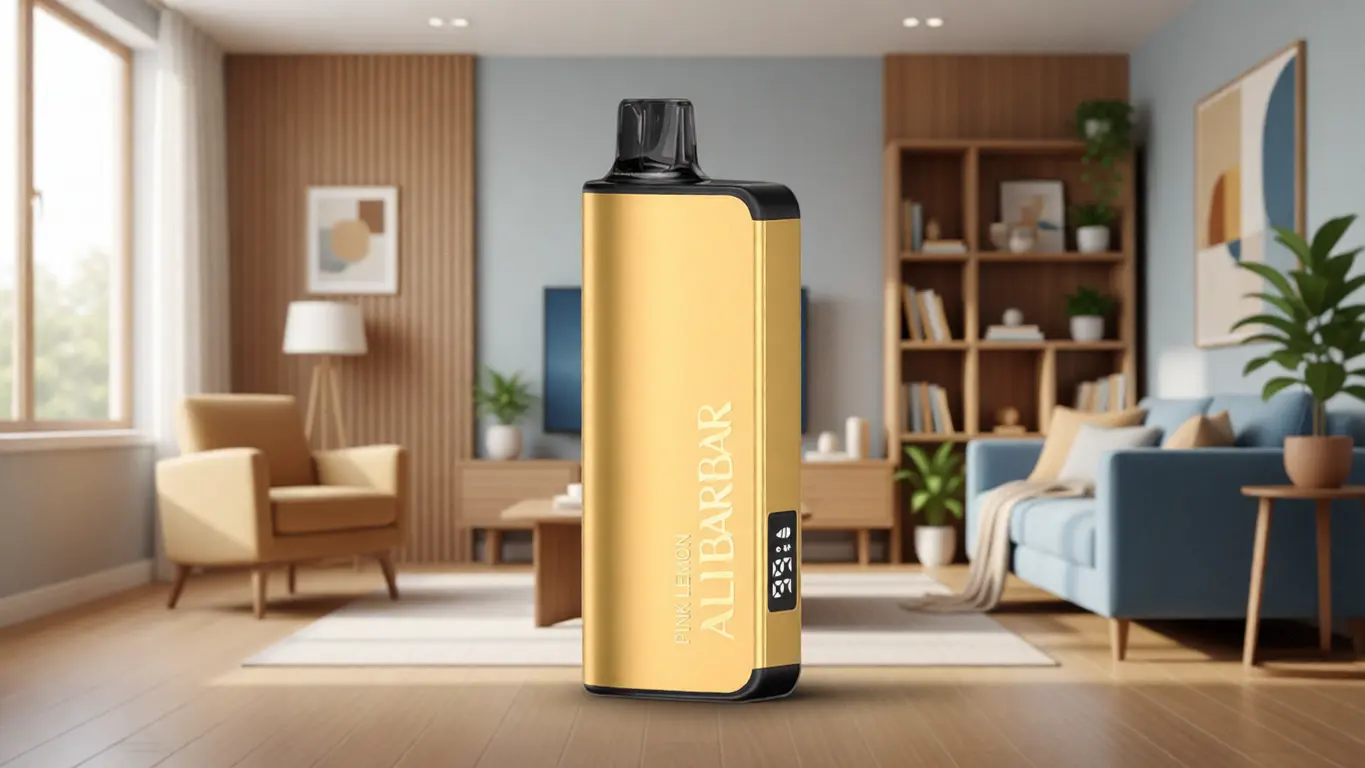
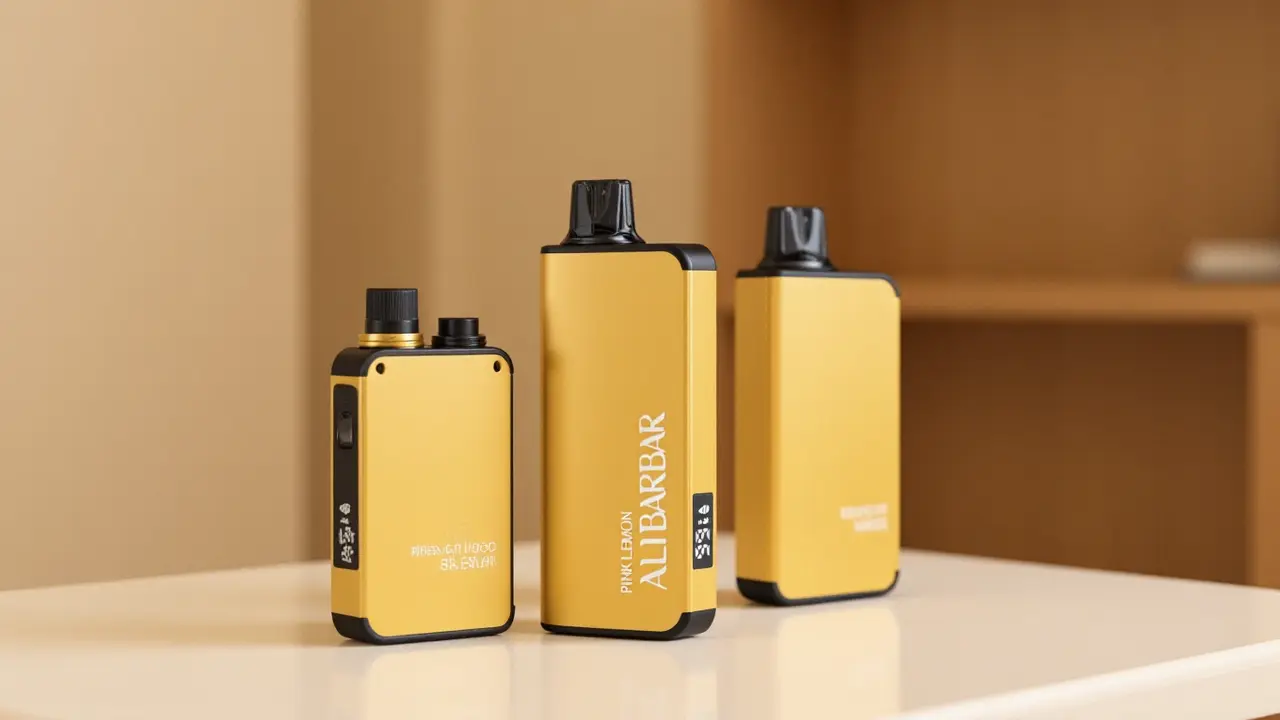
The engineering of the device itself shapes how much vapour is produced and at what temperature. Devices with higher power output and larger vapour volume naturally deposit more particles into the environment. A compact unit operating at lower power — such as the sealed, draw-activated designs common in the ALIBARBAR INGOT series — produces less total aerosol per activation compared to high-wattage adjustable devices.
Lower output does not mean zero scent. It means the volume of particles available to settle on surfaces is reduced, which directly shortens both airborne and surface persistence. Users of larger systems who switch to more modest devices frequently report noticing less lingering aroma, particularly in enclosed spaces like vehicles.
Liquid Composition: A Calculated Choice
The PG-to-VG ratio of the base liquid is the single most controllable variable for scent management. Higher PG blends (60% or above) produce thinner vapour that disperses faster. Higher VG blends generate denser, heavier clouds whose particles settle more readily onto surfaces and take longer to evaporate.
Flavor profile choice compounds this effect. A user running a high-VG custard blend through a powerful device will produce vapour that persists significantly longer than someone using a high-PG mint blend through a compact unit. If minimising lingering scent is a priority, the combination of device output and liquid composition matters more than either factor in isolation.
Environmental Conditions: The Uncontrollable Variable
Ventilation rate is the dominant environmental factor. A room with an open window and cross-breeze will clear airborne scent in under a minute regardless of device type. A sealed car interior on a still day can retain detectable aroma for 30 minutes or more, with surface residual lasting hours.
Temperature and humidity also exert measurable influence. Warmer air holds more vapour before condensation occurs, which can extend airborne persistence slightly. Higher humidity causes particles to cling more readily to surfaces, increasing residual scent duration. Cold, dry environments tend to produce shorter scent persistence overall.
Usage Density and Accumulation
A single activation in a ventilated room and twenty activations in a closed office produce fundamentally different outcomes. Scent accumulation follows a compounding curve: each subsequent use adds to the existing surface residual before the previous deposit has fully dissipated. Users who vape intermittently throughout the day in a fixed location will eventually establish a baseline ambient scent that does not fully clear until the space is ventilated for an extended period.
This explains why some users insist vape scent disappears instantly — they are evaluating a single event in open air — while others report persistent odour — they are evaluating the cumulative effect of repeated use in an enclosed, fabric-heavy environment.
A Realistic Timeline for Different Scenarios
Translating the above principles into practical timelines requires acknowledging that every scenario varies. The following estimates assume standard indoor temperature (20–22°C), moderate humidity, and a device of typical output — roughly equivalent to the ALIBARBAR INGOT 9000 or similar sealed-unit designs.
Scenario 1: Single Use in a Ventilated Room
Immediate airborne scent: Undetectable to a non-user within 30–90 seconds.
Surface residual: Negligible on non-porous surfaces; faint on soft furnishings for up to 30 minutes.
Complete clearance: 15–30 minutes with continued ventilation.
Scenario 2: Repeated Use in an Enclosed Space (e.g., car)
Immediate airborne scent: Clears 2–5 minutes after last use.
Surface residual: Detectable on fabric seats and headliner for 2–4 hours.
Complete clearance: Requires 10–15 minutes of active ventilation with windows down.
Scenario 3: Regular Daily Use in a Fixed Indoor Location
Baseline ambient scent: Develops after 3–5 days of consistent use.
Post-use peak: Airborne clears within 2–4 minutes; surface residual persists 4–6 hours.
Full removal from space: Requires 24–48 hours of no use combined with active ventilation.
These timelines shift when factors change. A high-output adjustable device with a heavy VG dessert liquid in a sealed room will push every number upward. A compact device with a high-PG citrus blend in a breezy outdoor area compresses them toward zero.
Practical Steps for Managing Scent Duration
If controlling or minimising lingering aroma matters to you, the following interventions produce measurable results.
Increase ventilation rate. This is the single most effective action. Opening a window, running an exhaust fan, or positioning yourself near an air intake reduces airborne persistence by 60–80% compared to still air.
Choose device output thoughtfully. Devices designed for modest, consistent output — like the ALIBARBAR INGOT series — deposit fewer particles per use than their high-power counterparts. If you use your device in shared or confined spaces, lower output is your ally.
Select liquid profile deliberately. Mint, citrus, and light fruit profiles dissipate faster than creamy, dessert, or tobacco blends. If you are sensitive to lingering scent or share space with non-users, this single choice has outsized impact.
Avoid fabric-heavy environments. Vapour particles adhere to textiles far more readily than to hard surfaces. Using a device in a room with carpet, curtains, and upholstered furniture will produce noticeably longer scent persistence than the same use in a room with tile floors and leather seating.
Allow space to clear between sessions. Waiting 15–20 minutes between uses in the same space allows airborne particles to fully disperse and surface deposits to begin evaporating, preventing the accumulation effect that creates persistent baseline aroma.
Common Misconceptions About Vape Scent Persistence
Several widespread beliefs about vape scent do not hold up under scrutiny.
“Vape has no smell.” This is false. Vapour has an odour; it is typically less intense and shorter-lived than combustion smoke, but it is not odourless. What people often mean is that the scent does not cling to clothing or upholstery in the same way smoke does — which is true — but that is a difference of degree, not of kind.
“High-quality devices produce no smell.” Device quality has little direct relationship with scent output. A well-engineered device that vaporises liquid efficiently may actually produce more consistent vapour, which can be perceived as having a cleaner, purer aroma. It will not be scentless.
“All flavours smell the same.” Flavor profiles vary enormously in their volatility and surface adhesion. Anyone who has used both a sharp citrus blend and a rich custard base knows the difference is perceptible and significant.
“Vape scent doesn’t linger on surfaces.” This requires qualification. It does not linger the way smoke does because vapour particles are aerosols, not combustion byproducts. But they do settle and can remain detectable on fabrics for hours, particularly with repeated use in enclosed spaces.
Frequently Asked Questions
Q: Can other people smell my device from across the room?
A: In a quiet, still room, yes — vapour carries a detectable scent for 15–30 feet typically. The intensity depends on device output, liquid composition, and air movement.
Q: Does vape smell linger on clothing like cigarette smoke does?
A: No. Vapour particles are less adhesive and evaporate more readily than smoke tar and combustion byproducts. However, regular heavy use in unventilated spaces can cause detectable scent on fabric, particularly with high-VG dessert liquids.
Q: How long does it take for a room to stop smelling after vaping?
A: With a window open, airborne scent clears within 1–3 minutes after the last use. Without ventilation, detectable aroma can persist 10–20 minutes. Surface residual on fabrics may last several hours.
Q: Why does vape smell different outside than inside?
A: Outdoor environments provide near-instant dilution. Airborne scent becomes undetectable within seconds because the volume of air available for dispersion is effectively unlimited. Indoors, the same volume of vapour concentrates in a confined space.
Q: Can I use an air purifier to reduce vape smell?
A: Yes. HEPA filters capture particulate matter, and activated carbon filters absorb volatile organic compounds from flavouring agents. A purifier with both filtration types accelerates clearance of both airborne and surface-residual scent.
Q: Does the type of device affect how long the smell lasts?
A: Significantly. Higher-output devices produce more total vapour, resulting in larger particle volumes that take longer to disperse. Compact, lower-output designs — like those in the ALIBARBAR range — deposit fewer particles and produce shorter scent persistence.
Q: Why does the same liquid smell different in different devices?
A: Device temperature and airflow characteristics alter how liquid is vaporised. Lower-temperature vaporisation can leave some flavour compounds partially intact, producing a different aromatic profile compared to higher-temperature use that more completely breaks down the same compounds.
Q: Does vape smell trigger smoke detectors?
A: Some optical smoke detectors are sensitive to dense vapour clouds. The scent itself does not trigger these devices, but the particulate density in an enclosed space can. Holding vapour longer reduces the visible output and decreases the likelihood of activation.
Q: How can I verify my device is working within normal parameters?
A: Consistent vapour production, even draw resistance, and predictable battery life indicate normal operation. If your device produces unusually large or unusually thin vapour relative to its documented specifications, a component may require attention. OZVAPE Shop supports verification through factory-certified product documentation and direct technical guidance.
Q: Where can I find reliable information about specific device specifications?
A: Manufacturer-published specifications for output, capacity, and liquid compatibility are the anchor. OZVAPE Shop maintains standardised comparison tables across its ALIBARBAR catalogue to enable direct product evaluation.
The Practical Takeaway
The question “how long does vape smell last” resolves into a more useful question: “under what conditions, and with what equipment?” The answer changes based on device output, liquid composition, ventilation rate, usage density, and surface materials.
If your priority is minimising lingering aroma, the most effective levers are straightforward: choose a lower-output device, select light flavour profiles with higher PG ratios, use your device in ventilated spaces, and avoid using it repeatedly in the same enclosed fabric-rich environment.
There is no universal timer. But there is a predictable framework, and applying that framework gives you accurate expectations and practical control. The right approach is not to obsess over scent elimination — because complete elimination is rarely realistic — but to align your equipment choices and usage patterns with the environment you actually occupy. That alignment, more than any single product specification, determines whether vape scent is an issue you manage effortlessly or one that nags at the edges of your awareness.