
VAPE FAQs
How Long Does A Vape High Last?
Sep
It’s the question that sits quietly behind almost every purchasing decision, yet it’s rarely answered with the directness it deserves. You take a draw, you register that initial sensation, and then — sometimes minutes later, sometimes sooner — you find yourself reaching again. The period between those two moments isn’t random. It’s shaped by a handful of engineering variables, biological realities, and usage habits that most people never stop to examine.
At OZVAPE Shop, we hear variations of this question constantly, and the more we listened, the clearer it became that users deserve an explanation grounded in device design and human physiology, not in marketing shorthand. This article unpacks what actually governs how long the perceived peak of a vaping session lasts, why two people using the same device can report markedly different experiences, and how understanding those mechanics puts you back in control of your own routine.
What Defines the Duration of a Vaping Experience?
When someone asks “how long does a vape high last,” they are usually describing the window of elevated sensory satisfaction that begins seconds after inhalation and fades as nicotine plasma concentration declines. It’s a subjective curve, but it maps onto objective factors with surprising consistency.
The experience is influenced by three interrelated layers: the delivery efficiency of the device itself, the concentration and form of nicotine in the e-liquid, and the user’s own metabolic profile. A device that produces fine, consistent aerosol particles will create more efficient pulmonary absorption, sharpening the onset and, for many, extending the perceived plateau. A formulation with nicotine salts, commonly found in modern closed-system devices, is absorbed more rapidly than freebase nicotine at comparable strengths, producing a quicker rise and a somewhat shorter, more defined peak. Meanwhile, personal variables — body mass, liver enzyme activity, recent food intake, even hydration level — set an outer boundary on how long nicotine remains active in the bloodstream.
Most users report that the core sensation lasts between 10 and 20 minutes after the last inhalation, with a gradual tail that can extend for an additional 15 to 30 minutes as blood levels decline. But that’s a population-wide average, not a prediction. Understanding your own position on that spectrum requires looking more closely at the tool in your hand.
How Device Design Influences Experience Longevity
A vaping device is not a passive container. It is a precision instrument whose internal architecture directly shapes how rapidly and how thoroughly nicotine is delivered into the bloodstream. When evaluating any device through the lens of experience duration, four engineering factors matter most.
Output Consistency Across the Operational Cycle
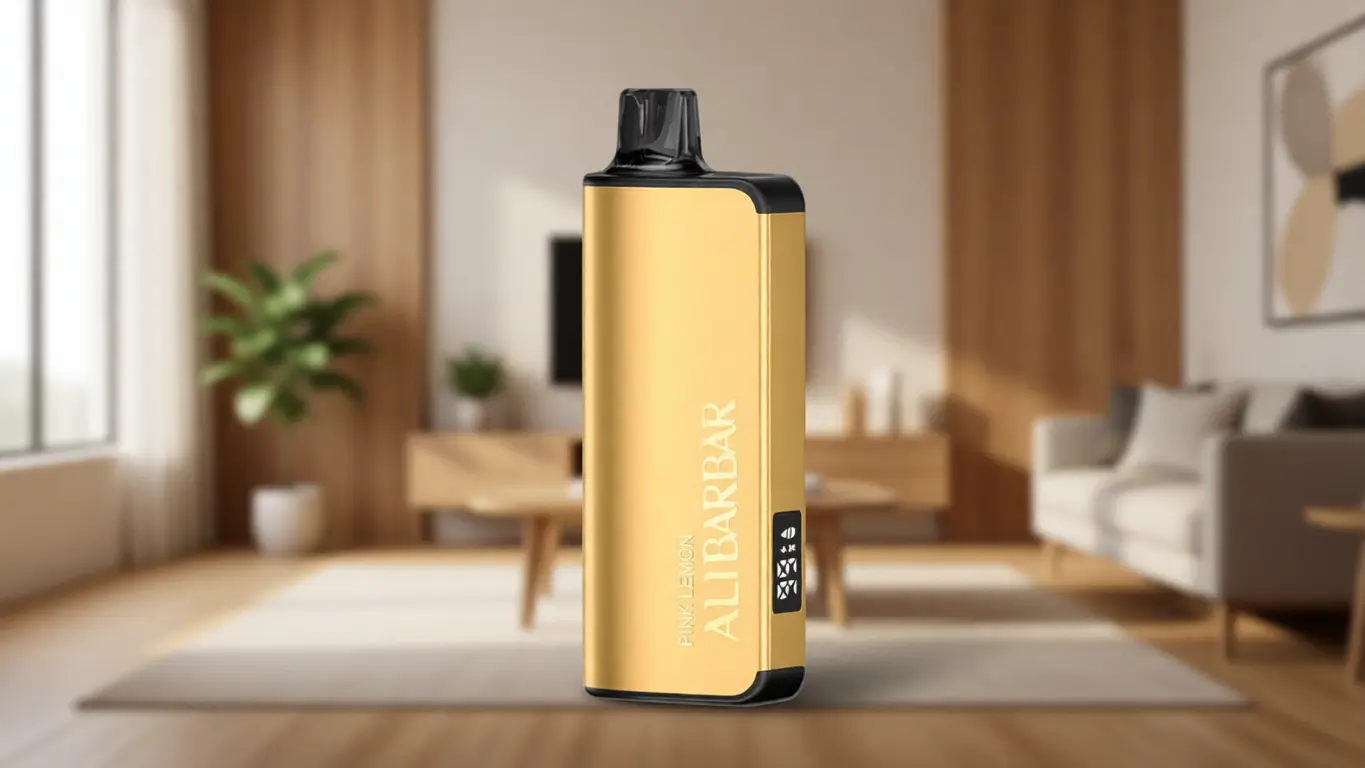
If a device’s power delivery degrades gradually as the battery discharges, the aerosol density drops with it. The tenth puff may carry noticeably less nicotine than the first, stretching the time it takes to reach a satisfying threshold and shortening the perceived plateau. Units engineered with regulated output chipsets — those that maintain a stable voltage until the battery is genuinely depleted — produce a more repeatable experience. Several current-generation devices in the ALIBARBAR catalogue, including the INGOT 15000, are built around precisely that principle, holding output within a narrow performance band across thousands of puffs. That engineering choice doesn’t just improve reliability; it makes the duration of your session more predictable day after day.
Coil Architecture and Aerosol Particle Size
The coil — its resistance, surface area, and wicking behaviour — determines the size distribution of the aerosol droplets. Smaller, more uniform particles penetrate deeper into the respiratory tract and are absorbed more quickly, leading to a sharper onset and, for many users, a slightly shorter but more intense peak. Larger particles, more typical of older or poorly atomising designs, are absorbed more slowly and can create a longer, flatter curve. This is not a matter of one approach being “better”; it’s a trade-off that every user makes, knowingly or not. Devices that maintain tight quality control over coil materials and assembly, as observed in the ALIBARBAR INGOT 9000, tend to produce an aerosol profile that stays consistent from the first draw to the last, removing an uncontrolled variable from your duration calculation.
Airflow Geometry and Draw Resistance
The ratio of air to vapour and the turbulence of the airflow path affect how much nicotine reaches the alveoli with each inhalation. A tighter draw (mouth-to-lung style) tends to deliver vapour in a more concentrated, discreet pulse, which can create a longer residual sensation for some users because the nicotine is absorbed more gradually through the oral and upper respiratory mucosa in addition to the lungs. A looser, direct-lung airflow sends a larger volume directly to the lungs, producing a faster peak and a shorter apparent duration. Devices that offer adjustable airflow, such as the ALIBARBAR Ice Adjust 12000, give the user the ability to directly modulate this variable — though many people never realise that function has a real physiological consequence, not just a feel-based one.
Status Feedback and the End-of-Session Decision
A device that withholds information about remaining charge or remaining liquid forces the user to make an unconscious guess: “Should I take another draw, or is the session over?” That guesswork fragments the experience and makes it harder to notice genuine satisfaction. When a device provides clear, unambiguous indicators — battery life remaining, an estimate of remaining operational capacity — you stop second-guessing and start recognising your own rhythm. That’s why status transparency isn’t a cosmetic feature; it’s an enabler of self-awareness.
The Role of Nicotine Strength and Personal Physiology
Even a perfectly engineered device interacts with a biological system that is fluid and individual. Nicotine follows a well-studied pharmacokinetic curve: peak plasma concentration arrives roughly 5 to 10 minutes after inhalation, then declines with a half-life of about two hours. The subjective “high” — more accurately, the sensation of alertness, calm, or focus that users describe — is most pronounced during the rising phase and early plateau, usually trailing off noticeably within 15 to 30 minutes.
But that baseline shifts depending on:
Nicotine concentration: Higher-strength e-liquids (50 mg/mL and above in salt-based formulations) produce a more rapid accumulation, shortening the time to peak and, for tolerant users, potentially compressing the perceived duration because the fall-off feels steeper.
Inhalation technique: Deep, extended draws followed by a brief breath-hold increase nicotine bioavailability, while short, shallow puffs deliver far less.
Tolerance patterns: A regular user’s nicotinic receptors are partially desensitised, meaning the same dose produces a blunted peak that may appear to fade faster, even though the plasma concentration remains stable for the same period.
Circumstantial factors: Caffeine intake, stress levels, and even the ambient temperature can alter peripheral vasoconstriction and absorption rates.
Acknowledging these variables isn’t an admission of uncertainty; it’s a recognition of reality. Anyone who claims a particular device guarantees “X minutes of satisfaction” for every user is ignoring the half-dozen moving parts that actually determine the outcome.
Comparing Different Vaping Architectures Through the Lens of Duration
The market now spans everything from slim, pre-charged single-use devices to sophisticated, user-configurable modular systems. Each architecture distributes nicotine across time differently.
| Architecture | Typical Onset | Peak Duration Impression | Notes |
|---|---|---|---|
| High-capacity sealed devices (e.g., ALIBARBAR INGOT series) | Quick, within 5–10 seconds | 15–25 minutes for most users | Output consistency across the device’s life preserves predictability; no user-adjustable settings to inadvertently alter the pattern. |
| Refillable pod systems (open) | Variable | 10–30 minutes depending on coil, liquid, and power settings | Flexibility introduces more variables; experienced users can fine-tune, while less attentive users may see large swings in duration. |
| Advanced mod + tank setups | Can be immediate with sub-ohm builds | Often shorter, more intense peaks with freebase nicotine, but longer gradual tail with certain salt configurations | The highest degree of user control, but also the highest potential for misconfiguration that disrupts the expected experience. |
What consistently emerges from the data — and from user feedback recorded through support channels at OZVAPE Shop — is not that one architecture is universally longer-lasting, but that predictability is the real commodity. Devices that lock in design parameters for the user (coil resistance, power curve, airflow) remove the guesswork and allow the brain to calibrate expectations accurately. That’s one reason sealed high-capacity devices have gained such a strong following among people who prioritise routine over experimentation.
A Practical Framework for Gauging Your Own Experience Duration
Rather than relying on generalised timelines, you can build a personal baseline with a simple, structured observation method. No special equipment needed, just a note-taking habit for one to two days.
Select a consistent device and liquid configuration. Use the same unit, the same draw style, and the same environment for a few consecutive sessions.
Count your draws and time them. Note how many puffs you take in a single session and the time elapsed from the first inhale to when you feel the peak begin to fade.
Record the quality of that fade. Does it drop off sharply at a specific minute mark? Does it linger as a subtle background sensation for much longer? This distinction helps separate the core peak from the residual tail.
Check the device’s feedback indicators. If you’re using a device with a visible battery gauge or a consumption estimate (as found on the digital interface of the ALIBARBAR INGOT 15000), correlate the fading sensation with remaining capacity. This tells you whether you’re ending your session because your device is depleting or because your body has reached its natural threshold.
Adjust one variable at a time. If you want to extend the plateau, try a slightly tighter draw or a brief pause between puffs. Keep everything else constant so you can isolate cause and effect.
This framework doesn’t promise a universal number. It promises something more useful: the ability to isolate which variables actually govern your experience, rather than someone else’s.
Common Misconceptions That Undermine User Satisfaction
Years of monitoring how adults interact with personal electronic devices have surfaced a handful of recurring errors. They’re understandable — the industry hasn’t always made technical distinctions clear — but they reliably lead people away from outcomes they’d actually enjoy.
1. Assuming a Stronger Nicotine Strength Always Means a Longer-Lasting Experience
Higher concentrations reach the peak faster and, paradoxically, can make the decline feel more abrupt. That steep drop-off often prompts a quick second session, creating a cycle that feels shorter overall, not longer.
2. Treating All Closed-System Devices as Functionally Identical
Two devices that look alike on store shelves can have fundamentally different power management circuits. One may produce consistent aerosol for its entire operational life; another may taper off after 60% of its rated capacity. That tapering directly reduces the duration of satisfying sessions in the later life of the device. This is not a cosmetic difference; it’s an engineering decision with real-world consequences.
3. Ignoring the Impact of Inhalation Rhythm
Many users unconsciously increase puff frequency as the sensation fades, which spikes nicotine intake briefly but accelerates tolerance and shortens the next plateau. A measured, intermittent pattern often sustains a more stable subjective effect than rapid, clustered puffs.
4. Confusing Category Terminology with Technical Specifications
Terms like “disposable” or “high-capacity” are marketing categories, not engineering guarantees. A device rated for 9000 puffs with a poorly regulated battery might deliver a full experience for only the first 6000, while a well-engineered counterpart maintains output consistency deep into its rated life. Reading past the headline number and looking for evidence of output regulation is a skill that pays off in daily satisfaction.
Frequently Asked Questions
Q: How soon after a vape session does the strongest sensation fade?
A: Most users report the peak subsides between 10 and 20 minutes after the last draw. The gradual tail, where a milder sensation remains, can continue for another 15 to 30 minutes, though this varies significantly with device delivery efficiency and personal metabolism.
Q: Does the type of nicotine (salt vs. freebase) change how long the effect lasts?
A: Nicotine salts are absorbed into the bloodstream more rapidly, often producing a faster peak and a slightly shorter, more defined plateau. Freebase nicotine at comparable strengths typically has a slower absorption curve, which some users perceive as a longer-lasting, though less intense, sensation.
Q: Can a device’s battery level affect how long I feel the effect?
A: If a device’s output voltage drops as the battery discharges, later puffs will deliver less aerosol and less nicotine, potentially shortening the perceived duration. Devices with regulated output maintain consistent delivery across the battery cycle, preserving session quality.
Q: Why does my experience vary so much between different devices of the same stated nicotine strength?
A: Differences in coil design, airflow tuning, and aerosol particle size can all alter how much nicotine actually reaches the bloodstream per puff, even when the liquid strength is identical. Two 50 mg/mL devices can behave very differently if one atomises more efficiently.
Q: If I vape more slowly, will the sensation last longer?
A: Slowing your inhalation and spacing puffs further apart can moderate the rate of nicotine absorption, often resulting in a more gradual, sustained sensation rather than a sharp rise and fall. It also reduces the likelihood of temporary receptor desensitisation from rapid redosing.
Q: Do disposable devices provide a shorter experience than refillable systems?
A: Not inherently. High-quality sealed devices with regulated output can deliver sessions of comparable or even greater consistency than some user-configured refillable systems. The key is the device’s internal power management, not whether it’s refillable.
Q: Can I estimate how long my device will provide a consistent experience over its full lifespan?
A: Yes, to an extent. Manufacturers that publish specifications around coil consistency and output regulation provide a basis for estimation. In practice, a device that explicitly communicates its remaining capacity — through an LED or digital display — gives you real-time feedback to anticipate when session quality might begin to change.
Q: Does food or drink before vaping affect the duration?
A: Yes. Consuming acidic foods or beverages can slightly alter oral pH and nicotine absorption. A heavy meal may slow gastric emptying and systemic absorption, potentially delaying the onset and flattening the peak.
Q: Why do I sometimes not feel anything at all from the same device I used yesterday?
A: Acute tolerance, dehydration, fatigue, and even ambient environmental factors can raise your perceptive threshold. The device is likely delivering the same dose, but your brain’s baseline has shifted temporarily.
Q: Where can I get devices that are engineered for consistent, predictable output?
A: Authorised retailers that source directly from manufacturers and verify batch integrity, such as OZVAPE Shop, carry devices designed with output regulation as a core engineering requirement rather than an afterthought.
Choosing Duration, Not Just a Device
The question “How long does a vape high last?” is, in truth, a question about control. It’s asked by people who are tired of unpredictable routines and who suspect, correctly, that the answer lies not in a single number but in a clearer understanding of the tool they’re using and the body they’re using it with.
Duration isn’t something you simply accept; it’s something you can observe, map, and, to a meaningful degree, influence — provided you start with a device that doesn’t add its own chaos into the equation. The engineering that goes into consistent aerosol production, transparent status feedback, and durable power management is not a luxury; it’s the quiet architecture that makes a predictable day possible.
OZVAPE Shop exists to make that predictability accessible, by offering factory-certified ALIBARBAR devices backed by clear specifications and local support. When you know what your device can do — and why — you stop guessing and start shaping your own experience, one session at a time.