
VAPE FAQs
How Long Does A Thc Vape Last?
Sep
The question of how long a THC vape lasts sounds simple. The person asking it is usually standing in front of a shelf, or scrolling through a specification page, trying to work out whether the device in their hand will last through a full weekend away, or whether they need to factor a backup into the cost. What complicates the answer is that “lasts” means different things to different people. One user is measuring the interval between charging cycles; another is measuring the total working life of the device before performance degrades; a third is counting the number of usable draws before the heating element can no longer deliver a consistent experience. All three interpretations matter, and a device that excels in one dimension may be mediocre in another if its internal architecture was never designed to balance them.
At OZVAPE Shop, we have observed that the most frustrated users are not those who bought the cheapest option, but those who were never told what to realistically expect. This article is a detailed, technically grounded explanation of the factors that determine how long a THC vape actually lasts — whether you are measuring hours, days, or the operational life of the hardware itself. By the end, you will be equipped to evaluate any device against your real-world routine, and to recognise which design decisions genuinely extend useful life, and which are just numbers on a box.
Understanding What Matters: Core Engineering and Design Factors
Most conversations about device longevity start and end with battery capacity. That is a mistake, because a vape is a system, not a battery in a case. The four engineering domains below are interconnected; neglecting any one of them is the fastest route to arriving somewhere with a device that no longer performs.
Internal Architecture and Output Consistency
The longevity of a vape’s useful life is ultimately dictated by its heating element and how it interacts with the substance it is designed to vaporise. In lower-cost, sealed units, the heating coil is typically a simple wire wrapped around a wicking material. As the coil cycles through heating and cooling, metal fatigue sets in, and residue accumulates on the wire. The result is a gradual decline in vapour quality — lower density, uneven temperature, and eventually a burnt taste — long before the battery is empty. This is the kind of degradation users describe when they say a device “stopped hitting properly after a couple of days.”
Better-engineered devices, such as those in the ALIBARBAR range, address this through two mechanisms: carefully calibrated coil geometries that distribute heat more evenly, and advanced airflow paths that prevent hot spots. The practical implication is that a device can deliver a consistent draw from the first session to the last, rather than turning into a frustration after a few dozen uses. When evaluating a unit, ask yourself whether the manufacturer publishes any data about coil composition or heat distribution. If not, you are relying on hope.
Power Management and Status Transparency
A vape that dies without warning leaves you stranded. This is not just an inconvenience; for someone who relies on a device throughout a long workday, it can be the difference between a settled routine and a day spent distracted by a non-functioning unit. The hidden problem here is that many devices rely on simple voltage delivery circuits that do not communicate remaining charge accurately. A three-light system that shows green until moments before shutdown is of little practical value.
What separates a well-thought-out device from a commodity one is the presence of meaningful, granular status feedback. Some ALIBARBAR devices, for instance, incorporate multi-level LED indicators that let you gauge capacity at a glance, not just guess. More critically, the power management ICs (integrated circuits) in these devices are calibrated to prevent deep discharge, which is one of the leading causes of permanent battery capacity loss. A device that preserves battery health through disciplined charge cycles will maintain its per-charge runtime for far longer than one that allows the user to drain it to zero repeatedly. When a device has no status transparency, the user compensates by carrying a backup — effectively doubling their upfront cost for no reason other than poor information design.
Physical Design and Material Durability
A vape lives in pockets, bags, and cupholders. It is dropped, jostled, and exposed to temperature swings. The question of “how long it lasts” is partly a question of physical resilience. Devices with painted finishes often look worn after a few days of contact with keys or coins. Mouthpieces with sharp contours become uncomfortable during extended use. A body that is too smooth slips out of a hand, while one that is poorly sealed lets in dust and moisture that can corrode internal contacts.
Materials such as anodised aluminium or polycarbonate alloys, used in several ALIBARBAR models, resist everyday abrasion far better than painted zinc alloys. Ergonomic mouthpieces contoured for prolonged use are not a luxury; they directly affect whether a user can enjoy a full session without irritation. These are not cosmetic details — they determine whether the device remains functional and pleasant to handle for months, or ends up discarded prematurely because the exterior has become unpleasant to hold or the internals have been compromised.
Modularity and Lifecycle Flexibility
Perhaps the single biggest factor in total device longevity is whether the unit is designed as a sealed, disposable item or as a system where the power source is separated from the consumable component. A fully sealed device stops being useful when any one part fails — a coil burn-out, a depleted battery, or an empty reservoir all lead to the same dead end. In contrast, a modular architecture allows the user to replace only the element that has reached its end of life, keeping the core battery and control unit in service.
This has a direct impact on cost-per-use and waste. ALIBARBAR’s product family includes both high-capacity rechargeable systems and more compact pre-configured options, but the common thread is that users who value longevity can choose platforms where they swap a pod or cartridge rather than throwing away an entire device. When estimating how long a vape will “last” for your purposes, the correct metric is not always the number of puffs on the packaging. It is the total number of hours of satisfactory performance over the entire ownership period, and modularity extends that number substantially.
Applying These Criteria to Real-World Options
Rather than declaring one category superior, it is more useful to look at how different user routines intersect with device engineering. The same technical characteristic that delights one person can be irrelevant to another.
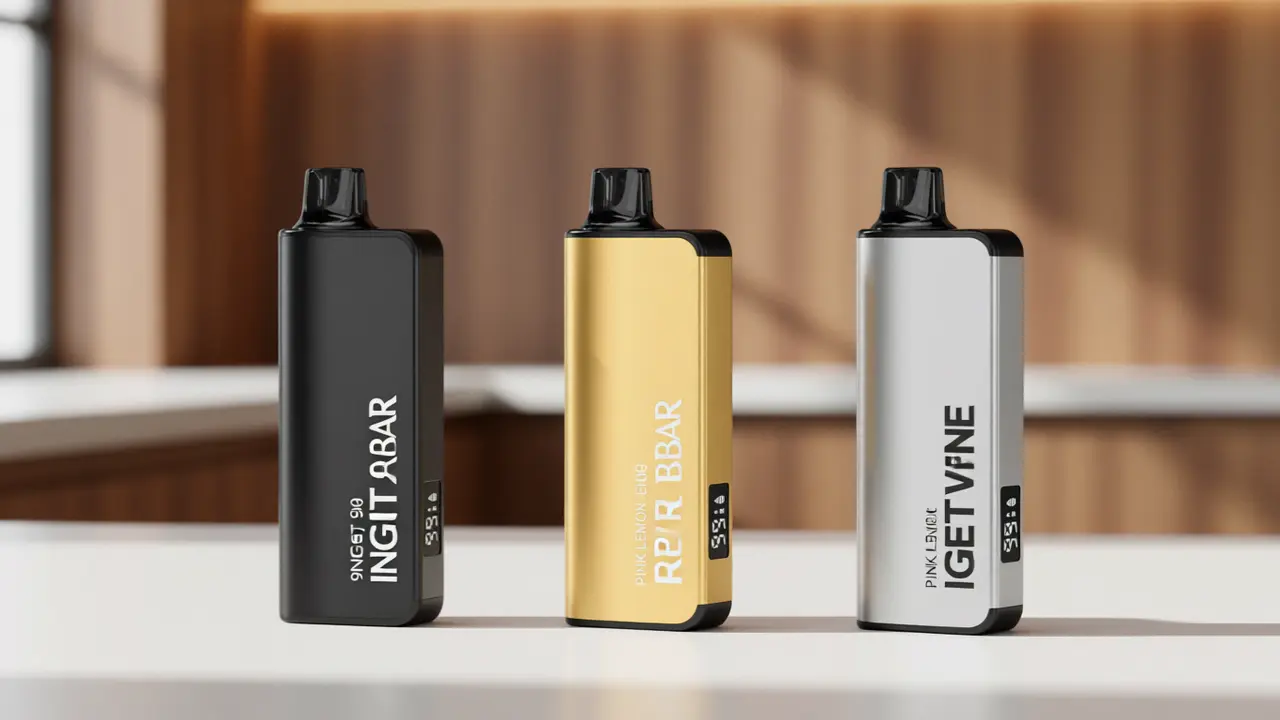
For the user who needs a device that can survive a weekend trip without access to a charger, high internal battery capacity combined with efficient power delivery is paramount. A device like the ALIBARBAR INGOT 15000 is engineered with this scenario in mind; its larger cell and calibrated output board prioritise consistent runtime over the sheer number of draws printed on the box. The trade-off is a slightly larger form factor — a non-issue for a bag, but noticeable in a slim pocket.
For the user who wants granular control and is willing to trade maximum capacity for adjustability, a platform like the ALIBARBAR Ice Adjust 12000 offers a different value proposition. Here, the engineering focus shifts toward airflow customisation and the ability to fine-tune the draw, which can actually extend the perceived useful life because the experience remains satisfying across different usage patterns. The trade-off is that adjustable mechanisms introduce additional mechanical parts; long-term reliability depends on the quality of those components.
For the user who prioritises cost management above all else, initial purchase price can be misleading. A cheap sealed device that degrades after a few days may need to be replaced three times in a month, while a modular system with replaceable pods, such as certain ALIBARBAR rechargeable models, spreads the hardware cost over a much longer period. The economical choice, measured over a full year, is frequently the one that costs more on day one.
Other commonly encountered device families — including single-use disposables and open-system pod devices — follow different engineering philosophies. Many disposables prioritise compactness and low unit cost, but the absence of rechargeability means the battery is oversized relative to the consumable content, or the device fails with content remaining. Open-system pods offer refill flexibility but often lack the integrated power management that protects battery health over hundreds of cycles. These are not criticisms; they are statements about design intent. A device designed for one evening is not failing when it does not last a week; it was never built to.
A Practical Framework for Evaluation
If you are holding a device and trying to estimate how long it will serve you, step beyond the marketing. Use these diagnostic questions in sequence:
What is the device’s true usable capacity relative to your typical daily consumption? Do not rely on puff counts alone — they are measured under laboratory conditions that rarely match real-world draw lengths. Instead, compare the manufacturer’s stated electrolyte volume (if available) or battery capacity against your known usage. If you average 200 draws per day, a device claiming 3000 draws is not a 15-day device in practice; it is a 10–12 day device under conservative assumptions.
Does the device give you granular status feedback, or just an on/off indicator? If the latter, assume you will start carrying a backup. The frustration is not worth the savings.
Is the device rechargeable, and if so, what battery protection circuitry is present? A device with overcharge, over-discharge, and short-circuit protection will retain its per-charge runtime far longer than one without. This is not visible, but the brand’s documentation should state it. At OZVAPE Shop, all ALIBARBAR units include factory-certified protection circuits; if a retailer cannot confirm this, treat the omission as a warning.
What is the replacement path? For sealed devices, the answer is “buy a new one.” For modular systems, identify the cost and availability of replacement components. This multiplies the effective lifespan.
Can you touch it? This sounds trivial, but build quality reveals itself immediately. A rattling button, a loose mouthpiece, a seam that catches a fingernail — any of these predicts a shorter physical lifespan, regardless of internal engineering.
Standardised specification comparison is a powerful tool. When a retailer commits to displaying technical data consistently, as we do with the ALIBARBAR line, it becomes possible to side-step marketing language and make decisions based on the same data points across products. Without that, you are comparing fog.
Common Selection Errors and Industry Observations
Even experienced users make predictable mistakes when judging how long a device will last. Recognise these patterns, and you are less likely to repeat them.
Error 1: Equating puff count with total usable lifespan. A puff count is a laboratory benchmark, not a user guarantee. In real-world conditions, draws vary in duration, ambient temperature affects battery performance, and coil degradation begins from the first cycle. A device rated for 15000 puffs will stop delivering an acceptable experience long before that number if the heating element is poorly designed. Treat puff counts as a comparative index, not a promise.
Error 2: Assuming visual similarities indicate identical internals. Two black, stick-shaped devices can look nearly identical and yet contain vastly different battery cells, coil architectures, and protection circuits. The exterior tells you nothing about the quality of the voltage regulator or the wicking material. This is why sourcing from a channel that can verify supply chain integrity matters — it turns an opaque purchase into a documented one.
Error 3: Undervaluing modularity when calculating cost-per-use. A $40 device that lasts six months because its pods are replaceable is cheaper per month than a $15 device that fails in three weeks. Users often fail to extend the timeline far enough to see the inflection point.
Error 4: Misunderstanding battery degradation. Every lithium-ion cell loses capacity over charge cycles. A device that is frequently deep-cycled (drained to cut-off) ages faster than one that is topped up regularly. Without status feedback, users tend to deep-cycle out of fear of running out, actually accelerating the very degradation they wanted to avoid. This is a systemic industry flaw, not a user error; good devices mitigate it, poor ones accelerate it.
On an industry level, the shift toward integrated, factory-sealed designs has created a market where many products are optimised for initial sensory appeal rather than sustained performance. Manufacturing realities mean that the cost difference between a precision-etched ceramic coil and a basic silica-wick coil is pennies at scale, yet the difference in operational lifespan is dramatic. Brands that invest in the former are betting that user satisfaction over time drives repeat business. Brands that do not are betting that the market churns fast enough to sustain them. The former philosophy is the one we support through our selection of ALIBARBAR devices, because it aligns with the way actual humans use and judge their equipment.
Frequently Asked Questions
Q: How many days of use should I expect from a high-capacity rechargeable vape?
A: It depends on your daily consumption, but using a device like the ALIBARBAR INGOT 15000 as a reference, a moderate user might achieve 8–12 days before recharging, assuming the internal battery is maintained properly. Heavy users will see fewer days, but the total operational hours are comparable. The key variable is not the device’s rating but the consistency of its power delivery across that period.
Q: Does keeping a vape fully charged extend its overall life?
A: Not necessarily. Lithium-ion cells experience less stress when kept between 20% and 80% charge. A full charge is useful for maximum runtime but, if constantly maintained at 100%, can marginally accelerate capacity fade. Devices with intelligent charge management mitigate this; budget devices do not.
Q: How can I verify that my device is a genuine ALIBARBAR product?
A: Genuine ALIBARBAR units sourced through OZVAPE Shop include multi-layer verification mechanisms. Check the packaging for a batch code and verify it through the factory-authorised portal. Counterfeit devices invariably lack the precision of engraving, consistency of finish, and status indicator behaviour of originals.
Q: What causes a vape to lose flavour or produce a burnt taste before it stops working?
A: Almost always, this is coil degradation. Residue accumulation on the heating element creates hot spots that scorch the material, and wicking fatigue means the coil does not receive adequate supply between draws. A device with a high-quality coil and saturation-optimised wicking can avoid this for far longer, which is why coil design matters more than puff count.
Q: If I only use my device occasionally, will it still degrade over time?
A: Yes, but more from battery self-discharge and chemical aging of the electrolyte than from use cycles. If you plan to store a device for weeks, keep it at approximately 50% charge in a cool environment. A fully depleted battery left sitting can enter an unrecoverable state.
Q: Does OZVAPE Shop provide support if a device does not meet the documented specifications?
A: Yes. All ALIBARBAR devices sold through OZVAPE Shop are backed by a local support team that can assist with troubleshooting, returns, and replacement in the event of a documented manufacturing fault. We maintain direct communication with factory supply lines to ensure issues are resolved rather than deflected.
Q: Are there devices specifically engineered for prolonged, repeated daily use?
A: The modular systems in the ALIBARBAR range, including those with replaceable pod architecture, are designed for this scenario. The power unit remains in service while only the consumable component is replaced, which distributes wear and extends the platform’s overall useful life well beyond a sealed equivalent.
Q: Can I extend a sealed device’s life by charging it carefully?
A: Marginally. You can avoid extreme temperatures and deep discharges, but once the coil or the internal cell reaches its end of life, there is no service path. That is the fundamental limitation of a sealed design; you can slow the decline but not reverse it.
Q: Is it normal for a device’s vapour output to decrease as the battery drains?
A: In poorly regulated devices, yes. In devices with output regulation circuits, the vapour production should remain consistent until the battery is nearly exhausted. A sudden drop-off before the battery indicator signals empty suggests either a calibration fault or a low-quality power board. ALIBARBAR devices use constant-output circuits to prevent this.
Q: How do I compare two devices when one lists a higher puff count but a lower battery capacity?
A: Treat the puff count with scepticism. The device with the higher battery capacity and documented output regulation is likely to deliver a more consistent experience for a longer period. Puff counts are marketing metrics; battery capacity and coil quality are engineering realities.
Conclusion
The real answer to “how long does a THC vape last” is not a number. It is a relationship between the device’s engineering choices and your actual routine. A device that communicates its status, regulates its output, and lets you replace the part that wears out will outlast a device that looks identical but was built to a lower set of specifications, because it was designed to serve you across weeks and months, not just through a first impression.
Informed users make better decisions, and better decisions lead to less frustration, less waste, and lower long-term cost. At OZVAPE Shop, we have structured the ALIBARBAR catalogue to make these architectural differences visible — not through hype, but through standardised technical documentation and a supply chain that guarantees you are receiving the device as it was engineered, not an approximation.
You know your own patterns better than any specification sheet ever could. The device that will last for you is the one whose engineering priorities match the rhythm of your days, not the one with the most attention-grabbing claim on a retail display. Take the criteria outlined here, apply them to whatever you are considering, and trust the outcome that emerges from your own clear-eyed assessment.