VAPE FAQs
How Hot Do Vape Coils Get?
Sep
You turn to your device mid-morning and the familiar trail suddenly tastes hot and acrid. It is a split‑second signal that something has drifted outside its normal operating window. The internal heating element, usually held at a temperature that gently converts liquid into an inhalable aerosol, has momentarily climbed past the point where everything stays smooth and predictable. That moment raises an obvious question: how hot do vape coils actually get? The answer is more layered than a single number, and understanding it separates users who consistently run their devices within safe, flavour‑preserving limits from those who unknowingly push hardware into thermal territory that shortens its life and degrades every draw. At OZVAPE Shop we see this understanding as foundational, not as a sales point but as the kind of knowledge that lets adult users make clearer decisions about the equipment they carry every day.
Understanding What Matters: Core Engineering and Design Factors
To speak meaningfully about coil temperature, you have to detach it from abstract wattage figures and tie it back to the physical realities inside the atomizer. Four interacting factors determine how hot the heating surface gets, and they determine whether your device spends its life in a comfortable thermal band or repeatedly spikes into a zone that stresses components and annihilates flavour.
Resistance, Power, and the Temperature Curve
At the simplest level, a coil is a resistive wire that converts electrical current into heat. For a fixed voltage, a lower‑resistance coil (sub‑ohm) pulls more current and generates more heat per second. Regulated devices complicate this by letting you dial in wattage directly, but the principle holds: the power you send to the coil, multiplied by time, drives the temperature upward until it reaches an equilibrium where heat lost to the moving airstream and evaporating liquid balances the electrical energy coming in. In a poorly tuned system that equilibrium can sit far above the ideal aerosolization range of around 180 °C to 220 °C. In extreme cases, surface temperatures can exceed 300 °C — hot enough to decompose common carrier liquids and produce the acrid compounds that register as a burnt hit.
What this means in practice: a device that delivers inconsistent power, or one whose resistance drifts as the coil ages, pushes operating temperature into unpredictable territory. Users who notice flavour fading halfway through a supposedly full‑capacity device are often experiencing a coil that no longer maintains a stable temperature curve.
Coil Material and Thermal Behaviour
The wire itself is not a passive bystander. Kanthal, nichrome, stainless steel, and titanium each have distinct resistance‑temperature coefficients. Kanthal (iron‑chromium‑aluminium) is stable and forgiving: its resistance barely changes with heat, so a simple variable‑voltage device can drive it without wild temperature swings. Stainless‑steel wire, particularly SS316L, has a rising resistance as it heats, which allows temperature‑control circuitry to track and cap the coil temperature with reasonable accuracy. That capability is not merely a luxury; it is the difference between a coil that can be pegged at a safe 210 °C throughout a long draw and one that ramps unchecked toward charring temperatures if the wick runs slightly dry.
Wick Saturation and Temperature Spikes
Coil temperature is not a solo performance. It is a duet with the wicking system. A fully saturated wick acts as a heat sink, absorbing energy through the phase change from liquid to vapour. As soon as saturation drops — because the juice is viscous, the wicking ports are too small, or you are chaining draws faster than capillary action can replenish the coil — the temperature at the wire surface rockets upward. Even a coil set to a conservative wattage can hit breakdown temperatures in fractions of a second if the local liquid supply stutters. This is why devices that advertise enormous puff counts but use tiny wicking windows often leave users with a harsh, hot finish long before the liquid reservoir is empty.
Airflow and Heat Dissipation
Moving air does double duty: it carries vapour away and it cools the coil directly. A carefully engineered airflow path that channels incoming air evenly across the entire heating surface keeps temperature gradients low. Anodized aluminium bodies, ceramic heat sinks, and bottom‑airflow designs that pass intake air over the coil housing all serve to wick away energy before it can accumulate. Devices that prioritise compact form without adequate internal venting often run noticeably hotter toward the end of a session, a sign that thermal mass is building up with nowhere to go.
The Role of Power Regulation and Status Feedback
Regulated devices with a well‑calibrated board add a layer of intelligence. They monitor coil resistance in real time, apply power smoothly rather than in jarring pulses, and can throttle wattage if an abnormal temperature rise is detected. A basic unregulated device relies entirely on the user’s judgement and the physical limits of the battery, which is why experienced users value clear status indicators. When a device tells you nothing about its current output level, you are effectively operating blind, and carrying a backup becomes a subconscious admission that you do not trust the thermal management of your primary device.
Applying These Criteria to Real-World Options
The thermal design principles outlined above are not theoretical ideals; they are visible in the engineering choices made by manufacturers who take coil temperature seriously. Consider the architecture found in current‑generation devices like those in the ALIBARBAR INGOT and Ice Adjust families, available through platforms that maintain factory‑certified inventories such as OZVAPE Shop.
What immediately stands out is the use of precisely machined airflow channels that direct intake air across a broad coil surface rather than a narrow hot spot. These devices are built around mesh‑style heating elements that, by spreading the same wattage over a larger area, keep peak surface temperature lower than a traditional round‑wire build running at equivalent power. The result is a more stable temperature band, even during extended draws. Meanwhile, the power management board applies output in a regulated, consistent curve — so the tenth draw of the day delivers thermal behaviour nearly identical to the first, provided the reservoir is not depleted. This contrasts with simpler devices whose unregulated discharge curve causes temperature to sag as the battery voltage drops, then climb again on a fresh charge, forcing the coil through constant thermal cycling that accelerates material fatigue.
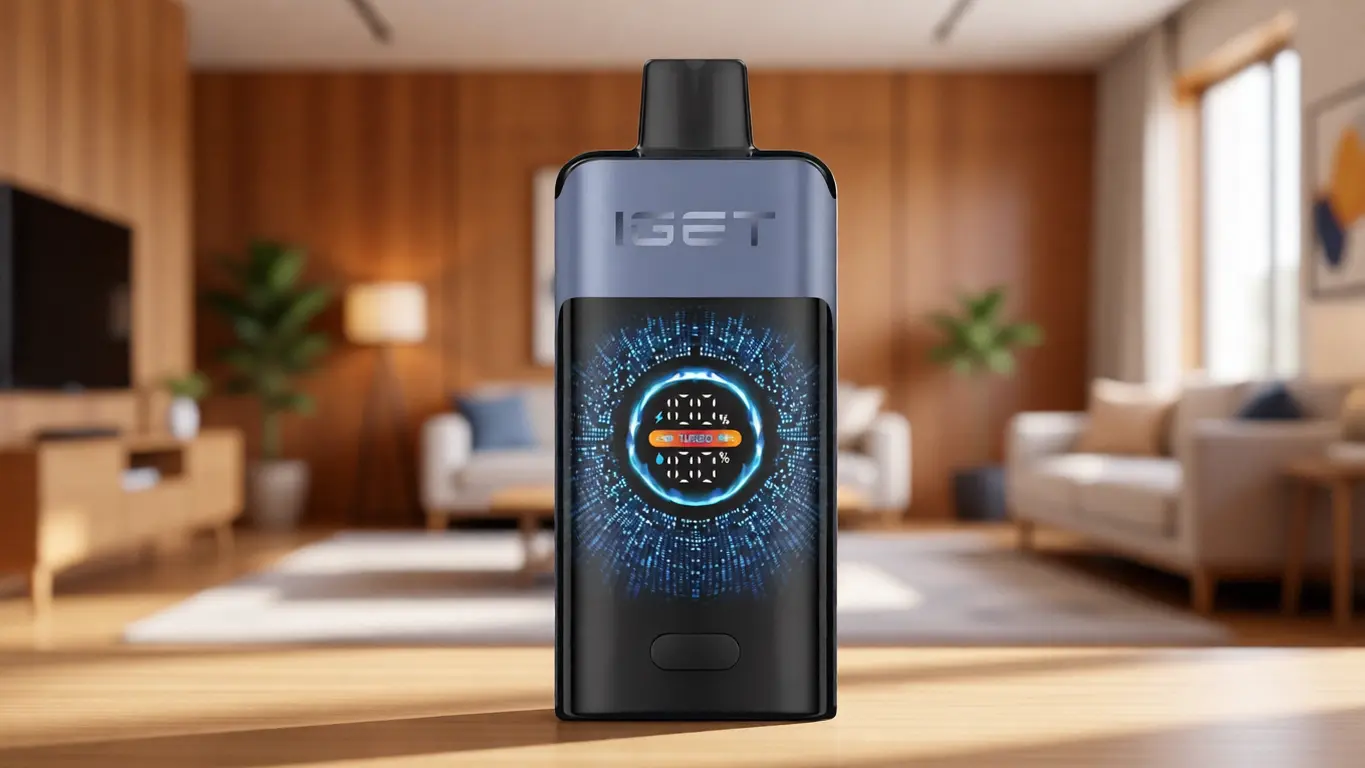
It is also worth noting the emphasis on visible status communication. Devices that incorporate a clear, easy‑to‑read battery and liquid level indicator remove the guesswork that leads users to draw harder on a dying cell, inadvertently heating the coil above the intended range in a futile attempt to extract more output. Transparency of device status is not a convenience; it is a practical temperature‑stabilising tool.
Other device families available across the market may prioritise extreme compactness or an aesthetic resemblance to traditional form factors. In those designs, internal heat‑sinking is often minimal, and airflow pathways are constrained, resulting in a noticeably hotter mouthpiece and a higher incidence of scorched‑tasting draws after moderate use. The comparison is not about brand superiority; it is about recognising that different engineering priorities produce distinct thermal signatures, and the user who understands this can select a device that matches their actual draw style and duration.
A Practical Framework for Evaluation
You can appraise any device’s likely thermal behaviour before committing to it by running through a short diagnostic checklist:
Can you view the coil or read a detailed specification? If the resistance, material, and heating‑element geometry are not disclosed, you cannot estimate the temperature envelope.
Does the device have a clear remaining‑capacity indicator? A lack of status feedback correlates strongly with users running coils past the point of safe saturation, triggering temperature spikes.
What do long‑term user reports say about flavour consistency toward the end of the device’s lifespan? If multiple independent accounts mention burnt or hot draws at the halfway mark, the thermal equilibrium is failing prematurely.
Is the airflow path described or visible? Devices with a clearly engineered airflow intake — vents positioned away from the hand, channels that wrap around the coil housing — tend to maintain lower operating temperatures than sealed, unvented units.
Does the device incorporate any form of output regulation? Constant‑voltage or temperature‑control boards are not always advertised loudly, but their presence is a reliable signal that coil temperature will stay within a managed range.
Working through this framework with an intention to match thermal behaviour to your daily usage pattern — short, gentle draws versus long, consecutive draws — will eliminate most disappointing choices before they ever reach your pocket.
Common Selection Errors and Industry Observations
The gap between what users expect and what they experience often has less to do with a device being defective and more to do with a few mis‑steps in how thermal performance is evaluated.
Error one: equating high advertised puff counts with thermal endurance. Puff count is a measure of reservoir volume and wattage economy, not a guarantee that the coil will stay within a safe temperature band for those puffs. A device can be engineered to deliver 9,000 draws on paper while allowing the coil to overheat after the first 3,000 because the wicking cannot keep up. Temperature stability and puff count are independent variables.
Error two: assuming that visual similarity indicates equivalent internal design. The market is awash with devices that share a silhouette and a rounded mouthpiece but differ enormously in their internal thermal architecture. A mesh coil encased in a proper heat sink is not the same as a simple wire wrapped around a silica wick stuffed into an identical‑looking shell. Externals are not engineering.
Error three: undervaluing airflow design in favour of pure wattage. Users sometimes fixate on higher‑wattage devices, expecting a denser vapour, only to find the mouthpiece uncomfortably hot and the flavour distorted. In many cases, a well‑ventilated, lower‑wattage coil running at a controlled temperature produces more satisfying results precisely because it avoids thermal breakdown of the flavouring compounds. Airflow is not a secondary feature; it is the primary cooling mechanism.
Error four: misapplying data from one device category to another. A coil temperature reading of 220 °C in an open‑system rebuildable atomizer with generous airflow means something quite different from the same reading in a sealed, compact device where there is little room for heat dissipation. The surrounding chassis, the proximity of the mouthpiece, and the thermal mass of the housing all affect the perceived heat, regardless of what a thermocouple says at the wire surface. Context matters.
From an industry vantage point, it is observable that some manufacturers now treat thermal management as a core differentiator, investing in mesh‑coil geometry that profiles temperature across a wide contact area and pairing it with metal‑alloy bodies that actively wick heat away from the mouthpiece. Others continue to recycle a basic architecture while competing on price alone. The devices that endure in user favour are the ones that protect the thermal window in which flavour compounds stay intact, and that protection increasingly defines the line separating equipment worth recommending from equipment that leaves behind a string of burnt‑tasting memories.
Frequently Asked Questions
Q: What is the typical temperature of a vape coil during normal use?
A: In a properly saturated, regulated device, the coil surface typically operates between 180 °C and 220 °C. Temperature‑control modes aim to clamp within this band. Unregulated or poorly wicked coils can briefly spike above 300 °C.
Q: Does coil temperature affect the safety of the vapour?
A: Yes. Sustained temperatures above approximately 235 °C can cause thermal breakdown of carrier liquids, potentially producing undesirable carbonyl compounds. Operating below this threshold is a primary reason for precise temperature regulation.
Q: How can I tell if my coil is getting too hot?
A: The earliest warning is a sudden acrid or burnt taste, often accompanied by an unusually warm or hot mouthpiece. If you notice this regularly before the reservoir is empty, the device’s thermal management is not matching your usage style.
Q: Do mesh coils run cooler than traditional wire coils?
A: Generally, yes. By distributing the same power across a larger surface area, mesh coils reduce peak heat flux, keeping maximum surface temperature lower and temperature distribution more even.
Q: Does the coil material change the temperature I experience?
A: It changes how the coil responds to power. Stainless steel’s increasing resistance with heat makes it suitable for temperature control; Kanthal’s flat resistance curve works well for fixed‑voltage devices. The material itself doesn’t set the temperature, but it determines how predictably the device can limit it.
Q: Can a high‑puff‑count device still overheat?
A: Absolutely. Puff count relates to liquid capacity and power economy. If the wicking design cannot replenish the coil quickly enough during back‑to‑back draws, the coil will overheat regardless of how much liquid is left in the tank.
Q: What engineering features help a device stay cooler?
A: Efficient airflow channels that direct air across the coil, mesh‑style heating elements, metal‑alloy housings that act as heat sinks, and regulated power boards that prevent wattage overshoot all contribute to lower operating temperatures.
Q: How does OZVAPE Shop ensure the devices it stocks manage heat appropriately?
A: OZVAPE Shop curates inventory from brands that document their coil materials, resistances, and power‑regulation features. The platform standardises specifications so adult users can compare thermal management capability alongside other attributes, and it sources only from factory‑certified channels to ensure the device you receive matches its published engineering.
Q: If I want a device that runs consistently cool, what should I look for?
A: Prioritise devices with mesh coils, clearly defined airflow paths, a status indicator for battery and liquid level, and some form of output regulation. Handle the device in person if possible; a metal body that passively dissipates heat is preferable to a fully sealed plastic shell.
Q: Is it normal for a device’s mouthpiece to feel warm?
A: Slight warmth after extended use is normal. If the mouthpiece becomes uncomfortably hot or the vapour feels distinctly hot on the throat, the internal temperature is probably exceeding the intended range and airflow may be insufficient.
Conclusion
A vape coil’s temperature is not a fixed property; it is a dynamic outcome of a particular combination of resistance, power, material, wicking, and airflow — and it governs whether each draw tastes clean or ends in an acrid surprise. Knowing that a well‑sorted coil lives comfortably between 180 °C and 220 °C gives you a reference point, but the deeper value lies in recognising the design elements that keep it there, draw after draw, across the full span of a device’s operational life. The ALIBARBAR lineup, with its mesh‑coil architecture and regulated output, illustrates what a thermally disciplined device looks like, and a retailer that makes engineering details transparent — such as OZVAPE Shop — gives you the information required to act on that understanding rather than leaving it to chance. An uninformed choice is always a gamble; once you learn to read the thermal clues embedded in a device’s design, you stop gambling and simply choose what suits your rhythm.