
VAPE FAQs
How Far Can Vape Detectors Detect?

Oct
As the presence of personal electronic devices becomes more common in shared spaces, a parallel technology has emerged: environmental sensors designed to detect aerosol particles or chemical traces associated with device use. Property managers, school administrators, and facility operators deploy these detectors with the stated goal of enforcing policies. But for the adult user who simply wants to understand the privacy and practical boundaries of such monitoring, one question surfaces repeatedly: how far can these detectors actually “see”?
The answer is not a single number printed on a specification sheet. It is a moving target shaped by sensor physics, room geometry, ventilation patterns, and — crucially — the assumptions built into the detector’s firmware. At OZVAPE Shop, we believe that informed adults deserve plain‑language explanations of matters that affect their daily lives, without hype or deflection. This article provides a structured, technically grounded look at the detection range question, drawing on observable industry patterns and engineering fundamentals. You will come away with a realistic framework for interpreting manufacturer claims, and a clearer picture of what is — and isn’t — reliably measurable.
Understanding Detection Range: The Core Factors
Detection range is not a single property of a device; it is an outcome of several interacting systems. Knowing what to look for in each layer gives you a much more reliable mental model than any headline figure.
Sensor Technology and the Physics of Capture
Most vape detectors fall into two categories: particulate sensors (which measure airborne particle concentration, often using laser scattering) and chemical sensors (which respond to specific volatile organic compounds). Particulate sensors are inherently line‑of‑sight; they sample air that flows into a small chamber. Their effective range is essentially the distance from which an aerosol plume can reliably reach the sensor inlet before diluting below the detection threshold. In still air, a focused plume might be detectable at 4–6 metres, but in a ventilated corridor, that figure can drop below 2 metres.
Chemical sensors, which rely on adsorption onto a sensitive surface, have a different constraint: they are concentration‑dependent and can be slow to react. A detector with a chemical sensor might be advertised as covering a “room,” but what that usually means is that in a sealed, unventilated space of a given volume, it will eventually register a change — not that it can pinpoint a source in real time.
Environmental Influence and Placement Realities
Even the most advanced sensor cannot overcome the physics of air movement. A ceiling‑mounted unit in a hallway with a steady flow of conditioned air creates a moving curtain that can whisk a plume away before the sensor ever sees it. The same unit placed in a small, stagnant bathroom will behave very differently. Key environmental multipliers include:
Air exchange rate: Higher ACH (air changes per hour) drastically reduces effective range.
Thermal stratification: Warm aerosol can rise and bypass a sensor mounted too low, or be trapped near a ceiling and miss a desk‑level sensor.
Obstruction geometry: Partitions, furniture, and even standing bodies can create micro‑eddies that hold aerosol in place, or sweep it past a sensor before it triggers.
Power, Calibration, and Drift
A detector that is not periodically calibrated against a known particulate source will gradually drift. A sensor whose lens has accumulated a fine layer of dust may report false positives or, worse, raise its internal threshold to avoid nuisance alarms — effectively reducing its detection range without any outward indication. Status transparency is therefore a critical, and often overlooked, aspect of performance. If a device gives you no real‑time feedback about its signal‑to‑noise ratio or last calibration date, you are operating partially in the dark.
Data Integration and Alert Latency
Many modern detectors are networked. The time from a sensor registering a threshold breach to an alert appearing on a console can be seconds or minutes, depending on polling intervals and processing logic. This does not change the physical range, but it affects the perceived responsiveness. A system that aggregates readings over 30‑second windows may appear to have a narrower detection envelope than one that streams continuously, simply because a transient plume has dissipated by the time the data is evaluated.
Applying These Criteria to Real‑World Detector Performance
Commercially available detectors typically quote an operating radius that implies a perfectly spherical coverage zone. In practice, a device advertised with a “4.5‑metre detection range” means the following: under ideal laboratory conditions — still air, fixed particle size, direct line of sight — the sensor can reliably register a pulse at that distance. Outside the lab, treat that number as an upper bound, not a guarantee.
Facility managers who understand this reality often adopt a layered approach. They install units closer together than the stated maximum, especially in high‑traffic areas, and complement particulate sensors with pressure‑differential or sound‑based triggers. The underlying lesson: the “range” number on a sheet is best understood as a starting point for estimating how many units a room needs, not as a promise that every emission within that circle will be captured.
A Practical Framework for Evaluating Detection Claims
If you need to assess whether a given detector installation has meaningful reach, you can apply a simple diagnostic sequence without any special equipment:
Request the calibration protocol. A manufacturer that publishes how and how often their sensor should be field‑verified is revealing something about their confidence in long‑term stability.
Ask about the sensor’s minimum detectable mass concentration (µg/m³). Lower thresholds generally mean longer effective range, because a plume disperses as it travels.
Observe placement relative to airflow. Mentally trace the primary airstream; if the sensor is downstream of where an emission would occur, its practical range is far shorter than if it is directly in the flow path.
Test with a harmless, analogous aerosol. A small ultrasonic humidifier puff can sometimes reveal plume behaviour visually, helping you map how far a coherent plume travels before breaking up.
Check for alert history and false‑positive rates. A detector that triggers excessively may have been recalibrated to be less sensitive, often without a public notice.
This framework doesn’t require trusting a manufacturer’s marketing; it uses observable, physical logic to set realistic expectations.
Common Misconceptions That Undermine Sound Judgment
“A higher sensitivity always means more detection range.”
Sensitivity and range are related, but not linearly. A hyper‑sensitive sensor in a dusty environment may be deliberately desensitised in firmware to avoid constant false alarms. The actual detection envelope might shrink as a result.
“If my device produces less visible aerosol, I’m outside its reach.”
Many chemical sensors do not rely on visible particulates. A low‑odour compound can still trigger a sensor tuned to a specific molecular signature, even if the user sees no cloud. Understanding what a sensor is looking for matters more than assuming that a faint output equals invisibility.
“A detector that covers a classroom will cover a warehouse.”
Room volume and shape dominate range. A sensor rated for 60 m² of still‑air classroom will behave entirely differently in a 200 m² open space with constant air turnover. Scaling a detection estimate linearly is a fast route to disappointment.
“All detectors are designed to catch everything.”
In practice, many deployed detectors are primarily aimed at combustible cigarette smoke and have particle‑size cutoffs optimised for that purpose. The aerosol from a modern portable device may have a different size distribution and can slip past a sensor designed for a different target. This is not a design flaw so much as a mismatch in intended use.
Frequently Asked Questions
Q: What is the typical detection radius for a vape sensor?
A: Under ideal conditions, most particulate‑based detectors can capture a plume at 3–5 metres. Chemical sensors often rely on room‑level accumulation, so they are evaluated more by room volume than by point‑source radius.
Q: Can a vape detector see through walls or around corners?
A: No. Aerosol particles and chemical vapours move with air currents. A solid wall is an absolute barrier. A plume must physically reach the sensor’s inlet or be drawn into it by a fan. Doors, windows, and even large furniture pieces can effectively carve detection voids.
Q: Does wearing a mask or using air purifiers reduce detection distance?
A: Masks on the user do not significantly change the amount of aerosol released, but they can alter the plume’s direction. A HEPA filter nearby can dramatically reduce airborne particle concentration, effectively shrinking the detector’s reach by cleaning the air before it hits the sensor.
Q: Are detectors more sensitive to repeat exposure?
A: Not typically. Unless a sensor remains contaminated from a previous event, its response is based on instantaneous or windowed concentration. However, some systems use trend analysis to look for repeated patterns, which can trigger an alert even if a single event by itself would not.
Q: Can environmental factors like humidity affect detection range?
A: Yes. High humidity can cause particle growth, actually making some detectors more sensitive in the short term, but it can also fog optical sensors and lead to faster drift. Direct water condensation on a sensor lens instantly reduces range to near zero.
Q: How can I verify the detection range of an installed unit?
A: As a non‑administrator, you usually cannot. The most reliable approach is to ask the building operator for the make and model, then look up the manufacturer’s laboratory test conditions. Compare those conditions to the real environment: ventilation rate, ceiling height, and furnishings.
Q: If a detector’s stated range is 5 metres, should I assume it covers a 5‑metre sphere?
A: No. The stated range is almost always a maximum achievable under controlled airflow. In a typical room, treat at least half the advertised figure as the practical, consistent envelope.
Q: Do all detectors alert instantly?
A: Rarely. Many buffer readings to avoid false positives. A 10‑second delay is common; some systems aggregate over a minute. That changes the temporal reach: a brief puff at 3 metres might disperse before the averaging window closes.
Q: Are there detectors that can identify specific devices?
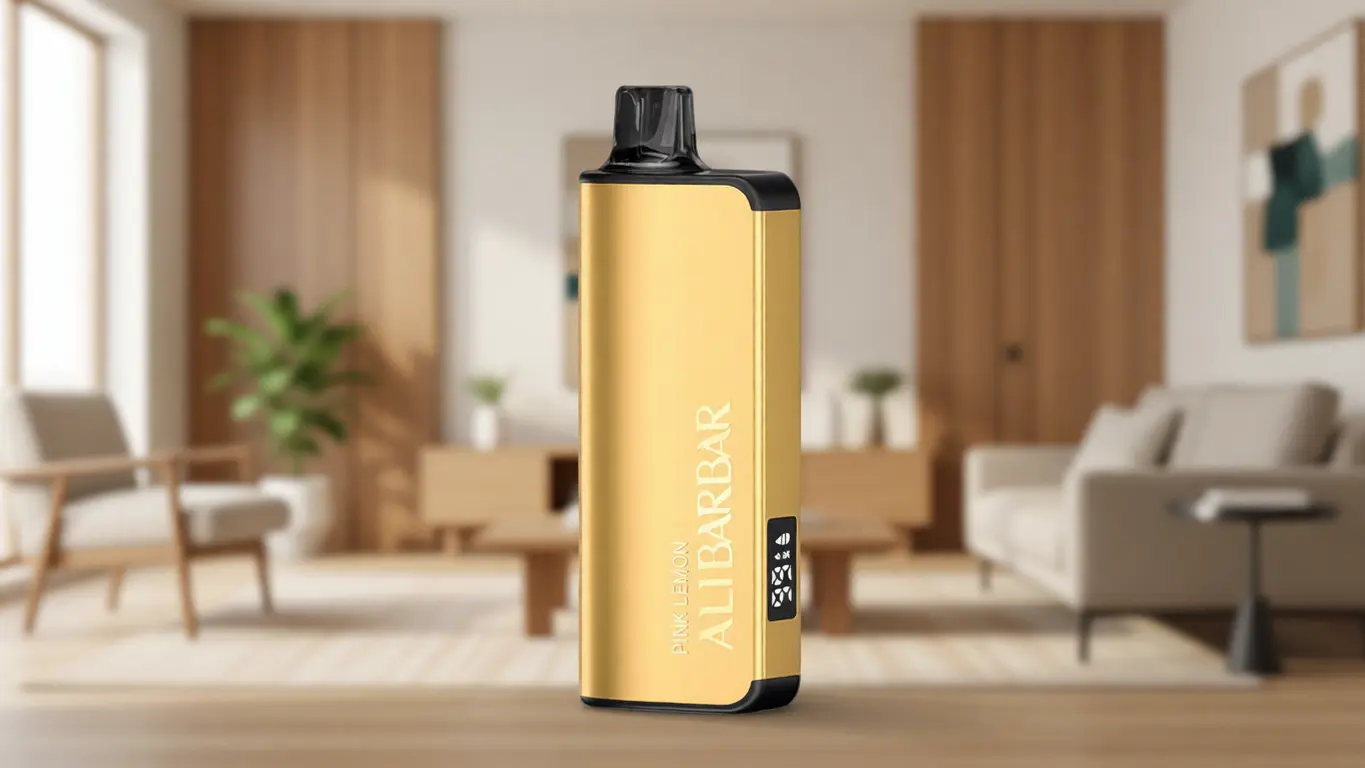
A: Not by brand or model. Some chemical sensors can broadly classify compounds, but they cannot fingerprint a specific device line like ALIBARBAR. The technology currently detects general categories of emission, not device‑level signatures.
Q: Can I shield a sensor’s view without blocking it entirely?
A: Redirecting airflow is the primary method. A small desk fan blowing perpendicular to the sensor can push a plume aside. However, deliberately tampering with safety equipment in a facility may violate policies, so it’s important to stay within the rules.
Where Clarity Lives: The Value of Thinking in Systems
Vape detection distance is not a number; it is a system behaviour. Once you move from asking “how far” to asking “under what air conditions, with what sensor type, and with what calibration,” you are already making better decisions than someone who simply reads a spec sheet. That shift in thinking — from headline figures to context‑dependent physics — is exactly the kind of informed perspective we encourage at OZVAPE Shop. We exist to help adult users understand the technology that surrounds them, without exaggeration and without skipping the uncomfortable parts.
When you evaluate a detector’s reach, you are not really measuring distance. You are measuring the coherence of an aerosol plume, the dilution power of the air around it, and the sensor’s ability to distinguish a faint signal from background noise. None of those variables stays constant from room to room, or even from hour to hour. Recognising that uncertainty is not a weakness; it is the beginning of genuine competence.
Visit OZVAPE Shop for straightforward resources, factory‑certified devices, and a support team that treats adult decision‑making with the seriousness it deserves. The right choice is the one that accounts for the real conditions of your life, not the one that looks best on a comparison chart.