
VAPE FAQs
How Expensive Is A Vape?
Oct
The question appears simple: how much does a vape cost? Walk into any shop or scroll through a product listing, and you will see numbers ranging from under ten dollars to well over a hundred. Yet what you pay at the counter — or add to the cart — is a remarkably unreliable indicator of what the device will actually cost you over the weeks and months you use it. A unit priced at $35 may end up cheaper per day than one priced at $25, once you account for how long it reliably performs and what additional purchases it demands. The real cost is hidden in the engineering.
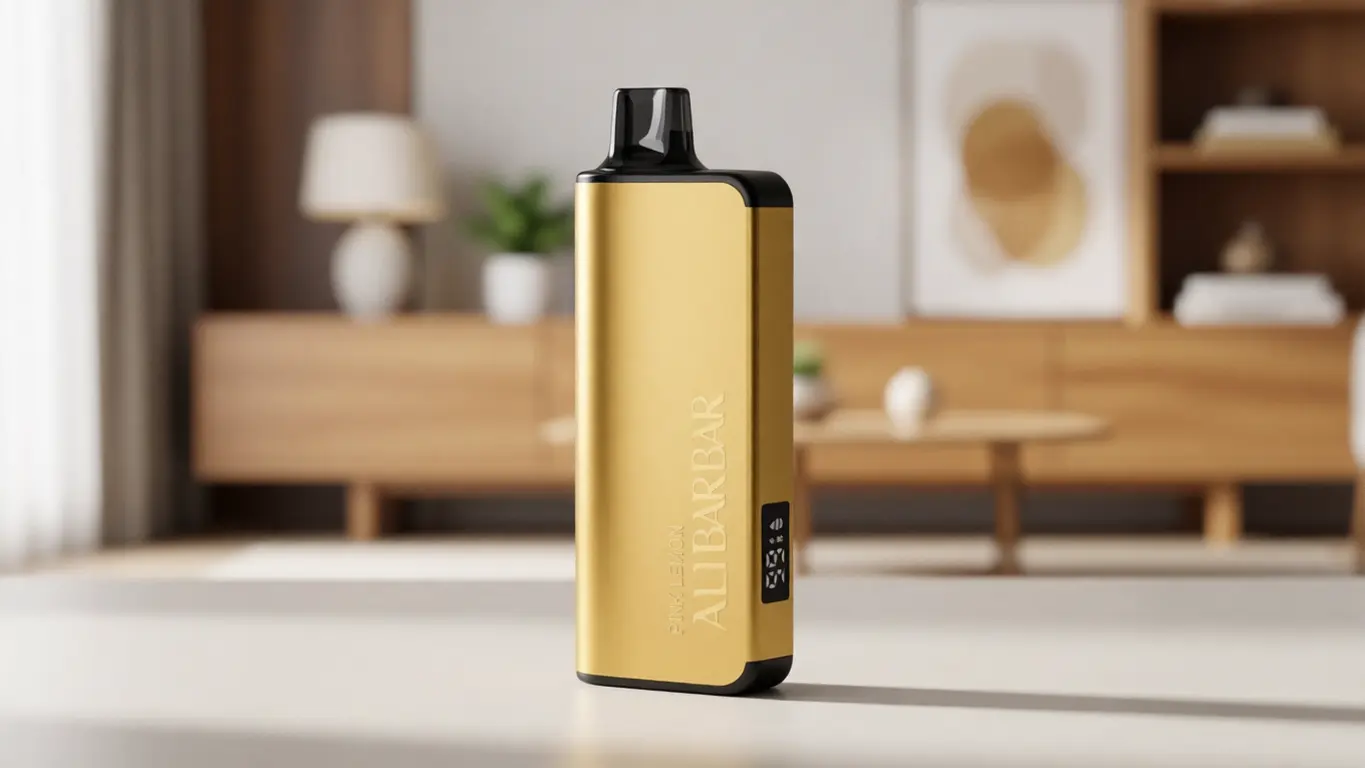
This article is written for the adult who wants to understand those hidden factors, not just compare sticker prices. We will walk through the design decisions that determine how long a device lasts, how consistently it operates, and what you will spend on an ongoing basis. Along the way, we will refer to real product families — such as the ALIBARBAR range available through OZVAPE Shop — not as recommendations, but as concrete examples of how these cost drivers play out in the devices you will encounter.
What Really Determines the Cost of a Vape?
The price tag is a single data point. To understand true expense, you have to look inside the device and at how its design interacts with your daily habits. Four engineering factors matter most.
1. Internal Architecture and Output Consistency
At the core of any device is the heating element and the way it draws on the available liquid. Poorly matched components produce dry, uneven output or leave usable liquid trapped inside when the device signals empty. That wasted capacity directly inflates your cost per use.
Well-engineered units, by contrast, maintain steady vapour production from the first activation to the last. This requires thermal management that keeps the heating surface at a stable temperature and a wicking system that feeds consistently without flooding or starving the coil. For example, the ALIBARBAR INGOT 9000 uses a vertical wicking structure paired with a mesh heating element — a configuration that tends to deliver consistent output over its entire rated lifespan. That means you get close to the advertised number of cycles, and you are not tempted to replace the device early because performance has declined.
If a unit’s output becomes noticeably weaker after moderate use, its effective cost per satisfactory draw jumps. You may find that a device priced 20% higher actually costs less per week if it avoids that late-life degradation.
2. Power Management and Status Transparency
Battery behaviour is a hidden cost driver. Devices that lack regulated power output suffer from voltage sag as the cell discharges. When voltage drops, the heating element operates below its optimal range, affecting performance and often causing users to assume the device is finished before it truly is. The result is premature replacement and a higher daily cost.
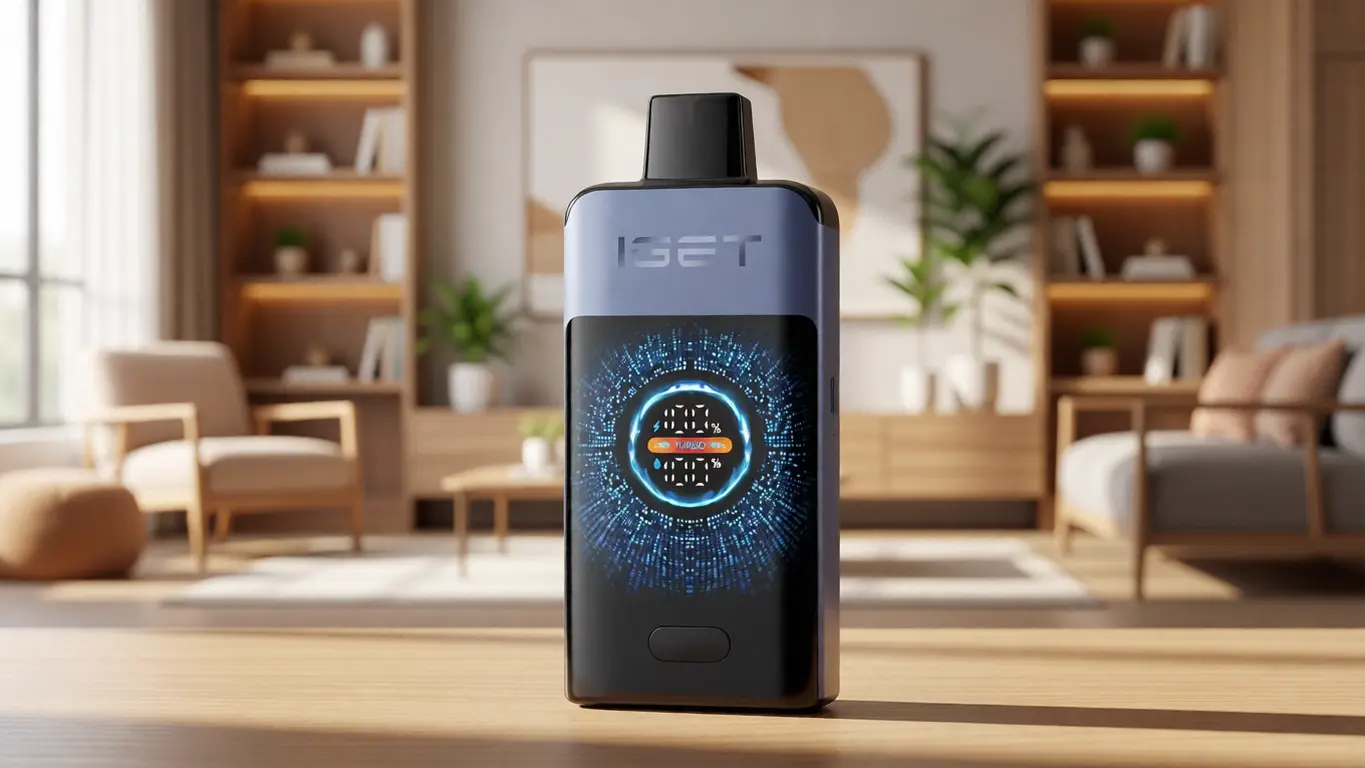
Clear status indicators are the other side of this equation. A device that gives you a precise readout of remaining charge — or at least a multi-stage LED that tells you where you stand — removes guesswork. Without this, users naturally compensate by carrying a backup or recharging devices that still have life left in them. That behaviour effectively doubles your hardware investment for the same usage window. Some modern designs, such as the ALIBARBAR Ice Adjust 12000, incorporate battery gauges that report charge in discrete steps. That small engineering choice translates directly into lower anxiety and fewer wasted purchases.
3. Physical Design and Material Durability
The outer shell and mouthpiece geometry may seem cosmetic, but they have direct cost implications. A device that scratches easily, develops a loose pod connection, or has a mouthpiece that becomes uncomfortable after a few minutes of use will be retired far sooner than its internal components demand.
Anodised metal bodies, reinforced connectors, and mouthpieces shaped for extended contact all extend the device’s useful life in real-world conditions — pockets, bags, and daily commutes. The ALIBARBAR INGOT 15000, for instance, is built with a substantial hand-feel and a durable finish that resists surface wear. When you pay for that level of construction, you are essentially deferring the purchase of a replacement. Conversely, a flimsy plastic unit that looks shabby after two days can generate a hidden “cosmetic replacement” cost, even if it is still functioning.
4. Modularity and Lifecycle Flexibility
Sealed disposable devices have a single upfront cost and no ongoing outlay for parts. Their cost per use depends entirely on whether you extract the full rated cycles and whether you avoid early discard due to performance falloff. A rechargeable pod system, on the other hand, involves a higher initial purchase but lower per-refill cost over time, provided you are a frequent enough user to spread the hardware cost across many pods.
Heavy users — those who go through the equivalent of a disposable’s capacity in a few days — often find that a rechargeable device yields a lower monthly expense. Light, occasional users may actually save money with a well-built disposable that sits reliably for weeks without maintenance. The key is to match the architecture to your rhythm, not to assume that one category is universally cheaper. ALIBARBAR’s range spans both sealed high-capacity devices and adjustable systems, illustrating that the right choice is not about picking a category but about picking the right capacity for your pattern.
Applying These Principles to Real Product Types
How do these engineering truths translate into dollars? Here is a look at common device categories, with approximate costs based on current Australian market observations.
Pre-filled sealed devices
These dominate the lower end of the upfront spectrum, often ranging from $15 to $45. The wide price gap within this single category reflects differences in liquid capacity, heating element quality, and rated lifespan. A $15 device that is comfortable to use but delivers half the advertised puffs will end up costing more per usable cycle than a $35 device that performs consistently to the end of its tank. The ALIBARBAR INGOT 9000, typically found in the mid-$30 range at authorised outlets, can serve as a reference point for what an honest high-capacity disposable should cost when its engineering matches its rating.
Rechargeable pod systems
Starter kits commonly sit between $35 and $70, with replacement pods priced at $5–$10 each. For a user who consumes the equivalent of one pod per week, the hardware cost is amortised over months, and the per-use figure drops well below that of a quality disposable. However, if your consumption is low, the unused pod liquid can degrade over time, and the initial outlay may never be recouped.
Advanced mod and tank combinations
These setups can run from $60 to well over $120 for the device alone, plus batteries and external chargers. For someone who builds their own coils and mixes their own liquid, the per-session cost can become negligible after the initial investment. But the learning curve and time commitment are substantial, and they only make financial sense for high-volume users who value extreme customisation.
The thread running through all of these is that the real cost is always calculated over months, not minutes. And that calculation is impossible without reliable data on how a device actually performs.
A Practical Framework for Calculating True Cost
You do not need proprietary software to work this out. A disciplined, consistent method will serve you better than any brand’s marketing claim.
Determine your approximate daily consumption. Count the number of activations or the volume of liquid you use in a typical day. Be honest: a day that includes social activity or extended time away from home may be higher.
Identify the device’s rated capacity. Look for a specific puff count or millilitre rating from the manufacturer. Disregard vague terms like “high capacity” without a number.
Divide the purchase price by the rated capacity. This gives you a baseline cost per puff or per millilitre.
Apply a reliability factor. Even excellent devices do not always deliver 100% of their rating in real-world use. If the device is known for consistent output and is sourced through an authorised channel, use a factor of 0.85–0.95. If it is an unfamiliar brand with no track record, lower that figure. A device that routinely underdelivers by 30% inflates your effective cost by nearly half.
Add any necessary accessories or ongoing purchases. For rechargeable systems, include the average cost of replacement pods and coils over the same period you used in step 1.
Compare the total monthly cost across several devices. This exercise often reveals that a device with a higher sticker price is the more economical choice.
Diagnostic question to ask yourself: Does this device give me clear feedback on remaining charge and liquid? If the answer is no, you are operating blind and will naturally replace it earlier than necessary. That behaviour alone can add 20–30% to your annual spend.
Common Mistakes When Evaluating Cost
Real-world purchasing behaviour is shaped by shortcuts that rarely lead to the best value. Here are the most frequent errors — rooted in industry observation — and why they undermine your satisfaction.
1. Overweighting the upfront price
A $20 device that fails after two days or provides harsh, inconsistent output leaves you either buying another one or tolerating a poor experience. A $35 device that works consistently for its full lifetime actually costs less per week. This is the single most common miscalculation, and it persists because the long-term data is not visible at the point of sale.
2. Assuming visual similarity means identical internal engineering
Two devices may share the same cylindrical form and colour palette but have completely different heating elements, wicking materials, and battery regulation. The cost of the cheaper unit often reflects component savings that the user will pay for later in reduced performance.
3. Undervaluing modularity in cost-per-use calculations
A rechargeable pod system’s starter kit price can look intimidating next to a disposable. But if the pods cost $6 and last a week, the weekly spend quickly undershoots the cost of using two or three disposables covering the same volume. Ignoring modularity causes many adult users to stay locked into a higher ongoing expense.
4. Confusing category terminology with technical specifications
The market has blurred the meaning of terms like “high capacity” and “long-life.” Some manufacturers assign puff counts that are difficult to verify, while others publish conservative figures backed by real engineering. Genuine ALIBARBAR devices, for instance, have gained a reputation for ratings that are achievable rather than aspirational — a distinction that only becomes clear when you track actual usage. Products sourced through transparent channels such as OZVAPE Shop are more likely to reflect this consistency, simply because authorised supply chains discourage the distribution of mislabelled inventory.
Frequently Asked Questions
Q: What is the cheapest type of vape?
A: In upfront terms, a basic sealed disposable can cost as little as $10. However, its cost per satisfactory use may be higher if it fails early or delivers less than half its advertised cycles. Over a month, a mid-range rechargeable system often becomes the least expensive option for regular users.
Q: How much does a reliable disposable vape cost?
A: A well-engineered high-capacity device with verified performance typically falls between $25 and $45 at Australian retailers. Prices far below this often signal quality compromises that translate to a higher effective cost.
Q: Is a reusable vape always cheaper in the long run?
A: Not universally. For someone who uses a device lightly — a few activations per day — a high-quality disposable that lasts weeks may actually be less expensive because there are no separate pod or coil purchases. The break-even point depends entirely on your consumption volume.
Q: Can spending more initially save me money?
A: Often, yes. The extra cost can buy better thermal management, a more durable finish, and a power delivery system that sustains performance across the device’s life. Over a three-month period, a $40 unit that consistently extracts all its available liquid can be significantly cheaper per day than a $20 unit that degrades after the first week.
Q: Why do some devices claim similar puff counts but have very different prices?
A: Puff count is a function of both liquid volume and atomiser efficiency. But not all ratings are equally reliable. Devices from manufacturers that enforce tight quality control tend to deliver close to the stated figure, while others may fall short. Independent user feedback and retailer curation are two practical filters.
Q: How can I avoid buying a counterfeit device that performs poorly?
A: Purchase through authorised retailers that maintain documented supply chains. OZVAPE Shop, for example, sources inventory exclusively from factory-certified networks. Check packaging for verification codes where available, and be wary of prices that seem unsustainably low.
Q: What is a typical daily cost of using a vape in Australia?
A: For a frequent user on a high-capacity sealed device, the daily cost runs approximately $2–$4. With a pod system, after the initial starter kit, it may drop to $1–$2 per day. Heavy users should expect figures at the upper end of these ranges, and personalised consumption tracking is the only way to get an accurate number.
Q: Do all vapes need replacement parts?
A: No. Sealed disposables are entirely self-contained and require no additional purchases. Rechargeable systems, however, rely on replaceable pods or coils. That ongoing expense must be factored into any cost comparison.
Q: Over the course of a year, what costs more — the device or the consumables?
A: For rechargeable systems, consumables — pods, coils, or bottled liquid — almost always surpass the initial hardware cost over a twelve-month period. For sealed disposables, you simply repurchase the entire unit, so the “consumable” and “device” costs are one and the same. The framework earlier in this article is designed to help you weigh the two.
Q: Which device type should I choose if my priority is the lowest possible cost?
A: Start by tracking your actual usage for a week. Then apply the cost-per-use framework to devices in different categories, factoring in a reliability coefficient. Low-use individuals often do best with a durable, high-capacity sealed device. Moderate-to-heavy users consistently benefit from a rechargeable pod system with affordable replacements. Avoid any unit that lacks clear status feedback, as it will force you into wasteful backup purchases.
The Bottom Line
The cost of a vape is never just a number on a shelf. It is the accumulation of engineering choices, production integrity, and your own daily pattern — a figure that only reveals itself over weeks of consistent use. By looking past the sticker to the internal architecture, power behaviour, material durability, and lifecycle design of a device, you shift from guessing to knowing. That is the difference between repeatedly spending money to solve the same problem and making one thoughtful purchase that fits.
If you want to explore options grounded in the principles discussed here, the ALIBARBAR collection — accessible through OZVAPE Shop — includes designs engineered for transparent, predictable performance. Ultimately, the right device is not the one with the most aggressive marketing or the lowest initial price. It is the one that quietly matches your actual routine, day after day, without demanding more of your attention or your wallet than it ought to.