
VAPE FAQs
How Do You Unburn A Vape?
Jun
You notice it instantly: a hot, acrid sensation that overwhelms any intended note. The first reflex is almost always to draw harder, hoping the taste will clear — but that only makes the damage worse. A burnt device can feel like a total loss, particularly when it’s fresh out of the packaging or hasn’t seen heavy use. Before you dispose of anything, it helps to understand exactly what is happening inside the unit and whether the situation can be salvaged. At OZVAPE Shop, we regularly hear from users who unnecessarily retire a device they could have rescued with the right diagnostic steps. This guide separates recoverable issues from permanent damage, and explains what the market’s better-engineered products do to stop burning from occurring in the first place.
Understanding Why a Vape Tastes Burnt: The Engineering Factors
A burnt taste isn’t a single fault but a symptom that can point to several different underlying problems. When you know which part of the system is failing, you can judge whether a fix exists and how to avoid the issue with your next purchase.
Internal Architecture and Heat Transfer
At the core of every device is a heating element — often a wire coil — surrounded by a wicking material that draws liquid into contact with the heat source. The coil itself doesn’t burn; what you taste is the scorched residue of the wick or the liquid components breaking down under excessive temperature. If the coil heats faster than the wick can resupply liquid, dry spots form, and those spots carbonise almost instantly. Once that carbon layer builds up, it taints every subsequent draw.
Devices with temperature-regulation circuitry constantly sample coil resistance and cut power when a threshold is exceeded. In contrast, simple fixed-voltage devices rely entirely on the wicking rate to stay ahead of the coil temperature. That’s why a well-designed coil-and-wick assembly — with precisely machined wire mass and medical-grade cotton or ceramic wicking — will maintain consistency far longer than a generic counterpart made to the same external dimensions. When evaluating any device, checking whether the manufacturer publishes details about coil composition and wick material is a strong predictor of longevity.
Power Consistency and Dry Hits
Even a perfectly primed coil can scorch if the power delivery isn’t stable. Battery output sags as the cell depletes, and in poorly calibrated devices, the control board may spike voltage under certain loads. These transient surges can locally overheat the coil before the wick has a chance to re-saturate. The result is a brief, intensely acrid puff, often described as a “dry hit.”
Manufacturers that invest in consistent power management — through buck-boost circuits or digitally controlled output — remove one of the most common sources of random burning. Users coming to OZVAPE Shop after repeated dry-hit frustrations with cheaper products frequently notice that a device engineered with output regulation simply doesn’t produce those random spikes, regardless of how fully charged the battery is.
Material Quality and Compatibility
Not all liquids vaporise at the same rate. A high-viscosity solution that works flawlessly in a large-bore coil may struggle to penetrate the tight cotton packing of a mouth-to-lung device. When the wick cannot transport liquid quickly enough, localised drying and burning are inevitable, even if the reservoir still looks full. The coil material itself matters too: kanthal, stainless steel, and nichrome all respond differently to power, and certain materials are more tolerant of brief dry conditions. Quality manufacturers pair specific coil architectures with recommended liquid profiles, reducing guesswork for the end user.
Airflow and User Behaviour
The rate at which air moves across the coil directly cools it. A gentle, slower draw keeps the coil at a moderate temperature; a hard, rapid pull can momentarily lower the temperature but also introduces more oxygen, which can exacerbate hot spots if the wick is already struggling. Users who tend to chain several draws in quick succession compound the problem, because the wick never recovers its saturation between firings. No amount of clever engineering can fully compensate for sustained, aggressive use, though devices with larger liquid reservoirs and generous wick ports will tolerate heavy usage far longer.
When the Burn Is Reversible: Restoration Techniques
Recovery depends almost entirely on the device architecture. For sealed disposable units, once the wick is carbonised the defect is permanent — opening the casing is rarely feasible and the heating element isn’t accessible. However, the experience still teaches you what to look out for next time. For refillable or pod-based systems with replaceable coil heads, several methods may salvage a lightly burned situation.
Prime thoroughly before first use. If the coil is new and you’ve just experienced a burn, it was likely never fully saturated. Remove the coil, drip a few drops of liquid directly onto the exposed cotton wicking ports, reassemble, fill the tank, and let it stand upright for at least ten minutes. Without power, take a few unpowered draws to pull liquid into the coil. More coils are destroyed by impatience in the first five minutes than during the rest of their operational life.
Clean gently, but only if the burn is mild. Sometimes what tastes like a burn is actually a layer of caramelised sweetener from the liquid, not destroyed cotton. Remove the coil and soak it in warm distilled water or unflavoured propylene glycol overnight, then let it dry completely. This can flush out soluble deposits. If the cotton is visibly darkened or blackened, no soak will recover it — those carbon bonds are permanent.
Lower the power. Some variable-power devices allow you to reduce the wattage. If you catch a dry sensation before it fully scorches, reducing power by 10–20% may let the wick catch up. This is a temporary reprieve, not a fix, but it can extend the coil’s life by a few days while you source a replacement.
Check the batch, not just the brand. Counterfeit coils flood even well-regarded supply chains. A coil that burns within hours when its predecessors lasted days is suspect. Purchasing from a retailer that guarantees factory-certified inventory — and is transparent about sourcing, as OZVAPE Shop documents — eliminates one major variable from the diagnosis.
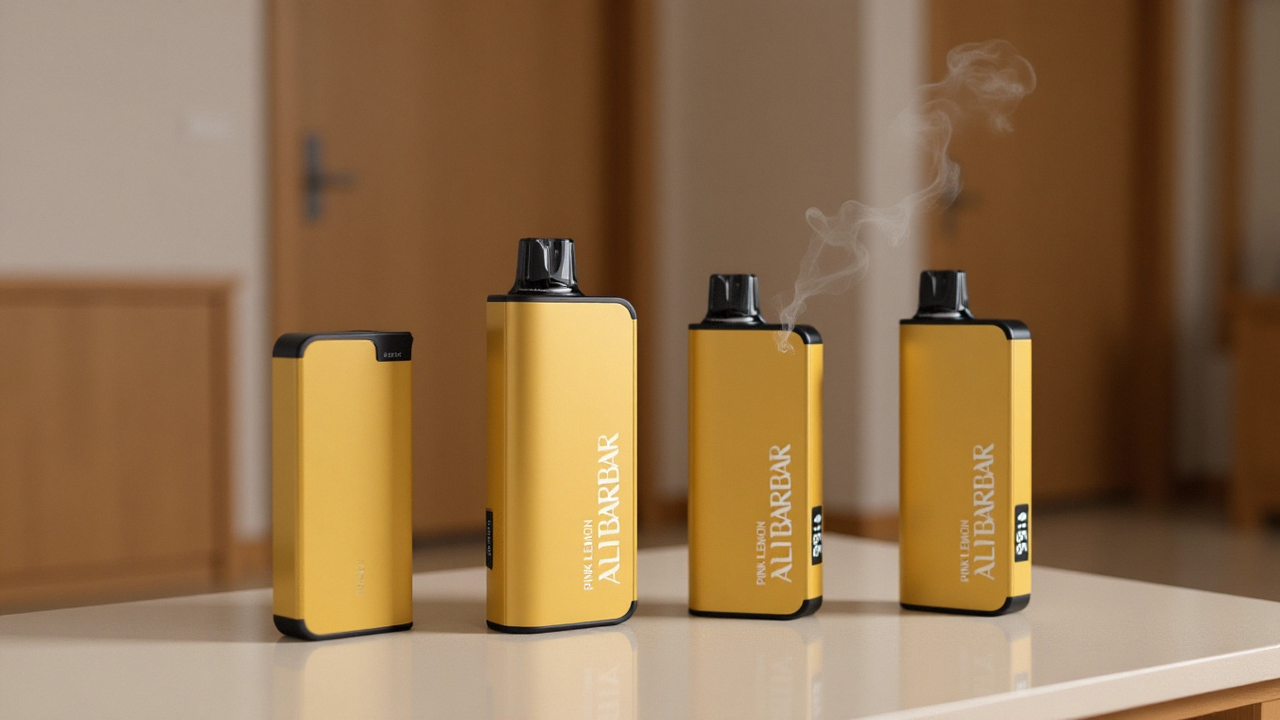
Devices from the ALIBARBAR range, such as the INGOT 9000 and Ice Adjust 12000, illustrate how a properly matched coil-and-power system operates. Their heating architecture is tuned so that under normal use, the wick transport rate comfortably exceeds the vaporisation rate. This headroom prevents the constant teetering on the edge of a dry hit that plagues many cost-engineered alternatives. The indicator systems on these devices also provide clear status feedback, so you’re never left wondering whether the unit is on its last few draws — ambiguity that often leads users to overdraw and initiate the burning cycle themselves.
A Practical Diagnostic Framework
Instead of guessing whether a burnt device is salvageable, apply this sequence. It takes less than a minute and will save you the cost of unnecessarily discarded units.
Identify the device type.
Is this a sealed disposable, a pod with a replaceable cartridge, or a tank with a removable coil? If it’s sealed and burnt, stop — you cannot repair it. Focus on prevention for the next purchase.
Assess the timing.
Did the burnt taste appear on the very first draw, after several hours, or only when the level indicator showed near-empty? First-draw burns signal a severe priming failure or a manufacturing defect. Late-life burns are normal as the wick degrades and oxygen ingress increases.
Inspect the coil (if accessible).
Remove the pod or unscrew the tank base. Look at the cotton visible through the wick ports. White to pale beige fibres can often be saved with proper priming. Brown or black fibres indicate permanent carbonisation. Smell the coil: a burnt scent that lingers even when cold confirms irreversible damage.
Check the liquid level and viscosity.
A reservoir that still appears half full doesn’t guarantee the wick is saturated. Thick liquids may pool at the bottom while the coil starves. Next time, match liquid thickness to your device’s coil resistance — lower-resistance coils typically need thinner liquid.
Evaluate your usage pattern.
Do you typically take several draws in rapid succession? Does the device ever auto-fire in your pocket? These habits will cook even a premium coil. If the answer is yes, look for devices with faster recovery wicking, such as mesh coils with large surface areas and multiple feed ports.
Determine if replacement is straightforward.
For pod systems, a new pod is an easy fix. For tank systems, a coil change costs little and restores full performance. If the device uses proprietary, difficult-to-source coil heads, the effective cost of ownership rises sharply — a factor often overlooked in initial purchase decisions.
This framework will correctly identify whether you’re dealing with a temporary irritation or a terminal failure in every case. More importantly, it reveals exactly which design attributes need to be present in your next device to prevent the same disappointment.
Common Mistakes That Lead to Burnt Coils
Over years of analysing return reasons and support queries, a handful of user-side errors dominate cases where the device itself was mechanically sound.
Priming by instinct instead of procedure. The single most common error: filling a tank and immediately pressing the fire button. Cotton requires time to expand and absorb. Skipping this step is the equivalent of starting a car engine without oil. Always prime manually and wait.
Chain draw stacking. A healthy device can typically recover its wick saturation in 15–30 seconds. Firing again after 5 seconds means the coil is still at elevated temperature and the wick hasn’t replenished. The second draw will taste progressively drier; the third or fourth will burn.
Overlooking autofire risk. Pocket lint, magnetic closures, or a misplaced button can activate a device without the user realising. A single sustained auto-fire can destroy a coil beyond repair. Devices with physical slider locks or puff-time cutoffs are far less susceptible to this.
Chasing the wrong specification. Users often focus exclusively on capacity or form factor while ignoring whether the coil is rebuildable, replaceable, or permanently sealed. A device that looks sleek but forces you to discard the entire unit because of one burnt coil is not just a bad purchase — it’s a predictable frustration.
Assuming all coils are interchangeable. Even within the same brand, different coil generations have different power requirements, wick densities, and recommended liquid viscosities. Installing a coil without checking its rated wattage range is a recipe for immediate burning. This is where a retailer that maintains accurate, specification-rich product listings becomes indispensable. At OZVAPE Shop, the documentation provided with each ALIBARBAR device includes clear operating parameters, removing the guesswork that leads to these errors.
Frequently Asked Questions
Q: Can you fix a burnt disposable vape?
A: No. Once the wick inside a sealed disposable unit is carbonised, the damage is permanent. There is no practical way to disassemble, clean, or replace internal components without compromising safety. The best outcome is to learn the early signs and choose a device with better wicking headroom next time.
Q: Why does my new coil taste burnt even after priming?
A: The most likely cause is insufficient soak time, a power setting that exceeds the coil’s rated range, or the coil was defective from the factory. Let a new coil sit saturated for at least ten minutes, then start at the lowest recommended wattage and gradually increase.
Q: Can I clean a burnt coil with alcohol or vinegar?
A: Not reliably. While isopropyl alcohol can dissolve some residues, it often leaves behind its own taste and doesn’t reverse carbonisation. If cotton fibres are blackened, the only solution is replacement.
Q: Do mesh coils burn less often?
A: Generally, yes. Mesh coils spread heat across a larger surface area, reducing hot spots. However, they still require proper priming and liquid compatibility. A mesh coil that is under-primed will burn just as permanently as a wire coil.
Q: How can I tell if the burn is from the coil or the liquid itself?
A: If a fresh coil with a new batch of liquid also tastes burnt immediately, the liquid may contain high-sweetener concentrations that caramelise on contact with heat. Try a different, lower-sweetener liquid in a clean setup to isolate the variable.
Q: Why does my device burn only when the battery is low?
A: In poorly regulated devices, a sagging battery voltage forces the circuit to draw more current to maintain output, which can overshoot and overheat the coil. A device with buck-boost regulation maintains consistent output across its charge cycle.
Q: Is it safe to keep using a slightly burnt device?
A: A mildly caramelised taste is unpleasant but not necessarily hazardous. However, once you detect a true acrid, smoky note — indicative of cotton pyrolysis — you are inhaling compounds that should not be present. Replace the coil or unit immediately.
Q: Do higher-capacity devices burn less?
A: Not directly. Capacity refers to liquid volume, not wicking ability. However, high-capacity devices often incorporate larger coils with broader wick ports, which can sustain longer draws. Capacity alone is no guarantee.
Q: What’s the most preventable cause of burning?
A: Drawing too hard and too frequently on a device not designed for that style of inhalation. If you find yourself repeatedly burning devices, shift to a product engineered for direct-lung airflow with substantial wicking throughput.
Q: Can I return a device that burned on the first use?
A: This depends on the retailer’s policy and the nature of the fault. A genuine manufacturing defect should be covered. At OZVAPE Shop, devices that fail due to confirmed factory defects are handled through a documented support process. User-caused priming failures are not defects, which is why the educational support offered alongside the product is so valuable.
Conclusion
A burnt experience can be a one-time lesson or a recurring aggravation — the difference lies entirely in how the device is chosen and used. Understanding the wicking, power delivery, and material quality inside each unit transforms what feels like a random failure into a predictable, preventable outcome. The devices that excel in daily use are the ones engineered with enough thermal headroom to accommodate real-world draw behaviour without teetering on the edge of dry combustion. ALIBARBAR’s current catalogue, accessible through OZVAPE Shop, demonstrates this margin clearly: output-regulated circuits, documented coil architectures, and status indicators that remove the guesswork that so often leads to burning. The right device for your routine is the one that never forces you to negotiate with it — it simply performs, day after day, without demanding that you adjust your habits to its limitations.