
VAPE FAQs
How Do You Know Your Vape Is Empty?
Sep
How Do You Know Your Vape Is Empty?
Every vaper has been there: the draw suddenly feels thin and airy, the flavor fades to something faintly unpleasant, and the visible vapor thins to a ghost. You inspect the device, turn it over, shake it near your ear, and still you are not entirely sure whether the problem is an empty cartridge, a dying power cell, or a choked coil. The question “how do you know your vape is empty?” sounds straightforward, but the honest answer depends heavily on the architecture of the device you are holding. This article breaks down the engineering behind empty detection, the practical signals that matter, and the habits that prevent you from being caught without a working device at the worst possible moment. At OZVAPE Shop{:target=”_blank”}, we see the consequences of this uncertainty every day — users carrying two or three devices “just in case,” or throwing away units that still have a meaningful amount of usable life left because no reliable indicator existed.
Understanding how a device signals emptiness is not about memorizing puff counts or reading marketing sheets. It is about recognizing the sensory and mechanical feedback loops that occur as the liquid level drops. Different designs address this problem in different ways, and once you see the pattern, you will never be caught off guard again.
Understanding What Matters: Core Engineering and Design Factors
To know when a vape is empty, you first have to understand what “empty” actually means inside the device. It is tempting to think in terms of a simple liquid reservoir, but the interaction between the heating element, the wicking material, the air intake, and the power source creates a chain of events that reveals the liquid level well before you reach a dry tank. The factors below determine how clearly those warning signs appear.
Internal Architecture and Output Consistency
The heating element sits at the core of the device. In a properly functioning unit, it draws liquid from the reservoir through a wicking material and vaporizes it at a controlled temperature. When the liquid level drops to the point where the wick can no longer maintain full saturation, the heat transfer changes. The coil begins to run hotter because there is less liquid to absorb the thermal energy. That heat spike produces the characteristically harsh, scorched taste that vapers universally recognize.
But not all devices tell you this at the same stage. High-quality engineering delays that scorched point until the liquid is genuinely exhausted. Some devices use a porous ceramic heating element that holds residual liquid in its structure, keeping the draw smooth even when the visible reservoir is nearly gone. Others rely on a traditional cotton wick that will scorch considerably earlier, effectively telling you “almost empty” far sooner than necessary. The difference is not just a matter of taste; it also affects the lifespan of the device. A device that consistently scorches at 15% remaining liquid is functionally discarding that last fraction of its capacity.
How do you recognize well-engineered thermal management? The symptoms are subtle but consistent. A quality device produces the same flavor intensity from the first draw to the final one. You should notice a gradual thinning of vapor — not a sudden change in flavor. If the taste shifts dramatically before the device stops, the design is prioritizing manufacturing cost over user experience.
Power Management and Status Transparency
Battery status is not the same as liquid status, but the two are constantly confused. Many devices show a vibrant LED that reflects the power cell’s remaining charge, yet offer no indication of the liquid level at all. That single omission shapes user behavior: people charge devices that are already empty, assuming a full battery means a full cartridge. The same confusion causes people to discard devices that are simply low on battery, not empty of liquid.
Good power management extends beyond simply delivering voltage. The most thoughtful devices calibrate their output as the liquid level drops, slightly reducing power to compensate for reduced wicking. This keeps the temperature stable and prevents that unpleasant scorched hit. The trade-off is that the final few puffs become noticeably weaker and cooler. That is actually a good thing — it creates a clear sensory signal that the device is nearing the end, without the punishment of a burnt throat hit.
The hidden cost of status ambiguity is practical: users who cannot trust their device’s signals will always over-prepare. They will carry a backup even on a short commute because the uncertainty itself is the problem. A device that communicates honestly — through a visible window, a distinct change in draw resistance, or a predictable shutdown — eliminates that mental burden.
Physical Design and Material Durability
The physical form of a device either helps or hinders your ability to check its status. Transparent or translucent reservoirs are the gold standard. If you can see the liquid, you know exactly how much remains. But manufacturers make choices here that affect more than convenience.
Tinted or opaque cartridges are often chosen for aesthetic reasons — a sleek, all-black device certainly looks premium compared to a translucent one. But that choice imposes a constant cost on the user: you can never visually verify the liquid level, so you are always guessing. Tinted windows are a middle ground; they show the liquid when held against light, but not always in dim conditions. Mouthpiece design also matters. A narrow mouthpiece restricts airflow, which can alter the draw resistance and give you a false impression of a full cartridge when the liquid is actually low. Conversely, a very open mouthpiece may make a nearly empty device feel “airy” long before the coil begins to dry.
Durability also plays a role in empty detection, though it is less obvious. A device with a soft, easily scratched finish will collect scuffs and smudges around the window area, eventually making the liquid level harder to see. A well-coated, matte surface retains clarity and serves its diagnostic purpose for far longer. When evaluating a device, take a moment to see whether the manufacturer has made the status window a priority or an afterthought.
Modularity and Lifecycle Flexibility
How a device handles its end-of-life tells you a lot about its design philosophy. Sealed, single-use devices offer no user intervention: when the liquid is gone, the device is done. The only question is whether the manufacturer has implemented a clear cutoff mechanism. Rechargeable, sealed devices are similar — they operate until the liquid runs out, and even though the battery could technically power more cycles, the unit is unusable without refilling.
Refillable or replaceable-pod systems change the equation entirely. With a replaceable pod, “empty” is a minor event: you swap in a new pod and continue. The practical challenge is detecting that moment without wasting the liquid still in the pod. Many users refill too early or too late because they cannot judge the remaining volume through an opaque design.
That said, modularity introduces its own subtle failure modes. A pod that is almost empty will behave differently from a full one — the draw resistance may change, and the flavor may become muted before the device cuts off. Understanding your device’s architecture is the first step to predicting how it will signal its own emptiness. A sealed device with a robust auto-cutoff is arguably simpler to manage than a refillable tank where the user has to manually intervene at exactly the right moment.
Applying These Criteria to Real-World Options
Once you understand the engineering factors, you can look at actual devices with fresh eyes. No single device is best for everyone; the right choice depends on how you use the product and how much uncertainty you are willing to accept.
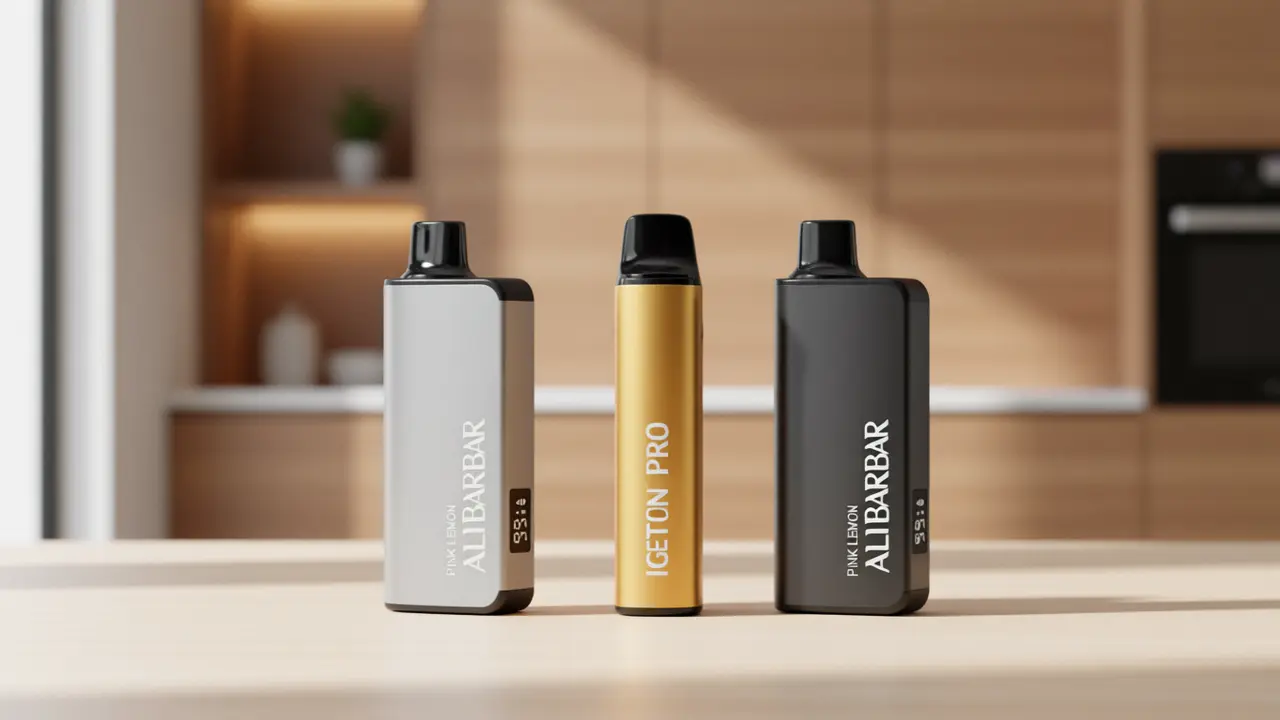
In the ALIBARBAR family, the INGOT 9000 and INGOT 15000 represent a classic sealed device approach. The INGOT 9000 uses a visible transparent cartridge that makes liquid inspection trivial. Users can see the level at a glance, and the device is engineered to maintain output consistency until the reservoir is nearly exhausted, after which it shuts down cleanly. The INGOT 15000, with its larger capacity, uses a similar construction but adds a multi-stage power management system. Published specifications suggest the coil temperature is regulated so that the final few puffs produce thinner vapor rather than a scorched taste — that is exactly the behavior you want in a device that cannot be refilled.
The Ice Adjust 12000 series takes a different approach. It features an adjustable output level, which introduces a new variable. At lower power settings, the device draws less liquid per puff, so the apparent “emptiness” arrives later in terms of puffs but not in terms of total liquid consumed. Users who adjust their power settings must also adjust their expectations for when the device will signal its end. This is not a flaw; it is a design trade-off that rewards attentive users.
Comparisons with other popular device families are useful because they illustrate the range of signaling strategies. Some well-known Italian-designed devices use entirely sealed, dark plastic bodies with no window whatsoever; they rely entirely on an auto-shutdown mechanism, which means the first warning sign is the device simply refusing to fire. That approach is acceptable if the auto-shutdown is consistent, but it eliminates the opportunity to pace yourself — you cannot tell that you are two puffs away from the end. Other devices, particularly those from certain Chinese manufacturers, include a small LED that changes color based on remaining liquid. However, these color changes are often highly subjective and difficult to interpret in bright sunlight. The ALIBARBAR range’s preference for clear windows is a simple, proven solution that avoids those interpretation issues.
When you are evaluating a device, ask yourself one question: will this device tell me when it is empty in a way I can act on? A transparent window is always actionable. A soft cutoff is actionable. A sudden shutdown is borderline actionable — you know the device is empty, but you had no warning. A burnt taste is actionable only if you can tolerate the discomfort of that final puff.
A Practical Framework for Evaluation
You do not need to be an engineer to reliably determine when a vape is empty. What you need is a systematic method. The following steps take less than thirty seconds and will work with virtually any device on the market.
1. Visual inspection if possible. If the device has a transparent section, hold it up to a light source and examine the liquid level. Look for air bubbles, which can create false readings. Tilt the device gently to level out any bubbles. If the liquid is below the wicking inlet (usually a small hole or porous area), the device is functionally empty, regardless of what the battery indicator says.
2. Assess draw resistance. A change in airflow is an early signal. A device with a full cartridge typically produces a slightly restricted, consistent draw. As the liquid level drops, the coil area becomes less saturated, which reduces the density of vapor and can make the draw feel lighter. If the draw is noticeably airier than when the device was new, you are close to the end.
3. Measure vapor volume. Take a standard puff and observe the visible vapor. A decline in output without any change in draw length or strength points to a failing liquid supply. This symptom appears before the flavor changes, and it is more objective than taste.
4. Monitor flavor intensity. This is the most subjective step, but it is useful. A gradual reduction in flavor — not a sudden burnt taste — typically indicates the liquid is running low. If the flavor is completely absent but there is still vapor, the device is likely on its last few puffs.
5. Note the output cutoff behavior. If your device stops producing vapor entirely, do not immediately assume it is dead. Check the battery indicator first. If the battery shows charge but the device will not fire, the liquid is exhausted. Some devices have a locking mechanism that requires you to click a button five times; make sure you have not accidentally activated it.
Standardized specification comparison is a practical tool for reducing decision friction here. If you are choosing between two devices and one has a transparent reservoir and the other does not, the transparent one will always give you more information during daily use. Similarly, if both devices claim the same puff count but one uses a ceramic heating element, the ceramic unit is more likely to deliver consistent performance through the end of its life. A simple table in your own notes can help you weigh these factors without relying on memory.
Common Selection Errors and Industry Observations
Even knowledgeable users make avoidable mistakes when evaluating how a device signals emptiness. Some of these errors are benign; others cost real money and cause genuine frustration.
Overweighting puff count while ignoring complementary factors. A device may be marketed as delivering 9000 puffs, but that number assumes a specific draw duration and power setting. If you take longer draws or use a higher power setting, the actual puff count drops significantly. The more serious issue is that many users only look at puff count and never consider whether the device has a clear emptying signal. A 9000-puff device with no window will leave you guessing at 9,000 puffs. A 7000-puff device with a transparent reservoir and a predictable soft cutoff lets you plan far better.
Assuming visual similarity means equivalent internal engineering. Two devices can look nearly identical — same form factor, same mouthpiece shape, similar weight — and contain completely different heating elements, wicking materials, and air intake geometries. The budget version may scorch with 20% of liquid remaining, while the better-built unit delivers smooth draws until the last drop. Appearance tells you almost nothing about this. Reading specifications for the heating element material and checking whether the device has a regulated output is far more informative.
Undervaluing modularity in cost-per-use calculations. A sealed device that lasts for 9000 puffs may look more expensive per device than a refillable system, but the real cost per puff depends on how much liquid you waste. If you discard a sealed device while a visible amount of liquid remains because the flavor has turned, you are paying for liquid you never consumed. Refillable systems eliminate that waste but introduce the risk of overfilling, underfilling, and the need to carry liquid with you. Neither option is universally superior; the error is in calculating the cost-per-use without accounting for the efficiency of your own usage habits.
Confusing category terminology with technical specifications. The term “disposable” is increasingly misleading. Some devices marketed as disposables are actually rechargeable, and some have transparent reservoirs while others are completely opaque. The term says almost nothing about how the device signals its end. Similarly, “pod system” can refer to devices with proprietary pods, open refillable pods, or sealed disposable pods. These categories overlap in ways that create confusion. The only reliable approach is to read the specific product specifications and look for the three key indicators: reservoir visibility, output regulation, and cutoff mechanism.
From an industry perspective, there is a clear reason why so many devices lack proper empty indicators. Transparency costs money in two ways: it restricts the visual design, and it requires the manufacturer to ensure that the liquid level remains visible even as the device ages — no peeling windows, no discoloration. Some manufacturers deliberately avoid this because a user who cannot see the liquid level is more likely to discard the device and buy a new one, even if some usable liquid remains. This is not a conspiracy; it is simply a cost-benefit decision that prioritizes repeat sales over user transparency. Knowing this helps you vote with your wallet.
Frequently Asked Questions
Q: Why does my vape taste burnt even though it shows a full battery?
A: The battery indicator has no connection to the liquid level. If the device tastes burnt, the coil is not receiving enough liquid. This can happen because the liquid is low, or because the wick has become dried out due to rapid successive puffs. Let the device sit for a few minutes to allow the wick to re-saturate. If the burnt taste persists, the liquid is likely exhausted.
Q: Can I refill a device that is labeled as disposable?
A: It depends on the specific model. Many disposable devices are sealed and cannot be safely opened or refilled. Attempting to refill them can damage the device or cause leaking. If you want to refill, choose a device explicitly designed for refilling, such as a pod system or a refillable tank.
Q: How can I tell if my vape is empty without a window?
A: Rely on the sensory signals: the draw becomes lighter, the vapor thins, and the flavor fades. If the device has a regulated power system, you may also notice a cooler vapor temperature near the end. The most reliable method is to track your usage against the expected puff count, but that is only an estimate.
Q: Why did my vape stop working even though the battery light shows green?
A: The most common explanation is that the liquid is empty. A full battery with no liquid means the device has no reason to fire. Check the battery light after pressing the button; if the light is green but no vapor is produced, the device is empty or the coil is blocked.
Q: Is it normal for a vape to produce less vapor when it is almost empty?
A: Yes, that is actually a sign of good engineering. Reduced vapor output as the liquid nears the end indicates that the device is regulating power to avoid burning the wick. It is preferable to a sudden harsh taste.
Q: How many puffs does an ALIBARBAR INGOT 9000 actually last?
A: The rated puff count assumes a specific draw duration, typically two to three seconds. In practice, users who take longer draws or use higher power settings will get fewer puffs. The INGOT 9000 has a visible reservoir, so you do not have to rely on the puff count alone.
Q: What is the difference between the INGOT 15000 and the Ice Adjust 12000?
A: The INGOT 15000 has a larger rated capacity and a fixed output, which provides consistent vapor production and a simple cutoff. The Ice Adjust 12000 allows you to adjust the power level, which changes the draw resistance and vapor temperature. The adjustable version requires more active monitoring because the relationship between power and liquid consumption varies.
Q: Can a vape run out of liquid before the battery dies?
A: Yes, in most cases. For a typical sealed device, the liquid quantity and the battery capacity are matched so that the battery will last slightly longer than the liquid. This ensures the device does not run out of power while liquid remains. However, your usage patterns can skew this balance, especially if you take many short puffs versus fewer long puffs.
Q: How do I know if my device is due for replacement before it becomes empty?
A: Look for reduced battery life, longer charging times, or a persistent change in flavor. A dead battery is a clear sign. If the device stops producing vapor but the battery indicator remains charged, the device has likely reached the end of its liquid supply, and replacement is necessary.
Q: Is it safe to keep using a vape that has tasted burnt?
A: Continuing to use a burnt-tasting device is not recommended. The burnt flavor comes from the heated wick or coil material, and inhaling the byproducts is undesirable. Replace the device or the pod. A device that routinely tastes burnt before empty is a design flaw, and you should consider a different model.
Conclusion
Knowing when a vape is empty is not a matter of guesswork or superhuman palate. It is a matter of understanding the device’s architecture and paying attention to the signals it sends. A transparent reservoir is the clearest signal. A gradual decline in vapor output is the most reliable sensory cue. A soft, non-scorching cutoff is the most user-friendly shutdown behavior. Devices that communicate their status clearly remove the anxiety of being caught empty, and devices that hide that information force you to carry backup.
At OZVAPE Shop{:target=”_blank”}, we believe that the best device is the one that fits your habits without asking you to adapt to poor design. The ALIBARBAR range is a meaningful example of engineering choices made with the user’s daily experience in mind. But the same evaluation criteria apply to any device you encounter. Do not settle for a vape that keeps you guessing. The right choice is the one that tells you honestly where it stands — and that finally frees you from the ritual of shaking a device next to your ear in a parking lot.