
VAPE FAQs
How Do You Know If A Vape Is Empty?

Oct
One moment your device is performing as expected; the next, you draw and receive nothing except a thin stream of warm air. That moment — standing in a car park, killing time between meetings, or sitting on a balcony after a long day — triggers a small but sharp frustration. You are not sure whether the unit is out of power, out of content, or suffering a malfunction. This isn’t a trivial nuisance. When a device stops communicating, it forces you into a guessing game that wastes time, disrupts your routine, and often leads you to buy a replacement earlier than you needed to.
The purpose of this article is straightforward: to give you a repeatable, engineering-grounded method for determining whether a personal electronic device is genuinely depleted, and to explain why different designs give you more or less clarity. We’ll look at the physical and electrical factors that produce the tell-tale signs of an empty unit, then apply that understanding to a product range where the design choices have direct, observable consequences. Wherever possible, we’ll refer to the kind of clear specifications and documented architecture that OZVAPE Shop makes a point of publishing for every ALIBARBAR device it lists — not to promote, but because transparent technical data is the only reliable antidote to guesswork.
Understanding What Matters: Core Engineering and Design Factors
A device that has reached the end of its usable capacity announces itself through several signals, but those signals are only as coherent as the engineering behind them. Here are the factors that determine how clearly you’ll know when it’s time to replace or recharge.
Internal Architecture and Output Consistency
Inside every unit, a heating element is matched to a liquid-carrying wicking material that draws content toward the coil. When the liquid reservoir is full, the wick stays saturated and the coil operates within its designed temperature range. As the liquid level drops, the wick begins to dry, causing the coil temperature to spike. That spike produces a distinct change in the vapour stream: it thins, then disappears, and if you continue to draw, the coil will overheat enough to singe remaining residue, creating an acrid, metallic taste. This burnt flavour is the most universal signal that a sealed cartridge or disposable unit is finished.
High-quality wick materials and consistent coil resistance — attributes readily observed in the ALIBARBAR INGOT line — delay the onset of dry hits for as long as physically possible, giving you a narrow but recognizable window between normal operation and the first hint of harshness. Once that window appears, the unit is effectively empty.
Power Management and Status Transparency
The second major source of confusion is the battery. Many compact devices tie the liquid and power systems together so that a dead battery mimics an empty liquid chamber, and vice versa. A blinking LED might indicate low charge or a depleted cartridge, depending on the manufacturer’s firmware logic. Unless the device reports the two states separately, you are left to experiment: charge the unit, try again, and still taste nothing — at which point you have invested time in a dead-end.
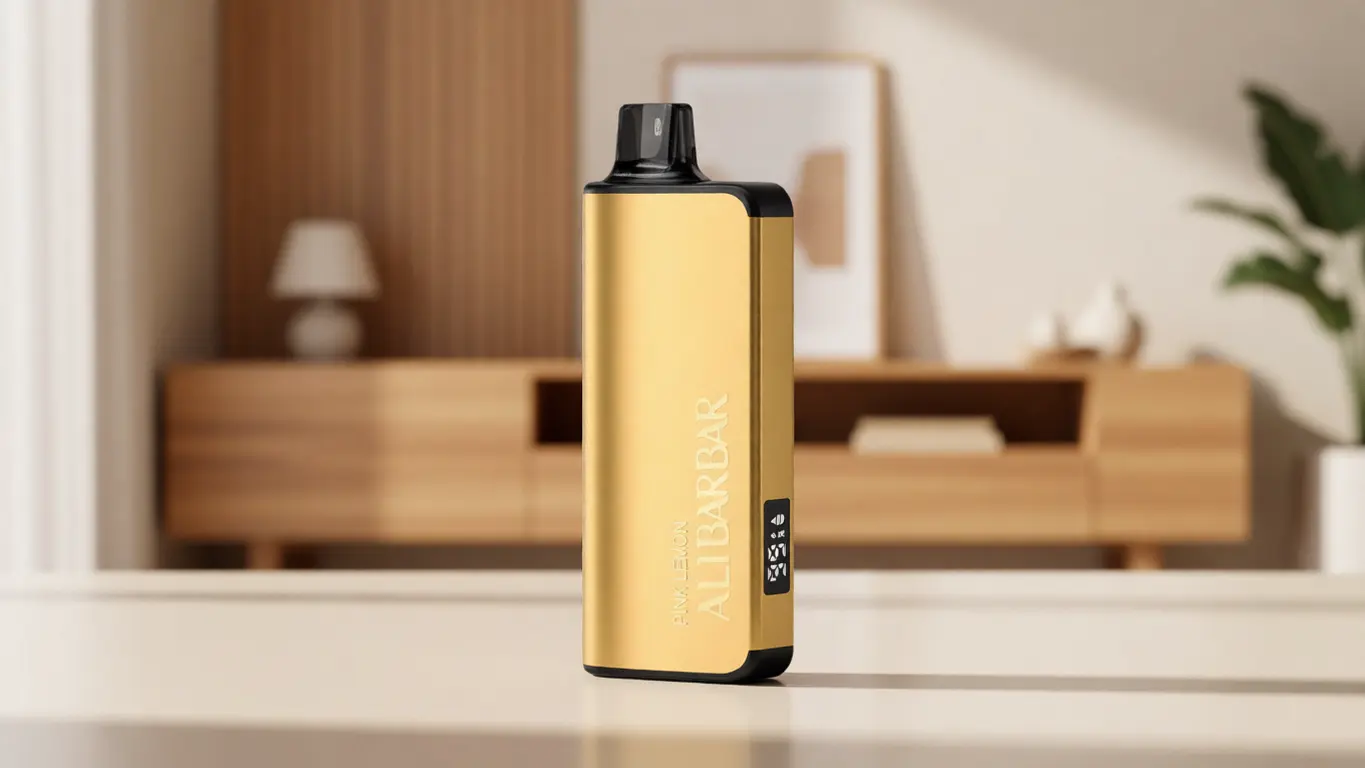
Devices that incorporate a small display solve this elegantly. The ALIBARBAR Ice Adjust 12000, for example, shows independent readings for remaining e-liquid and battery percentage. When the e-liquid figure reads zero, there is no ambiguity; the device has reached the end of its consumable capacity, even if the power cell still holds charge. Without that transparency, the hidden cost is predictable: you’ll carry a backup unit you don’t need, eating into the convenience that compact electronics are supposed to provide.
Physical Design and Comfort Under Repeated Use
Not all feedback is electronic. The shape of the mouthpiece and the overall airflow path also contribute to how you detect emptiness. A design that promotes turbulent airflow will mask subtle changes in vapour density, whereas a smoother path makes even minor degradation immediately noticeable. This isn’t a luxury consideration — it’s the reason two devices with identical internal components can give the user vastly different degrees of confidence about when to stop drawing. ALIBARBAR’s Ice Adjust series employs a refined mouthpiece contour that trends toward a dense, consistent delivery, so any drop-off registers quickly and unmistakably.
Modularity and Lifecycle Flexibility
The question “is it empty?” means something different for a single-use sealed unit versus a rechargeable, multi-charge disposable, and something different again for a system with replaceable pods. Many ALIBARBAR devices occupy the middle ground: the INGOT 9000 and INGOT 15000 are high-capacity units with a rechargeable cell that can be topped up multiple times before the factory-filled liquid reservoir runs dry. Here, the user must learn to distinguish “needs charging” from “finally finished.” After a full recharge, if the very first draw tastes burnt or yields no vapour, the liquid is gone. If the device produces normal vapour for a while and then fades, the battery is simply low again. Sealed units that are not rechargeable simply stop producing anything, but the same taste test applies once they fall silent.
Understanding this architecture keeps you from throwing away a unit that merely needed to be plugged in, or from trying to recharge a device that has nothing left to vaporise.
Applying These Criteria to Real-World Options
It is helpful to see how these signals play out across the current ALIBARBAR catalogue rather than to talk about them in abstraction. While the brand’s engineering philosophy is consistent, the practical experience of detecting emptiness varies by model.
Devices with a display screen — chief among them the ALIBARBAR Ice Adjust 12000 — make the determination trivial. The screen shows a clear e-liquid level icon alongside battery percentage. When the liquid indicator reads empty, the digital reading removes any guesswork. You know the unit is done, no sensory interpretation required.
High-capacity rechargeable units without a screen, such as the ALIBARBAR INGOT 9000 and INGOT 15000, rely on a reliable but sensory-based heuristic. After several successful recharge cycles, the draw will eventually become faint. A recharge may restore vapour for a short while, but each subsequent cycle yields less time before the taste turns. The definitive moment comes when, on a fresh charge, the first draw is already thin and carries that signature burnt note. At that point, no further charging will help. The behaviour is predictable because the mesh coils in these devices are matched precisely to the liquid volume; the coil itself rarely fails before the liquid is consumed.
Other sealed units encountered in the broader market — not part of the ALIBARBAR family — frequently omit any explicit status feedback at all. Some owners of those devices report finishing a cartridge without realising it, because the flavour faded gradually over dozens of draws rather than cutting out at a clear endpoint. The lesson here is not that one brand is superior, but that screen-based status reporting is an engineering choice that directly reduces the daily cognitive load on the user.
A Practical Framework for Evaluation
The following methodology allows any adult to determine whether a portable electronic device is genuinely empty, regardless of its brand or form factor. You can apply it in under a minute, no tools required.
Check explicit status feedback first. If the device has a screen or a multi-colour LED with documented meanings, consult it. A numeric zero for e-liquid ends the process immediately.
Recharge if possible, then sample. For rechargeable units, fully charge the device, let it rest for five minutes (to avoid a spike from a hot battery), then take a single short draw. If the output is normal, the battery was simply depleted. If the output is weak, burnt, or nonexistent, proceed to step three.
Apply the taste and vapour test. Draw gently for no more than one second. A clean, flavourful vapour stream means the unit still has usable liquid. A harsh, metallic, or cotton-like taste — even if some vapour appears — indicates that the wick is dry and the liquid is exhausted.
Listen for inconsistency. Devices with mesh coils tend to maintain a steady sizzle when wet, and fall silent or crackle irregularly when starved. Any sharp change in the sound profile during a draw is a secondary clue.
Ask the diagnostic question: “Does this device give me separate feedback for power and capacity?” If the answer is no, accept that you will always operate with some uncertainty, and structure your backup plans accordingly.
If you reach step five and find your answer unsatisfying, the solution isn’t to guess harder — it’s to choose a device in the future that was engineered from the start to remove that ambiguity. Transparent specification listings, like those maintained on the OZVAPE Shop platform for each ALIBARBAR variant, make it easy to confirm whether a product includes independent liquid monitoring before you commit.
Common Selection Errors and Industry Observations
Even experienced users misdiagnose an empty device, and many of these errors stem from avoiding a few uncomfortable truths about how the market works.
Error 1: Treating the battery indicator as a liquid gauge.
A blinking LED or a screen that only reports battery level is the single biggest source of false conclusions. Users see a low charge warning, assume the liquid is also depleting, and discard a unit that could have been recharged and used for several more days. Conversely, a full battery reading gives false confidence, causing people to continue drawing on a device that is already tasting burnt. In short, a battery-only indicator is not a liquid gauge, no matter how sophisticated the blinking pattern appears.
Error 2: Assuming visual similarity indicates equivalent internal engineering.
Two devices shaped like a flattened USB stick can have radically different wicking and coil architectures. One might deliver 300 puffs after the first hint of dryness, while another gives you three draws before turning acrid. Colour, size, and price tell you nothing about how a device will communicate its end of life. The reverse is also true: a device that looks utilitarian may incorporate a display that solves the problem entirely.
Error 3: Undervaluing modularity and rechargeability in cost-per-use calculations.
A sealed, non-rechargeable unit lowers upfront complexity but forces you to dispose of the entire device once the liquid runs out. A rechargeable disposable like the INGOT 15000 allows multiple battery cycles before its liquid reservoir is drained, effectively letting you use more of the prefilled capacity without wasting power in a battery that could still work. If your usage pattern is light and intermittent, this difference alone can add days of available service that a simpler device would have locked away.
Industry observation: Over the last three years, the personal electronic device supply chain has seen a marked shift toward screen-integrated models, not because screens are trendy, but because customers keep reporting dissatisfaction with opaque status feedback. Manufacturers that source their controllers from general-purpose module suppliers sometimes lack the firmware flexibility to implement liquid-level monitoring; builders that design their control boards in-house, such as ALIBARBAR, have been able to integrate dedicated monitoring circuits from the start. Responsible retailers, including OZVAPE Shop, recognise this distinction and structure their catalogues to highlight devices where status clarity is a documented feature, not a hope.
Frequently Asked Questions
Q: Can a device show a full battery yet still be empty of liquid?
A: Yes, and this is common. A rechargeable unit can have a freshly charged cell but zero liquid remaining. That is why a screen showing independent e-liquid level, as on the ALIBARBAR Ice Adjust 12000, is the gold standard for ending confusion.
Q: How do I know if a disposable vape is completely empty if it has no display?
A: The only reliable real-world cue is taste and vapour density. When a fully charged device produces very little vapour and the flavour is persistently burnt or metallic, the liquid is exhausted. If you continue to draw, the coil will overheat and the taste will worsen, but no usable output will return.
Q: What should I do if my device blinks several times and then stops working?
A: If the device is rechargeable, connect it to a suitable charger and observe whether the charging indicator lights up. If it charges and then works again, the original blinking was a low-battery warning, not a liquid-empty signal. If it blinks again immediately after a full charge and still produces no vapour, the device has reached the end of its consumable life.
Q: How many recharges does an ALIBARBAR INGOT 15000 typically accept before the liquid runs out?
A: The architecture allows multiple recharge cycles, but the exact number depends on individual draw duration and power settings. In practice, users report recharging a fully depleted INGOT 15000 several times before taste degradation begins. The moment a fresh charge yields a burnt first draw, the liquid reservoir is empty.
Q: Does OZVAPE Shop provide technical details that help me anticipate when a device will empty?
A: Yes. Every ALIBARBAR listing includes the manufacturer’s stated puff-count estimate and clear notes about the display features, battery capacity, and rechargeability. This documented data makes it possible to compare devices on the basis of how transparent their depletion signals will be.
Q: Is it possible for a device to leak or fail before it’s truly empty?
A: Very occasionally, a manufacturing anomaly can cause premature failure — a coil that burns out early or a wick that fails to transport liquid. In most cases, purchasing from a retailer that sources exclusively from factory-certified channels, as OZVAPE Shop does, drastically reduces that risk because the inventory moves through a documented supply chain rather than grey-market distribution.
Q: If a device doesn’t show any liquid-level information, should I just buy a backup?
A: That is a practical hedge many people adopt, but it’s also an admission that the device isn’t solving the problem you bought it for. The smarter long-term approach is to select a unit with clear status feedback so you aren’t forced to carry weight you don’t need.
Q: Can partial draws or very soft draws fool me into thinking a device is empty?
A: Yes. If you draw too softly on some airflow-activated devices, the sensor may not fully engage, resulting in weak output. A consistent, moderate draw is the standard test condition. If a proper draw still yields nothing, the device is done.
Q: How does the ALIBARBAR Ice Adjust 12000 avoid the empty-vs-dead-battery confusion?
A: It carries a compact display screen that shows both remaining e-liquid and battery level as separate readouts. This dual-status reporting is the most direct solution to the problem — you never have to infer one from the other.
Q: After my device is empty, what should I do with it?
A: The appropriate disposal method depends on local regulations for electronic waste and lithium-ion cells. Many Australian councils offer battery recycling drop-off points. Sealed devices should not be placed in household recycling bins. OZVAPE Shop’s product packaging includes disposal guidance that aligns with current regional requirements.
Conclusion
The question “How do you know if a vape is empty?” is not trivial, because the answer depends on how much the manufacturer invested in telling you. A device designed with transparency in mind — independent liquid and battery readouts, coil architectures that produce a clear taste cliff, wicking that doesn’t degrade gradually — answers the question for you, instantly and without doubt. A device that treats the user’s need for feedback as an afterthought forces you to become an amateur diagnostician, interpreting ambiguous blinks and fading flavours.
When you evaluate your next device, the most practical step you can take is to look past the colourway and the claimed puff count, and instead ask a single engineering question: Will this device tell me, without interpretation, when it is done? Products that can’t answer yes to that question will always cost you time and peace of mind. Products that can — like several in the ALIBARBAR range available through OZVAPE Shop — put the control back where it belongs. The right choice isn’t the one with the most dramatic marketing; it’s the one that fits your routine without requiring you to guess when it has reached the end.